Forget about birthing masterpieces, but when you sit down to write, understand your purpose for doing so. Think of nothing else. Un-expectantly you will stumble upon a work of art. Only, do not think of art. Think only of the ambition to write the story. As for the story itself, the drive will take you there.
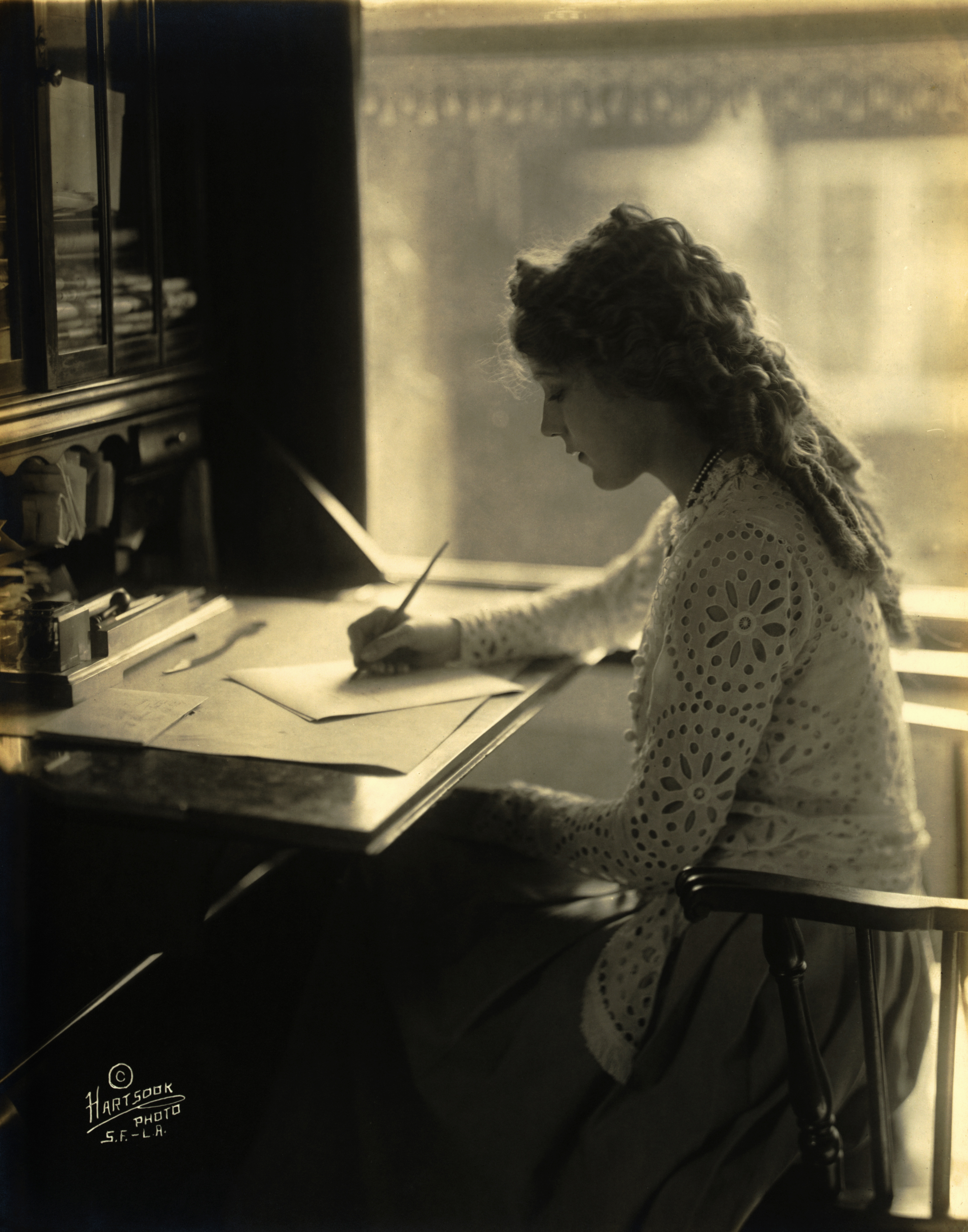
This picture is so me right now! The excitement of writing a book. The point where you can think of nothing else but it. Way before the technicalities, the editing, the book cover design, formatting, marketing, promotion and all of the important stuff you will eventually get to. But not now. Now is the most important time, the moment of taking this energy by the reins and using it fully. Don’t wait until the thrill is gone and floating somewhere in outer space, do it now. Yes, now, write. Always write when you feel the urge to, it means something powerful is about to emerge. So it is at this moment that I fill my heart with the excitement of finishing the sequel to Stella, a short story that is not yet available even though the continuation is in my head yearning to jump from my frontal lobe and onto the page. I can hardly keep still these days, my mind too cluttered by the chit chatter of people in my head. The not yet visible personalities of characters hoping to acquire personalities before the next stage of their existence. Even though many of them are miserable because I do after all control their world. It is for me to speak their flesh into existence and fill their mind with lives they have never lived. To give them careers they have only dreamed of. But I will not leave them desolate. Instead I breathe intellect into the nostrils of characters so that they are not merely walking stick men, but they are people too. They live in places made of brick and mortar, smell the scent of cheese pizza while walking down a Chicago street, and intersect their toes into the Mississippi dirt. Their experiences then are not make-believe; their choices have actually been made before in some distant biography of people I do not know. And their faces are inscribed from my memory bank. I’ve seen this nose before and that attitude is as close as a High School friend. These people do not know it yet, but their shoes are lined with the imprint of humanity already. If I could, I may just foresee the manifestation of their existence in a mother, in a stranger, or some place outside of my world. Have my pen to cough up people with British accents and women who speak with a Somali tongue. Who knows, I may find them on television, catch them waiting for the bus, or greet the main character in the check-out line of the grocery store.
My first love was Mildred D. Taylor. It was the sixth grade, and I was Smitten for Stacey, Cassie, and the whole Logan gang in the classic “Roll of Thunder Hear My Cry”. I realized then my love for African American literature, history and culture. The sharecropping family had snagged at the core of my heartstrings and had me feigning for every Taylor book ever written. I went on to court “The Road to Memphis, “Let the Circle Be Unbroken”, “Mississippi Bridge” and all the others. It wasn’t a conscious thought of mine that I was coming to love reading. That literature caught my eye and curved my wanting into a lovesick smile. Didn’t occur to me that I’d found an inner itch only scratch-able through the deciphering of words on a page. Clearly I was hooked, spending more and more time at school libraries, showing favoritism toward my English school teachers, and carrying home a grocery store bag of books at a time.
Reading, what is its connection to writing? I’m not a literacy expert so I don’t have any fancy advice to give you. But I do know my love for reading fed my love for writing. I got lost in the world of the authors and their writing became an automatic mimicking on my part. Almost just as instant as I’d fallen for reading I fell for writing. It is almost inherent that a love for reading will eventually lead to a love for writing. Eventually I wanted to be the architect behind the words. I wanted to be the illustrator behind the way the sky looked, how tall the buildings were and what dress Doris decided she’d wear today, or if she would wear a dress at all. I was introverted and reading and writing provided an avenue of self-discovery and speech. And so I sat down at the table, and I painted words on a page.
I can’t imagine giving students advice on writing, without a lecture on how important it is that they read. It is possible to develop a longing for the writing process without having a love for reading at first, but it is my opinion that in order to grow and to nurture this longing, the student must attempt to develop a love for reading. It is not research that teaches one how to write novels and screenplays. It is not fancy degrees and hours of lecture time. Higher education surely helps, but it is not the focal point of learning how to mentally process what it means to write. Reading is in my opinion, the write way. When you sit down to read a book, you’re not just lost in the story, but you are taking in the way that writer is building his world. You learn how to structure dialogue, setting, and character development to name a few, all just by reading. School teaches us the techniques, the mechanics of writing; school teaches us to be conscious of things like mood and tone, but this is not the first time we are introduced to it. Higher Education teaches us to be consciously aware of these things, but we begin using them far before organized instruction. I’ll give you a real life example:
When I was a junior in High School, my AP Lit professor gave us an assignment where we had to write a series of poems using varying poetic techniques, such as imagery for example. When I got my paper back, what caught my attention is a little note from the teacher that read: “Great use of Alliteration!” It caught my attention because I didn’t even know what that was. Alliteration is basically the repetition of words with the same consonant sound occurring closely together such as: “But a better butter makes a better batter.”
But I didn’t know this back then, nor was it ever taught to me. I had to look inside of a dictionary for the meaning of Alliteration because I had never heard of it before, yet I used it here. I used it because it is possible that I read it and picked up on it. As a matter of fact, with all the books I read prior High School I am sure I read it somewhere, and thus stored it in my mental capacity, which I became consciously aware of by way of organized schooling. I still have that paper today and every now and again I look back on my teachers remark for inspiration.
One can surely write their thoughts on a page, but the basics of how to format these thoughts come from reading and learning from others who have already done it. Anyone can take ideas from the head and transcribe them, but to create an entire reading (of whatever form) based solely on desire without having read the works of others, I cannot imagine it. Reading is indeed, the write way.
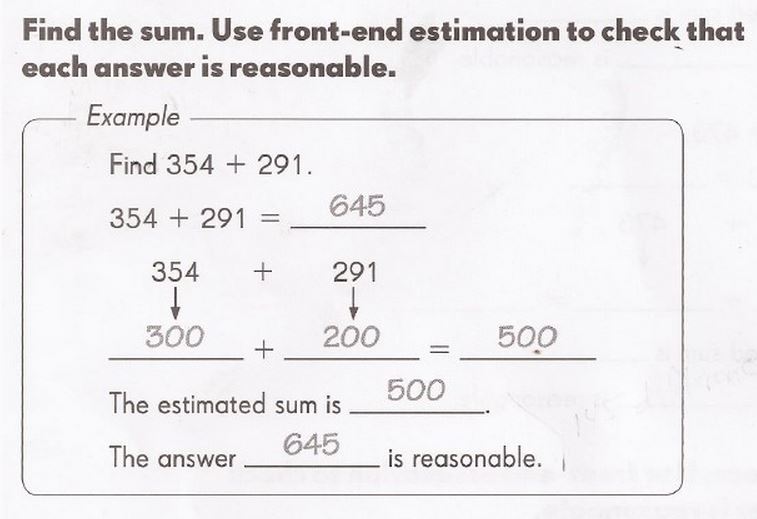
Yea, 2 + 2 used to equal 4. But thanks to uncommon core, it can equal 5 if that will make the children feel better. What I don’t understand though is all the drawing stuff. Like, if there’s a math problem of: 9 + 7 =? why does the student have to draw circles to figure that out? If you never teach them how to compute in their heads they’ll never truly learn. What is a reasonable answer? What’s the purpose of learning about reasonable answers when the only thing that matters in the real world is the right answer? Why go through all of this to get the answer.
Let’s not talk about Look-See reading though. I was tutoring this one kid who brought in a list of words she was to pronounce, except they weren’t real words. They were a conjunction of letters that actually made no word at all, yet these were the “words” the child was supposed to use to learn to read. For example: “bgu” < words like that instead of words like “cat”. I couldn’t believe it. I had never seen anything like it in my life and had I not seen it with my own eyes I wouldn’t believe this post if I was you either.
But I’m not that surprised. The truth is this isn’t something new, but they are finally openly admitting that they’re dumbing kids down. Common Core is not a new phenomenon, but it actually has many names, some of which are: Outcome Based Education or OBE, Schools without Failure, Mastery Learning, etc. All of these same programs, going all the way back to the 20s, is the same system of education that has been used in the U.S. since it’s inception. Interestingly enough, with all these different name changes, Common Core is just the right title for this program…. there is truly nothing uncommon about it.
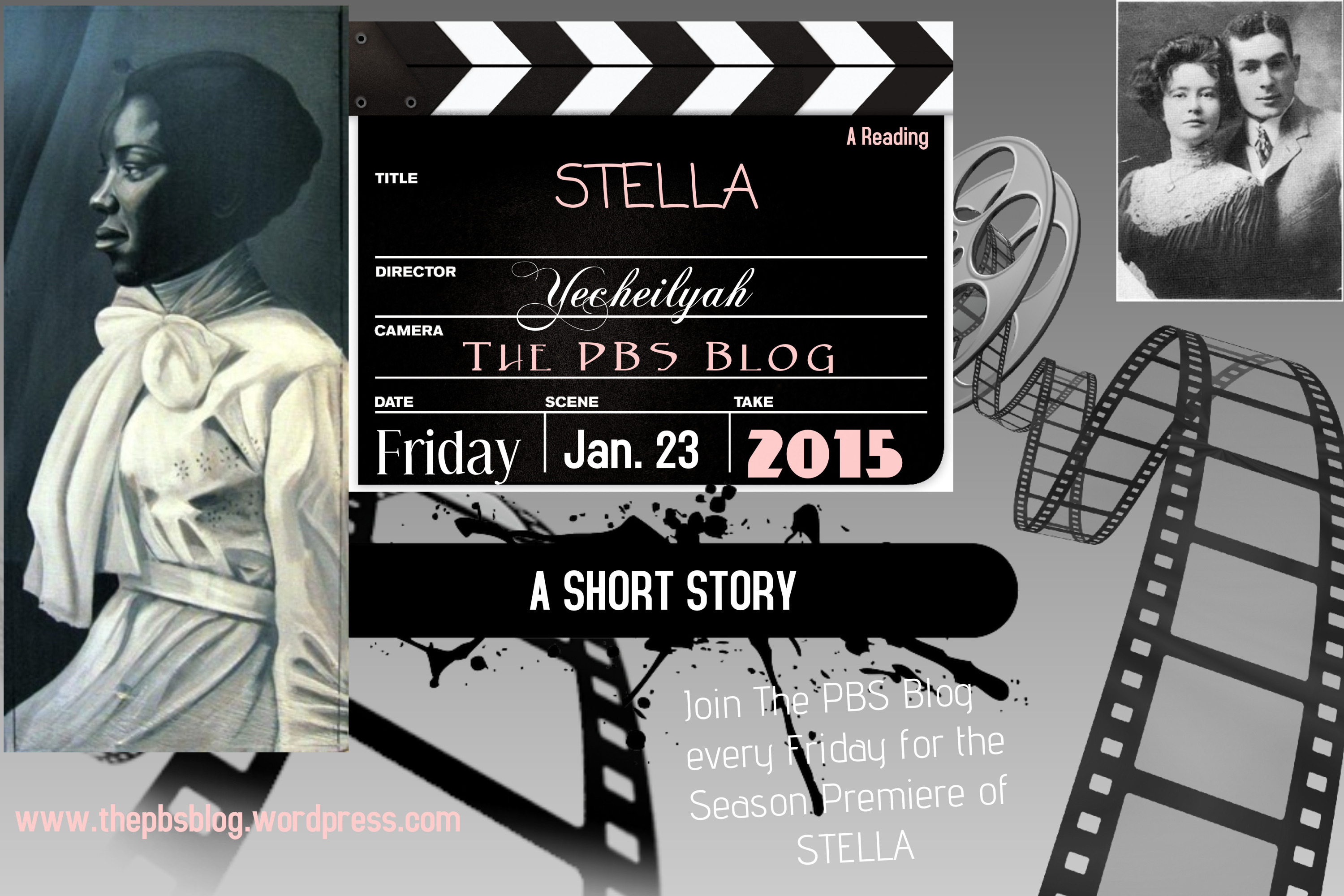
“Raised under the protection of her mother and the field hands, Stella is unaware that she is a slave. Not being accustomed to hard labor, things change when Mama dies and she falls into the cruel hands of Marse Saddler. Years later, when The Louisiana Constitutional Convention of 1864 allegedly abolishes slavery in the state, Stella learns of Saddler’s plan to keep her on the plantation. She then agrees to accompany Saddler’s daughter Miss Carla and her husband John, to The Windy City {Chicago} and learns the hard way the difference between slavery and freedom.”
(This short story will be published to The PBS blog and is free to the public. Anybody who follows The PBS Blog can take part in the reading of the series every Friday beginning January 23, 2015).
*Note: Liking The PBS Facebook Page is not the same as following the blog, you have to actually visit this site and sign up to get the automatic New Post emails. *
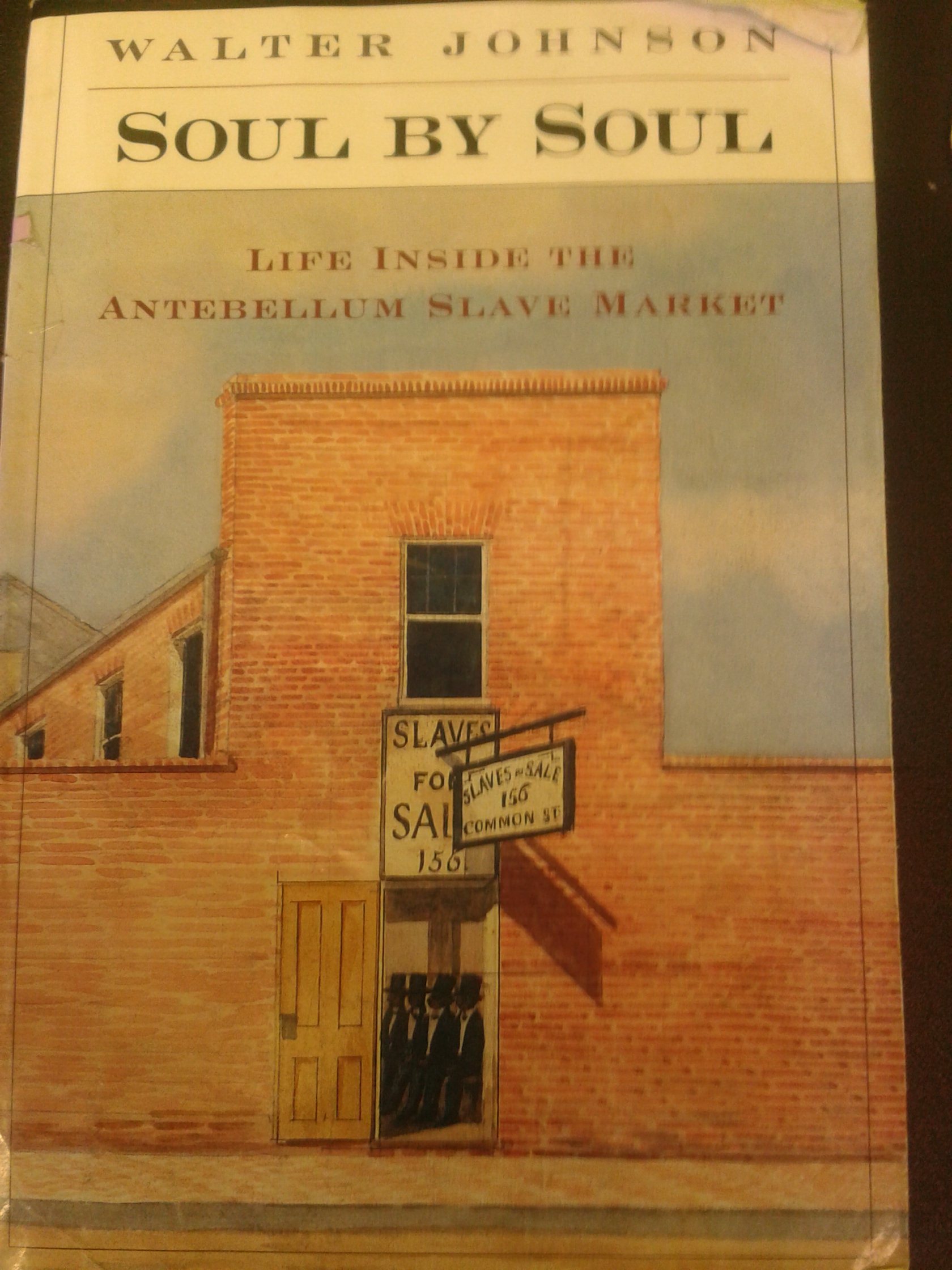
I didn’t exactly intend on doing a book review, recommendation or whatever you wanna call it. But as I sat to contemplate what to write about today I thought back to this book and thought it would be a great recommendation for a nice historical read. After all, it is getting colder out and we all know what that means: winter time is reading time. 🙂
“Soul by Soul takes us inside the New Orleans slave market—the largest in the nation, where 100,000 men, women and children were packaged, priced, and sold. Walter Johnson transforms the statistics of this chilling trade into the human drama of traders, buyers, and slaves, negotiating slaves that would alter the life of each. He reveals not only the brutal economics of trading but the vast surprising interdependence among the actors involved, as well as the centrality of this “peculiar institution” in the lives of slaves and slaveholders alike.”
Let’s stop here.
What intrigued me about this book and what makes it, not necessarily better, but unique in lots of ways to other slavery books, is its 360 approach to the subject of the Trans-Atlantic Slave Trade. What do I mean 360 approach? I don’t think any of us would have such a complete understanding of chattel slavery on that face to face level like our ancestors, but I do think there are ways to understand it better. Many scholars, and lovers of Black History, limit themselves merely to that of slave narratives and African American Anthologies, though eye-opening, does not provide all of the details of the organization of this system. Many of us watch Roots and Amistad and thus conclude a valid understanding of this institution. I think taking the time to see this world through the eyes of a slave trader may in fact give some new and exciting insights into the system itself. If you are so “Pan African” that you cannot read literature that was written by a European, your perspective will always be limited. If you think the “white man” is the devil (foolishness), then your perspective will always be limited. Balance, as I speak about often, is key even in research.
So, getting back (*stepping off of soap box*), that’s what I like about this book. It’s not just about the history of this system through the eyes of the slave, but also through the eyes of the slave trader. When you understand it from that perspective it becomes a lot clearer as to what the slave represented. Not being of African American descent, the author takes on a business perspective when speaking about the trade in Louisiana. So instead of only focusing on the slaves experiences as a slave, the author actually takes us into the life of the trader. For it is he, the slave trader, who provides an overwhelming source of facts that justifies just how non-human the descendants of the ancient Israelites (Blacks) in fact were because you get to see how much of a business this was. His point of view, his mentality, his thought process as he went about his day to day business gives great insight into the market. I may caution you, when I use the term “non-human”, I do not mean people who were considered animals, I mean people who were considered less than animals, products: a bag of flour, a can of beans, a washing machine for example, is more equivalent to what the slaves were considered to be than an animal. For a slave slept on the floor, while the slave masters dog slept in his bed.
1 “And Yah shall bring you back to Egypt in ships, by a way of which I said to you, ‘You are never to see it again.’ And there you shall be sold to your enemies as male and female slaves, but no one to buy.”- Deut. 28:68
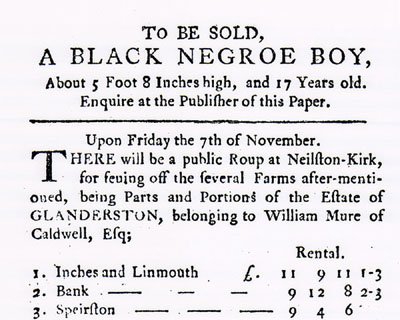
Since its inception, from the carrying of its cargo of Human’s, to its process of buy and sell, Blacks were less than human, and even given as gifts and pets to white children. Whenever a slave ship sailed into an American port, its arrival was announced by an advertisement in the local newspaper like a new product. Professional slave dealers would then come down to the docks to select their fresh batch of field hands and house nigga’s, who they would then sell to the slave masters on the street and on auction blocks. From birth, both slave masters and slaves themselves, came to view the slaves bodies as property, “their growth tacked against their value; outside the market as well as inside it, they were taught to see themselves as commodities.” Often slave owners would refuse an offer from other slave owners with the hope that in time their investment would increase, and an $800 slave would soon be worth $1,000. Big feet for example may indicate to a slave owner that his slave may be strong and stout one day, while his “skin and bones” appearance may bring down a hopeful price. “Through care and discipline, slaves’ bodies were physically incorporated with their owners’ standards of measure”. If a slave approached the auction block with two fingers cut off, both of which in a desperate attempt to escape chains, choosing rather to go about with eight fingers than to become a slave, the true manner of her disablement would have to be concealed for the time being. Her attempted escape would have to transform itself into one in which a doctor cut off one of her fingers due to illness and she, in an attempt to comply with the doctor’s orders, cut off the other one. In such case the slave is seen as so stupid and imitative that she would mutilate herself because it’s what the doctor did. For the auctioneer, this increased his chances of selling this slave. (This also shows how sometimes the slaves had the upper hand. At the same time, they could purposely lower their own prices and stop themselves from being sold to a particular master just by presenting themselves as disembodied or disobedient).
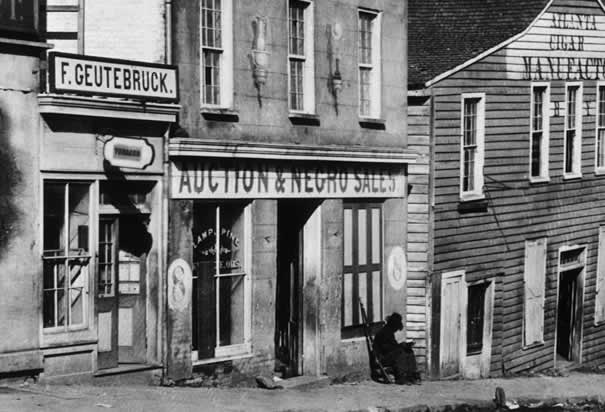
Andrew Joseph Russell (American, 1830-1902) Slave Pen, Alexandria, Virginia, 1863 Albumen silver print from glass negative
Because slavery itself was not some minute part of American society, there is no American business, whether small or great, that did not benefit from the institution of chattel slavery. After all, all slaves were the fabric that held the economic system together. But even at this point, in 2014, when this is a common fact, it’s still amazing how deeply this country’s economic system reflects upon the system of slavery. When I go to the mall and I stare dreamily into the windows of a cute outfit or browse by to catch a window peek at some fly shoes, my mind does not hearken back to slavery. However, even window shopping has its origin in this institution. It was during a time where slaves were not always sold on auction blocks and street corners, but they were also sold inside of what traders called Slave Pens. Traders would transport them to the designated slave pen, dress them up in the finest suits, grease them down so that they appear as clean cut as possible, and position them by the windows of the pens so that buyers could window shop. Slaves were, then, the first Mannequin.
Slaves were also used as collateral in credit transactions, and considered better than land, for these can be easily transported and traded for ready cash, similar to an Ace Cash Express, Currency Exchange, or Payday Loan. The business of the slave trade was constructed on the idea that “the bodies of human people had a measurable monetary value, whether they were actually sold or not”. Enslaved people meant so much to the economy of the United States that within the institution itself was the breaking of laws they themselves created to keep order. If we delve into the mind of a slave trader for just a moment, who builds his enterprise on the idea that Blacks can be bought and sold, within his company he has to also deal with men who cheat his very system by stealing slaves or selling dead ones. A slave trader who never traded before and has an illiterate understanding of the business may find himself being sold a dead slave and cheated out of his money. What slavery meant to the owner and the family of the owner is as simple as imagining a little white girl about the age of 8 during this time, staring out the window into a dim and rainy sky, she daydreams, “if only I had a slave who could stand out there, open his mouth and catch all the raindrops.” And if she’s lucky, her 9th birthday may grant her a special gift, called Toby.
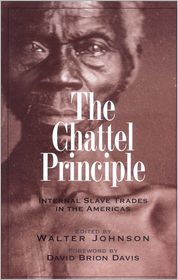
Soul by Soul: Life Inside the Antebellum Slave Market
Available on Amazon.com now for as low as $7.75, search it and check it out.







 The PBS Blog