

Tag: novels
Beyond The Colored Line – Part 2 of Book 2
 ****************************
Disclaimer: The following post is excerpted from a book written by Yecheilyah Ysrayl and is property of Yecheilyah Ysrayl. No part of this publication may be reproduced, or stolen. Permission is only given to re-blog, social media sharing for promotional purposes and the case of brief quotations embodied in the critical articles and reviews and pages where permission is specifically granted by Yecheilyah Ysrayl. (For permission write to: ahouseofpoetry@gmail.com) Copyright © 2015, All Rights Reserved.
*************************************
Part 2
_________________________________________________
1928
5 Years Later
Age 12
*******************************
Daddy run off to who knows where on account of his life. Some racist whites had seen him and Mama together and threatened to lynch him if found. So he run off to nobody knows where. The community gossip is that his brothers know, but they won’t say. We weren’t alone though, Mama and me. Seems like Mama filled the hole where Papa should have been with our whole family. The house always stayed filled with guests: my people, and peoples of my people. My granddaddy was a colored man, and so owned this land. My name sake, his mama Stella, was a slave and was given this house by her owner. As the story goes, after Grandma died, I was born. Since Mama was the closest, she named me after her. We got stories going all the way back to her girlhood, and stories of Grandpa Solomon too. I heard the stories mostly on Sundays, since all the family come down. My aunts would gather around the table with my mom and they laugh and cry most of the night about they girlhood. I don’t have any uncles except from my daddy side, but they don’t come around much cause of my aunties. Uncle Roy say Mama acts different around her sisters and that they too uppity, especially Aunt Sara. She’s the youngest of my aunties and the most spoiled. She’s the one who convinced Mama to send me to a private school to escape all the worry, and boy were my uncles hot! They said we were breaking the law – that a Negro had no business in a white school. But Aunt Sara said I had all the right in the world since I was technically half white after all.
“But does the school know she colored?” one of my uncles would ask.
“That’s none of the school’s business now is it?” Aunt Sara would say and they’d just go back and forth until Mama break it up.
That’s the story of my life: Was I white? Was I Negro? Race wars always concerned these two groups of people, and there ain’t seemed to be much place for a mulatto. Speaking of race, not all talks were good talks. Not all round table discussions were filled with laughter and jolly drinking. I used to sit up until my eyes were red with fatigue to hear Mama and my uncles talk about all the killings that were taking place around the country, and especially in the south.
“That’s what I say,” said the voice of Uncle Keith. “Up there in Minnesota.”
“That close?” Mama gasped. I could just picture her now with her hand over her chest. Mama had a thing for the dramatics.
“Yea that close. What, woman you living under a rock? They just had one on over in DeKalb last month,” said Uncle Roy.
“It’s a crying out loud shame,” continued Keith. “Say they dragged the boys from the cell and a whole mob of ‘em lynched ‘em. Say it was bout least a thousand of ‘em.”
“My my,” said Aunt Rebecca.
“Well you know what I say, if you can’t beat ‘em, join ‘em,” said Sara.
“Where did you come from?” said Deborah, annoyed.
“From betwee–,“ began Sara.
“Please, spare us,” said Mama.
“I didn’t ask the question,” said Aunt Sara, smacking her lips.
But there were times, of course, I witnessed for myself evidence of the events rocking the country. One day, Mama and I went to visit Cousin Mary in Texas, and drove the truck up to a general store. We walked in, and being only about five at the time, I picked up a post card hanging on one of the shelves. It was of a man hanging on a tree that supported an iron chain that lifted him above fire. The man didn’t seem to have much of a body left. His fingers were cut off, his ears and his body burned to a crisp. On the back of the postcard read:
“This is the barbeque we had last night. My picture is to the left with a cross over it. Your son, Joe.”
I learned later the picture was of a 17-year old mentally ill boy named Johnny, who had agreed to having raped a white woman. And everybody at home still talked of the Cairo circus of 1909, the public lynching that took place here in Illinois. I asked Mama once if we could go to a circus like that, and she told me to never ask her of such things again. I couldn’t understand what had Mama so upset till I found out what kind of circus it was. It was events such as this that caused my aunts not to want much to do with the land or the house. They say it’s too close to slavery. So when Granddaddy died, Mama took on the burden of keeping it, and keeping it full too. I got kinfolk I see every weekend, and some I never met before. And some I don’t think are kinfolk at all; they just come for a hot meal and a bed. But that was alright with Mama. She didn’t care none about being taken advantage of. She just wanted to be around people she could feed and clothe. Her heart was just full of love like that. Sometimes they spend the night, but other times they just come and go. Sundays were the biggest days. Mama cook a feast of a dinner: fried chicken, yams, macaroni and cheese, fried brim and crappy, greens, pies, cakes. You name it, it was on our table. Everything except pork. Mama say Granddaddy was always talking about his Hebrew Heritage and teaching them about it too. Said he didn’t like being called Negro and African, and they weren’t allowed to call him that either, or themselves for that matter. Granddaddy say with his face all proud, “There are two things in the world I would never be: Christian and a Hog Head.”
Then he’ll light his pipe and go on rocking in his favorite chair, like the conversation was supposed to be over, even though folk mouths hung open. That’s another reason my uncles say we uppity:
“Everybody due for a lil fat back every now and again. Everybody Negro that is,” Uncle Roy would say, cutting his eyes over at Mama.
“Good thing we ain’t Negro then huh?” Deborah would shoot back.
Deborah, named after my great great great grandmother, fit right into her biblical name and was the most like Daddy, taking her Israelite Heritage seriously and practicing the laws of the Old and New Testament. Most of the family thought she was crazy. That didn’t stop her from speaking her mind though. But good eating and conversation was just the half of it. There was music, dancing, drinking, smoking, and gambling too. Cousin Walter would bring over some of his hooch and the grown-ups forget all about the children, which was just the way we liked it. I had a lot of cousins and friends, but no one was as close to me as Thomas. Tommy’s mom died off when he was just a baby, and his dad come across the road looking for direction one day when me and Mama come walking along. Come to find out they didn’t really need direction so much as a bed to sleep in. Mama let them stay with us for a while until Luther, Tommy’s dad, got off his feet. But that didn’t stop them from coming around. Luther and Mama became good friends and Tommy was over every weekend. My aunties used to think there was something going on between Mama and Luther till she shut up the gossip with news of Luther’s lady friend, who also became friends with Mama. So naturally Tommy and I were good friends, but we were also enemies and partners in crime. Tommy was dark as charcoal with big lips, nappy hair, and a wide nose. And I envied him for being so obviously Negro. It’s the same reason I liked him too.
“How you get so dark?”
“I don’t know,” said Tommy. “Just lucky I guess.”
“Lucky? What you got to be so proud for? Ain’t no girls liking no skin that dark.”
“Shut up white girl,” said Tommy.
“Shut up big head,” I say.
That’s usually when he punches me in the arm and I’d have to hunt the rest of him throughout the house.
We weren’t much of a church going family; party going is more like it. Except when Mama wanted to show off a new dress or hat, when somebody died or needed saving, and on Holidays and such. Folk would come from all over southern Illinois to hang out with “Cousin Judy”, as Mama was often called. Sunday’s sure were fun, my second favorite day of the week.
Saturdays was my favorite day of the week. It was the day for shopping and that only meant one thing: Chicago. First, Mama would wake me to the smell of biscuits or pancakes. This was to keep me full enough throughout the day so she didn’t have to worry none about food buying. Then, I was commanded to bathe down real good, paint my arms and legs with oil, untie my curls from the night previous, and we’d both put on our Sunday’s best and be two of the most beautiful women you’d ever seen. I was a young lady now and shopping was the best thing to a young lady next to boys (but you couldn’t like them in public). You could like shopping though. I loved going from store to store in search of the finest. Skipping along while Mama scanned the insides of magazines for stuff she only saw on TV. We would squeeze our way through crowds of people, just bumping into each other. They weren’t dressed as professional today. Instead, they wore their weekend wear, bought ice cream for their children and went inside movie theatres, and so did Mama and I. We could buy candy or jewelry, or perhaps a new hat or two with the money Mama made from the laundry. We drank from water fountains without label, and spent money without prejudice. Everything was so easy on Saturdays, life itself was better. We had us a good time on Saturdays because on Saturday, no one knew we were colored.
– Stella M.
**********************************************
What did you think about the second part? I hope it held your interest and you’re ready for chapter three. I am leaving you with a surprise part from Book 1 below. For the prologue to Book #1, see last week’s post. If you like this story so far, would you do me the favor of sharing this post with your friends who might enjoy reading it also? Re-blog or share on your social networks. Thanks a lot! And I’ll see you next week for Part 3.
Self-Publishing Book Descriptions
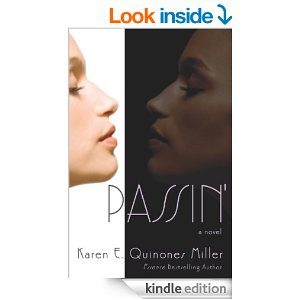
Passin‘ is not a self-published book, but I would like to use it as an example. I actually borrowed it from the library and intend on returning it soon. Not that it wasn’t a good read, but I wouldn’t purchase it. Here’s why: I enjoy a book that makes my mind play it out in my head like a movie. I want to see the characters develop as real breathing people, I want them to have real issues and problems, and I want to see the story in action, and let’s just say this movie’s a little slow. Not that this book didn’t have all of that, it’s just slow getting to the point I perceived to be the main event (the meeting of the man). So it’s an alright read; I wouldn’t give it 5 stars, though. More like 3 stars. I really am enjoying the read, it’s just that I’m a bit disappointed by what the book description told me and how the story is unfolding (yea, still reading it, I’ll probably move up to 4 stars by the time it’s over, who knows lol). The story is an interesting tale of a young woman passing in the new millennium (2007). Racial passing occurs when a person classified as a member of one racial group is also accepted as a member of a different racial group by passing as that different racial group. (Did I confuse anyone?) So a black woman pretending to be white is an example of passing to keep it simple. But what made me check out the book is this excerpt from the description:
“When a successful African-American businessman thinks Shanika is the white woman of his dreams, her world spins out of control. With her future on the line, she’ll have to go beyond skin-deep to discover what’s really worth reaching for–and the person she truly wants to be.”
I know I know, how woman of me, but who doesn’t love, love? Anywho, it’s not a bad story so far, but what’s disappointing is my assumption that the meat of the story would surround this event. But halfway through the book, there’s no mention of this African American man. The story is pretty much just about Shanika’s, I’m sorry Nicole’s, struggles with “racial” (I don’t really believe in a race but for the sake of clarity) identity and her inner conflictions about living a lie (and her hatred of self…my 2 cents). In fact, we don’t meet Mr. Right until close to the end of the book. I’m probably just being picky, but I really did borrow the book to specifically see how this relationship was going to evolve. I’m not finished with the book so I may be doing a part 2 of this same post about how I judged a book by its descriptive cover, but we’ll cross that bridge when we get there.
The point is that this inspired a post about how important book descriptions are to books, especially self-published books. We have talked about book cover designs, a little bit of editing, and even common sense reasons to self-publish. Now let us talk about the content of the book, starting with the description.
When a reader decides to buy a book, one of the first things that strike them is the book cover, the sample, and of course they’ve got to read those reviews. But another important element that plays a role in the buying experience is the book synopsis, summary, or description. If you think this is something I pulled out of my hat, just visit your nearest library or bookstore. You’ll see people scrolling through aisles and turning over the backs of books. Some of them flip through the pages and may even begin to read the first paragraph just to see if it grabs their attention.
The good thing is that if the description of your book has little to nothing to do with what the book is actually about, no one will know until after they buy the book and after they read it. The bad thing is that if they give a bad review, they’ll be your first and only customer. The truth is that book descriptions play a big role in book buying, and as I always say, it’s a good idea to produce your books the way you buy them. If a striking book cover makes you go for the bait then you should also have a book cover design that is also striking. Likewise, if reading the synopsis of a book is what makes you buy, then as an author you want to make sure your book description is also just as fantastic. “If your book description doesn’t grab them and make them feel ‘the need – the need to read’ then you’ve just lost a customer….” (Mark Edwards).
(For the record, Karen’s description was pretty good and achieved the desired effect, it made me pick it up and check it out which means I would have probably picked it up and bought it, so that’s not my complaint since I’m sure her book sells are doing better than mine. My complaint is just about the accuracy of her description of what’s actually in the book, but I digress).
A good summary will give readers just enough information about your book to get them excited about reading the whole thing. For this reason, it should be clear, brief, and simply breathtaking.
Below are 7 ways to improve on book descriptions by Mark Edwards as featured on the blog Catherine Caffeinated
(there are actually 11 but these are the ones I thought worth excerpting far as importance is concerned, 7 is a perfect number after all…isn’t it?):
1. Make it clear. Your potential reader needs to know with a quick skim read what kind of book this is, what it’s about and what the story is. The story is the most important element here – if you’ve written an erotic romance that will give Fifty Shades a run for its money, make sure people know that. Though remember, it’s the relationship at the heart of Fifty Shades that made it such a smash. You need to get that across in a very lucid way.
2. The first line is the most important. If you don’t get the first line right, they won’t read on (this applies to the book itself too). Your first line needs to encapsulate the whole book. It needs to draw people in, hit them where it feels good and make the hairs on the back of their neck stand up. Not easy – but worth spending time on.
3. Don’t be boring. The moment your potential reader feels bored, they’re gone, clicking on to the next book on the also-bought bar. Every line has to be compelling and move the story on. Just like your book, in fact.
4. Make them laugh, cry, cower. It’s all about emotions. How is your book going to make people feel? Is it heartbreaking or hilarious? Chilling or hotter than Angelina Jolie sunbathing in Death Valley? Again, look at the words most used in your genre. They are clichés for a reason. They work.
5. Use testimonials. If you have some quotes from well-known writers or experts, use them. These are generally best in a block rather than scattered through the text. If you’ve got a quote from your Auntie Maureen, you might as well use that too. Just don’t reference her as your auntie.
6. Make your characters live. As well as the story, it’s vital to get a good sense of your characters across – and, most importantly, their big problem. What terrible dilemma do they have to resolve? What personal demon do they need to conquer? You need characters and problems people will identify with – but they have to be big problems. Having a broken dishwasher just isn’t exciting enough.
7. Make the reader desperate to know what happens. You have to end your description with a cliffhanger. You need to lead the reader to the point where they are so curious that, were they a cat, it would kill them. Make sure you don’t give too much away. Be intriguing. Make them feel like Anastasia when Christian tells her he’s about to show her something really new and exciting. Make them go ‘Holy crap!’”
The Best and Worst of Times
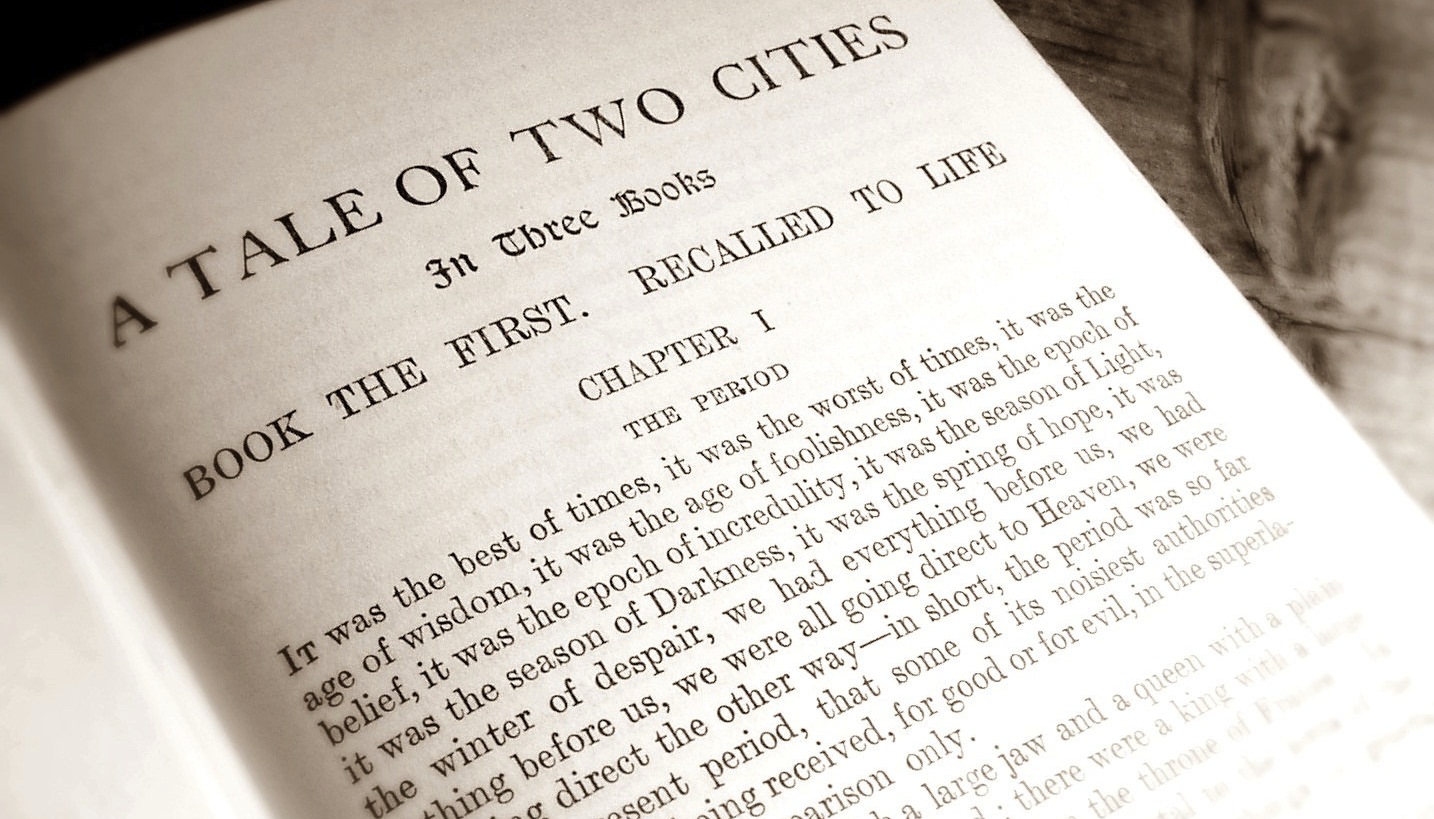
“It was the best of times, it was the worst of times, it was the age of wisdom, it was the age of foolishness, it was the epoch of belief, it was the epoch of incredulity, it was the season for Light, it was the season for Darkness, it was the spring of hope, it was the winter of despair, we had everything before us, we had nothing before us…”
I am sure Charles Dickens’s “A Tale of Two Cities” didn’t have my thoughts in mind when it opened with this paragraph. Yet, as I read it, I cannot help but to stop and to ponder how it closely describes today. Not today as it is personal to the individual. Not today as in going to work, going to school or other miscellaneous routines to which we have sculpted our clocks to mimic. Not even today in the sense of any hint of parallel or extreme depth. I’m not even talking about the constructs of the book at all really. I’m not a fan of Dickens, but I love imagery in writing. I love being able to read a description that is so tasteful that it can be compared to something completely outside of its own identity and still make sense. This excerpt is that description, while the synopsis of the book has nothing to do with it. I’m sure any writer can take something insignificant and make use of it in other situations. And as such this small piece stood out to me, making me stop to ponder and to meditate on its relation to today. Not even the entire paragraph captured me but this part did, separating itself as a reminiscence of the world surrounding us. A mixture of light and darkness. Of hope and despair. Of truth and deception. Of redemption and condemnation. It is a wonderful time but a terrible time at the same time. Indeed, we are somewhere between movement and stillness.
The Invisible Woman
November, 2001
The dust particles flying from the duster floated slowly off the boxes, strangely reminiscent of the worst terrorist attack to occur in the United States. Each set seemed to align themselves parallel to the others, and tilting dangerously off the Brooklyn Brownstone as if to mock her. The coming of dawn splashed its hint of shadow off the dull cardboard, distorting its true image. They were taller it seemed, and almost menacing. The woman looked on sadly, fastening its flaps, tucking them one inside the other. It was safer this way, but still she took a step, and rested her bottom against the course concrete as if finding a foundation strong enough to hold all of her baggage. That’s when she saw it, its pages flapping quickly in the wind almost blowing the book off the steps; she caught it, along with a strange feeling with how her arm had extended itself in rescue. It had only been two months and she was intrigued to find that Ellison had read her mind. No, she did not believe he was an invisible man; she instead was prepared to insist he was a mind reader. The only other explanation available to explain his knowledge of her departed state was if he was talented enough to take her heart and contextualize it in ways that even she could not. Of course now she understood that Ralph Ellison was neither mind reader nor genius. Like a mirror that penetrates the souls of the invisible, she could easily see herself in a similar situation. The neighborhood had gone on as it always had; the people continued in their routine way and it made her angry, how could they? “To the mall!” she says. “To the workplace!” he shouts. They move about, “To the city!” they shout. But there is no city, and there is no mall. There is no workplace, there is only darkness. What’s everybody so happy about? Nothing was the same and she was utterly alone. Why was that so hard for them to understand? She has tried to make them aware that their journeys were in vain, but she has been pushed over. She has been blocked. She has been ignored. They have walked right through her, and for a split second they’ve become one with her, but only to come out on the other end and still they cannot see. None ever noticing that she has just pushed against them, and burned the top of their flesh with her light. Cymbalta wasn’t helping much either. But that’s because she is invisible. It is she they cannot see.
Candy wrappers and Anthrax warned Newspaper clippings loiters the sidewalk in front of her, and the screaming engines of cars sped by in a desperate attempt to escape the moment for the one at the corner, shattering the woman’s thoughts and calling her attention away from the book. And as the brisk November wind rattled angrily against her blouse, she disregarded the unopened mail laying idly on top the brown boxes. Inside, the small sirens going off seemed to rattle the cordless resting comfortably on the sofa like tiny explosions.
“Yea?”
She was sick with exhaustion with the interviews and radio shows, and journalist thirsty phone calls that promised never to bring her husband back, just a hot story. It’s not like they were really talking to someone anyway. She had never been around a group of people who enjoyed talking to themselves so much.
“I don’t think so”, she annoyingly spoke into the receiver before hanging up at the sound of a trucks engine; the movers were here. “Great”, she said exasperated, managing to make it out the door. She was going to be late…again.
You Must Write It
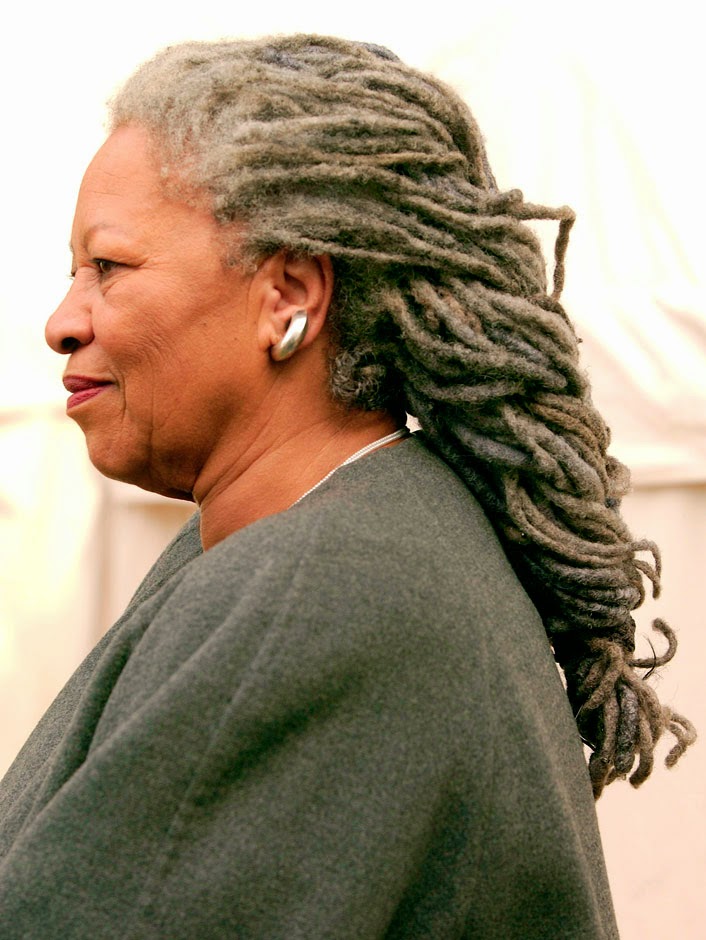
“If there’s a book that you want to read, but it hasn’t been written yet, then you must write it.”- Toni Morrison
Welcome!
Welcome!
To the Pearls Before Swine Bloggers website! Please see the “About” tab to get a better understanding of what this book (and blog) is all about.
In the meantime, I need you (and your friends) to SUBSCRIBE to this blog for a chance to win prizes, play games, gain further insight into the book by asking questions, post your reviews, and for a chance to read sneak peek excerpts into Season #2.
Writing is something that brings me joy, and that makes me happy regardless of the gain. But in addition to writing, I also like to have a lot of fun, and to inspire as many brothers and sisters as I can through innovation and creativity. In short, I really enjoy doing what I love, and what I LOVE is to engage my readers in games, activities, and contest whenever I come out with a book (for those that remember The Aftermath blog).
That said, I would really appreciate you SUBSCRIBING to this blog to get a better understanding of what this screenplay series is all about and for the opportunity to engage in open discussions concerning the gift of writing itself.
This blog will feature literature, articles, quotes, and poetry periodically. But for exclusive access to poetry please visit my sister blog @ ahouseofpoetry.wordpress.com.
Alrighty then people that’s it for now. In the meantime however, why don’t you walk on over to our new FACEBOOK PAGE, like it, and then come on back here and take a look around? We’ve worked hard to ensure a comfortable place here while you wait on more post, so take a look around and enjoy yourselves, we’ll be back shortly!
 The PBS Blog