Yecheilyah’s Book Reviews – Southern Horror Stories by Lisa W. Tetting

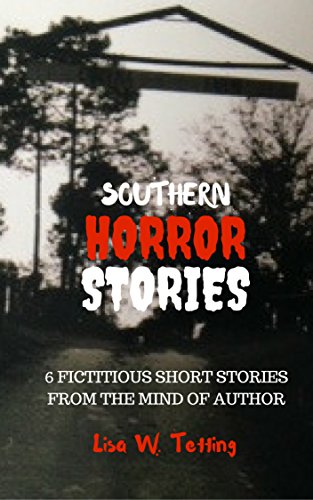
Title: Southern Horror Stories

Author: Lisa W. Tetting

Print Length: 68 pages

Publication Date: October 26, 2017

ASIN: B076WW49KN

Almost 400 years ago, the first enslaved Blacks arrived in the Virginia colony at Point Comfort on the James River. Spanish records suggest that the enslaved were captured in the Portuguese colony of Angola. At first, the number of enslaved taken was small. In about 1650, however, with the development of plantations on the newly colonized Caribbean Islands and American mainland, the trade grew.

But what if things had turned out differently? What if the enslaved could exact immediate vengeance on their oppressors and gain their freedom with help from their ancestors? That is essentially the theme connecting six short stories in Lisa W. Tetting’s short story collection, Southern Horror Stories.

Each story begins with a tragedy familiar to that of chattel slavery. In Barren Plantation, Pansy witnesses the death of her baby girl immediately after giving birth. Afterward, the woman bathes in the child’s blood, soaking up the energy, and begins to hear chanting in a foreign language. She becomes possessed and starts chanting along with the voices until an entity arrives to give her word on her next move. She is to save the other children on the plantation in a most chilling way.

In “Caleb’s Stitches,” children of the enslaved go missing. In “Mind of Hope,” a girl witnesses her mother’s beating death and her father’s shooting. Her ancestors instruct her on how to get revenge for her parents. And in Underground Hell Road, the slaves have overtaken the plantation in an intelligent plan to create a portal to freedom. All the stories involve the enslaved receiving guidance from their ancestors on how to strike back at those who hurt them.

I loved most the connection between the stories. Linking Barren Plantation and Caleb’s Stitches was brilliant and so was the connection between Slave Island and Pirates of Slavery. I would also love to see Underground Hell Road fleshed out into a full-length novel with elements of the other stories possibly weaved in. I love the idea of the plantation being a way for the slaves to transition their way to freedom and would love to read a full novel on the concept.

Southern Horror Stories is an easy and entertaining read that is not recommended for children (though with the author’s talent, I can easily see a PG version of the stories to help youth understand about the horrors of slavery). Lisa’s writing style is lovely and easy to understand.

Plot Movement / Strength: 4/5

Entertainment Factor: 5/5

Characterization: 4/5

Authenticity / Believable: 4/5

Thought Provoking: 5/5

Overall: 4/5

Southern Horror Stories is Available Now on Amazon
Connect with Lisa Online!

Blog

Website

Twitter

IG

Goodreads

The First “African” Slaves Arrive in Jamestown, Virginia, Aug. 20, 1619

Screenshot_2017-08-19-20-44-48-1
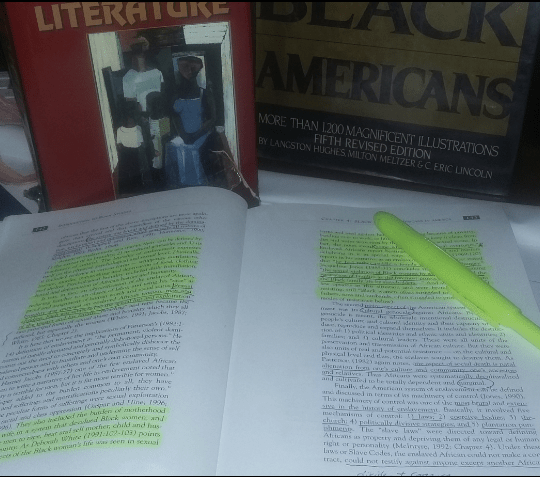
My messy desk…studying my history

“A Dutch ship carrying 20 Africans arrived in Jamestown, Virginia, on Aug. 20, 1619, a voyage that would mark the beginning of slavery in the American colonies. The number of slaves continued to grow between the 17th and 18th centuries, as slave labor was used to help fuel the growing tobacco and cotton industries in the southern states. At the end of the Civil War in 1865, some 4 million slaves were set free. However, racial inequalities and violence toward newly freed slaves would persist in the country throughout the 1860s and 1870s.”

– Source, BET National News

“The arrival of the “20 and odd” African captives aboard a Dutch “man of war” ship on this day (August 20) in the year 1619 historically marks the early planting of the seeds of the American slave trade.” (Benjamin Banneker also challenged Slavery In Letter On This Day In 1791)

Source, Ioned Chandler, Newsone

“Today in 1619, it was reported by English tobacco farmer John Rolfe, husband of famed Indian princess Pocahontas, that “20 and odd” African slaves arrived at the Jamestown Settlement in British colonial North America aboard a Dutch man-of-war ship. The ship had originated in the Portuguese colonies of present-day Angola, which had been established in the 1500s. Angola was a heavy exporter of slaves to Brazil and the Spanish colonies.”

Source, Infobox

“Newly established English colonies in North America create a demand for laborers in the New World. At first, captured Africans are brought to the colonies as indentured servants. Once their term (3-7 years) is completed, indentured servants are allowed to live free, own land, and have indentured servants of their own. However, this system does not last long; indentured servitude gives way to lifetime slavery for Africans as the British colonies grow and the need for a permanent, inexpensive labor force increases”

Source, This Far by faith

“The Black Atlantic explores the truly global experiences that created the African American people. Beginning a full century before the first documented “20-and-odd” slaves arrived at Jamestown, Virginia, the episode portrays the earliest Africans, both slave and free, who arrived on the North American shores. Soon afterwards, the Trans-Atlantic slave trade would become a vast empire connecting three continents. Through stories of individuals caught in its web, like a 10-year-old girl named Priscilla who was transported from Sierra Leone to South Carolina in the mid-18th century, we trace the emergence of plantation slavery in the American South. The late 18th century saw a global explosion of freedom movements, and The Black Atlantic examines what that Era of Revolutions—American, French and Haitian—would mean for African Americans, and for slavery in America.”

Source, The Black Atlantic, episode one of The African Americans: Many Rivers to Cross with Henry Louis Gates, Jr., 

“In terms of African involvement, it is true also that Africans enslaved others before the coming and demands of the European. But three other facts must be added to this statement to give a holistic picture.. African enslavement was in no way like European enslavement. It was servitude which usually occurred “through conquest, capture in war or punishment for a crime” (Davidson, 1968:181). It could also resemble serfdom as in Medieval Europe where peasants were tied to the land and a lord for protection. They often lived as members of the family, married their masters daughters and rose to political and economic prominence and did not face the brutality and dehumanization which defined European chattel slavery.”

Source, Introduction to Black Studies, Ch. 4: The Holocaust of Enslavement

Black History Fun Fact Friday – Free Frank

black-history

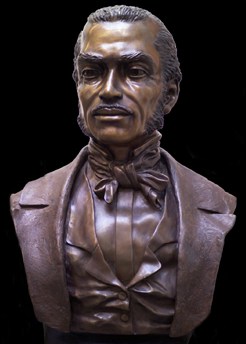
This is a man who was free in more ways than one. Welcome back to Black History Fun Fact Friday. Meet, Free Frank.

The first African American to found his own town in the United States, Free Frank was born Frank McWorter on September 7, 1777 as a slave in South Carolina to a West African woman named Juda. Having been abducted and then enslaved it is commonly assumed that his father was the Scots-Irish master George McWhorter. In any event, Frank was leased by McWhorter to neighbors as a laborer. This experience (despite the situation) lead to him gaining entrepreneurial skills and businesses skills being around those he was leased to.

free-frank

He later married an African American woman from another plantation named Lucy.  Together they had four children. The extra money Frank was making gave him the opportunity not only to free himself but also his wife ($800) and oldest son. Earlier in life he’d founded a saltpeter plant which he sold later in exchange for the freedom of Frank Jr. who was a fugitive in Canada. Lucy and Frank also had three more freeborn children.

Free Frank did more than free individuals from slavery but he was also an entrepreneur. Frank and his family moved to Pike County, Illinois in 1830 and in 1836 founded what is now Philadelphia Illinois. Frank built the community on 80 acres of land, but it didn’t stop here. Limited by state statutes, McWorter petitioned the Illinois General Assembly using a legislative loophole, and by 1836 he and his sons owned 600 acres in Hadley Township without restriction. Frank leased plots to both white and black residents.

Although the railroad sliced through Pike County in 1869, there were some parts of the community that remained active until the 1920s and is considered one of the most famous antebellum towns.

The town size grew to approximately 160 people, 29 households, and several craftspeople and merchants by 1865. Frank witnessed that growth until his death in 1854 at the age of 77 years, while Lucy lived to 99 years of age, raising their family until her death in 1870.

Dumbing Down Our Kids

dumb3

“We the people, of the American educational system, in order to possess docile minds, establish low self-esteem, proper enslaved attitudes, regurgitation of unnecessary facts and a lack of self-defense; promote poverty to those unable to service their own welfare and secure the system of stupidity among ourselves to proliferate your posterity, we will sing songs and graduate in time to add riches to the wealthy, do ordain and establish this Educational System of America.”

Signed, The Educated Fool