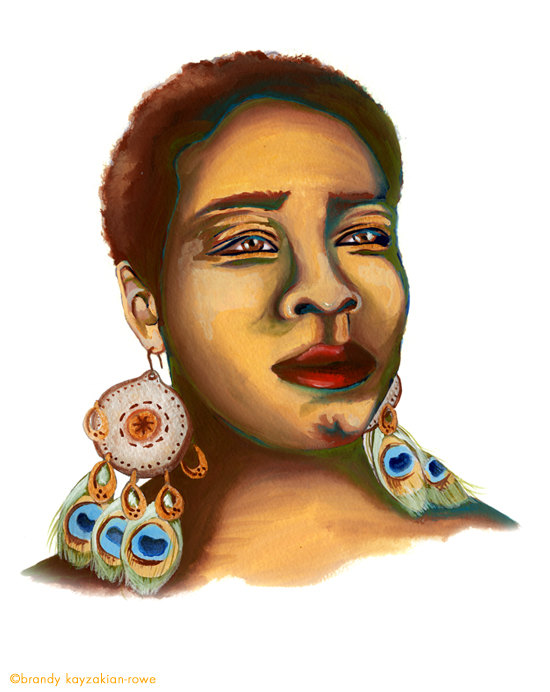
“She let Rebellion Bridge the gap in her heart that her mind won’t let a man fill in”
Tag: blogger
Soul by Soul
I didn’t exactly intend on doing a book review, recommendation or whatever you wanna call it. But as I sat to contemplate what to write about today I thought back to this book and thought it would be a great recommendation for a nice historical read. After all, it is getting colder out and we all know what that means: winter time is reading time. 🙂
“Soul by Soul takes us inside the New Orleans slave market—the largest in the nation, where 100,000 men, women and children were packaged, priced, and sold. Walter Johnson transforms the statistics of this chilling trade into the human drama of traders, buyers, and slaves, negotiating slaves that would alter the life of each. He reveals not only the brutal economics of trading but the vast surprising interdependence among the actors involved, as well as the centrality of this “peculiar institution” in the lives of slaves and slaveholders alike.”
Let’s stop here.
What intrigued me about this book and what makes it, not necessarily better, but unique in lots of ways to other slavery books, is its 360 approach to the subject of the Trans-Atlantic Slave Trade. What do I mean 360 approach? I don’t think any of us would have such a complete understanding of chattel slavery on that face to face level like our ancestors, but I do think there are ways to understand it better. Many scholars, and lovers of Black History, limit themselves merely to that of slave narratives and African American Anthologies, though eye-opening, does not provide all of the details of the organization of this system. Many of us watch Roots and Amistad and thus conclude a valid understanding of this institution. I think taking the time to see this world through the eyes of a slave trader may in fact give some new and exciting insights into the system itself. If you are so “Pan African” that you cannot read literature that was written by a European, your perspective will always be limited. If you think the “white man” is the devil (foolishness), then your perspective will always be limited. Balance, as I speak about often, is key even in research.
So, getting back (*stepping off of soap box*), that’s what I like about this book. It’s not just about the history of this system through the eyes of the slave, but also through the eyes of the slave trader. When you understand it from that perspective it becomes a lot clearer as to what the slave represented. Not being of African American descent, the author takes on a business perspective when speaking about the trade in Louisiana. So instead of only focusing on the slaves experiences as a slave, the author actually takes us into the life of the trader. For it is he, the slave trader, who provides an overwhelming source of facts that justifies just how non-human the descendants of the ancient Israelites (Blacks) in fact were because you get to see how much of a business this was. His point of view, his mentality, his thought process as he went about his day to day business gives great insight into the market. I may caution you, when I use the term “non-human”, I do not mean people who were considered animals, I mean people who were considered less than animals, products: a bag of flour, a can of beans, a washing machine for example, is more equivalent to what the slaves were considered to be than an animal. For a slave slept on the floor, while the slave masters dog slept in his bed.
1 “And Yah shall bring you back to Egypt in ships, by a way of which I said to you, ‘You are never to see it again.’ And there you shall be sold to your enemies as male and female slaves, but no one to buy.”- Deut. 28:68
Since its inception, from the carrying of its cargo of Human’s, to its process of buy and sell, Blacks were less than human, and even given as gifts and pets to white children. Whenever a slave ship sailed into an American port, its arrival was announced by an advertisement in the local newspaper like a new product. Professional slave dealers would then come down to the docks to select their fresh batch of field hands and house nigga’s, who they would then sell to the slave masters on the street and on auction blocks. From birth, both slave masters and slaves themselves, came to view the slaves bodies as property, “their growth tacked against their value; outside the market as well as inside it, they were taught to see themselves as commodities.” Often slave owners would refuse an offer from other slave owners with the hope that in time their investment would increase, and an $800 slave would soon be worth $1,000. Big feet for example may indicate to a slave owner that his slave may be strong and stout one day, while his “skin and bones” appearance may bring down a hopeful price. “Through care and discipline, slaves’ bodies were physically incorporated with their owners’ standards of measure”. If a slave approached the auction block with two fingers cut off, both of which in a desperate attempt to escape chains, choosing rather to go about with eight fingers than to become a slave, the true manner of her disablement would have to be concealed for the time being. Her attempted escape would have to transform itself into one in which a doctor cut off one of her fingers due to illness and she, in an attempt to comply with the doctor’s orders, cut off the other one. In such case the slave is seen as so stupid and imitative that she would mutilate herself because it’s what the doctor did. For the auctioneer, this increased his chances of selling this slave. (This also shows how sometimes the slaves had the upper hand. At the same time, they could purposely lower their own prices and stop themselves from being sold to a particular master just by presenting themselves as disembodied or disobedient).

Because slavery itself was not some minute part of American society, there is no American business, whether small or great, that did not benefit from the institution of chattel slavery. After all, all slaves were the fabric that held the economic system together. But even at this point, in 2014, when this is a common fact, it’s still amazing how deeply this country’s economic system reflects upon the system of slavery. When I go to the mall and I stare dreamily into the windows of a cute outfit or browse by to catch a window peek at some fly shoes, my mind does not hearken back to slavery. However, even window shopping has its origin in this institution. It was during a time where slaves were not always sold on auction blocks and street corners, but they were also sold inside of what traders called Slave Pens. Traders would transport them to the designated slave pen, dress them up in the finest suits, grease them down so that they appear as clean cut as possible, and position them by the windows of the pens so that buyers could window shop. Slaves were, then, the first Mannequin.
Slaves were also used as collateral in credit transactions, and considered better than land, for these can be easily transported and traded for ready cash, similar to an Ace Cash Express, Currency Exchange, or Payday Loan. The business of the slave trade was constructed on the idea that “the bodies of human people had a measurable monetary value, whether they were actually sold or not”. Enslaved people meant so much to the economy of the United States that within the institution itself was the breaking of laws they themselves created to keep order. If we delve into the mind of a slave trader for just a moment, who builds his enterprise on the idea that Blacks can be bought and sold, within his company he has to also deal with men who cheat his very system by stealing slaves or selling dead ones. A slave trader who never traded before and has an illiterate understanding of the business may find himself being sold a dead slave and cheated out of his money. What slavery meant to the owner and the family of the owner is as simple as imagining a little white girl about the age of 8 during this time, staring out the window into a dim and rainy sky, she daydreams, “if only I had a slave who could stand out there, open his mouth and catch all the raindrops.” And if she’s lucky, her 9th birthday may grant her a special gift, called Toby.
Soul by Soul: Life Inside the Antebellum Slave Market
Available on Amazon.com now for as low as $7.75, search it and check it out.
Pre-Conceived Notions
the first time we met, I stood knee deep in lust
took advantage of your smile
never thought I would fall for it
too young to realize I’ve just never met a man before
dancing in your eyes
willing
to gamble my last just for a chance to see you again
your words,
so elegant that I thought deception wrapped its arms around my waist
tried
to convince me our love was nothing but child play
planned
to hold nothing in my heart but a piece of your gaze
and now
just maybe
you’ll let me kiss the anger from your voice
babysit your thoughts in my lap
let you feed on the wisdom of my breast
and we’ll dance neck up in peace & tranquility
7 Keys to Peace
• Speak with Integrity; say only what you mean
• Accept Simplicity, never make things any more challenging than it really is
• Seek to improve on at least one thing in your personal life everyday without acknowledging the challenges that come with it
• Never focus more on the faults of others than those of your own; you’re always your own worse enemy
• Never exhaust your energy on problems you can’t solve
• Don’t use your words to speak against yourself, or against others
• Don’t take things so personally; nothing others do or say is a reflection of you
Peace can only exist if you want it to. When we are immune to the thoughts and actions of others, we won’t be the victims of endless suffering.
People Will Forget You
Guest Feature Poets
One of the features we have added to The PBS Blog’s list of reading material is our Guest Feature section. In this section, we strive to deliver quality poems or articles, usually written by an author outside of PBS, for your enjoyment. We would like to cover so many different topics but we can’t do it without your help. After all, who better to get your message out there but you? So, we are opening up to allow some of you to Submit a Poem of any subject to The PBS Blog to be posted in our Guest Feature section. This is not the same as a Guest blogger because you will not have access to this site. You will not be given a key in which to go into the inner rooms at this time, but I will be posting your poem to The PBS Blog for you. I will not edit your work and a link back to your blog (if you have one) will accompany your poem (further details are below). I have to make it clear that I do not have millions of followers. You will not be exposed to a grand audience and you will not be compensated for services rendered. However, you will get the opportunity to have your work exposed to some new faces and may even be able to make some new connections. I am also aware that there are many new bloggers in the blogosphere (like some of you just started yesterday, congrats! btw). If you are among one of these, this exercise is for you. I have seen an enormous increase in the follower or traffic or however you track your blog’s success, to someone’s blog when they were either featured or re blogged by someone else. That’s because in this vast techno-world, it’s not always easy to see everyone. Sure, your blog can be great, but it can also get lost in the clutter. So the re-blogs help to greatly generate attention to who you are. The Guest Blogs and Features do the same. So, for those of you who are still looking to do some connections and increase traffic to your blog, this is for you. One of the many purposes for this blog is inspiration. I enjoy inspiring and motivating people by way of poetry. I love being able to write about things that others can relate to, so being able to relate to others will be a key factor in the Guest Features I choose.
I will begin posting the Guest Features as soon as you can get them to me, but I will also like to space them out so if you don’t see your poem posted immediately it’ll probably post the next day (Poems are posted in the order to which they are received). Below is a basic guideline to follow:
– Only Poetry submissions are accepted at this time, Guest Featured Articles from Bloggers is coming soon.
– Poems can cover a variety of topics, except for these no no’s: 1. I will not accept material with an obscene use of profanity (guest or no guest, this blog is after all a reflection of me and that’s just not the kind of language I use) 2. religious agendas (this is not to say you can’t submit a poem with spiritualism, but please don’t send in a poem about how Jesus is Lord and that we all need to accept him as our personal lord and savior) 3. and poems that are just outright disrespectful (no example needed)
The idea is to try to relate to people across the board so try to be relatable. You have your own blog in which to push your own agendas.
– I will NEVER edit your post. All submissions will be posted AS IS.
– I will NEVER take credit for your work. All submissions include your first and last name along with any other credentials you’d like to send, such as: blog address, copyright information, etc. If you only send in your first and last name, this is what will accompany your post
– Limited promotions only. Please don’t send us a book about how great your business or talent is. Keep in mind that you are a guest in someone else’s home.
– If you’re familiar with The PBS Blog you know we like to use big colorful images to compliment each post. While images are not always used, if you would like to use them, please include them attached to your e-mail. I will arrange them in your post so that it looks nice (see posts for an idea). If no picture is attached to your e-mail we will not add pictures.
– If you’re a blogger, we encourage you to respond to the corresponding comments following your Guest Feature. If you are not a blogger, The PBS Blog will kindly thank those who comment on your poem. We can add an e-mail address or your personal website too if you include it in the e-mail. It’s up to you.
– You will know if I am interested in posting your poem simply because I will respond to your e-mail. Please give at least 1-2 business days before slamming your computer into the wall because you have not heard back from me. Bloggers actually have lives outside of cyber space, so give it a day or two.
That’s it, see ya soon 🙂
Please e-mail entries to: ahouseofpoetry@gmail.com