The Amazon Best Seller Badge is something to be proud of, no matter how small you believe your success is. However, I wouldn’t put it on my book covers.
Adding “Amazon Best Seller” or “#1 Amazon Best Seller” to your book cover is not a good idea because the title, unfortunately, holds little weight among industry insiders and quickly goes away when the book drops in rank.
I would also not add the badge if my book became a bestseller when it was free. This means people downloaded the book, I didn’t sell copies which could make the “Best Seller,” misleading.
If your book is picked up by a traditional publisher and reaches best seller status, they will create a new cover with the label.
“Being an Amazon Best Seller is a credential that could mean you sold 10 books in a sub sub sub category.”
Luvvie Ajayi Jones
What Luvvie means is you can get a bestselling ribbon or become a bestseller in a random, obscure category by selling just a few books.
This doesn’t mean the author shouldn’t be proud of themselves.
This means the author should wait until they see themselves on the list consistently (holding steady for days, weeks, or months at a time) or if they are in the top categories of all books on Amazon, not just one random category.
There are many bestseller lists, and being named on any of them is an accomplishment worth celebrating.
Unfortunately, Amazon Best Seller holds the least weight, and people are so inundated by it that it no longer means much. Adding it to your book cover looks cool, but it will not help you sell more books, nor will it help you look like an accomplished author.
It could, in some ways, make you look like an amateur.
In fact, unless you are among more recognized lists, such as USA Today or the New York Times, I would leave bestseller off the cover altogether.
However, this is only my opinion so if you do it, I advise:
Award Winning Author (if you’ve won any notable literary awards)
Best Selling author of (Your Best Selling Title) but leave the Amazon part out
When I decided to write the history book, I was intentional about taking people on that journey with me.
When I visited museums, I shared video clips, took pictures of historical landmarks, and shared screenshots of my writing progress.
I wrote about where I was in my writing, such as when the book was going in for editing, and continued to educate on topics I would cover in the book. I vividly recall how excited I was to finish the first draft and celebrate with my team.
I’d built up so much awareness and excitement about this book that people were searching for it on Amazon before it came out. This was part of the reason I put it on preorder so early. It was in demand. It is what the people wanted.
As a result of taking people on the journey with me, I’ve had more fun writing this book than I’ve had writing any other book. I’ve also sold more preorders for this book since The Stella Trilogy through my website. The level of trust that people who didn’t know me from Adam put in ordering directly from me was humbling.
But it didn’t come cheap.
People trusted me because I put in the work. The work is not done. Far from it, but it has started. With this foundation, I look forward to continuing to build with the people who believe in me and the mission of continuing the work necessary to restore the forgotten heritage to the forgotten people.
What I hope new authors will take from this is the power of taking people on the journey with you and having fun with the process of writing the book.
The basic answer is that owning the ISBN to your book makes you the publisher, which is the purpose of self-publishing for most authors who pursue the route.
Let’s look deeper into the ISBN and why I strongly suggest self-published authors own theirs. I’ve written on this before, but this time I am including advice from Sue Collier, the coauthor of The Complete Guide to Self-Publishing, 5th Edition. She has been working with authors and small presses for nearly two decades, providing writing, editing, production, and promotions work for hundreds of book projects.
This how serious I want you paying attention to this right now, lol. | Photo by cottonbro studio.
The ISBN is the set of numbers at the back of your book on the bar code that captures information regarding the book’s publisher, title, language, edition, and version. It is necessary for anyone publishing a book they want to sell.
The number is issued to the publisher, so in traditional publishing, the author does not worry about this, as their publisher will be the book’s publisher of record.
In self-publishing, you can choose a free ISBN assigned by your print-on-demand company, such as Amazon, Lulu, or Ingram Spark. In this case, the company will appear as the publisher of record. For instance, a free Amazon ISBN means Amazon is the publisher, and so on.
Buying an ISBN or getting the freebie is totally up to the author. In fact, a freebie might be ideal for beginning authors on budgets who just want to see their books in print.
Still, the ISBN holds much more weight than these print-on-demand services have let on.
“The POD publisher services companies will try to tell you that it doesn’t matter whether you use their assigned ISBN or obtain your own. But it does because using their ISBN will ensure they are listed as the publisher of record in BIP (Books in Print) as well as with any distributor. Consequently, all orders and inquiries will go to them.”
– Sue Collier
A free ISBN is fine if you only want to publish a book and maybe sell a few copies here and there. However, if you see yourself one day selling your book in bulk to corporations, bookstores, and libraries as the publisher of record, you want to purchase an ISBN so that it belongs to you. Collier explains why:
“Let’s take a few hypothetical situations: Suppose a corporation is interested in purchasing one thousand copies of your book, contacts the Internet publisher (whoever you published through), but you never hear about it. What if a distributor wants to take it on but finds the economics aren’t feasible? Tough luck.”
Sue Collier
Owners of Upscale Foot Spa in Atlanta
Corporations do business with businesses, not individuals. Owning your ISBN with your own imprint positions you as a serious business. If Lulu is your publisher, Lulu is who corporations will contact for the kind of transaction in Collier’s example.
Why?
Because any organization with specific orders or inquiries regarding your book will approach the publisher of record. If you own your ISBN, that would be you/your company. If you do not own your ISBN, that would be whoever you published with.
“In addition, if a POD publishing services company is listed on your book as the publisher, your book may immediately be disregarded by bookstores and potential reviewers as a poorly done vanity press project.”
Sue Collier
Amazon does not vet the manuscripts uploaded to its publishing platform. Consequently, it is flooded with mediocrely written books with poorly designed covers, poor editing, and even worse formatting. When corporations see a book published by Amazon, they automatically throw it into this slush pile.
“Does it really matter? Yes, it does. Here’s the bottom line: If you don’t purchase your own ISBN under your own publishing company name, then you are not the publisher. If you use a publishing services company and let them assign your book an ISBN, they are the publisher, not you.”
Sue Collier
Grabbing the free ISBN from Amazon or whoever you publish with is not a sin. It’s okay. You will still be able to sell your books and do well.
It is, however, very limiting for self-published authors who want to sell their books beyond Amazon’s virtual shelves, have their own imprints, or be the publisher of record for their work so they can sell in bulk and process large orders through businesses and corporations.
As I learn more about self-publishing and strive to develop and sell better books, I realize how important it is to write a marketable book. As I speak with other writers who want to self-publish, I realize how important this stage is to the process.
Traditionally, publishers will turn down a book if it’s not marketable. In self-publishing, there are no gatekeepers to make that decision, as the author has more creative control.
The disadvantage to this, however, is that the self-published book that doesn’t have a market also doesn’t sell well, and the author learns the hard way why publishers tend to be so selective.
“No matter how you decide to publish, your book, ultimately, ends up a product in the marketplace—a product for sale. Yes, your creativity, authenticity and even inspiration make it stand out from the pack. However, often, more than these things, a bestseller is created by your ability to:
write a book that is unique in a category
write a book that is necessary in a market and category
write a book that targets a large potential audience
successfully target and promote to a market.”
Nina Amir, How to Write Marketable Books that Feed the Soul
Publishing is challenging, period. It doesn’t matter if you are self-publishing or publishing traditionally; it’s hard work.
But it’s even harder to push a book that has no market.
One way to discover this is to ask yourself questions.
Are there other books similar to the one I am writing that have been successful?
Years ago, I spoke with an author who said they wanted to write a cookbook that is also a self-help book and a memoir.
It would be difficult to market this kind of book because it has no clear focus, and there is no evidence of someone combining so many different genres in one book and doing it successfully. It is confusing, and there is no audience for it.
We frequently want to produce the most innovative and unique story ever written, which causes us to overthink. The concept that we have a completely original idea that has yet to be realized is a fantasy. It is not real. Each story idea has been tried before. What distinguishes a book is our unique perspective.
It’s YOUR voice that makes it different. It’s YOUR voice that makes it stand out.
Photo by Oladimeji Ajegbile
What’s the competition like?
What are the top five to ten books in your categories that are doing well? This is not to compare yourself to them and feel bad about it. This allows you to determine whether there is a need that you can supply. In what ways is your narrative set-apart? Are there any gaps in the market you can fill? The lack of this type of market analysis is why self-published books fail to sell. There is a lot of inventiveness, but more business principle implementation is needed.
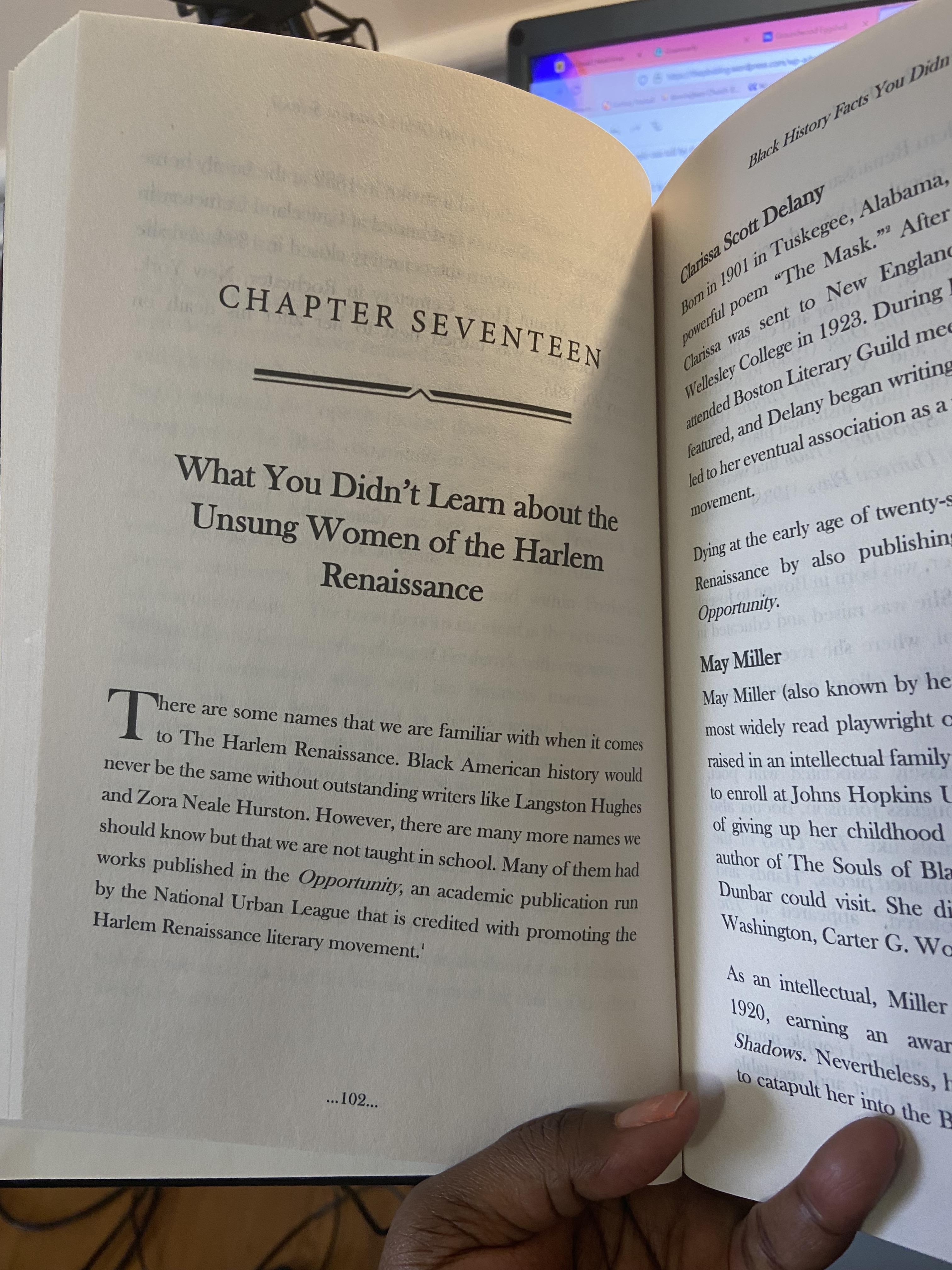
When I chose to publish Black History Facts, I knew I wanted it to be both instructive and straightforward. I didn’t want it to be so nerdy or long that the average individual became bored and stopped reading. I based this on other nonfiction history books that are comparable to mine but that I get bored with over time.
I also considered young readers early in their black history journey. Is there something a young person could read on their way to the longer, more advanced reads? I wouldn’t recommend Black AF History to my thirteen-year-old niece. It is an excellent education, but I know she’s not going to read 432 pages. I took all of this into consideration.
What are people’s reactions when I talk about my book? Do they gasp? Do they want to know more? Do they ask follow-up questions? Are they checking in to see if I’ve finished it yet?
If people keep asking about your book, that’s a clue that it is marketable because of its demand. If your logline or first few sentences intrigue them, you might have yourself a winner.
Another thing you could do is to use your blog as a test platform. Share a few chapters of a story and see what kind of engagement and feedback you get. I’ve written a few books from this blog by doing that, including Black History Facts.
“Publishing is a business, and the business owner needs to be as certain as they can be that the products or services they offer for sale will sell and make money for them. It is no different from a boutique owner deciding to stock one dress style and not another – or a building contractor using the same sub-contractors because they have demonstrated a superior service in the past.”
Nina Amir, How to Write Marketable Books that Feed the Soul
While editing, cover art, and formatting are must-haves for any book, writing a book that people want to read, one that is marketable, is the first step to self-publishing a book that sells.
Self-publishers who use Print-On-Demand may find themselves in a situation where, though they’ve done all they could to produce a superior product, the lack of resources to truly make it shine will still leave the book with that this must have been self-published glow.
That is why the paper you choose for your book is important as it could set the tone for how professional (or cheap) your book looks on the inside.
So let’s talk about it.
White, Cream, or Groundwood Eggshell?
If you have yet to reach the stage where you’ve published your book, bookmark this for later!
In short, you will get to choose your paper when uploading your files to KDP, Ingram, or whichever platform you choose and setting everything up for publishing. This is the paper used to print your book. Your choices will be white, cream, or, if you are using Ingram Spark, Groundwood Eggshell.
I do not recommend white paper except in cases of books with color images. Otherwise, you want to choose cream paper when publishing your book.
It is easier on the eyes than white and makes your book look more professional on the inside.
I always say there is a lot self-publishers can learn from traditionally published books. If you go to your bookshelf and crack open a traditionally published book, the paper is a creamy, off-white. For self-publishers, cream paper is the closest you’ll get to that.
Well, it was the closest.
Enter, my new favorite, Groundwood Eggshell…
I love how this paper makes my book look like it was printed by a publishing house.
It’s not always the case that a Self-Published book looks self-published because of poor editing or cover art.
It can also be because Print-on-Demand does not offer the same industry-level finish to the physical product as traditionally published books by larger publishers.
Some people can tell by the glossy finish and white paper the book has been self-published.
Annd it doesn’t help that Amazon puts a Not for Resale strip on their proof copies. (This was not always the case). At first, I thought it was a nice touch, but now it’s like a big red flag that screams: “I published this book on Amazon!”
That’s why I like Ingram Spark’s quality, specifically their hardcovers and Groundwood Eggshell paper option better than Amazon. The grade of the physical book is excellent and sets the book apart to where it looks like it was printed by a publishing house.
For the record, I am not saying a self-published book is not good unless it is like a traditionally published book.
I am saying that self-publishers do not always have access to the resources to produce a book that can compete with books published by companies with bigger budgets and better materials.
Imagine if Black schools could have received better resources, school houses, books, everything they needed, but remained all-black.
In the same way, imagine if self-publishers and indie authors everywhere had the same access to tools similar to traditional publishing houses but remained independent in the process.
When choosing your paper, I do not recommend you ever choose white except in the special case we discussed. Always go with the cream, and if you are using Ingram, try that Groundwood Eggshell.
If your book is properly edited and formatted, this paper should make your interior pop out.
Social media is not a marketing plan but can be part of a larger strategy because it is a connection tool. It helps you to find, connect with, and nurture your audience.
It is through these connections that you build the like and trust factor. People believe in you and trust you.
When people believe in you, they buy from you.
Here are Some Ways to Use Social Media as Part of Your Larger Strategy:
Share your journey and inspiration.
Why are you writing this book? Who are some of your favorite authors and their books? What inspired you to write in the first place? What’s the story behind your title? What’s your story?
Follow accounts related to your topic.
Who follows you on social media is less important than who YOU follow. These accounts influence you personally and train the algorithm to show you more of the same.
Engaging with accounts that are relatable to your topic, beliefs, morals, values, and passions will do two things.
First, it will make you aware of trending topics in the news related to your area of expertise, which will help you create relatable content.
Discussing current events related to your book’s genre can be a great way to generate interest and attention while using social media to share your thoughts and insights. This helps build your author platform, authority, and attract more readers to your work.
Secondly, following like-minded accounts and engaging with them will introduce you to more people who might enjoy reading your kind of book.
Center Content Around the Topics/Themes of Your Book
Focus your messaging on connections and themes related to your book. Consider how the post might be educational, inspirational/motivational, informative, or entertaining. Even when I post something silly to TikTok, I make sure it aligns with what I am known for.
My rule of thumb is that the post must have something to do with black history/history in general, poetry, or books in some way. As a result of only focusing on these things, I’ve grown my TikTok account from 3K to 26.1K followers, highest view at 1.5 million, and increased subscriptions to my email list.
Leverage Relationships
Collaborate with other writers, authors, and business people who write books similar to yours or offer a service you can benefit from. Can they get you on their podcast? Review your book? Promote it on their pages? Can they repost/share your book cover? Do they know of anyone who can offer a service related to what you do? As the old saying goes, “closed mouths don’t get fed.” A lot of opportunities to gain exposure comes from simply asking.
Social Proof
We live in a world where most people only believe what they see. Share screenshots of book reviews, excerpts, quotes, and recommendations from others to provide social proof that can help boost interest in your book. This proof can also showcase your writing through blog posts, articles, videos, graphics, and more. Give people a taste of what they can expect from the whole meal. People self-publish books every day so show what sets you apart.
I hope this helps get your 2024 book marketing efforts off to a good start!
I didn’t plan on posting today, but there is a debate going on about whether new authors should spend money on self-publishing their books.
In brief, publishing a book you want others to spend their money on will cost some financial investment if you care about your reader’s experience.
There’s a reason authors who sign with conventional publishing houses don’t pay money for editing and cover art. It is because the publisher has a team of experts to take care of that. In exchange, the author sells the rights to their book and receives royalty payments for sales.
As a self-publisher, you are the publisher, which means you are responsible for outsourcing everything you need to ensure a profitable product.
It doesn’t have to be an arm and a leg, but you want to, at minimum, cover editing, a decent cover design, print and digital formatting, and own your ISBN from Bowker so that you are the publisher of record.
Paying someone to publish your book is also not self-publishing.
If you paid someone to publish your book, including editing it and everything else, you have not self-published it. You have paid a vanity press to publish it for you.
I’ve heard too many horror stories from authors who say they will never self-publish again, only to discover they never actually self-published. They signed with a vanity press who uploaded the book to Ingram, and did little more than the author could have done themselves.
But this isn’t about vanity presses. This is about how too many people self-publish because they think it’s easier than all other routes: vanity, hybrid, and traditional. They have not considered if they have the time and resources to self-publish or if it’s even something they are really interested in.
The truth is that not everyone is equipped to be their own publisher, which is fine! First-time authors are not required to self-publish, but if they do, they must recognize the financial risks involved in providing a quality product worth people’s money.
You cannot throw a book together that you claim you didn’t do to make money and then sell this mediocrity to other people.
Cause technically, you can self-publish for $0, but it will look like it.
I blame the existence of this debate on the whole “art” conversation. Authors don’t think they have to invest financially because too many of us consider publishing a book a passion project instead of a business decision.







 The PBS Blog