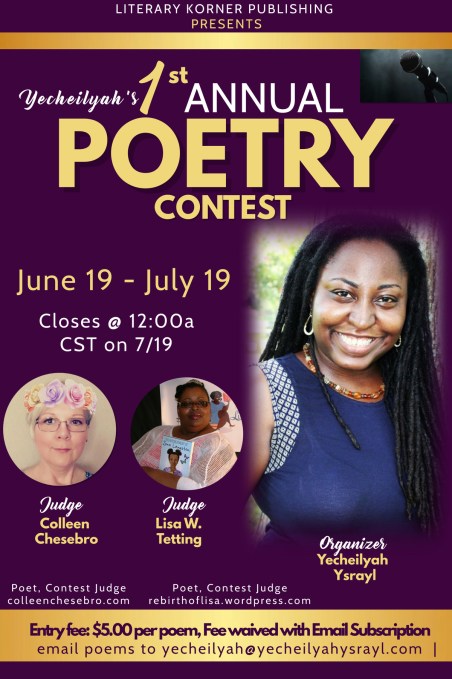
As you all know, I am running my first ever poetry contest in honor of my upcoming release Renaissance: The Nora White Story (Book One) which features poetry and is available now for eBook preorders.
Click Here to order at the low price of $1.99 before the price goes up on July 15th.
This book will also be available in paperback.
You can help further by marking Renaissance as to read on Goodreads. CLICK HERE.
Now, poetry…
I am writing to remind you that this contest will end soon!
First, what is this all about? For those of you who have not already checked into Colleen’s Blog where I made the initial announcement on June 19, 2017, here are the rules:
The Poem
Submit one or two original, unpublished poems to Yecheilyah at yecheilyah ysrayl dot com (yecheilyah@yecheilyahysrayl.com) between now through July 19, 2017. You will have until 12:00 midnight Central Standard Time on 7/19 to get your poems in before closing.
Poems must be your ORIGINAL work and UNPUBLISHED anywhere online.
There is one winner of this contest with up to 2 entries per poet.
Entry Fee:
There is a $5.00 Entry fee. Click HERE to pay the fee.
OR – Entry fees can be waived by signing up for my email list HERE. There is no other way to waive the fee.
If you are already on my email list, please mention this when submitting your poem.
Signing up for my email list represents one entry.
If you are entering more than one poem, you must pay the entry fee for any additional poems.
The Reason for the Fee:
The entry fee is in place to help pay for the prizes.
Current Prizes
At this time, we have one Grand Prize Winner who will receive:
Poem published to The PBS Blog (includes links to your social media, buy links to your books (if any) and promotion.)
Amazon Gift Card
Letters to a Young Poet by Rainer Maria Rilke
*From When I was a Black Girl by Yecheilyah Ysrayl
And Still, I Rise by Maya Angelou
*From When I was a Black Girl is my second collection of poetry. First published in 2012 with a second edition published in 2013, this book became a book of study at The Evergreen State College in Tacoma, Washington for the Fall 2014 semester. Part of an Independent Learning Contract, it remains part of the school’s files to this day. It is my honor to offer a paperback of this collection as a winning prize for this contest. This is an exclusive offer that you will not find on Amazon.
International Shipping
Please note: Winners outside the U.S. will be awarded Kindle downloads of the books listed if someone overseas wins.
Final Thoughts:
The winner will be announced on Monday, August 6, 2017 on both this blog and Colleen’s.
(If you win, you will be notified a couple days before the announcement via email you have won and that an announcement will go out featuring you. This is so that we can collect your information, social links and links to any books you have out if any).
The Grand Prize Winner will have their poetry featured on The PBS Blog with added promotion. The date for this will be revealed to the poet after they have won.
To enter this contest, please send $5.00 to the PayPal of Literary Korner Publishing HERE.
To waive your fee, please sign-up to my email list HERE.(Verification of sign-up will be reviewed before poem is accepted).
Since Renaissance follows the theme of The Harlem Renaissance and Black life in the South, poems should have something to do with these themes and can be as long or as short as you would like. The contest is open to all poets.
I understand not all of you are familiar with this era so I am opening this up a bit. The theme will remain the same but it is not mandatory. Poems of all kinds will be accepted and considered for the win.
Would a focus on the 1920s era and women in general be nice? Yes, but it is not required to win. Consider this open mic!
If you didn’t see the original announcement, CLICK HERE to learn more.
That is all and I look forward to reading your poems!
Wow. Poets check it out! $10,000 Award Poetry contest. Being I’m not even 30, I can’t participate lol. Post Quote: “The award seeks to recognize an American poet who is at least 40 years old and who has never published a book-length collection of poetry.”
The Poetry Foundation recently announced that it will once again be holding its Emily Dickinson First Book Award. Though the contest is held infrequently, it is a wonderful opportunity for poets. It also has several unusual restrictions. The award seeks to recognize an American poet who is at least 40 years old and who has never published a book-length collection of poetry.
The prize for this award is extraordinary. The winner will receive $10,000 as well as the publication and promotion of a book of poetry by Graywolf Press. In addition to having a stellar name, Graywolf Press has published some amazing works including Max Porter’s Grief is the Thing with Feathers, Elizabeth Alexander’s American Sublime, and Kevin Barry’s Dark Lies the Island. (The Press has an extensive list of award winning books.)
In order to be considered, contest entrants must submit a poetry manuscript between…
Put your stones back in your pocket, there’s nothing freaky going on here. Minds out the gutters please. Great, now we can begin.
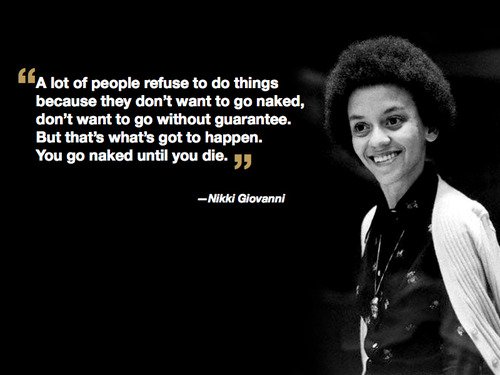
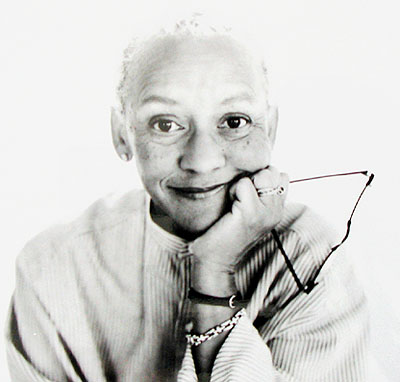
For today’s episode of Writer’s Quote Wednesday, Colleen has asked us to appreciate a few poets. Initially, I was going to share something from Melvin B. Tolson but I have instead chosen this one from Nikki Giovanni for a few reasons:
The reason I went with this quote is because I look for quotes that instantly speak to me. This is when I know I have selected the appropriate one for the week. So anyway, as soon as I read this quote I was put into the mind of poetry. Nakedness reminds me of writing poetry because to write poems is to do so in a way that communicates, that bridges gaps, and that builds and to do this properly, at least in my opinion, is to get naked. By getting naked I just mean to be transparent. It is to strip yourself down to complete humility so that you can share poems that actually speak to people. Sometimes poems seem so extremely personal that it seems like it’s too much, an over share if you will. And while I will never tell you to just tell all your business, I will say that if you enjoy poetry you will hear some pretty personal stuff. It’s the poets’ way of getting naked because the fact of the matter is that transparency speaks. You don’t necessarily have to be all deep in the over intellectualized kind of way no, but poets should have something to say that will help others to cling onto that testimony like a bond. This is why poetry is so emotionally charged because people will always be able to relate to the real and poetry is that real. Good poetry is the whole experience. It’s the taste, the touch, the sight, and the feel.
About the Author:
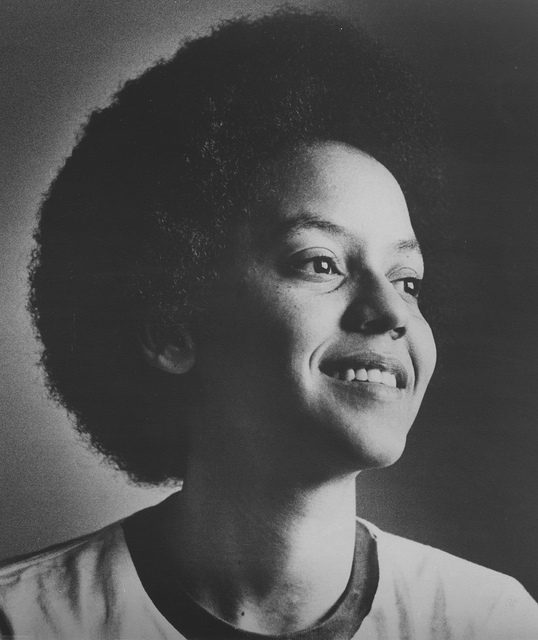
Born Yolande Cornelia on June 7, 1943, Nikki Giovanni is a writer, commentator, activist, and educator. One of the world’s most well-known African American poets, her work includes poetry anthologies, poetry recordings, and nonfiction essays, and covers topics ranging from race and social issues to children’s literature. She has won numerous awards, including the Langston Hughes Medal, the NAACP Image Award, and has been nominated for a Grammy Award for her Nikki Giovanni Poetry Collection. – Wikipedia
****************************************
“Maybe I’ll use poetry to C-Section my insides besides I’ve got to have some kinda gut to stand up here and strip for you”- Yecheilyah
I would like to present first Philips Wheatley because as I embark on publishing my third collection of poetry, I cannot help but wonder what it must have been like for her to be the first. Phillis Wheatley was the first black poet in America to publish a book. She was born on May 8, 1753 in West Africa and brought to New England in 1761, where John Wheatley of Boston purchased her as a gift for his wife. Like many of her time, Phillis was taught to read by her owners and could read and write English by the age of nine.
Many people are under the impression that slaves were of pure ignorance; that they muttered broken English because they were imbecile. This is not truth. Slaves were only ignorant so far as the English language is concerned, at which they could not read, write, and could barely speak. They were strangers in a foreign land and introduced to ways to which neither they nor their fathers had known. Put me in the middle of a street in China and see how dumb I will be.
Nonetheless, Wheatley also became familiar with Latin, Greek, the Bible, and selected classics at an early age. She began writing poetry at thirteen (around the same time I started writing), modeling her work on the English poets of the time, particularly John Milton, Thomas Gray, and Alexander Pope. Her poem “On the Death of the Rev. Mr. George Whitefield” was published as a broadside in cities such as Boston, New York, and Philadelphia and garnered Wheatley national acclaim. This poem was also printed in London.
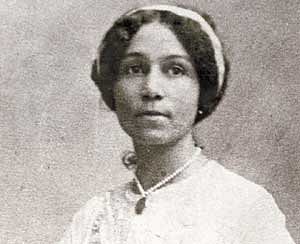
Anne Spencer
1882–1975
Anne has too many names for me to keep up with so we’ll stick with Anne Spencer. Anne was born in Virginia in 1882. She was the daughter of a former slave and her mother enrolled her in school for the first time when she was eleven years old. She graduated seven years later as valedictorian. Known as a “Harlem Renaissance Poet”, Anne was good friends with many Harlem Renaissance writers, including James Weldon Johnson, Langston Hughes, and W.E.B. Du Bois. Spencer’s poetry engages themes of religion, race, and the natural world. Thirty of her poems were published during her lifetime, in such anthologies as The Book of American Negro Poetry (1922) and Caroling Dusk (1927) and was the first African American woman poet to be featured in the Norton Anthology of Modern Poetry (1973).
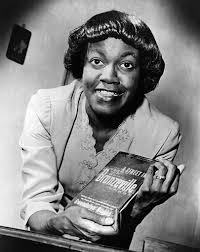
Gwendolyn Brooks
1917–2000
For some reason, whenever I say this woman’s name I think of Books. Seems like it should be Gwendolyn Books, but anyway, Brooks and I do actually have something in common: we are both from Chicago. Brooks was born in Topeka, Kansas, but her family moved to Chicago when she was young. Her father was a janitor who had hoped to become a doctor; her mother was a schoolteacher and trained pianist. They were supportive of their daughter’s passion for reading and writing. Brooks was thirteen (again around the same age I was when I began writing) when her first published poem, “Eventide,” appeared in American Childhood; by the time she was seventeen she was publishing poems frequently in the Chicago Defender, a newspaper serving Chicago’s black population. After such formative experiences as attending junior college and working for the NAACP, she developed her craft in poetry workshops and began writing the poems, focusing on urban blacks, that would be published in her first collection, “A Street in Bronzeville”.
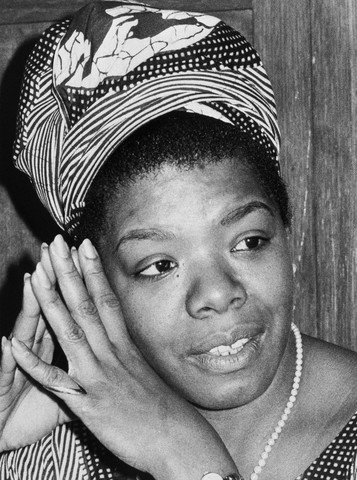
Maya Angelou
1928-2014
I could probably leave this part blank and many of you would still know who this woman was. The poet and award-winning author known for her acclaimed memoir “I Know Why the Caged Bird Sings” and her numerous poetry and essay collections. Born on April 4, 1928, in St. Louis, Missouri, writer and civil rights activist Maya Angelou is known for her 1969 memoir, I Know Why the Caged Bird Sings, which made literary history as the first nonfiction best-seller by an African-American woman. In 1971, Angelou published the Pulitzer Prize-nominated poetry collection “Just Give Me a Cool Drink of Water ‘Fore I Die”. She later wrote the poem “On the Pulse of Morning“—one of her most famous works—which she recited at Bill Clinton’s inauguration in 1993. Angelou received several honors throughout her career, including two NAACP Image Awards in the outstanding literary work (nonfiction) category, in 2005 and 2009. She died two days after my 27th birthday on May 28, 2014.
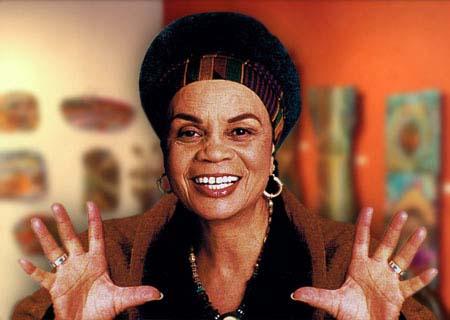
Sonia Sanchez
1934
Sonia is another poet whose name rings with such prominence that I could leave her bio blank too and many of you would still know who she is. Born Wilsonia Benita Driver, on September 9, 1934, in Birmingham, Alabama Sanchez lived with her paternal grandmother and other relatives for several years after her mother died in childbirth a year later. In 1943, she moved to Harlem with her sister to live with their father and his third wife. Sonia married and divorced Albert Sanchez, a Puerto Rican immigrant whose surname she kept.
In the 1950s, Sanchez formed a poets’ group, the Broadside Quartet. Sanchez began teaching in the San Francisco area in 1965 and was a pioneer in developing black studies courses at what is now San Francisco State University, where she was an instructor from 1968 to 1969. Sanchez is the author of more than a dozen books of poetry, including “Morning Haiku” (Beacon Press, 2010); “Shake Loose My Skin: New and Selected Poems” (Beacon Press, 1999); “Does your house have lions?” (Beacon Press, 1995), which was nominated for both the NAACP Image and National Book Critics Circle Award; “Homegirls & Handgrenades” (White Pine Press, 1984), which won an American Book Award from the Before Columbus Foundation. From the 1970s through the ’90s, she wrote poetry, plays and kids’ books. She retired from her Laura Carnell chair in English in 1999.
Nikki Giovanni
1943-
Giovanni’s collections, like the women before her, focused on African American identity. Born Yolanda Cornelia, Nikki Giovanni was born in Knoxville, Tennessee on June 7, 1943 and raised in Cincinnati Ohio, a place I got the chance to visit for our 8th Grade school trip. On July 28, 2000, when I was thirteen years old, I lost my Dad to cancer. In December of 2014, I lost my Aunt to the same disease. In some way or another I can sympathize with Giovanni, who is not only a poet but a Lung Cancer survivor and has contributed an introduction to the anthology Breaking the Silence: Inspirational Stories of Black Cancer Survivors (Hilton Publishing, 2005). Giovanni has been awarded The Langston Hughes award for Distinguished Contributions to Arts and Letters in 1996, as well as more than twenty honorary degrees from national colleges and universities. She has been given keys to more than a dozen cities, including New York, Los Angeles, Dallas, Miami, and New Orleans. She has served as poetry judge for the National Book Awards and was a finalist for a Grammy Award in the category of Spoken Word.
She is currently professor of English and Gloria D. Smith Professor of Black Studies at Virginia Tech, where she has taught since 1987.
Ntozake Shange
1948-
I fell in love with Shange’s poems almost instantly. I really enjoy the raw truth of experience embodied in the words and the style in which they occupy the page is hard to ignore. I like how she allows the words to be written just how they are spoken, how they ignore the “professionalism” of the edit. (though poetry does tend to allow for this kind of freedom).
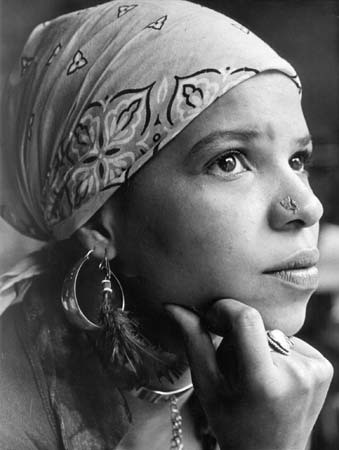
Born Paulette Williams, Ntozake Shange was born into an upper middle-class African-American family. Her father was an Air Force surgeon and her mother a psychiatric social worker. Cultural icons like Dizzie Gillepsie, Miles Davis and W.E.B. DuBois were regular guests in the Williams home. Shange attended Barnard College and UCLA, earning both a bachelors and master degree in American Studies. But Shange is most famous for her play For Colored Girls Who Have Considered Suicide/When the Rainbow Is Enuf (1975) which is how I was introduced to her. A unique blend of poetry, music, dance and drama called a “choreopoem,” it “took the theater world by storm” said Jacqueline Trescott in the Washington Post, as it “became an electrifying Broadway hit and provoked heated exchanges about the relationships between black men and women…Its form—seven women on the stage dramatizing poetry—was a refreshing slap at the traditional, one-two-three-act structures.” The play uses female dancers to dramatize poems that recall encounters with their classmates, lovers, rapists, and abortionists. The women survive abuse and disappointment and come to recognize in each other the promise of a better future.
June Jordan
1936-2002
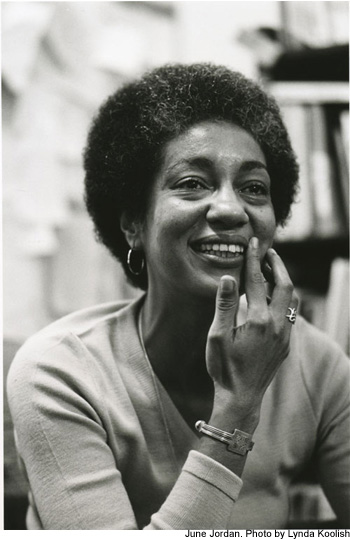
June Jordan is the author of children’s books, plays, a novel, and Poetry for the People: A Blueprint for the Revolution (1995), a guide to writing, teaching and publishing poetry. Her collections of political essays include Affirmative Acts: Political Essays (1998) and Technical Difficulties (1994). Basic Books published her memoir, Soldier: A Poet’s Childhood, in 2000.
Born in New York City on July 9, 1936, June Jordan attended Barnard College. She received the National Association of Black Journalists Award, and fellowships from the Massachusetts Council on the Arts, the National Endowment for the Arts, and the New York Foundation for the Arts.
Her numerous books of poetry include Directed by Desire: The Collected Poems (Copper Canyon Press, 2007), Haruko/Love Poems (1994), Passion (1980), and Things That I Do in the Dark (1977), among many others. She taught at the University of California, Berkeley, where she founded Poetry for the People. June Jordan died of breast cancer on June 14, 2002, in Berkeley, California.
Rita Dove
1952-
Rita Dove is the first African-American woman to be named Poet Laureate of the United States, and only the second to win a Pulitzer Prize for poetry (Thomas and Beulah, 1987), Rita Dove has achieved a great deal in her career. Her multi-layered poems dramatize the stories of individuals both living and dead against the backdrop of larger historical forces (I really like “Reverie in Open Air”). Rita was born in Akron, Ohio on August 28, 1952. Her books of poetry include (but are not limited to) Sonata Mulattica (W. W. Norton, 2009); American Smooth (W. W. Norton, 2004); On the Bus with Rosa Parks (W. W. Norton, 1999), which was named a New York Times Notable Book of the Year and was a finalist for the National Book Critics Circle Award. In addition to poetry, Dove has published a book of short stories, Fifth Sunday (University of Kentucky Press, 1985), the novel Through the Ivory Gate (Pantheon, 1992), essays in The Poet’s World and the verse drama The Darker Face of the Earth (Story Line Press, 1994). She also edited The Best American Poetry 2000 and The Penguin Anthology of Twentieth-Century American Poetry (Penguin, 2011).
Dove is Commonwealth Professor of English at the University of Virginia, where she has been teaching since 1989.
********************************************
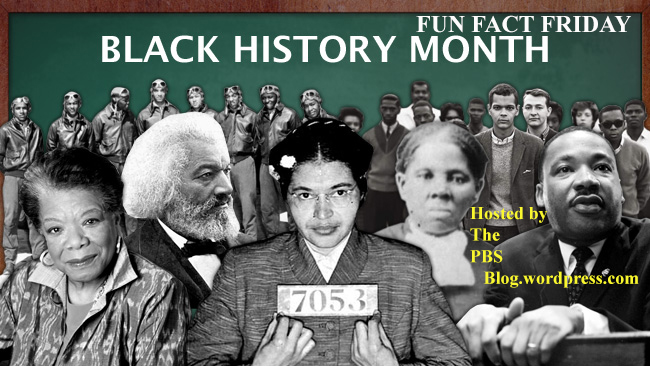
And that’s it for this week’s episode of Black History Fun Facts. Don’t forget to check out last week’s episode, in case you missed it:
I believe life tends to happen in stages. There are certain bridges that we have crossed as stepping stones to get to where we are; a small portion of the bigger picture to lead us on. And even where we are today is of itself a mere foundation for where we will be tomorrow. As I think about this, I am recalled to Lucille’s quote and I am reminded of the compassion and the respect that we should have for one another because you never know what’s beyond those eyes. What they have seen, what they see, or what they have endured. And even our idea of what seems difficult or simple can play a different role in the life of someone else. I may have known homelessness but the man who lost his mother to cancer may experience a struggle that would have broken me, whereas my homelessness could have broken him. Makes me think about what each person has endured and how it has contributed to their strength. No matter how seemingly small it was something that we ourselves probably could not have faced if given the chance to do so.
About the Author:
Lucille Clifton 1936–2010
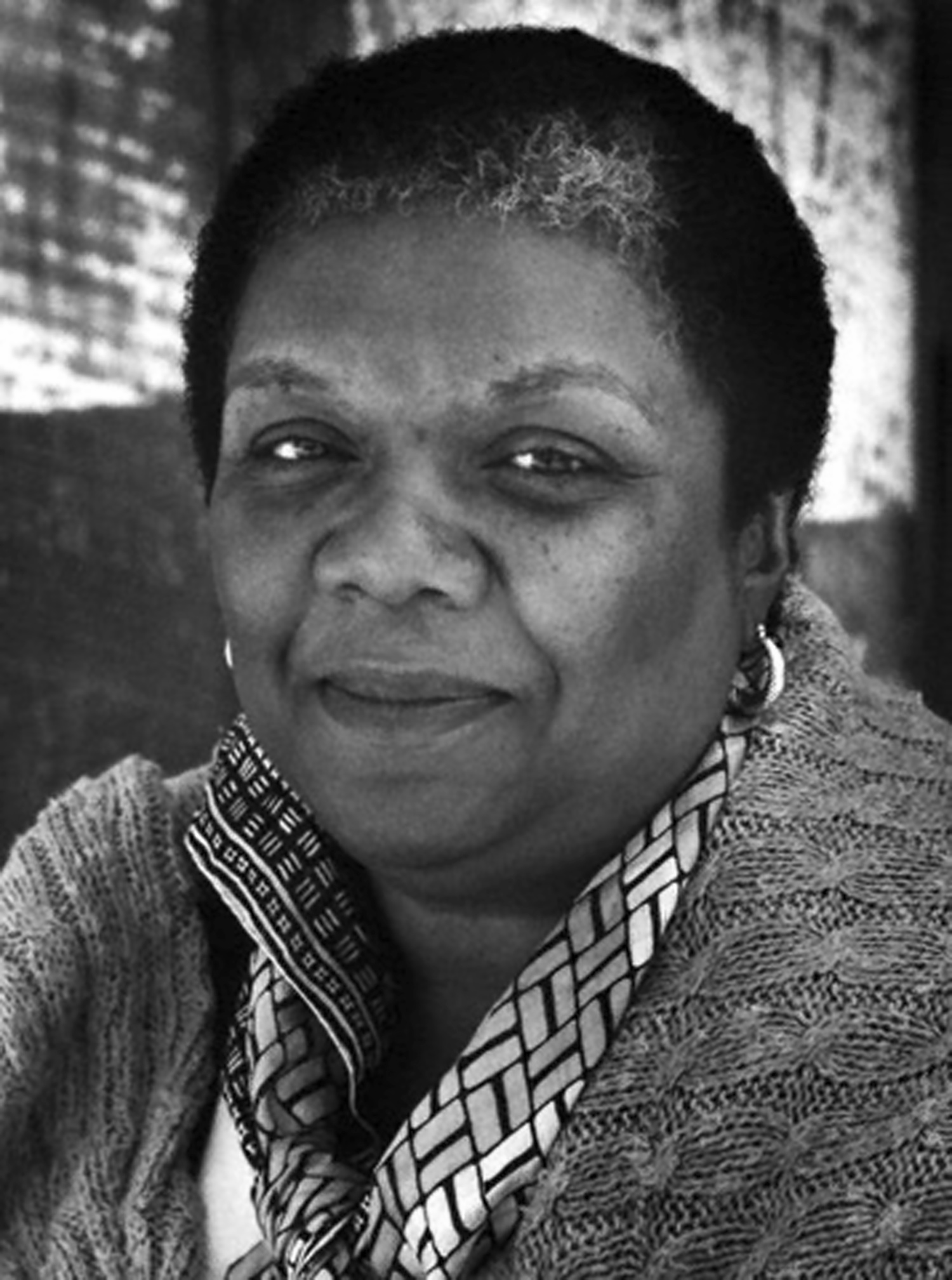
What I noticed right away about Lucille is that she puts the sweet in “short and sweet”. Her poems are often not very long-winded, but they are short, almost speeding like, but not tasteless. Clifton is noted for saying much with few words. In a review of her work, Peggy Rosenthal commented, “The first thing that strikes us about Lucille Clifton’s poetry is what is missing: capitalization, punctuation, long and plentiful lines. We see a poetry so pared down that its spaces take on substance, become a shaping presence as much as the words themselves.”
In an American Poetry Review article about Clifton’s work, Robin Becker commented on Clifton’s lean style: “Clifton’s poetics of understatement—no capitalization, few strong stresses per line, many poems totaling fewer than twenty lines, the sharp rhetorical question—includes the essential only.”
In addition, Lucille Clifton’s work hinges largely on life, emphasizing endurance and strength with a focus particularly on the African American experience and family life. It is another reason I enjoy her poetry. In 2007, Clifton was awarded the Ruth Lilly Poetry Prize in which the judges remarked,
“One always feels the looming humaneness around Lucille Clifton’s poems—it is a moral quality that some poets have and some don’t.”
In addition to the Ruth Lilly prize, Clifton was the first author to have two books of poetry chosen as finalists for the Pulitzer Prize, Good Woman: Poems and a Memoir, 1969-1980 and Next: New Poems (1987).
An additional plus is that Lucille was not just a poet, but she was also an author of children’s books, designed to help them to understand the world and enable an understanding of black heritage specifically.
In books like “All Us Come Cross the Water “(1973), Clifton raises awareness of African-American history and heritage. Her most famous creation, though, was Everett Anderson, an African-American boy living in a big city; an eight title series that won the Coretta Scott King Award. Connecting Clifton’s work as a children’s author to her poetry, Jocelyn K. Moody in the Oxford Companion to African American Literature wrote: “Like her poetry, Clifton’s short fiction extols the human capacity for love, rejuvenation, and transcendence over weakness and malevolence even as it exposes the myth of the American dream.”
And that’s it for this weeks episode of Writers Quote Wednesday!
Be sure to checkout Silver Threading to see how you can join the fun.
As the hours turn into days and days into weeks and weeks into months and months into years, what keeps a writer writing? This is a question posed by writers, bloggers, poets, victims of writer’s block, etc. It is a question begged to be answered by the blank stare of white paper, literally or digitized into Word Documents and notepads. But the answer is simple: what keeps a writer writing is his desire to write. His need to pluck at random thoughts and stitch them into language. Sometimes it is a line or two, sometimes a whole paragraph, sometimes an entire manuscript, sometimes a poem, anything to keep writing; a transcribed confession of the heart that must be communicated on paper. Anything you want to do can only be done if you want to do it. It is a lesson that applies to positive and negative, good and bad, right and wrong. To right my wrong I have to want to do it. To strengthen my right I have to want to do it. To write I have to want to write.
Writers are often told that doing more of it sharpens the skill, this is true. You’ll become more familiar with your individual writing style and your individual writing voice by doing it more. But the key to getting this far is to actually want to do it. What are you willing to sacrifice to ensure that you keep writing? Perhaps you’d like to set aside 15 minutes a day. This alone can make a big difference in shaping your writing habits and inspiring you to want to write more. Whatever it is, there must be an unquenchable desire to write in order to continue to do so. This desire may be influenced by a lot of things, but nothing should be able to kill that influence itself. It is untainted by the greatness or failures of those before or behind you. They are just grand instruments striking a cord at your beloved longing. Striking against the wanting in your chest and fueling a fire that just makes you want to write even more. The desire to write, it is the undying flame, and the living water. Even if you are your own audience, your ambition to create and invent and revolutionize through words is something you always hold on to.









 The PBS Blog