 Week three-four:
My apologies for the delay on this; I have recently come back to town and this week has been busy trying to get back on schedule. But, as promised, here are the final sneak peeks of Beyond The Colored Line:
Note: This excerpt is part of a book written by Yecheilyah Ysrayl. No part of this publication may be reproduced, or stolen in a retrieval system, or transmitted in any form or by any means without written permission of the publisher. The exception would be in the case of brief quotations embodied in the critical articles and reviews and pages where permission is specifically granted by Yecheilyah Ysrayl.
*******************
1932
Age 16
**************************
“Never limit yourself sweetheart.”
Aunt Sara was sitting at the vanity table applying red lipstick to lips that I didn’t think could get any redder. Aunt Sara was a thin but shapely woman, filling out the beautiful dark red dress that went down to her ankles, but held snug at the waist with a petite black belt. She wore black heels, and her red hat sat on the bed next to me as I sat watching her perfectly apply more make-up. She was in the middle of another lecture.
“We got the whole world just waiting for us and the least we can do is oblige. Besides, it’s not like you’re betraying anyone or denying anything. You have just as much a right to this life as anybody.”
It was Tuesday night and Aunt Sara was going out again. She tilted her head this way and that in the mirror and smiled her approval.
Mama lost the house. She tried to do the best she could with the visitors and such, but the depression didn’t allow for people to want to travel much. And the taxes came to be too much for a laundry woman’s salary. We moved to Chicago where things weren’t much better. The Great Depression was particularly severe here because of the city’s reliance on manufacturing, the hardest hit area nationally. Only 50 percent of the Chicagoans who had worked in the manufacturing sector in 1927 were still working by the time we arrived, especially Negroes. By now, 40 to 50 percent of Negro workers in Chicago were unemployed, including Aunt Sara. She was a school teacher, but wasn’t making any money. By the end of the year, the city would owe teachers more than eight months’ pay. But Chicago’s population grew enormously because of the mass lynching’s taking place in The South. Negroes escaped Mississippi as if running from a plague. And for just $11.10 they were brought by train to a new world. Everything was still segregated. In fact, Chicago is the most segregated place I’d ever seen. But you could hold your head up in Chicago. So to us, it still offered a freedom that didn’t exist in in The South. It was the land of milk and honey. And the crisis didn’t seem to affect Aunt Sara as it did Mama anyway. She didn’t particularly like being a part of the life Sara lived and she was depressed over our situation.
“Speaking of the whole world, what is it with you and that Timmy boy?” Sara puckered her lips for a final review as she spoke.
“Tommy Aunty, his name is Tommy,” I said.
Tommy and I had become rather close as we got older, though I couldn’t decide if we were dating or not. Aunt Sara clasped her hands together as she stood and sat next to me on the bed, “Oh, my memory these days.”
“Tommy’s a good friend, nothing special.” I lied.
“That’s my girl,” said Sara, grabbing her hat and putting it on, admiring herself again in the mirror as she spoke.
“I don’t think it’s a good idea for you two to see each other no how. There’s not much room for opportunity with such men. You must learn to play the game sweetheart.”
“Are we so different?” I asked.
Sara turned to face me, “You can drink your coffee black all you wanna, but I’d prefer a little cream to taste. I swear I don’t know what’s gotten into your Mother, teaching you to hate yourself is what she doing. There’s nothing wrong with embracing who you are, you remember that.”
I sunk down in my seat, embarrassed. I knew where she was going with this. Every day was Saturday for Aunt Sara. Uncle Bob, as we were instructed to call him (though marriage didn’t exist between them) was Sara’s new man, a wealthy doctor on Chicago’s North side. The problems of the Great Depression affected every group of Americans, but no group was harder hit than Negroes living in the cities trying to live like rich white folk. In some Northern cities, whites called for Negroes to be fired from any jobs as long as there were whites out of work. Otherwise, the depression meant nothing to Negroes who had been depressed in America for nearly 400 years. For this reason, we were Aunt Sara’s little secret hidden securely inside Uncle Bob’s pocket. She didn’t just pass for white, Aunt Sara was white. And coming from a white mother and half white father no one second guessed us, not even Bob.
“I tell you what, the ladies and I are attending a small gathering this evening, and you should come along.”
“But I’m only sixteen,” I said.
Sara smiled, “And? Who’s asking questions? Today you’re sixteen years old sitting in a house wasting your life away. But tonight, tonight you are the most beautiful twenty-one year old they’d ever lay their eyes on. The most beautiful white woman they’d ever seen.”
One Year Later
I laughed as Tommy and I strolled down the Negro area of town, arm linked in arm. We had decided to stop fooling ourselves and had begun dating. I must say, being with Tommy was one of the most refreshing parts of my life: smart, colored, and hilariously funny. His presence alone gave me a sense of relaxation I didn’t feel at home. I didn’t have to pretend or fear discovery. It was a relief being with him, and a lot of fun too. Indeed, the love I had for that man could never be mistaken and could never be traded. He was my first love and I love him still.
Tommy held open the door to The Shack, a mom and pop restaurant owned by Negroes. As I entered the restaurant, however, my foot stopped mid-air over the threshold.
“Sidney?”
It was Annie, one of the first friends I’d met in Aunt Sara’s circle. I had begun living a double life. It was easier than I’d expected. I had, after all, enjoyed the private education, the fine dresses, and the parties. I found myself looking forward to the freedom of going where I wanted and buying what I needed. We were one of the few European families doing well during the depression and loved by everyone. Aunt Sara and Bob got closer. We were invited to his inner circle of friends and family, which meant standing on top the highest hill and waving. Even Mama began to lighten up just a bit. Things were going well, until now.
“Annie, what a surprise!” I said as Annie and I hugged each other, planting dainty kisses on each other’s cheeks, fake grins all over the place. Annie looked Tommy up and down, while he held onto the door, as if she had just spotted a piece of trash on the ground that must be disposed of quickly.
“You must be the servant. I’m Anne, how do you do?”
Tommy let the door slip from his hands, closing quietly as Annie held out her hand; covered in a crisp white glove made of finer cotton than spread across his kitchen table. Tommy’s family were sharecroppers. Silently he wondered how many barrels of cotton it took to make it glow in the darkness. He looked at Stella, staring deeply into the green eyes he once adored, and the reality of the present situation lit a fire inside of his chest. He hoped he wouldn’t fall down dead from a heart attack. It would be a shame for his dad to find out his son died cause of a thing as a woman’s glove.
Tommy said nothing, just kept his eyes fixed on mine. I didn’t want to look away, but I couldn’t help but to feel them shooting little prickly darts into my skin, and it was beginning to burn. I had to think of something. Quick. I pleaded with his eyes.
“Why of course, where are my manners? Thomas, this is a friend of mine Annie. Annie this is Thomas, the new driver.”
I hopelessly tried to catch sight of his eyes. I wanted to plead mercy, but Thomas’ eyes searched instead for something on the ground. I turned my attention back to Annie.
“Why of course,” said Annie. “I was just telling Daddy about how difficult it is to find one these days. Why we just replaced a cook last week. Poor Mama was devastated,” we laughed, only hers was real.
“I told her we’d just have to get Miss Pearl to do it, but you know Daddy couldn’t stand for that. A housekeeper cooking? Why the next ball would be simply atrocious,” we laughed again as I silently prayed for a miracle.
“Anywho,” continued Annie, “I am off, but do come by tomorrow. The women and I are having tea, you know Mama’s dying to show off the furniture.”
“Of course,” I said as we hugged and kissed again.
As I waved goodbye to Annie, I turned to plead my case to Tommy, who was already halfway down the street. And just like that, our friendship had ended.
***********************
I’m so grateful you’ve taken the time to read this far, I hope it means you are enjoying the story. If you’d like to continue reading and find out what happens next, you can get the book from Kindle for just $2.99 when it releases this summer and less than $10 in paperback.
I plan on writing another book in this series later this year, and with your permissions I’ll let you know when that’s available and send you some more free chapters. Until then, if you want to know what I’m up to, you can follow me on Twitter @: https://twitter.com/ahouseofpoetry.

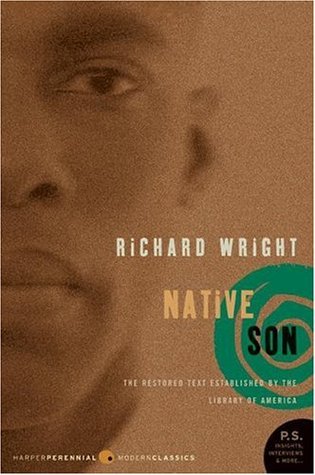 A classic, Richard Wright’s Native Son is a powerful story about a young black man who, in a state of panic, kills a white girl. When I first read this book, I was startled and certainly unprepared for what awaited each page. It was not the murder that shocked me, it was Wrights talented description of Biggers inner turmoil, not as a murderer but as a Black man in 1930s America and the fear and shame of that alone that coincided with his actions. Not in a justifying way, but in a way that painted the picture of what it looks like when fear manifested itself into the physical; when it rose from that invisible feeling, the beating heart and sweaty hands, and into the full image of its potential. Native Son in essence shows us the danger of that kind of fear and not just the danger, but what it looks like. The image of fear wrapped in black skin, smack down in the midst of white America.






![sneak-peek2[1]](https://thepbsblog.com/wp-content/uploads/2015/04/sneak-peek21.jpg)
 The PBS Blog