
Tag: history

Must Reads: Negro Slave Songs in The U.S.

This is a highly recommended book for African Americans who want to study history. “Negro Spiritual Songs” were not made up babble at random but they were songs that talked about the history of the African American in America. Massa was not just a broken dialect of the word “Master” but it is actually a Hebrew word meaning “Oppressor”. Black people were only illiterate to the extent that they did not read and write English but it doesn’t mean they could not read and write period. What if you were taken to China and dropped off, would you be able to read and write Chinese? Fluently at that?
The point is that if you do not know enough of your history to go back 300 years ago and help your people then, you will not be able to help your people today. If you couldn’t liberate them 300 years ago you cannot do it now.
Don’t allow someone to tell you your history, study your history. If they didn’t treat you right, what makes you think they taught you right?
The Evolution of the Blog

I was fulfilling some orders this morning, you know the daily grind, and my thoughts fell on blogging in general. I thought about the history of blogging and how it has changed over the years. But what my thoughts focused on more so is how the increase in technology seemed to have downgraded the professional image of blogging in the eyes of the (wait for it) blogger.
When we launch these blogs, I do not think we really understand its significance. At least I didn’t.
Anyone can create a blog today. It is as easy as signing up for a Word Press free account. You can write about what you want and organize your blog how you see fit. Though it is easy to do, have you ever thought about what it means to be a blogger? I remember watching television over the years and seeing someone speak. Sometimes the person speaking had a title that said “Blogger” and as he or she spoke concerning their subject of expertise I never second guessed that they were a professional. “Blogger” was no different to me then than “Attorney at Law” or “Psychologist”. That is because before the blog evolved into what it is today, it was a big deal.
“The modern blog evolved from the online diary, where people would keep a running account of their personal lives. Most such writers called themselves diarists, journalists, or journalers. The Open Pages webring included members of the online-journal community. Justin Hall, who began eleven years of personal blogging in 1994 while a student at Swarthmore College, is generally recognized as one of the earliest bloggers, as is Jerry Pournelle. Another early blog was Wearable Wireless Webcam, an online shared diary of a person’s personal life combining text, video, and pictures transmitted live from a wearable computer and EyeTap device to a web site in 1994.
The blog was independently invented by Ian Ring, in 1997. His online journaling platform was called an “e-journal”. Ring’s project was later abandoned, but was rewritten in 2006 but didn’t become popular amid the overwhelming flood of other CMS systems becoming available, including WordPress. Ring still maintains that he “invented the blog”, which is technically true even though there were other projects that could make the same claim with greater authority.
Another early example of an early online entry into the evolution of blogging was created by Dave Winer. Winer is considered a pioneer of Web syndication techniques and has been considered one of the “fathers” of blogging. As the editor of Scripting News claims that his site “bootstrapped the blogging revolution and that it is the longest running Web Log on the internet”, Winer did not use the term “blog” and has never claimed the term. However he has gone on record as saying that “The first blogs were inspired by this blog, in fact many of them, including Barger’s Robot Wisdom, used my software.”
Websites, including both corporate sites and personal homepages, had and still often have “What’s New” or “News” sections, often on the index page and sorted by date. One example of a news based “weblog” is the Drudge Report founded by the self-styled maverick reporter Matt Drudge, though apparently Drudge dislikes this classification. Two others—Institute for Public Accuracy and Arts & Letters Daily—began posting news releases featuring several news-pegged one-paragraph quotes several times a week beginning in 1998. One noteworthy early precursor to a blog was the tongue-in-cheek personal website that was frequently updated by Usenet legend Kibo.
Early weblogs were simply manually updated components of common websites. However, the evolution of tools to facilitate the production and maintenance of web articles posted in reverse chronological order made the publishing process feasible to a much larger, less technical, population. Ultimately, this resulted in the distinct class of online publishing that produces blogs we recognize today.” – Wikipedia
So what of all this? What’s the point?

From personal reflection, understanding the magnitude of what it means to blog helps me to maintain a level of professionalism on my blog; whether that is the appearance or the quality of the content. It helps me to remember that people are browsing the internet and coming across this blog from Google everyday in hopes of finding solutions to problems, or to overall be informed. It is not to say that blogs are not fun because I have lots of fun on this blog. And as we have read the first blogs were online diaries. Interestingly enough, many of the blogs I come across have this format.
The blogger is not a writer in the organized sense, just someone using the web as a way to publicly vent their thoughts (which I think we all do to an extent). It is just to say that I have come to look at blogging in a new light. As opposed to when I first started this blog, I place a kind of value on it now that I didn’t really think about before. Not value as in its my whole world or anything, but value as in the fact that real people are taking the time to stop here and to read and to learn. Therefore, how I present myself online, as a reflection of my real self, is not just some mediocre past time. What we write here is a big deal. Every day you are helping people in every aspect of their lives. To be a blogger then is kinda a big deal. I would even say it is something worth mentioning on a resume.
Timeline: Blogging Evolution:
January 1994
Swarthmore student Justin Hall creates first blog ever, Links.net.
December 1997
Online diarist Jorn Barger coins the term “Weblog” for “logging the Web.”
April 1999
Programmer Peter Merholz shortens “Weblog” to “blog.”
August 1999
Blogger rolls out the first popular, free blog-creation service.
January 2000
Boing Boing is born.
July 2000
AndrewSullivan.com launches.
February 2002
Heather Armstrong is fired for discussing her job on her blog, Dooce. “Dooced” becomes a verb: “Fired for blogging.”
August 2002
Nick Denton launches Gizmodo, the first in what will become a blog empire. Blogads launches, the first broker of blog advertising.
December 2002
Talking Points Memo highlights Trent Lott’s racially charged comments; thirteen days later, Lott resigns from his post as Senate majority leader.
December 2002
Gawker launches, igniting the gossip-blog boom.
March 2003
“Salam Pax,” an anonymous Iraqi blogger, gains worldwide audience during the Iraq war.
June 2003
Google launches AdSense, matching ads to blog content.
August 2003
The first avalanche of ads on political blogs.
September 2003
Jason Calacanis founds Weblogs, Inc., which eventually grows into a portfolio of 85 blogs.
January 2004
Denton launches Wonkette.
March 2004
Calacanis poaches Gizmodo writer Peter Rojas from Denton. Denton proclaims himself “royally shafted” on his personal blog.
December 2004
Merriam-Webster declares “blog” the “Word of the Year.”
January 2005
Study finds that 32 million Americans read blogs.
May 2005
The Huffington Post launches.
October 2005
Calacanis sells his blogs to AOL for $25 million.
December 2005
An estimated $100 million worth of blog ads are sold this year.
January 2006
Time leases Andrew Sullivan’s blog, adding it to its Website.
February 2006
The Huffington Post surges to become fourth most-linked-to blog.
#Book #Review for Stella Book #2: Beyond The Colored Line by Christa Wojciechowski
Title: Stella Book #2: Beyond The Colored Line
Author: Yecheilyah Ysrayl
Published: July 27, 2015
Released: August 24, 2015
ASIN: B013PQCKK8
Pages: 64
Rating: 5/5
Genre: Black Literature, Historical Fiction, Fiction, Short Story
Nothing is Simply Black or White
Stella: Beyond the Colored Line is a fascinating walk through the ages–from slavery, to segregation, to the black power movement, to modern times.
Through the eyes of one mixed race woman, the author touches on major events in African American history, allowing the reader to experience them in real time.
The story deepens when Stella decides to live as a white woman and raise her children as whites. As her family grows and develops within a changing society, Stella and her children reveal complex perspectives and attitudes that make it clear that it doesn’t matter who your ancestors were. Nothing is just simply black or white.
*************
They are coming in slowly but they are coming! Special thanks go out to Christa for this review; it makes my second five stars! OK so its only two reviews BUT both are five stars, I’ll take it! Every small victory is worth appreciating. In case you’re wondering why these reviews are so short, it’s really a short read, a novella if you will. If you would like to receive a free copy of this book in exchange for an honest review please email me. It really will not take up too much of your time. In any event, I appreciate both the positive AND constructive criticism I am getting on the back end. It lets me know the reviews are real deal and is EXTREMELY helpful in the polishing off of Book #3, whose release date and book cover I will be announcing soon. The Stella Trilogy is almost complete!
Unfamiliar Faces – Lost to History
Last week I published a post called “Unfamiliar Faces – Lost to History” where I listed a few people who were affiliated with major historical events in some way but whom we do not hear much about. I stated that I will attempt to list a few every Thursday. This is not a promise. I will do my best, but most of the faces of the truly unknown are not on Google but are hidden inside the pages of books I’d have to revisit, articles and documentaries. Below are four more faces of the unknown I found this week:
#1: The Harlem Hellfighters
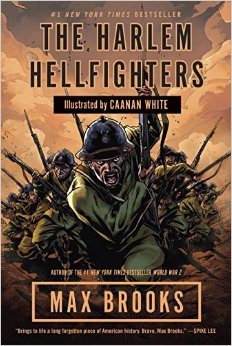
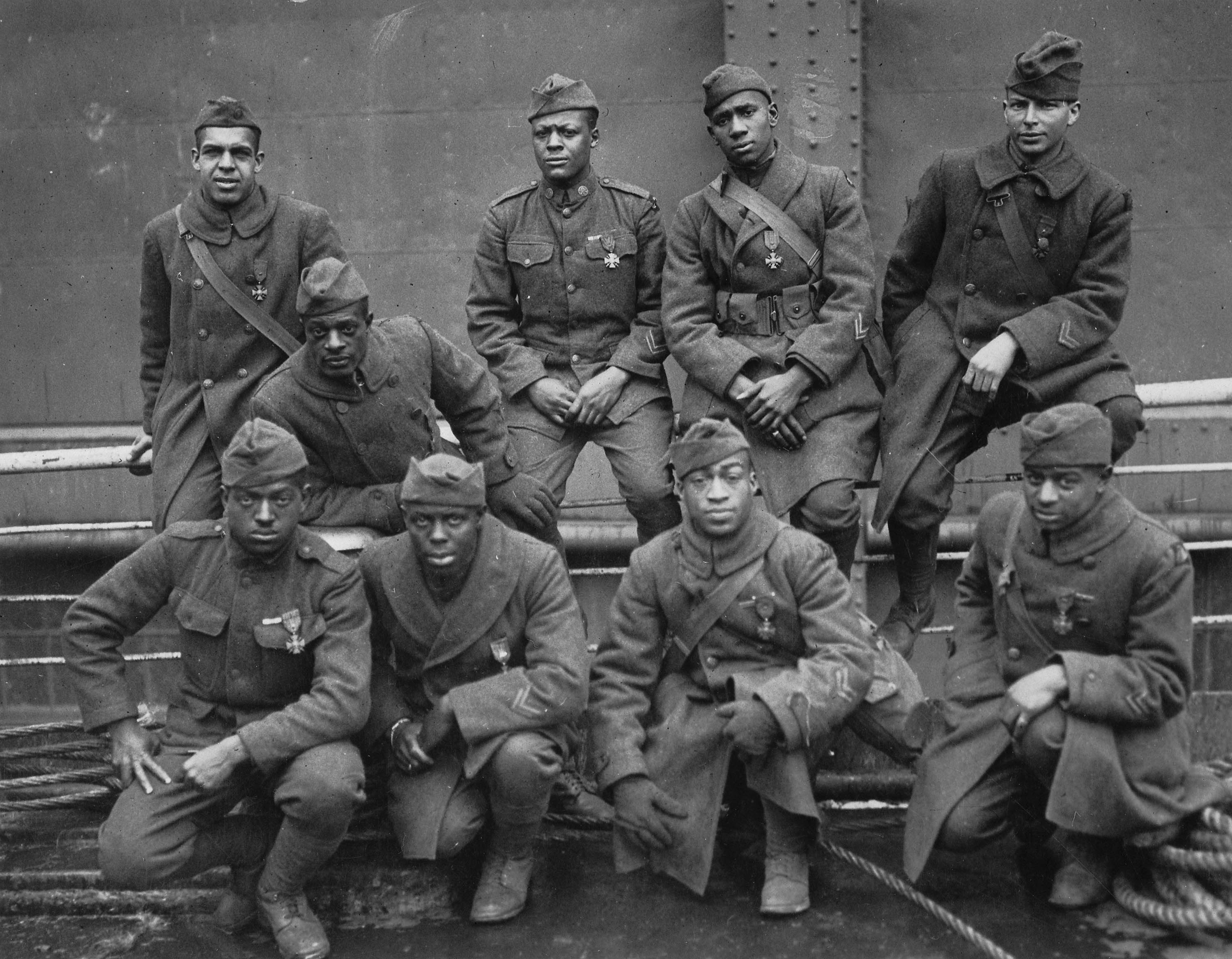
For those who didn’t already know, African Americans have fought in every major war. Little is known of one of the few black combat regiments of World War I. Nicknamed “The Harlem Hellfighters”, February 17th, the day of their battle, became an unofficial holiday. On February 18th of 1919, 3,000 veterans of the 369th Infantry (formerly known as the 15th Colored Regiment) paraded up Fifth Avenue at 23rd Street to 145th and Lenox for the prestigious Croix de Guerre from the French army.
#2: The Olmecs
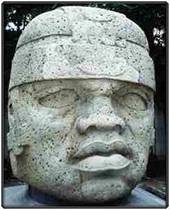

The Olmecs, whose features are similar to that of the African and Asian, are another part of black history we do not often hear about. They, The Olmecs, carved about twenty-two colossal stone heads in the southern parts of Mexico with their likeness and their influence have been found in Guatemala and further south. Olmec type sculptures have also been found in parts of the U.S. In fact, I am not sure if its still there, but there was an Olmec head on the property of The Field Museum in Chicago. If its still there, it should be somewhere near the back for those of you who are in the city.
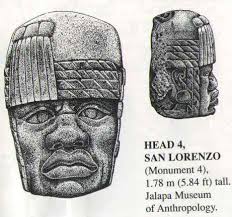
The Olmecs and other pre-columbian Blacks of the Americas were part of a prehistoric trade network that began in Africa and spread worldwide over 100,000 years ago and at various periods afterwards. To learn more about them, read They Came Before Columbus by Ivan Van Sertima and Susu Economics: The History of Pan-African Trade, Commerce, Money and Wealth.
#3: Cpl. Roman Ducksworth Jr

A military police officer stationed in Maryland, was on leave to visit his sick wife when he was ordered off a bus by a police officer and shot dead. The police officer may have mistaken Ducksworth for a “freedom rider” who was testing bus desegregation laws.
#4. Triple Nickles
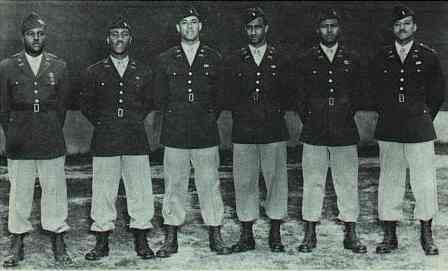
When my husband and I went to the movies about a month ago, a man had on a shirt displaying The Triple Nickle. My husband, former military, stopped and sparked up a conversation with the man. He was surprised to see it since no one really knew who they were. To our surprise, neither did the man. He was just wearing the shirt.
In 1944, 16 black men completed jump training and became parachute-qualified. The Triple Nickles Battalion was the first black airborne unit. Historians suggest the unit paved the way for a more integrated military.
Unfamiliar Faces – Lost to History
Have you ever wondered about those people who were part of history but who you never hear about? Sometimes people get lost to history. For whatever reason, their stories don’t make it to mainstream news, most of the time until years or even centuries later. Below is a list of four random people who were involved in major historical events in some way but whom we never hear much about. I will list a few every Thursday time permitting.
#1

Irene Morgan – We have all heard of Rosa Parks, but there were at least three women who refused to give up their seats on the bus in the Jim Crow south over the course of history. Eleven years before Parks, Irene Morgan, later known as Irene Morgan Kirkaldy, an African-American woman, was arrested in Middlesex County, Virginia, in 1944 for refusing to give up her seat on an interstate bus according to a state law on segregation. The Irene Morgan Decision inspired the men and women of CORE to create a nationwide protest movement called “The Journey of Reconciliation” when groups of civil rights activists rode buses and trains across states in the South in 1947, a sort of precursor to The Freedom Rides of 1961.
The Irene Morgan v. Commonwealth of Virginia, handed down a landmark decision on June 3, 1946, when they agreed that segregation violated the Constitution’s protection of interstate commerce. Irene Morgan v. Commonwealth served as a catalyst for further court rulings and the Civil Rights movement. Eight years later, the Supreme Court decided in Brown v. Board of Education that segregation violated Equal Rights Protection.
Irene Morgan died on August 10, 2007.
#2
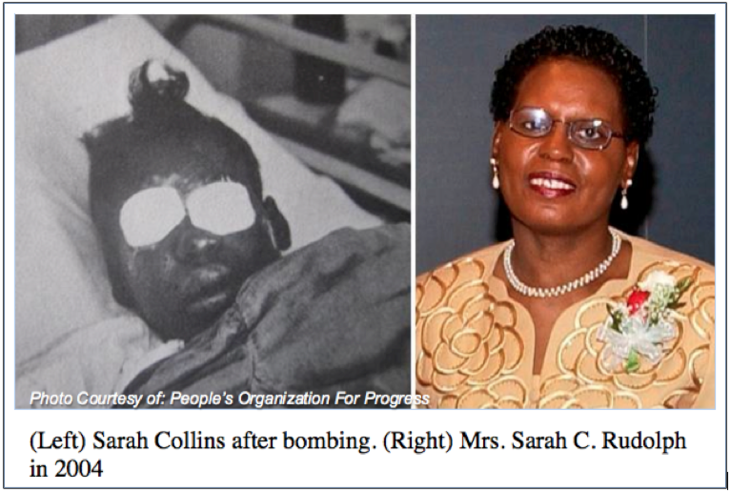
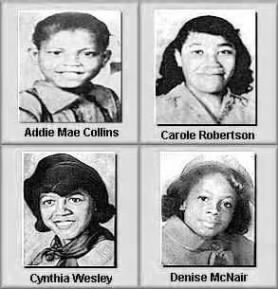
Sarah Collins Rudolph – We’re all familiar with the story of the Four Little Girls who were killed in the 1963 bombing of the 16th Street Baptist Church in Birmingham Alabama. However, there were five little girls who were injured, four died but one remained. Sarah Collins Rudolph is the fifth little girl who was injured in the 1963 bombing. Her story touches my heart because she was blinded and there is nothing like losing your eyes. In 1963, the Ku Klux Klan bombed the 16th Street Baptist Church in Birmingham, Alabama. Sarah Collins Rudolph survived the blast, but her sister Addie Mae and three other girls were killed. Today, Sarah still struggles with the aftermath of the bombing.
Update (2017)
Speaking of Addie, another lost to history fact (something that is just becoming known but that didn’t make news upon discovery) is concerning Addie’s missing body. Thirty years after the bombing, her sisters visited the grave. Seeing the condition, the neglected state it was in, they decided to move the body to a better-maintained area. However, when they dug up the grave, they discovered the corpse was gone but not only was the corpse gone but so was the casket itself. Addie Mae’s body was missing. The last reported update came in May of this year (2017) when an underground radar company searched and found what appears to be a child’s casket. Read More Here
#3
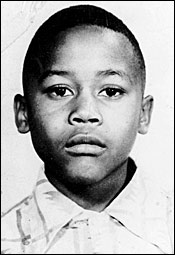
Virgil Lamar Ware – Emmett Till wasn’t the only youngin who perished in that day. Virgil Lamar Ware is a name we don’t hear very often or probably never did. At 13, Virgil was riding on the handlebars of his brother’s bicycle on September 15, 1963 when he was fatally shot by white teenagers. The white youths had come from a segregationist rally held in the aftermath of the Sixteenth Street Baptist Church bombing. Talk about six degrees of separation (Six degrees of separation is the theory that any person on the planet can be connected to any other person on the planet through a chain of acquaintances that has no more than five intermediaries.)
#4
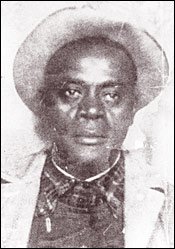
Lamar Smith – We have all heard of Emmett Till who was murdered August 28 of 1955. What we don’t hear a lot about is the murder of Lamar Smith just two and a half weeks earlier of this same year. On August 13, 1955 in Brookhaven, Mississippi, a man named Lamar Smith was shot dead on the courthouse lawn by a white man in broad daylight while dozens of people watched. The killer was never indicted because no one would admit they saw a white man shoot a black man.
#Book #Review by Anna Kopp “Beyond the Colored Line” by Yecheilyah Ysrayl
Special Thank You to Anna Kopp for this wonderful Review. Beyond The Colored Line is Available now in Print, Amazon Kindle, B&N NOOK, Kobo, iTunes and Google Play.
 The PBS Blog