Always There Are the Children

Something devastating is happening, a bone-chilling, frightening thing.

The children are dying.

In this year alone, I have learned of the deaths of four young people, three of them children under 25 years old. All of them were from people I know; they were firstborns, the first fruits of their mother’s wombs.

It has made me reflect deeply on how we foster future generations while remembering old ones. As a history buff, I understand how easy it is to dwell on the past. However, I’ve realized that the past, present, and future are inextricably linked; if we ignore one, we disregard the others.

I had the fortunate opportunity to speak with my husband’s great-aunts this past weekend as we mourned the death of their sister, our grandmother. They are all in their 70s and 80s, so I asked them what advice they have for the next generation. Almost everyone said to listen to the elderly. Essentially, you should obey your mother and father. Today, many may refer to this as honoring the ancestors. Whatever phrase you use, the broad consensus is to listen to those who came before you.

Growing up on a farm, where they grew and raised everything they ate, I got the impression they weren’t just saying this because they were elders but that it was a genuine conviction in which they truly believed.

Growing up, many of us heard the warning: “Honor your mother and father so your days are prolonged on the earth.”

I think about the depth of this as I watch the children perish.

One of my favorite poems from Nikki Giovanni is “Always There Are the Children.”

For me, it is a reminder that we do not live forever in these bodies. We will pass on one day, but there will always be children. What we pour into them while we live determines whether there will be more Nikki Giovannis and Maya Angelous.

Unfortunately, we live in a world obsessed with two things: appreciating people only once they’ve passed and only once they have become great. Rarely do we recognize the process and honor the in-between spaces. Seldom do we honor the becoming.

This robs the children.

And the children are not just minors in small bodies; we are the children, too. We are also daughters and sons, and I hope that we learn to nourish ourselves in the same way that those who came before us were nursed, and that we do so early on, rather than waiting until we are thought to have made it, because we are born worthy.

“We prepare the way with the solid
nourishment of self-actualization
we implore all the young to prepare for the young
because always there will be children.”

-Nikki Giovanni

Angels in Black Skin

Listen, yesterday started out annoying and frustrating for me.

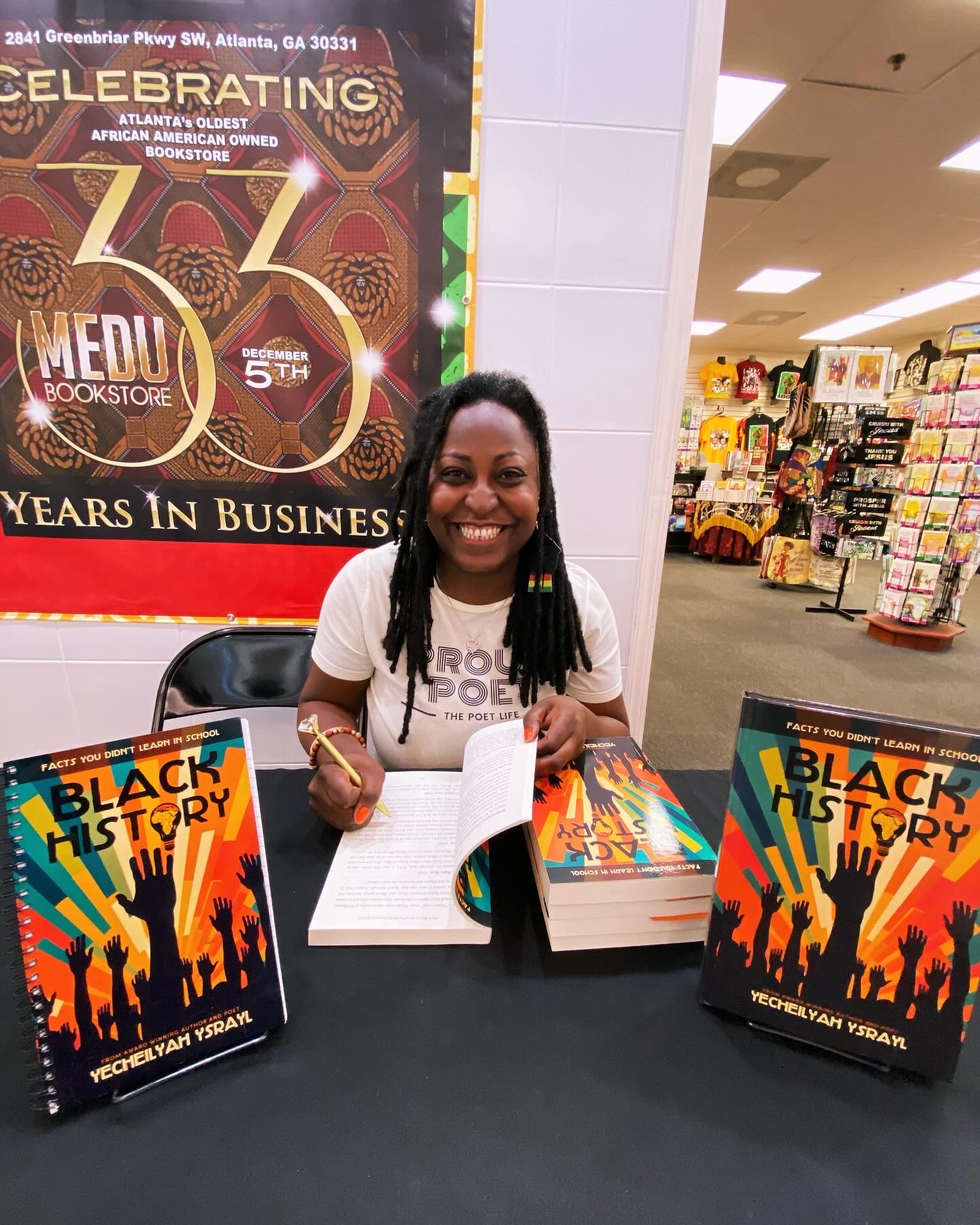
Watching all these Black people walk past my table and frown at the title of my book (Black History Facts You Didn’t Learn in School) was disheartening and sad.

It wasn’t about the money. It never is. It was about the sheer audacity of people to be offended.

I wanted to run to the bathroom and burst into tears at the arrogance of a people with no interest in their own history. There was even an interracial couple who walked by, him Black, her white.

Chile, do you know this man looked at his white friend/wife/woman and asked if she wanted the book while laughing as they walked on?

Trifling does not even begin to describe the moment.

But then…

There was an older Black man. He walked by my table and dropped a crinkled 20, whispering, “Keep doing what you are doing.”

You have to understand how he did it.

In African American families, elders (grandma’s, grandpa’s, aunts, uncles, etc.) will hug you and whisper in your ear, “How you?” While slipping cash into the palm of your hand.

There is no conversation about it and they are not interested in your explanations. It is simply an act of love wrapped tight in spiritual discernment. You need this even if you don’t think you do.

You could be struggling with bills.

You could be frustrated.

You could be facing any unforeseen tragedy, and this person who has lived long enough to know what love looks like in the flesh slips you with just enough money to cover whatever was bothering you.

Now, I was not in a financial catastrophe but a spiritual one. An emotional one. One that almost made me pack up my things and walk out the door.

There is something about not being appreciated that sends me boiling.

My tolerance is zero.

But then, here comes an angel, dressed casually, with a brimmed hat and gray beard wrapped in golden black skin.

He drops a 20 on my table like it was the sweaty palm of my hand and whispered words of confidence into my spirit without losing stride. He spoke while walking, always keeping sight of his mission.

This man’s simple act gave me everything I needed to keep going.

People took notice, stopping at my table suddenly, almost like they had been commanded to.

There is no moral to this story that you have not already read.


No. This is not the angel man, lol.

The Kindle Version of Black History Facts is 99c for a Limited Time! Click Here to Get Yours.

Want a signed paperback? Click here!

Legacy

Have you ever sat back to consider that the lives your parents, grandparents, aunts, and uncles lived is a form of history?

The world they grew up in is a different world than the one we are living in today. Even as recent as the 70s and 80s. That world no longer exists. I am fascinated by this. How did the world operate before I came to be? What were things like before I existed?

How often do we sit down to talk to our elders to glean wisdom from their lives?

Sitting at their feet and listening is the most accessible research we can do on our own personal history.

We learn more about the storyteller and ourselves as our lives are wrapped up in theirs.

Photo by By Toni Weschler

Coursing through your DNA is the experiences and the trauma of your ancestors. Wouldn’t it make sense to learn more about their story and, as a result, learn more about yourself?

I was not a fan of history in school. It didn’t intrigue me at all, and I found it boring. Passing was easy. All you had to do was read material that was never explained and memorize dates with no meaning.

blkhistorybook.com

I was in the second grade when I first learned about Emmett Till. His story stuck with me because it was the only form of Black history I had learned in school until High School, and even then, it all started with the Civil Rights Movement and Dr. King. It was as if our people didn’t exist before sit-ins.

It felt like we were still being enslaved, in a way, dehumanized through omission. A people forgotten, our legacies erased.

I only became curious when I learned more about my people. Black history intrigued me. The things we’ve invented, the struggles we’ve overcome, the way we just keep bouncing back.

When people can see themselves, something amazing happens. I didn’t care about history until I could see myself. My forefathers’ life piqued my interest, and out of that curiosity, I read.

The rest is, well, history.

You can still stream my interview episode on iDefineTV on Roku! Also, don’t forget to preorder your copy of Black History Facts You Didn’t Learn in School before January 24th to be part of the first shipment!