Writer’s Wednesday – Papa’s House

Wednesday is your new favorite day! Lol. 🙂

I would like to share more of my writing with you. I mean, besides poetry. Soooo, I’ve come up with another Wednesday Segment. Welcome to Day One of Writer’s Wednesday. I was late to my workout this morning drafting this so excuse my delay on getting to the comments. I am currently sweating it out during my lunch as you’re reading. Gotta keep it together ladies!

Here’s our Writer’s Wednesday Badge.

Every other Wednesday, I’ll give you either an excerpt from one of my books or something new, a short story or something. I don’t really know but I’ll think of something creative every other week, time permitting.

This week, I am giving you a sneak peek into a scene from The Road to Freedom in a segment I like to call “Papa’s House.” Enjoy!


“This here make you grow hair on ya chest,” said Papa as we laughed, watching as Terry took in the liquor before coughing, and Papa patting his back for rescue as he laughed.

“Breathe, son, breathe.”

“What the hell is that!” said Terry, wiping his mouth with the back of his hand.

“Can’t handle it, huh T?” said Frank, laughing.

Papa’s shoulders bounced up and down when he laughed, slapping his leg as he did so. “That there’s what we call white lightening. Amazing what you can do with a little corn mash. You be alright son, breathe,” he said as Terry went back to his place on the sofa, holding his chest.

We were sitting at the home of Peter “Papa” Whitfield, the white man who offered us food and a bathroom once Ms. Mary’s vittles ran low. Peter ran a farm just outside of town and his faded blue jean overalls and heavy boots gave way to the hard work it took to run this place. Acres of land spread wide on both sides, cows grazed the area beyond the fences, and Rottweiler dogs alerted its master of strangers approaching Poplar Springs Drive in Meridian Mississippi.

The air was unusually cool tonight and the warm coffee blanketed our insides as we rested from the road. Though we would have liked to go on, Ms. Mary insisted we stop and refuel.

“You know, liquor does not actually warm you in the cold. It thins your blood and makes you colder in winter,” said Gary.

“Thank you, Gary, for that irrelevant piece of information,” said Terry.

“Well, I don’t think your friend’s gonna be worried about the cold anytime soon,” said Papa, chuckling.

“What is that heavenly smell?” said Laurie as Sara, Papa’s wife, appeared from the back of the house carrying a casserole dish.

“Why don’t you ladies come find out. Leave the men here to talk about men things,” she said, with laughter in her voice as Laurie and Fae marched on to the back to retrieve more food.

As the women disappeared, headlights invaded their places on the sofa. Papa’s dogs barked and raced toward the unknown vehicle as they growled in the night air.

“You expecting company Mr. P?” said Willie, peeking out the window.

Papa frowned and stood as Sara emerged from the back.

“Papa.”

I don’t think I like the way that she called his name.

“Alright boys, y’all head on over to the back now,” said Papa.

“Why?” said Terry.

“This ain’t the time to be asking questions now boy, go!”

We all scattered to the back of the house, walking past the thick, black curtain that separated the kitchen from the dining room table; where Terry had taken his first, or perhaps second, drink.

“What’s going on?” said Fae.

“I don’t know.”

“Shh,” said Sara as Papa’s voice roared from the front door.

“Tommy Lee, ain’t specs to see you out so late, how’s the wife?”

“Hey there,” said the voice of a deep southern drawl. From the sound of it, Terry wasn’t the only one drinking tonight.

“Oh, she’s be fine. Mighty fine. Say uh, you ain’t got no company on in there do ya, Peter?” said the Tommy Lee voice.

Papa chuckled, “You mean besides my wife?”

Tommy Lee’s drunken voice laughed. “How is Sara doing by the way? She so pretty. Hey! Sara! It’s Tommy Lee!”

“You alright, man? Perhaps we should take this on out in the yard.”

“Perhaps,” said Tommy, laughing. “That’s a funny word, “Perhaps!” he said again, laughing.

“Look a here,” said Tommy. “Word is you’s got some niggers in there.”

“Whoa,” said Terry.

“Shhh!” said Sara as we continued to listen.

“I think you better get on home now Tommy, it’s getting late now.”

“Kicking me out, huh? I ain’t gonna tell you how to run thangs, but you best be careful. Nigra mens and Nigra womens is on the loose now. They’s tryna inflame our nigras and our whites t-t-t…” Tommy’s voice trailed off as if trying to find the words as we listened.

I regretted the once warm caffeine that now had my blood racing, my hands shaking, and my heart pounding out of my chest.

“Alright Tommy boy, I think you best get on the road now, the Missis be waiting,” said Papa as their voices faded away. I noticed Papa’s voice remained calm, and I imagined they had now stepped outside since we could no longer hear the now distant voices.

“OK, everybody just remain calm and stay where you are until I come back,” said Sara, before disappearing behind the curtain.

“What do you think is going on?” said Laurie.

“I don’t know,” said Frank.

“How does anyone know that we’re here?” said Gary.

That was a good question. We’d made sure to keep our travels discrete since the New Orleans incident. But it would also make sense that Frank’s dad would be looking for him. But I kept my thoughts concerning his dad to myself. We all knew he was racist and it embarrassed Frank. Though I’m sure Mr. Hansen had something to do with it, I did not want to disgrace the face of my friend. I went with my second thought instead.

“I wouldn’t be surprised if we were being watched.”

“Or followed,” said Fae.

“I bet it was that punk ass Papa. What kind of name is that anyway? What man calls himself Papa?”

Terry’s eyes had a gloss to it as he spoke. I think by now he was really feeling the liquor.

“I’m tired of this,” said Willie.

“Oh, so you punking out too Willie?”

“Terry come on,” said Fae.

“Naw, I’m asking him a legitimate question. You punking out, Negro?”

“What you just call me?”

“Really?” said Laurie looking at both Terry and Willie.

“I know y’all ain’t gonna do this now,” said Frank.

“Please don’t do this now,” said Gary.

“Shhh!” I was sick of everyone’s talking. Though they spoke in whispers, it seemed our voices carried and would float on out the back room and into Tommy Lee’s ears. Who knows what he wanted or what he heard. We were in Mississippi after all. The stories of their crimes against the Negro were well known in the South. And after the murders of Emmett Till and others, Mississippi’s racism had gained increased attention. People all over the world could read in newspapers and watch on television the bizarre system that protected those who committed crime after crime. I didn’t understand why such hatreds existed for negroes, and my longing for the answer burned its own private hole into my chest. Unless I did my part to find out, I would never be quite whole again. If only I could have explained it this way to mother where she could understand. Being part of the fight for freedom on behalf of negroes wasn’t just some phase I was going through. More so than a desire, it was a need. Otherwise, as a young white man in white America, I could not help but feel guilty on behalf of my people. And as we stood here, fearful of the unknown, I knew that what I felt could not compare to Fae, Willie, and Terry. Considering I was shaking uncontrollably in my own skin, what kind of fear did they experience? And more, what was it like to have to experience it your entire life? The pangs of guilt sought to overwhelm me as we stood there behind the curtain and waited.


TheRoadToFreedom_Ysrayl

“I enjoyed the writing style of the author, who was able to capture different characters through their dialogue and how she wrote their accents. Though Ysrayl is not a white teenage boy, she is able to write his narration convincingly, while also being able to give other perspectives through the rest of the characters.”

– Swimming Through Literature, Amazon Review

*****

Remember, The Road to Freedom as well as Beyond the Colored Line and Between Slavery and Freedom is on sale this month! The Black History Month Stella Sale ends next week. CLICK HERE to order all three books at one low price. All books are paperbacks, signed by me with my author seal. Shipping is also free but this limited time offer won’t last.

Four Months to Go: The Nora White Story

Hi guys,

Before the week ends, I wanted to share this with you.

book-and-e-reader-nora-w
Copyright©Literary Korner Publishing. The Nora White Story (Book One). July 15, 2017.

Next month, March, we will be four months out from the release of Book One in The Nora White Story. To prepare for this, I’ve put together a Book Launch Schedule to help all of you to stay updated on this project.

To view the Launch Schedule and to stay updated, I have put together a temporary website dedicated to The Nora White Story exclusively.

You can help me spread the word by sharing and checking out the site HERE.

I’d also appreciate any shares of the site with those who you know are interested in this kind of story.

As the time draws near, I will give more information about the special events leading up to the release for that particular month. As you can see, yes, there will be a blog party! But I’m not giving out any details right now. I will real soon and your patience is most appreciated.

bitmoji1417585539

Black History Fun Fact Friday – Twins or Nay?

black-history1

I’m not so sure we should call this a fun “Fact” Friday. It’s more like a Black History Fun Mystery Friday. Who wants to play? Get your magnifying glasses out, you’re gonna need them!

What if you were arrested and brought into jail, but upon entering were told that you had already been there? In fact, you were arrested before. “No I wasn’t,” you’d most likely say. The clerk will proceed to show you pictures of yourself. “Wow,” you think. “That’s my picture but I’ve never seen it before.”

Will West
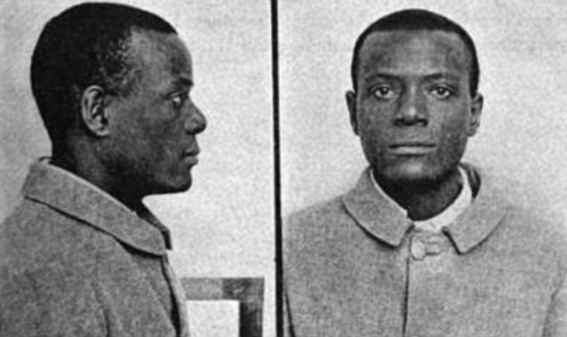
Mug Shot of Will West

That is what happened to Will West and William West. I admit this story is still controversial. Were they twins or not? I cannot say for sure myself. As a twin, naturally this story fascinates me. Was it a trick? Was it real? Did something supernatural take place? Maybe one man went back in time? Whatever happened, we have a real doppelganger situation on our hands (What’s a doppelganger? I take it you don’t watch Flash the TV show. A doppelganger is the version of you that exists in another timeline). I’m not joking. I think there really was something supernatural going on.

According to the story, Will West (or Will Tell, certain sources give different last names. Most of them use West so I will in this article) was arrested in 1903 and sent to the Leavenworth Penitentiary in Kansas. Back then they used a facial recognition system called The Bertillon System. The Bertillon System is a system developed by Alphonse Bertillon, a French criminologist who first developed the system of physical measurements of body parts, especially components of the head and face, to produce a detailed description of an individual. Invented in 1879, the system became known as the Bertillon system and gained acceptance as a reliable method of criminal investigation, though there were complaints that the system was flawed. The West case proved that it was in 1903 when two unrelated black men would inadvertently inspire the use of a different system, or at least that’s what is documented.

Will walked into Leavenworth in 1903 and caused the Clerk to double check his records. He was adamant that he’d seen this man before. In fact, not only did he see him before but it was two long years ago. Yes, he is sure of it. He had already arrested the man standing in front of him and his name was William West.

Using the Bertillon System would not help in this case, as the men had the same measurements and were identical in appearance. Let us imagine what the conversation was like. The clerk, whose name was McClaughty, pulls out Williams records, flips through them and looks up at Will. His mouth is twisted, his brow carving deep lines in his head. He looks away, staring at the files in front of him and then back up at Will.

“So, what you’re saying is that this ain’t you?”

The man turns the files around to show a photo of what looks to be the man in front of him.

article-1392418-0c55ce6e00000578-700_634x381
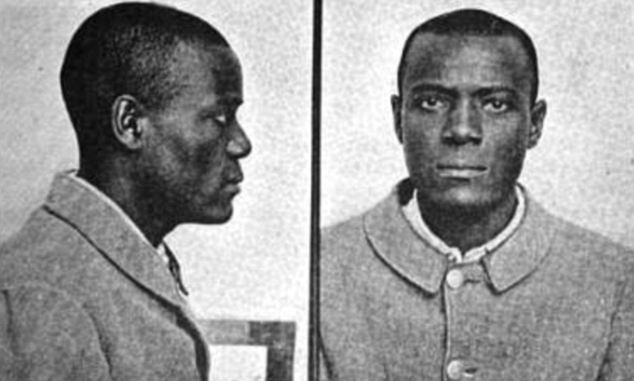
Mug shot of William

Will’s eyes buck but he shakes his head.

“No. I mean, that’s my picture but I don’t know where you got it from. I have never been here before.”

The Clerk did more searching and discovered that a William West was arrested two years ago for murder and that Will was a different person altogether. The incident caused the move from The Bertillon System to that of fingerprinting in criminal cases. Or at least the start of its use in the U.S. Fingerprinting had been used before in other parts of the world. According to Google: “The English first began using fingerprints in July of 1858, when Sir William James Herschel, Chief Magistrate of the Hooghly district in Jungipoor, India, first used fingerprints on native contracts. (By the way, Twins have different fingerprints)

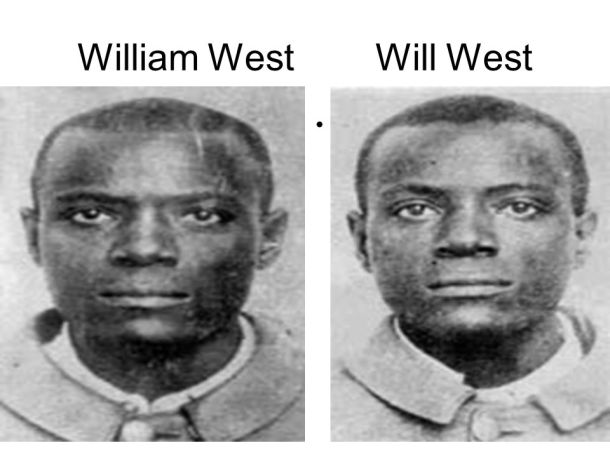
Here’s a side by side of Will and William:

slide_6

Some sources say that the men really were Twins. If this is true, why would Will lie about it? I mean, he was being arrested. What would be the motive behind the twin’s actions? Did they commit a crime together and one just got caught later?

If you scroll up to the first photo of Will and then back to the profile of William, their heads are shaped differently. William’s lump is more pronounced and there’s more of a curve. William’s profile also shows that his cheeks are slightly more sunken in, which isn’t so in the first image. This would indeed show flaws in the Bertillon System, which gave the men the same measurements (but you can look at the back of their heads and see they are shaped differently). William is also wearing more of a frown than Will is. According to the story, William was arrested for murder two years earlier. By the look on his face, he appears to have been incarcerated longer. I won’t say that he did it because we are talking about 1903 here ( a time where black men were often accused of a murder they did not commit), but he does look to be more agitated than Will.

Will’s image is also lighter and that’s either a mole or ink above his lips and under the nose. Either way, it’s not in William’s photo. Neither is what looks to be a scar on William’s head present in Will’s picture. There’s enough evidence physically to see these may, in fact, be two different people. One thing’s for sure, these men look too much alike not to be twins, but who knows? Maybe Will is from a different timeline altogether or the men really were not related. After all, the truth is stranger than fiction.


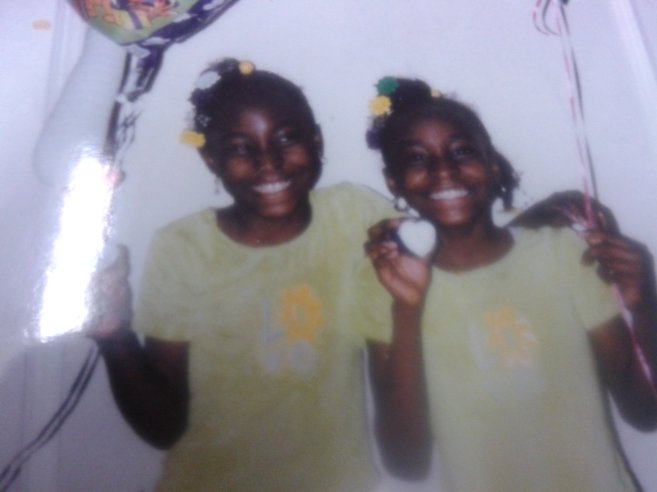
Here’s a throwback for fun by the way. This is Tracey and me turning ten. I can’t use a recent picture because then it’ll be obvious. I have locs and she doesn’t.

Can you solve the mystery? Where’s EC? (Lol hee hee)

120831_0003
Photo Source: Copyright©Yecheilyah Ysrayl. May, 1997

You Are the One

Malcolm X Shown with a Clenched Fist Speaking at a Rally

“The picture of the dry bones in the Valley, is talking about you. You are Lazarus. You are the dry bones. You are the prodigal son. You are the lost sheep. You are the people about whom the bible is speaking. Who will stand up in the last days when the trumpet is sounded. Black people are waking up. Black people are standing up. Black people are rising up.” – Malcolm X

Black History Fun Fact Friday – Mostafa Hefny and The Race Card

black-history1

What if you identified as one race but because of geographical differences you were told you were another race? Even if your skin tone said otherwise? Is it right to determine race by skin tone alone? Does race itself even exist?

In today’s episode of Black History Fun Fact Friday, we will explore The Race Card and how it has handicapped the life of one man who is still fighting to reclaim his identity. He is quickly becoming an important part of history as his story tells us so much about race.

This Aug. 8, 2012 photo shows Dr. Mostafa Hefny in Detroit. Hefny, an Egyptian immigrant who lives in Detroit wants the U.S. government to classify him as black, not white. The Egypt-born Hefny, 61, says he's easily identifiable as a black man, but when he was admitted to the U.S. decades ago, he was classified on government papers as a white person. Hefny says he's a Nubian, an ancient group of Egyptians considered more African than Arab. According to government directive, a white person is defined as "a person having origins in any of the original peoples of Europe, North Africa or the Middle East." (AP Photo/Detroit News, Max Ortiz) DETROIT FREE PRESS OUT; HUFFINGTON POST OUT
Dr. Mostafa Hefny in Detroit.(AP Photo/Detroit News, Max Ortiz) DETROIT FREE PRESS OUT; HUFFINGTON POST OUT)

Introducing Mostafa Hefny, an Egyptian Immigrant who came to the United States and was told he was white, despite his skin color. To understand this, let us first establish the U.S. racial classification system. The U.S. Census Bureau defines race as “a social category recognized by the United States and does not attempt to define race biologically, anthropologically, or genetically”. The Census Bureau recognizes five categories of race:

• White (people with origins in Europe, the Middle East, or North Africa,)
• Black or African American (Africa)
• American Indian or Alaska Native, Asian,
• Native Hawaiian
• Other Pacific Islander

Nicknames for race has also been applied to colors: White, Black, Red, and Yellow.

The census also includes a Hispanic ethnic category. It is an ethnic category rather than a race category because the Latino community is said to include many races, such as White, Black, Native American, Asian, and mixed. Keep in mind these are not classifications based on culture, land, or language, but skin tone alone. This means that anyone from Europe according to the lands designated for the specific color is considered white and anyone from Africa (according to the lands specified) is considered black.

In the ancient world, the Greeks, Romans, Israelites, Egyptians, Ethiopians, e.g. did not have racial categories. Rather people were divided according to their nationality. People from Europe may identify themselves as Irish, Russians, Greeks, Swedish, so forth and so on instead of simply whites. Likewise, people on the continent of Africa may refer to themselves as Ethiopians, Somalian’s, Nigerians, Egyptians, Israelites, Ghanaian’s, so forth and so on instead of simply blacks. The ancient Hebrews, Egyptians, Ethiopians, and Libyans didn’t speak of a place called Africa even though they were indigenous to that continent.

Since 1997, Mostafa Hefny, has been suing the U.S. government because when Hefny immigrated to America, the U.S. government told him he was no longer a black man. This is because according to the U.S. racial system of classification, we’re not supposed to realize that Egypt is in Africa, just that it is the Middle East, and as such anyone from the Middle East is considered White; obviously despite their skin tone.

“Dr. Hefny was a Bilingual Resource Teacher with Wayne County Regional Education Service Agency (Wayne County RESA) in Wayne, MI, USA for thirteen (13) years. When he stated on his employment records that he is black the Director of Human Resources sent him a letter which was copied to the Superintendent threatening him that his education career will be ruined if he did not change his racial classification on his employment records from black to white. A few days later one of the top administrators told him “If you ever say that you are black again no one will hire you and if hired you will be running from one job to the other for the rest of your life”. Even though Wayne County RESA provides support and consultant services to all of Wayne County which is 30% black, the Superintendent was white, his four Associate Superintendents were white, and 95% of the administrators and consultants were white.

Wayne County RESA did not fire Dr. Hefny, instead they denied him promotion twice, persecuted him, harassed him, called him nigger, and psychologically tortured him to the point that he left on social security psychiatric disability which lasted ten (10) years (1989-1998.) Additionally, he was hospitalized in psychiatric hospitals twice(1992 & 2000.) All the doctors who treated Dr. Hefny stated in their medical reports that his psychiatric injury was work related. When Dr. Hefny recovered and returned to the work force Wayne County RESA followed up on their threats and he was fired five times in one year.”

– Move On Petitions at http://petitions.moveon.org/sign/justice-for-an-indigenous

How did Hefny respond? He was shocked when his government-issued identification classified him as “white.”

This Aug. 8, 2012 photo shows Dr. Mostafa Hefny in Detroit. Hefny, an Egyptian immigrant who lives in Detroit wants the U.S. government to classify him as black, not white. The Egypt-born Hefny, 61, says he's easily identifiable as a black man, but when he was admitted to the U.S. decades ago, he was classified on government papers as a white person. Hefny says he's a Nubian, an ancient group of Egyptians considered more African than Arab. According to government directive, a white person is defined as "a person having origins in any of the original peoples of Europe, North Africa or the Middle East." (AP Photo/Detroit News, Max Ortiz) DETROIT FREE PRESS OUT; HUFFINGTON POST OUT
(AP Photo/Detroit News, Max Ortiz) DETROIT FREE PRESS OUT; HUFFINGTON POST OUT

According to the Detroit News: “As a Black man and as an African, I am proud of this heritage. My classification as a white man takes away my black pride, my black heritage and my strong black identity.” – Mostafa Hefny

This begs the question, what is black and what is white? We use them for clarity, but are they colors or nations of people? What about other nations? Asians, Chinese, Japanese?

According to the Office of Management and Budget Standards for the Classification of Federal Data on Race and Ethnicity, citizens are designated as White if they have “origins in any of the original peoples of Europe, North Africa or the Middle East.” For this reason, because of Hefny’s geographical location, his classification makes sense within the context of America’s definition of race. Again, according to the U.S. racial system of classification, we’re not supposed to realize that Egypt is in Africa, just that it is the Middle East, and as such anyone from the Middle East can be considered White; obviously despite their skin tone.

“Egypt is on the coast of Africa. It is not some small village in Sweden.” – Paul Mooney

From the foundation of man, we have been divided according to our nations and lands. In Genesis Chapter 10, we find the Table of Nations. After the flood Noah and his sons and their wives were saved and from this family repopulated the Earth. How they were divided is found in The Table of Nations.

ancient-egyptian-wall-painting
Ancient Egyptian Wall Painting
jet
JET Magazine Cover, Michael Jackson’s “Remember the Time”

Since Ham had the most descendants we are not going to go through every last one, but he birthed the African nations populating Africa and other parts of the “Middle East.” The word Ham in Hebrew is Khwam, and it means “hot, burnt, and black.” The first-born son of Ham, Cush, forms the Kushite nation. They were also called and known as the ancient Ethiopians. Ethiopia comes from the Greek word, Aethipos, which means, “burnt or black face.”  The Greeks applied this name to the people living south of Egypt. The name Egypt comes from the word Aegyptus though the Egyptians called themselves Khemet / Kemet, which is a variation of the Hebrew word Khawm (Ham).  It means, “People of the black land.”

de35641a49f23bad91b1f49c1df2418a

While many of us are already familiar with Ham’s sons, Shem’s descendants are not always acknowledged. Though not “Africans”, they were also black as were the Israelites who were often mistaken for Egyptians. Paul was mistaken for a black Egyptian (Acts 21:38), Moses passed as the grandson of Pharaoh for 40 years (Acts 7:22-23) and the messiah hid in Egypt:

“Now it’s very unlikely that Jesus would have been able to be HIDDEN in Egypt, if he had a very different color of SKIN from the people in Egypt.” – University of Birmingham historian, Dr. Mark Goodacre, BBC program called The Complete Jesus, 2001


kingtut
Statue of King Tut

DETROIT IMMIGRANT RACE

I am not sure where Henfy is today with his case. Last I read he was still fighting to be classified as black and this was back in 2012. The ancient Greek historian, Herodotus, who visited Egypt in the 5th century B.C.E., described the Egyptians as black-skinned with woolly hair and anthropologist, Count Constatin de Volney (1727-1820), spoke about the Egyptians that produced the Pharaohs.  He later paid tribute to Herodotus’ discovery when he said:

“The ancient Egyptians were true Negroes of the same type as all native-born Africans.  That being so, we can see how their blood, mixed for several centuries with that of the Romans and Greeks, must have lost the intensity of its original color, while retaining nonetheless the imprint of its original mold.  We can even state as a general principle that the face (referring to The Sphinx) is a kind of monument able, in many cases, to attest to or shed light on historical evidence on the origins of the people.”

How do you think race influences our society today?

Black History Fun Fact Friday – The Attica Massacre

black-history1


“ON SEPTEMBER 13, 1971, a four-day rebellion of over 1200 inmates at the Attica State Correctional Facility in bucolic upstate New York ended most horrifically after Governor Nelson Rockefeller ordered almost 600 state troopers to storm the prison. Even though the raid took only 10 minutes, when one could finally see through the haze of spent ammunition, it was immediately clear that the price of retaking this facility by force had been staggeringly high.” – Heather Thompson

Before we go on, let’s take it back…

Convict Leasing

sharecroppers_chopping_cotton_-_1941-h

With nearly half of all cotton investments in human bodies now gone, the end of chattel slavery no doubt left a sour taste in the mouths of slave-owners. Over four million African Americans (because who would know exactly how many?) were poured into a society that did not want them, cotton economies in shambles, cotton gins destroyed, and wealth that deteriorated before the ink could dry on the Emancipation Proclamation. A system so interwoven into the fabric of America could not just be taken away without serious consequences. Slave-owners could not sit back and watch; a reconstruction of slavery was necessary.

The Reconstruction Era, the process of rebuilding the south (which was really the time of restoring slavery to the south), introduced a new set of laws that would ensure that Blacks remained the property of landowners, sharecropping on the same plantations that held them as slaves. All of this despite General William T. Sherman’s plan to grant freedmen 40 acres on the islands and the coastal region of Georgia. But after the Civil War, blacks never did receive their “40 Acres and a mule” and were instead ordered to either sign contracts with the owners or be evicted, driven out by army troops. In the summer of 1865, all land had been ordered by the government to be returned to its original owners. Thus, millions of blacks remained poor. Still, this was not the only form of servitude to which they were subjected. In addition, something more law abiding would hold them in captivity. Ironically, within the same paragraph that abolished slavery, slavery was also reconstituted. According to the 13th Amendment:

“Neither slavery nor involuntary servitude, except as punishment for crime whereof the party shall have been duly convicted, shall exist within the United States, nor any place subject to their jurisdiction.”

According to this law, slavery could not exist in the United States except for punishment for a crime, permitting slavery in the case of imprisonment.

New laws targeted blacks, (Black Codes) criminalizing their lives. That is, almost everything was a crime. Farm owner’s incapable of walking by the railroad or selling the products of their farm after dark. Or, the infamous Pig Laws, where stealing a pig (or any animal) could result in five years’ imprisonment. Or Sundown Towns, all white neighborhoods where Blacks were not allowed after dark. The more Blacks broke these laws and were sentenced to prison, the more slaves the plantation owners, now masked under private parties and corporations, had back into their possession. They could work the prisoners from sun up to sun down again while providing them with food, clothing, and shelter. Also known as Convict Leasing—the leasing of bodies to coal and iron companies owned by former slave owners—slavery was back. In 1883, about 10 percent of Alabama’s total revenue was derived from convict leasing. In 1898, nearly 73 percent of total revenue came from this same source.

Attica State Prison

6a0120a69a468c970c01b7c8912fa9970b

With awareness growing out of the Civil Rights Movement of the 60s, Malcolm X, The Black Panther Party, etc., Black and Latino Prisoners of 1970 began organizing rebellions against their treatment within the prison system. As with any information passed through the “grape vine” of the black community, the rebellions spread from prison to prison until it came to a head the Thursday morning of September 9, 1971. When the door prisoners used to go to the yard was locked, a fight broke out between the prisoners and the guards. As the fight grew, more prisoners joined until they broke open a gate connecting to another part of the institution and, to make a long story short, prisoners were let loose within the institution.

The Brothers locked the prison down, kicking butt and taking names. I mean (clears throat), taking staff members as hostages and implementing their own system of order within the prison. Appointing leaders to keep order and to be sure the staff was properly cared for, they demanded from the outside world better treatment within the prison system. Better medical treatment and less slave labor. But their “freedom” would not last long. When a hostage who was hit in the head at the beginning of the fight died from his injuries, the prisoners were responsible under the felony-murder rule. The felony was the riot and the murder was the death of the guard.

Inmates of Attica State Prison (right) negotiate with Commissioner Russell Oswald (lower left) inside the jail where prisoners took control

Shortly thereafter, a National Guard helicopter flew low over the yard and blew a cloud of military-grade CS gas into the crowd of men. As told to Attorney Jefferey Haas, under the name Big Black, one of the surviving prisoners of the time recalls:

“First came the tear gas. People looked for something to cover their face. When I first heard the shots, I thought they were blanks. Then the people around me in the yard starting dropping. I realized they were real bullets, and everyone ducked and ran for cover.” (September 16, 1971, Prisoner of The Attica Correctional Facility, New York, as told to Jeffrey Haas).

The gun shots Big Black is referring to are the marksmen who came in and started shooting, hitting 189 of the 1300 men in the yard and killing 31 people—29 prisoners and ten hostages. (There’s a conflict between the numbers. Some sources say 31 prisoners died and some 39. I use 31 because that is in accordance with the news articles of the time).

After the shooting, the beatings came:

attica_1971
Source: Getty Images. Prisoners marching naked.

“The guards stripped us naked after the shooting. They made us crawl naked in the mud through a gauntlet where they beat us.” – Big Black

Next, Big Black (Big, dark skinned and part of the security) was tortured as an example. They burned his body with cigarettes:

“They took me out of the line. They made me lie on a table naked on my back and put a football under my chin. They put their burning cigarettes out on me. Some dropped them from the catwalk above and was laughing.”

“Afterwards, a news photographer found and recorded a pair of inscriptions, in separate hands, written with a white marker on a dark steel wall that succinctly told the story of the Attica rebellion. The top one said, “Attica fell 9-9-71 – F*&k you pig!” Just underneath that was written, “Retaken 9-13-71. 31 Dead Niggers.”

– Dennis Cummingham, Prison Legal News

attica-30th
Riot: Prison guard hostages and inmates gather in the exercise yard of cell block D inside Attica State Prison in New York on September 9, 1971

While seeking freedom the men had forgotten one thing: slavery is abolished except as punishment for a crime. They were given slave-like treatment because as prisoners under the law, they were still slaves.

Today, the message is still relevant.