The Voice of a Slave: CNN Freedom Project

http://www.cnn.com/videos/world/2015/08/21/spc-freedom-project-the-voice-of-a-slave.cnn

Check this video out. Its the voice of a man who was a slave who reveals briefly his experience. Of course I had to find something like this, but I’m really passionate about reliving history at the foot of the elders. I’ve always loved listening to the elders speak about their experience picking cotton and sharecropping and all of that, which nurtured my decision to write more aboutĀ  black history.

Speaking of Slave Ships, has anyone ever wondered what happened to those ships? Why are there no authentic slave ships in museums? I’m not talking about the replicas. How did whole ships just disappear? Is it possible that the wood was used to make other things? It does after all hold a lot of energy. Blacks were also hung from trees, which is also wood. What do we call a thick Forrest? We call it the woods. Can there be a significance to this? Just trying to expand my understanding on the whole institution of slavery itself. It’s not just that blacks committed suicide, but could it also be that they were sacrificed as well? Not everyone jumped ship, some were murdered. Just a thought.

Something is Off…

article-bridgewater5-0826

…about this story. This doesn’t look like a “disgruntled employee” to me. Vester Flanagan? Really right now? What kind of name difference is that from Bryce Williams? I’ll share my thoughts some other time. Now is the time to listen to the details before they change. Always pay attention when the story first breaks. To be continued….

Writing about Passing: Jessie Redmon Fauset

jessie-redmon-fauset-1882-1961-grangerJessie Redmon Fauset was born on April 27, 1882, in Camden County in New Jersey, and grew up in Philadelphia, Pennsylvania. She attended Philadelphia High School for Girls, where she was likely the sole African American in her class. Because Bryn Mawr College was reluctant to accept its first black student, they instead chose to help Fauset to get a scholarship to attend Cornell University. Fauset did well at Cornell and after graduating in 1905, Fauset’s race kept her from being hired as a teacher in Philadelphia. Instead, she taught in Baltimore, Maryland and Washington, D.C.

During the Harlem Renaissance, two papers were in circulation among black people that helped to greatly influence the movement: The Crisis, headed by W.E.B. Dubois, and The Opportunity, headed by Charles S. Johnson. While there seemed to be quite a competition from the two, stemming from the position of the two men, the writers also reflected the same. While Zora Neale Hurston wrote for The Opportunity, Fauset wrote for The Crisis and eventually became editor in 1919.


2657593132_8b9365f0a5While researching and studying for Stella Book #2, which launches tomorrow and deals with the subject of passing, I noticed that Fauset wrote a lot about passing; all of Fauset’s novels were the stories of black middle class passing for white. Her first novel ā€œThere is Confusionā€ is the love story of a wealthy black woman who falls in love with a medical student and dreams of being a dancer but is held back because of her race. Published in 1923, her second novel ā€œPlum Bunā€ is about a black woman who desires to be an artist; and decides to do so by passing as white and rejecting her family and friends. The story ends with her embracing her race and finding true love with a black man. In 1931 she published her third novel ā€œChinaberry Treeā€. Her last novel ā€œComedyā€, a study of the tension between drama and narration, was published in 1933. Inspired by a Greek tragedy, it is another story studying the dynamics of passing by giving voice to a black woman who can be seen as white. She passes for white in her everyday life and convinces her oldest children to do the same. The youngest child was too dark to pass which eventually leads him to commit suicide.

Sandra Bland & Black Hypocrisy

chi-ct-sandra-bland-ct0030015155-20150720

I know, I said I was resting. I also said I was a workaholic. I am resting but before I dig in deep and disconnect from the internet, I thought I’d give you something to ponder over the weekend.

What kind of woman was Sandra Bland? Can anyone tell me? Did she pray often? Did she love those around her? Who was she? Personally, I don’t know.

I’m always saddened by the deaths of anyone and the things I see taking place within the black community. However, what annoys me is when black people allow themselves to be driven by emotion and disregard common sense. It has been said that she was dead in her mugshot, for instance. Have any of you ever seen a dead body or a rotting corpse? Have you examined lifeless bodies or studied the difference between someone living or dead? How then do you know what kind of state the woman was in when she was photographed? Must we ignore the marijuana they found in her system or is she automatically granted immunity for being black? We have turned Sandra Bland into a hero, even though no one can tell me what kind of woman she was.

How do we know for certain that she didn’t kill herself? Is this conclusion a result of a personal study or are we making decisions off pure emotion? Maybe she was murdered or maybe she committed suicide but what does it mean?

It’s sad, of course. How can it not be? But the question black people should be asking themselves is why? Why do these things continue to happen to you of all people?

Why is there a greater outcry against the killing of Cecil the lion than the death of one of yours? We are killed in the streets every day. Why are you continually treated like less than a human being?

These are the kinds of questions we should be asking ourselves, not whether or not Sandra Bland killed herself. The question is not if she did it or not, the question is….why?

I am not without compassion, but I cannot allow my emotions to surpass the truth. It’s hard to sit back and watch your people die but this woman did nothing to be considered a heroine of mine. I don’t know what her life was like to be granted that title or to make that kind of a decision.

You see the truth of the matter is that a lot of people are unconscious, especially within the black community. We have no idea of what’s going on around us or in front of us. We have no understanding of who we are, who we are not, and why as a result it has led to our position or lack thereof in this land. We continue to be slaughtered in the streets under the rule of a black skinned president but you’ll hear nothing about that. Funny how dark skin can deceive dark skinned people. Blinded by the hypocrisyĀ  we cannot see the truth for what it is. Many of you, because you wear the title of African American, completely disregard any wickedness that comes from your blood line and the consequences that happens as a result of that disobedience. This woman is filled to the brim with weed but this is your Queen. I am not Sandra Bland’s judge and her death is sad, but she has done nothing for me to admire. Oppression is real but many of you are blind to the part that you play in that same oppression. This too is futility and it is hypocrisy.

Deu 28:20 ā€œYAH sends on you the curse, the confusion, and the rebuke in all that you set your hand to do, until you are destroyed and until you perish quickly, because of the evil of your doings by which you have forsaken Me.

Yours, Not Mine

ā€œWhat, to the American slave, is your 4th of July? I answer a day that reveals to him, more than all other days in the year, the gross injustice and cruelty to which he is the constant victim. To him, your celebration is a sham: your boasted liberty, an unholy license: your national greatness, swelling vanity. Your sound of rejoicing is empty and heartless. Your denunciation of tyrants brass fronted impedance; your shout of liberty and equality, hollow mockery. Your prayers and hymns, sermons, and thanksgiving, with all your religious parade and solemnity, are to him, more bombast, fraud, deception, and hypocrisy–a thin veil to cover up crimes which would disgrace a nation of savages. There is not a nation on the earth guilty of practices more shocking and bloody than are the people of the United States, at this very hour.ā€Ā – Frederick Douglass, July 5, 1852

Movie Night Friday – Boyz N The Hood

MNF

Welcome back to another Movie Night Friday, where I tell you about my favorite movies and why I love them. If you like the movies too, feel free to comment why you love them.

So today we’re looking at Boyz N The Hood, one of the best hood movies ever made.

posters_13976

John Singleton’s Directorial debut, Boyz N The Hood, released in July of ’91, is a Coming of Age Drama surrounding the life of three black men growing up in South Central LA, and starring some of the best black actors to date: Lawrence Fishburne, Ice Cube, Cuba Gooding Jr., Angela Basset, Regina King, and a young Nia Long, and Morris Chestnut. In fact, this was Ice Cube and Chestnut’s first movie debut.

99983 After his many troubles in school, a young Tre (Desi Arnez Hines II) is sent to live with his father Furious Styles (Fishburne) by his mother Reva (Basset) in the Crenshaw neighborhood of South Central. His father, one of the reasons this became one of my favorites, instills in Tre the life lessons and values many of his young friends do not have. In fact, as Tre reunites with his childhood friends, Darrin “Doughboy”, his brother Ricky and Chris, their mutual friend, his lessons in manhood take on new meaning and his decisions become critical. His friends do not have the privilege of a positive father figure and are drawn to the streets for guidance. Furious therefore warns Tre about following in their footsteps but despite his warnings, older Tre (Cuba) and his friends have their own way of surviving. In this Teen Hood Drama, loyalty and danger dance too close for comfort, and dire situations force Tre to decide for himself the future he wants.

Boyz-n-the-hooddc2dea40e72601ee4657064445fed7b8photo-big-4118472

Trailer:

Funny Movie Mistakes:

tumblr_mhduc3SrZb1r2m86do1_250

In the scene where Lawrence Fishburne hooks up Cuba Gooding Jr.’s fade, he never actually cuts any hair, but then demands that Cuba clean up the mess after he is finished.

LOL!

Watch the movie and see if you can spot the knot!

Slavery and Affliction: The Difference Between

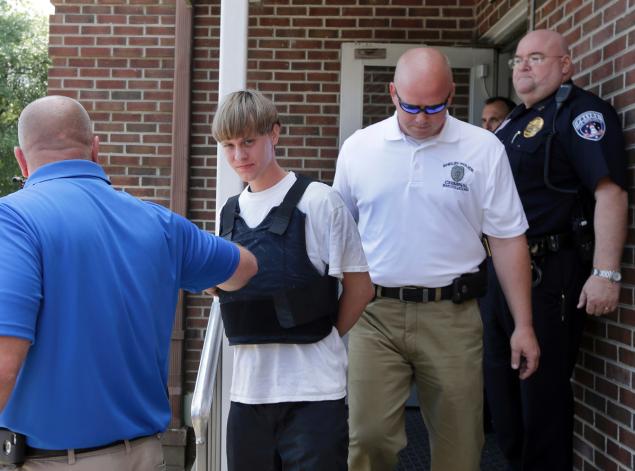
dylan-roof-in-custody

10 weeks ago, in Charleston North Carolina, an unarmed black man (Walter Scott) was shot in the back. The footage was caught on video. Today, his murderer sits in a cell next to last weeks Charleston Shooter, as many are now calling him. After killing 9 people, Dylan Roof went on the run and was caught 16 hours later by Law Enforcement. Once captured, FBI began to question Roof. Shortly after that, according to a statement given to the Charlotte Observer, they took Roof to Burger King because he said that he was hungry.
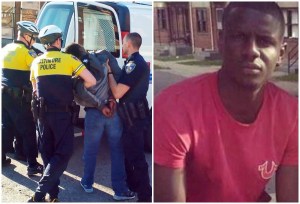
uptown_freddie_gray

Two months ago, 25 year old black man, Freddie Gray, was arrested by police, taken into custody, and critically injured in the transporting van. He fell into a coma and died due to injuries to his Spinal Cord. His death would lead to ongoing protest in downtown Baltimore. Pending further investigation into the incident, the six suspected police would be suspended… with pay.

*****

I know it annoys a lot of people, the constant conversations about blacks and race. The constant eruption of discussion concerning racist whites against blacks. The constant pushing forth of articles and posts concerning the relationship between these groups of people. At some point in History, every nation of people have experienced some form of racism within the context in which we know it. Specifically, when we talk about blacks in America, the subject of slavery often accompany the explanation concerning our captivity and struggles here. You’d be hard pressed to sit in on a conversation that does not include that part of history. What people who are not black, however, must understand is that it is not just about slavery. The institution itself was very traumatic for our people and has had, as a result, a dramatic effect on us so much so that it leaves a mental stain even until this day. However, this alone does not make our story unique, though it plays a pivotalĀ  role. Just as other nations have been discriminated against, other nations too have seen some form of slavery (though not to the extent of our confinement). This is the commonality of our servitude. The difference however, is this:

The reason you will always hear of blacks when discussing racism is not just because they have been slaves, nor is it simply because they have been mistreated once or twice. But in addition to slavery, being black in America also has to do with our affliction in America. We have not been slaves for 400 years, but we have been afflicted for nearly 400 years. Since 1619, when the first blacks were brought through the ports of Jamestown Virginia to begin what we know as the Trans-Atlantic Slave Trade, we have been mistreated and afflicted for the entire time that we have been in this land. Meaning there has not been a let up; not one moment of peace and it has been nearly 400 years, this is what makes our captivity unique. From slavery, to Jim Crow, to police brutality, racism and discrimination, high prison population, drugs, disease, you name it, we’ve seen it. Name one instance in History, from 1619 forward, where blacks have not experienced some form of humiliation.

I’ll wait.

Others have been, and are mistreated, but none outside the so called African American can produce documentation that will prove that their people have endured one continual stomping, blow by blow by blow for nearly 400 years straight. Blacks were not part of the U.S. Constitution, they are an add on; an amendment if you will. And this is the difference between having been a slave and having endured a continual affliction even after thatĀ  slavery has ended. Thus, while we have not been in physical chains this whole time, we have been afflicted this whole time (aside from the affliction of chains) more than any other people. Our psychological troubles then, and the anger built up among many of our lost brethren, is because they have seen their people as constant targets.