“I want to be the friend you fall hopelessly in love with. The one you take into your arms and into your bed and into the private world you keep trapped in your head. I want to be that kind of friend. The one who will memorize the things you say as well as the shape of your lips when you say them. I want to know every curve, every freckle, every shiver of your body. I want to know where to touch you, I want to know how to touch you. I want to know how to convince you to design a smile just for me. Yes, I do want to be your friend. I want to be your best friend in the entire world.” ––Unravel Me by Tahereh Mafi
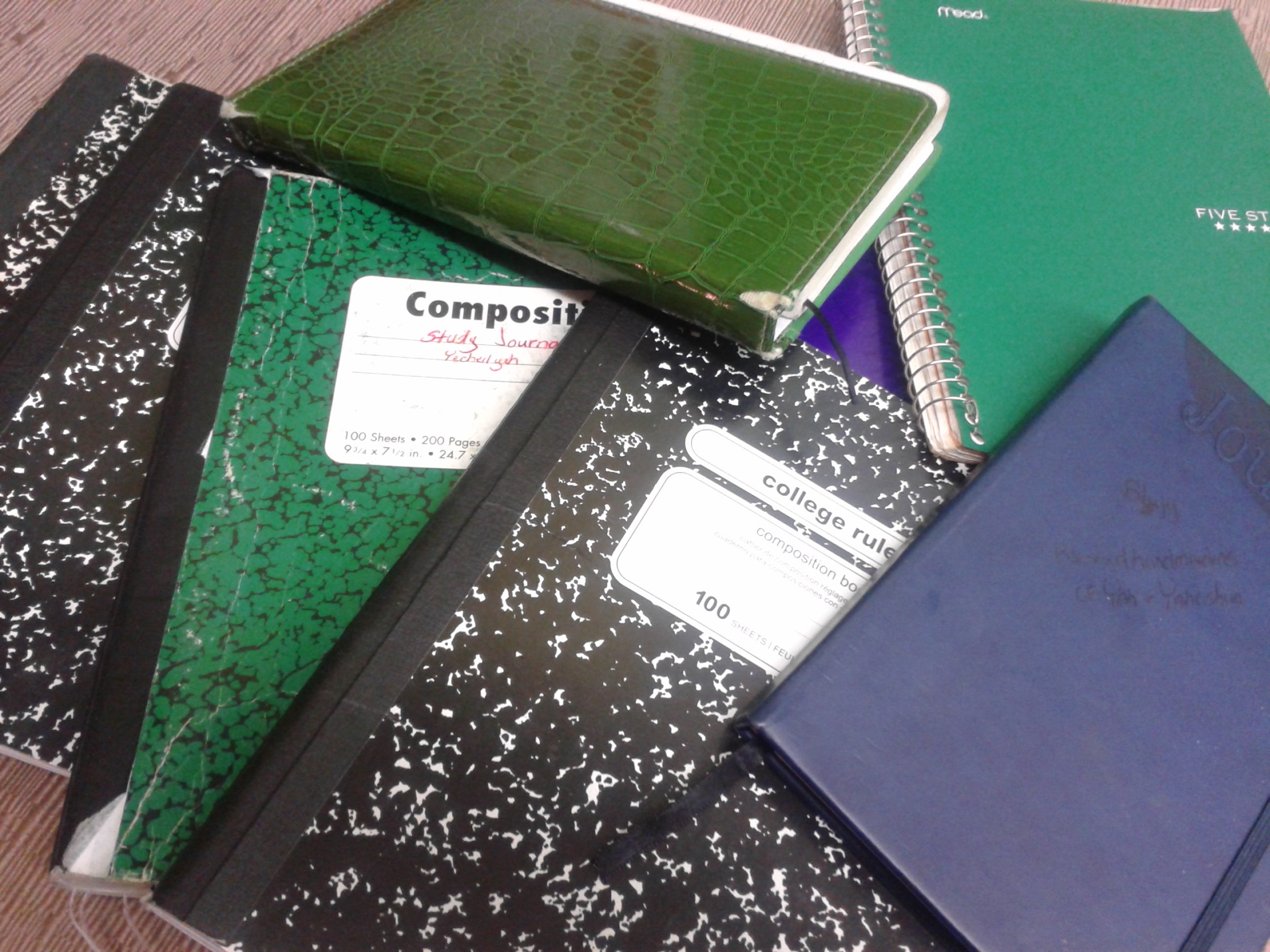
I appreciate technology really; I’m just as addicted as you are. But when I say notebook craze, I’m not talking about the computer, I’m talking about actual notebooks. You know, those pieces of paper held together by glue and metal rings, yea, those. I want to take the time to thank the founders of Dollar Tree, Dollar General, and Family Dollar for all the hard work you put into stocking your shelves with these babies. The $1 store itself has become a treasure of fresh inspiration for me, a living blueprint for whatever it is my mind feels like building up. Every new notebook is an opportunity to create something new. If I can spare it (which I somehow always can), I have to purchase a new notebook. Maybe it’s a small journal of a thing. Maybe it’s a 180 page 5 subject wide rule or 100 page composition book who knows. Perhaps I’ll get the same one as last time in a different color. I am after all looking to brighten things up a bit around here. How many? Two? Three? Four? “No, that’s obsessive, one step at a time EC. Just pick one you really like.” One? “Yes, one. And don’t forget the dish washing liquid you actually came to get but somehow got distracted by the school supply aisle.” Oh yea, that.
But this is really only the beginning. I still have to take the notebook home, and that’s when the fun really starts! I still have to decide what kind of notebook this is. What will I carve on the front cover to illustrate this new beauty to the world? What kind of purpose will this new storage place hold for my thoughts? Maybe I’ll fill it with random fragments of sentences, little immature and underdeveloped thoughts. A preliminary of something great but that looks right now like a foreign language. Maybe I’ll jot down a scripture or two, or elaborate on full sentences and transform them into a poem or two, a short story or an entire manuscript. Or this could just be the “just in case” notebook. You know, the little notebook you carry around in your purse (or suitcase/backpack for the men) just in case something good happens.(Please tell me you have a just in case notebook). But then I have to get into the notebook, and let’s not even talk about the intoxicating aroma of fresh paper; the undiluted blank state of blue and red lines. So pure and inviting, let me just write my name real quick. There, now that’s art.
These are the kinds of thoughts that run through my head all because of notebooks. A simple mission turned writer’s paradise. Is it an addiction? You can call it what you want. I mean, technically I don’t really need another notebook, BUT it will soon be a question of how I ever lived without it. So I guess I need another one because I will eventually need it. Makes sense? No? Good. I still got it. 🙂
Today’s Post is part of a weekly series on The PBS Blog that will take place from now on through February: Black History Fun Facts. During this series, I will post some fun facts about a portion of African American History, ranging from Archaeological, Cultural, Biblical, and Historical facts every Friday.
I will also extend this open invitation to anyone who would like to take part in Black History Fun Facts. All you have to do is use the #BHFF badge in your post, tag Black History Fun Facts, and pingback. And of course, make sure your post is about something, well….Black.
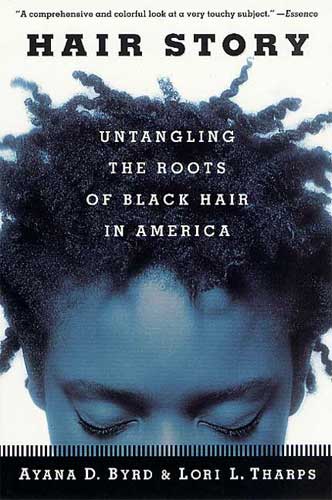
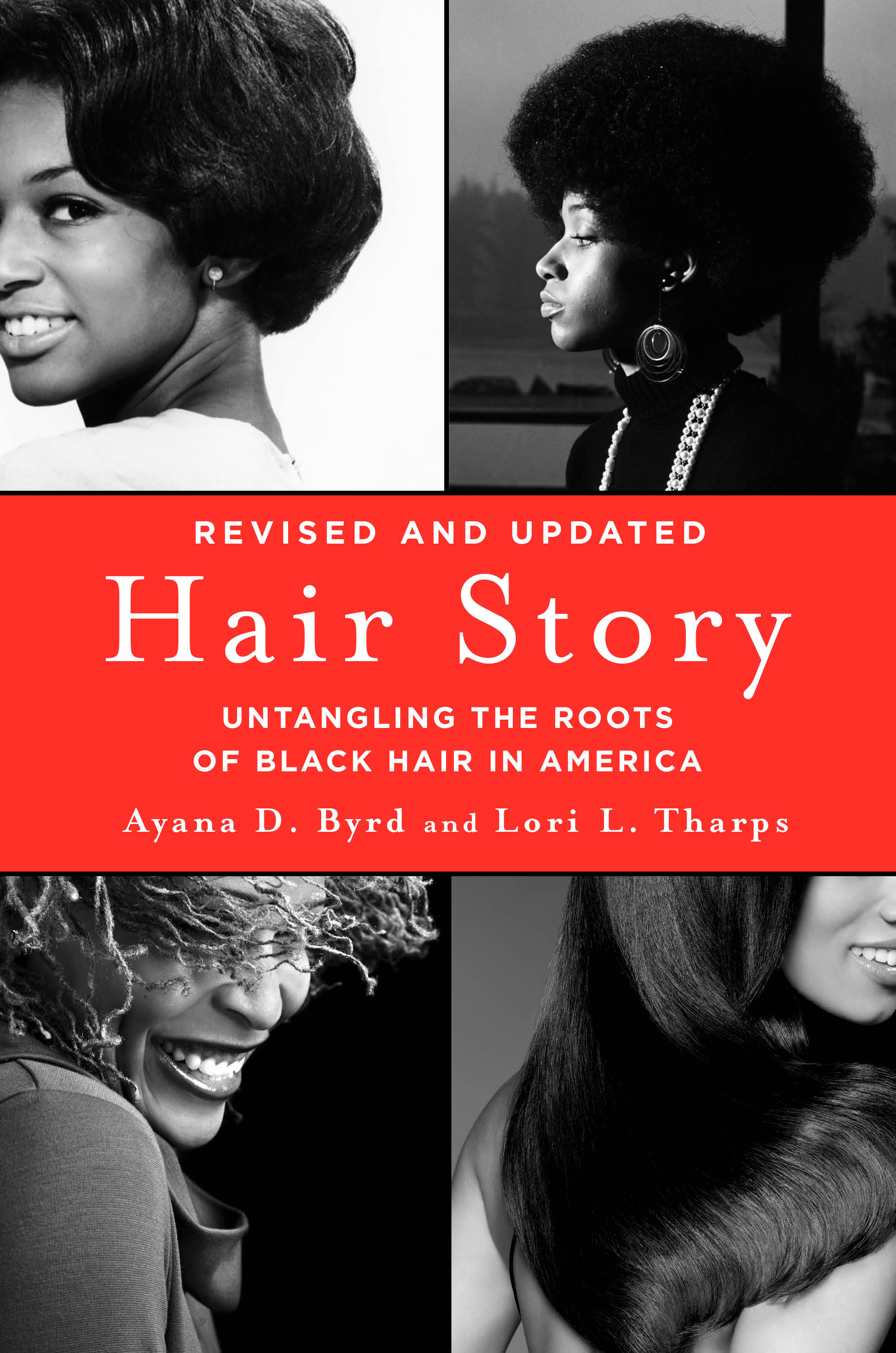
My pick for today’s BHFF is Hair Story: Untangling the roots of Black Hair in America:
Hair style and texture has been just as life changing and connected to the Black experience as racism and discrimination. Every movement in the history of the so-called African American people has had its own hairstyle. From the Afros of the 60’s & 70’s to the Jehri Curl of the 80’s, you can guarantee to spark conversation whenever black hair is involved.
In Hair Story, authors Ayana D. Byrd, and Lori L. Thraps takes us through a chronological timeline of how Black hair has changed over the years. From Africa to present-day America, Hair Story is not just an exciting read but a great source of research. I enjoyed the blast from the past the ladies took us on and the pictures and hair recipes that complimented the document well. Every stage and every situation presented a physical manifestation of that era in the form of hair for Black people. While I do not agree with every account mentioned, Hair Story is definitely a book to have in your home library (you do have a library…right??).
Good Hair
In 2009 Chris Rock reanimated the Hair debate in his comedy release Good Hair. Premiering at the Sundance Film Festival on January 18, 2009, Good Hair was released to select theaters in the United States by Roadside Attractions. According to Rock, he was inspired to make the movie after his then 3-year-old daughter Lola asked him, “Daddy, how come I don’t have good hair?” She has curly, wiry hair typical of many people of African descent. He realized she had already absorbed the perception among some blacks that curly hair was not “good”. As a result, Rock delves into the $9 billion hair industry, and visits such places as beauty salons, barbershops, and hair styling conventions to explore popular approaches to styling. He visits scientific laboratories to learn the science behind chemical relaxers that straighten hair. It is from this documentary that I went forward to do my own research on Hair. Interestingly enough, it is the same year I went natural.
The only thing this film lost cool points for in my book is that there were so many valid points that seemed to have to be hidden under the concept of comedy in order to have it mentioned on air. It appeared to me, that if given the chance, Rock could have explored more deeply the state of Black Hair. It is for this reason that I went in depth on my very own research in order to discover the missing pieces. However, I’m not throwing any stones because what Chris Rock and HBO produced was sufficient enough to jump start anyone’s thirst for understanding of Black Hair and it is a movie worth having in your collection.
And who can’t forget Tyra Banks show on Good Hair?
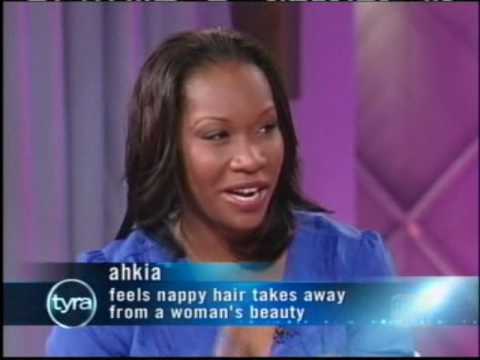
Also inspired by Chris Rock, Tyra launched a show in May of 2009 that spoke about African American women’s hair. It featured a variety of women (some with permed hair some with natural hair) who engaged in hot debate over what is considered good hair and bad hair. Children of the women also got involved, turning it into an emotional roller coaster of history and identity.
And so do most of your favorite artist and sports players:
For me locs are much more than just a fad. They represent our culture. We have worn our hair in these styles for thousands of years. Amaziyah Locs- pronounced (Ah-ma-zi-yah) is a Hebrew name that means “Made Strong by Yah.” I knew that the meaning was perfect for a natural hair care company specializing in Locs. It immediately reminded me of the story of Samson and Delilah. Samson was granted super natural strength by Yah in order to wage war against his enemies, such as destroying an entire army with only the jawbone of a donkey! However, Samson had a weakness: his hair, and without it he was powerless. When they were cut by Delilah, he lost all of his strength. Makes you wonder why there is a barber shop on every corner in predominantly “African-American” communities.
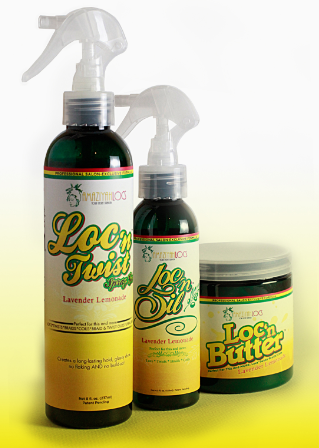
My favorite is the Loc N Butter but Amaziyah’s got plenty of variety to go around. Get the Loc N Twist, Loc N Oil or Loc in Butter:
Why not close out with a little music? Here’s India Arie, I am Not My Hair:
“I have learned that if you must leave a place that you have lived in and loved and where all your yesteryears are buried deep, leave it any way except a slow way, leave it the fastest way you can. Never turn back and never believe that an hour you remember is a better hour because it is dead. Passed years seem safe ones, vanquished ones, while the future lives in a cloud, formidable from a distance.” ― Beryl Markham, West with the Night
somebody almost walked off wid alla my stuff
not my poems or a dance I give up in the street
but somebody almost walked off wid alla my stuff
like a kleptomaniac workin hard & forgettin while stealin
this is mine / this ain’t yr stuff /
now why don’t you put me back & let me hang out in my own self
somebody almost walked off wid alla my stuff
& didn’t care enuf to send a note home sayin
I waz late for my solo conversation
or two sizes too small for my own tacky skirts
what can I do wit something of no value on
a open market / did you getta dime for my things
hey man / where are you goin wid alla my stuff
I see ya hidin my laugh
I want my stuff back
my rhythms & my voice
this is some delicate leg & whimsical kiss / I gotta have to give to my choice
now you can’t have me less I give me away
As the hours turn into days and days into weeks and weeks into months and months into years, what keeps a writer writing? This is a question posed by writers, bloggers, poets, victims of writer’s block, etc. It is a question begged to be answered by the blank stare of white paper, literally or digitized into Word Documents and notepads. But the answer is simple: what keeps a writer writing is his desire to write. His need to pluck at random thoughts and stitch them into language. Sometimes it is a line or two, sometimes a whole paragraph, sometimes an entire manuscript, sometimes a poem, anything to keep writing; a transcribed confession of the heart that must be communicated on paper. Anything you want to do can only be done if you want to do it. It is a lesson that applies to positive and negative, good and bad, right and wrong. To right my wrong I have to want to do it. To strengthen my right I have to want to do it. To write I have to want to write.
Writers are often told that doing more of it sharpens the skill, this is true. You’ll become more familiar with your individual writing style and your individual writing voice by doing it more. But the key to getting this far is to actually want to do it. What are you willing to sacrifice to ensure that you keep writing? Perhaps you’d like to set aside 15 minutes a day. This alone can make a big difference in shaping your writing habits and inspiring you to want to write more. Whatever it is, there must be an unquenchable desire to write in order to continue to do so. This desire may be influenced by a lot of things, but nothing should be able to kill that influence itself. It is untainted by the greatness or failures of those before or behind you. They are just grand instruments striking a cord at your beloved longing. Striking against the wanting in your chest and fueling a fire that just makes you want to write even more. The desire to write, it is the undying flame, and the living water. Even if you are your own audience, your ambition to create and invent and revolutionize through words is something you always hold on to.
This February (exact date coming soon) I will be releasing a new project entitled Stella, a short story about the lives of two women living in two different time periods, their experiences colliding in an explosion of emotional revelations:
Cynthia insists she’s not a racist, and while many of her points about the state of Black America are valid, she still doesn’t believe Blacks should have the same rights as whites. She believes America has come a long way, but that integration has kept it from going further. One day, Cynthia and her boyfriend Alex decide to visit Cynthia’s Grandmother, and happen upon information that will change their lives forever.
Raised under the protection of her mother and the field hands, Stella is unaware that she is a slave. Not being accustomed to hard labor things change when Mama dies and she falls into the cruel hands of “Mars Saddler”. Years later, when The Louisiana Constitutional Convention of 1864 abolishes slavery in the parish, Stella learns of Saddlers plan to keep her on the plantation. She then agrees to accompany Saddlers daughter Miss Carla and her husband John to The Windy City.
Together, Cynthia and Stella learn the hard way the difference between slavery and freedom.
Stella will be available in the following formats as well as in print:
Apple iBookstore, Barnes & Noble NOOK, Amazon Kindle, Kobo, and everything else. Visit http://www.theliterarykorner.com for additional details.











 The PBS Blog