Born in October of 1854 in Louisiana, Anna invented a kitchen tool she called a pastry fork.
The system of patents for inventions was not easy for African Americans at the time. Enslaved people were not considered people, they were not US citizens, and the rights of the US constitution did not apply to them. Consider the Dred Scott Decision where enslaved Scott unsuccessfully sued for him and his family’s freedom (they were eventually freed on May 26, 1857). This made it difficult for even free blacks to secure patents on their inventions, making it easy for their work to be stolen or attributed to someone else.
Of all the inventions by African Americans, we can just about imagine how much more this contribution would be if full credit had been given to those who were not considered worthy to receive it. Consider the following inventions:
The Artificial Heart Pacemaker Control Unit (Otis Boykin )
The Closed Circuit Television Security (leading to the home security system) Marie Van Brittan Brown
The Modern Home-Video Gaming Console (Gerald A. Lawson)
We can go on and on.
Anna’s story is special because she was one of few blacks to receive a patent for her invention of the pastry fork.*
The Pastry Fork was an older version of the wisp and other electronic mixers today as it automatically mixed without manual effort. This tool had many uses, including beating eggs, thickening foods, making butter, mashing potatoes, making salad dressings, and most pastry dough, which was difficult on the hands and wrists.
Anna filed an application for a patent of her Pastry Fork in July of 1891 and was awarded the patent on March 1, 1892.
*Martha Jones was the first black woman to obtain a US Patent.
Learn more black history by reading more articles on the Black History Fun Fact Friday page here. Have a black history fun fact of your own? Submit your article for a blog feature by emailing it in a Word Doc attachment to yecheilyah@yecheilyahysrayl.com. Read the submission guidelines here.
This is a real-life case of living beyond the colored line. It starts when a black man named O’Day Short and his family moved to a racist area of Fontana, California, in 1945. Here’s a bit of history behind Fontana:
The Ku Klux Klan established its headquarters in Fontana.
KKK Grand Wizard George Pepper and White Aryan Resistance (WAR) leader Tom Metzger claimed Fontana and the Inland Empire as their California Eastern Territory for White Supremacy.
Hells Angels Biker Gang originated in Fontana
Hells Angels and Nazi Low Riders (NLR), flourished in the city of Fontana, with no consequences from the Fontana P.D.
Many incidents of discrimination and hate crimes were unsolved and poorly investigated
Fontana has a long history of racism and discriminatory policies, so it is no surprise that blacks were not allowed south of the area. The saying went: “Base Line is the Race Line.” Southern Fontana can be best described as a “Sun-down town,” towns blacks were not allowed after dark. When the sun went down, any black person found in a “Sundown Town,” risked lynching. Read more about Sundown Towns in an older post here.
Carol Ann and Barry Short, along with their parents Helen and O’Day Short, died in a suspicious fire on Dec. 16, 1945, after crossing the color line in Fontana. | Inland Valley Daily Bulletin
When O’Day Short, his wife, and two children moved onto land in an all-white area, neighbors threatened them to leave that neighborhood and occupy one of the ghetto neighborhoods where the town allowed blacks to live.
One interesting thing about the Short family is that they were fair-skinned and many believe this is how they got to purchase the property in the first place. O’Day moved his family into the half-finished home. It is said the man who sold him the land where the house was being built did not know he was black.
When people complained, O’Day got a visit from the sheriff to leave the property. The Sheriff offered to buy the house back, but O’Day refused. The sheriff warned that the “vigilante committee,” will not be pleased. They recorded the visit by the Sheriff in the Sheriff’s office in San Bernardino. According to the report, Short described the threats to the Federal Bureau of Investigation (F.B.I). On December 6, 1945, Short also reported the threats to the Los Angeles Sentinel, an African American Newspaper.
On, December 16, 1945, not even a full month after the Short’s moved in and ten days after the reports, the Short home exploded in fire, the family inside.
Helen Short, 35, and her daughters Barry, 9, and Carol Ann, 7 died.
O’Day, 40, lived long enough to be taken to the hospital. A month later, on January 22, 1946, he also died.
They have linked the cause of the fire to an oil lamp O’Day was lighting when the tragedy occurred. The interesting thing about these reports is they didn’t mention that the Shorts were black, not in 1946 or later when the story resurfaced.
The NAACP hired an arson investigator later to investigate the story. The investigator reported that the kerosene lamp was found and almost intact, determining the fire was set, from the exterior.
I decided the Short Family would be the subject of this week’s fun fact because of the limited information that can be found on them. It was many years later before the NAACP launched their investigation and people even knew their story.
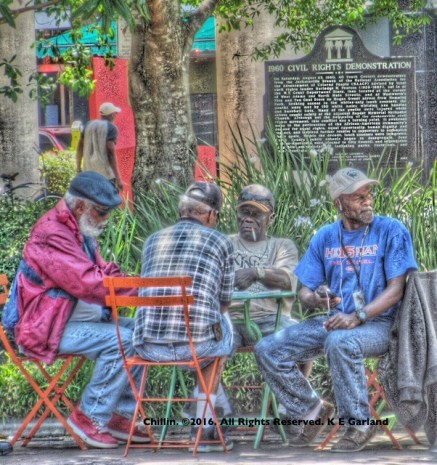
When you think of the civil rights movement, what cities come to mind? Mobile? Birmingham? Atlanta? some place, Mississippi? How about Jacksonville, Florida? Probably not, but this southern city and its leaders were just as influential as Selma.
I found this out four years ago, when I posted this photo to my blog.
A fellow blogger noticed the background and sent it to her friend, Rodney L. Hurst Sr. Mr. Hurst contacted me about purchasing a copy and explained the meaning of the sign behind the gentlemen’s heads.
I was excited to hear about this little-known Black history fact and asked Mr. Hurst to a breakfast interview to understand more.
KG: Can you describe a little bit about what Ax Handle Saturday was and what happened?
RH: I was president of the Youth Council NAACP and I led the sit-ins at the ripe old age of sixteen. My mentor was a guy named Rutledge Pearson.
KG: A school is named after him?
RH: Yes. One school is named after him. In fact, he and Earl Johnson were inducted into the Civil Rights Hall of Fame earlier this month (2016) in Tallahassee. He taught me eighth-grade American history. When I went to his class, he told me about the textbook and had other class members to talk about the textbook and then he said leave it home.
Mr. Pearson would not teach American history from the slanted and racist viewpoint of white textbook authors and historians. Our study of American history did not revolve around a book that only had the names of Booker T. Washington and George Washington Carver. We studied John Hope Franklin, Althea Gibson, and Thurgood Marshall.
The first book report I did was on a guy named Toussaint Louverture, who fast became one of my favorites. He led the only successful slave revolt in this hemisphere, eventually became the Father of Haiti, and because of what he was able to do in Central America in fighting Napoleon, and controlling the shipping routes, Napoleon had to sell Louisiana territory to this country. You will never read his name in an American history book and he is inextricably bound to the history of this country.
In Mr. Pearson’s history class, it was Black history every day in his class. He also said, freedom is not free; if you’re not part of the solution, you are a part of the problem. He encouraged us to join the Youth Council of NAACP. American history teacher in an eighth-grade class encouraging his students to join the Youth Council NAACP?
KG: You would get fired today doing that.
RH: Sure. And I joined when I was age 11, became president when I was 15, and led the sit-ins when I was 16. The sit-ins in Jacksonville were led by high-school students, which is one of the reasons we did it during the summer, as opposed to college students who were able to do it year-round.
We sat in Woolworth’s, where the federal courthouse is now. We sat in at the lunch counters: Kress, Woolworths, Grants, and McCory’s, which were downtown stores. And every downtown department store had a white lunch counter. Some had colored lunch counters, like Woolworths, which was at the back of the store. Others didn’t have colored lunch counters, but you would go to the end of the white lunch counter to order.
KG: But you couldn’t sit down?
RH: You couldn’t sit down. If the waitresses would come and take your order, then okay. So, we said, “No!” During my senior year we sat in. We sat in for two weeks. Woolworths closed the lunch counter. There were whites who stood behind us yelling, jungle bunny, nigger, go back to Africa ‘cause they couldn’t get their fresh lunches.
Two weeks later on August 27th, we were sitting in at Grants, which was on the corner of Adams and Main Street. And there were other incidents leading up to that. We had a white student, Parker, who joined us from Florida State (University) and the whites who were behind us thought he was the leader. Some white construction workers were standing behind him with big construction tools and these guys picked him up and formed a circle around him and walked him out to safety. All this time there were no police in downtown Jacksonville.
One guy had whittled off the end of his walking cane and would walk behind each of us and stuck all of us in the back with his walking cane. Again, no police. When we were attacked, we were attacked by 200 white men with ax handles and baseball bats. Black downtown was attacked. If you were white and tried to protect those Blacks downtown, you were attacked, too. When the word finally got out, then police came from everywhere.
Mr. Hurst described what happened to Parker, the white FSU student who supported the sit-ins and also Leander Shaw, Florida Supreme Court judge’s role in enacting justice. The details are outlined in his historical memoir It Was Never about a Hot Dog and a Coke!
But I want to stop here and emphasize a few points about meeting and talking with Mr. Hurst.
Understanding Black history in your city is important. I’m not from Jacksonville, but I’ve lived here for approximately 20 years. Prior to our happenstance meeting, I’d never heard of Rodney L. Hurst Sr. Subsequently, before our conversation, I was ignorant to the role Jacksonville played in the Movement. I’d heard of Rutledge Pearson Elementary School, but I didn’t know the significance of the person for whom it was named. I wonder if the 95% Black student population knows the rich history to which they’re connected?
Living history is important. Ax Handle Saturday occurred August 27, 1960. That’s 60 years ago. Mr. Hurst is old enough to be my father, not my grandfather or great-grandfather, my father. Sometimes, grainy documentaries make racial oppression seem as if it was eons ago. My conversation with Mr. Hurst reminded me that it was not. Luckily for the K-12 and college students he speaks to, he’s able to authenticate a perspective of a time period that is linked to our country’s history.
Teacher autonomy is important. As a former high-school English teacher, I have to highlight the autonomy teachers had in the 60s. Mr. Hurst’s history teacher was able to make an informed decision about his students and what resources they needed in order to be successful, in not only understanding history in America, but also in transforming their communities. Mr. Hurst was directly influenced by Rutledge’s off-script lessons and push to join an organization specifically with their best interests at heart. Hurst possibly would have never been a part of Ax Handle Saturday had Rutledge stuck to a scripted curriculum.
The takeaways from our interview are endless. But if nothing else, I hope these words inspire you to learn more about the influential Black people in your area because, after all, Black history is American history.
Dr. KE Garland
Katherin is a First Place Royal Palms Literary Award winning writer for Creative Nonfiction. Her work has been featured in the South Florida Times, Talking Soup and For Harriet. She typically writes in order to inspire social change. Other examples of her work can be found on her personalblog.
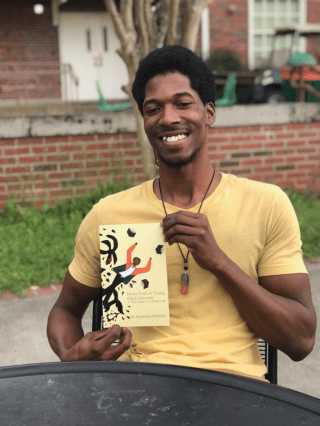
Today’s Black History Fun Fact Friday is from our special guest writer, Keyshawn McMiller. McMiller is a Senior Social Work major at Florida A&M University, and a current two-time published author (Ideals From A Young Black Introvert). Keyshawn aspires to one day, become a licensed counselor and ultimately, open the minds of traditional minority communities to the advantages of professional self-help.
The next time you ponder the great polymaths of the world such as Leonardo da Vinci, Thomas Jefferson, and Abraham Lincoln, be sure to include another prominent Renaissance Man in Benjamin Banneker. A free-status African American raised on a Maryland farm that would eventually be bequeathed to him, Banneker was fortunate enough to attend a Quaker school. Though, he was primarily self-educated, relying on loaned books to learn the bulk of his skills. While in his 20’s, his knack for mathematics was demonstrated as he constructed a working wooden clock based on studying pocket watches. This accomplishment would only be the beginning of Banneker’s successes, as an interest in astronomy brought on by Quaker Astronomer, George Elliott, led him to predict a 1789 solar eclipse accurately.
As he matured, the Black Excellence of Benjamin Banneker was only magnified as he eventually became a prominent abolitionist and land surveyor near the end of his life. During this period, Banneker wrote future U.S. President, Thomas Jefferson, a letter in 1791 asking for improved living conditions for his people. In this same letter, he also sent drafts of various almanacs for the states of Pennsylvania, Delaware, Maryland, and Virginia. Amazingly, this draft would eventually be published thanks in part to Thomas Jefferson’s approval. Perhaps Banneker’s most significant achievement came about as he surveyed the land that would eventually become the current domain for the United States’ capital in Washington, D.C.
Despite Benjamin Banneker passing on in 1806, approximately 57 years before Lincoln’s Emancipation Proclamation, his legacy lives on. His name is included in several institutions, including The Benjamin Banneker buildings housed at Florida A&M University. At the notice of his passing, an obituary was published in the Federal Gazette with the quote, “Mr. Banneker is a prominent instance to prove that a descendant of Africa is susceptible of as great mental improvement and deep knowledge into the mysteries of nature as that of any other nation.”
Keyshawn McMiller is a Senior Social Work major at Florida A&M University. A current two-time published author with “Ideals From A Young Black Introvert” and “Winnas, Not N*ggas,” Keyshawn is on a mission to use his gifts of writing to inspire the next generation to trade who they are for what they can become.
Black History Fun Fact Friday returns next week with a brand new fun fact and our first special guest! Until then, I hope you enjoy this repost of how Black History Month got started.
Black History Month is around the corner. You know, the one time of the year that people are genuinely interested in Black History. Good thing you’ve got The PBS Blog, where we hit you up every week and all year round! Today, let us explore how Black History Month came to be.
Have you ever wondered why Black History Month is in February? You’ve heard it (or maybe even said it) “Why its gotta be the shortest month of the year tho?” Yea, that was you. It was me too. Before we get into that, let’s start from the beginning.
It starts with Dr. Carter G. Woodson, famous for his book The Mis-Education of the Negro, a book I highly recommend that you read (if you haven’t already).
Known as “The Father of Black History Month,” Carter was one of the first African Americans to receive a doctorate from Harvard and dedicated his career to the field of black history.
Carter G. Woodson, 1947. Carter G. Woodson Papers, Box II 28, Manuscripts Division.
In 1915, Carter G. Woodson helped found the Association for the Study of Negro Life and History (which later became the Association for the Study of Afro-American Life and History). The next year he established the Journal of Negro History and in 1921 formed the African-American-owned Associated Publishers Press. His goal was to center the contributions of African Americans. He wrote a dozen books, including but not limited to: A Century of Negro Migration (1918), The History of the Negro Church (1921), The Negro in Our History (1922) and The Mis-Education of the Negro (1933). The Mis-Education of the Negro is the most famous of these and is an often-recommended book by Historians and is also a book of study at Colleges. It centers on Black’s indoctrination into the American education system and touches on self-empowerment.
In 1926, Carter founded Black History Week. Black History Week eventually became Black History Month. It started as a program to encourage the study of Black History and was a week-long celebration in honor of Frederick Douglass (Born Feb. 14th) and Abraham Lincoln (Born Feb. 12th) and therefore Black History Month is in February.
Using Abraham Lincoln’s birthday is odd to me since Lincoln said that if he could have saved the Union without freeing any slaves he would have done it. Written during the Civil War, in one of Abraham Lincoln’s most famous letters to Horace Greeley, editor of the New York Tribune, Lincoln wrote about his focus to save the union, not to free the enslaved. Written while the Emancipation lay in his desk, not yet proclaimed, this letter is where the infamous quote comes from:
“My paramount object in this struggle is to save the Union and is not either to save or to destroy slavery. If I could save the Union without freeing any slave I would do it, and if I could save it by freeing all the slaves I would do it, and if I could save it by freeing some and leaving others alone I would also do that. What I do about slavery, and the colored race, I do because I believe it helps to save the Union.” – Abraham Lincoln, excerpt from
Letter addressed to Horace Greeley, Washington, August 22, 1862.
Source: The Collected Works of Abraham Lincoln, edited by Roy P. Basler
Learn more about Lincoln and the truth on his motifs concerning the freeing of the enslaved here.
In any event, in honor of these men, the program was held February of 1926 and was later expanded to an entire month as late as 1976.
And that, my people, is how Black History Month (the brief version) came to be.
Don’t Complain. Use What You Have.
I do not believe in colors. I believe in nations of people. I do not consider black and white to be nationalities set in motion by the creator but colors created by men. I believe that each human person belongs to a nation with land, laws, customs, and traditions to govern them. No one is black, white, or red. This doesn’t even make sense. Race was a concept developed by man to keep certain truths hidden and to promote racial superiority. Like you, I do not believe that Black History is something that should be assigned to one month, (for me it’s a way of life) let alone the shortest month, but I won’t complain about it. Instead, I’ll use it to further educate those whose eyes and ears are more open to hearing the truth. Every day is a chance to share Black history but instead of complaining about it is “the shortest month,” let us use February as an opportunity to awaken those who don’t know to the wide range of historical information that exists (but is largely left out of the textbooks) at a time where people are most interested to learn.
In the age of information where it is “cool to be conscious,” people aren’t as “woke” as they think they are. That said, if Black History Month is an opportunity for us to share knowledge and to introduce something to people at a time where they would pay attention, then we should do it. It has nothing to do with “celebrating black history month” but spreading the truth. If Black History Month helps people to understand who they are because their minds are open now, by all means, let us take advantage of it and stop complaining. Okay, so the month is short. That just means we better pack as much information into these 28 days as we can.
*Steps off soapbox*
And now, for my favorite Carter G. Woodson Quote:
“When you control a man’s thinking you do not have to worry about his actions. You do not have to tell him not to stand here or go yonder. He will find his “proper place” and will stay in it. You do not need to send him to the back door. He will go without being told. In fact, if there is no back door, he will cut one for his special benefit. His education makes it necessary.”
– Dr. Carter G. Woodson, “The Miseducation of the Negro”
The inspiration for today’s topic comes from a heated discussion ongoing from an episode of the TV show The Real. The Real is a talk show that prides itself on being centered on conversations on current events, fashion, family, relationships, and celebrity news. The show’s hosts include Jeannie Mai, Adrienne Bailon, Tamera Mowry-Housley, Loni Love, and now Amanda Seales. The show’s hook is presenting real topics, having real discussions, and giving very real opinions. However, some audiences do not find the show as authentic as it prides itself to be, and Loni’s comments add a lot of fuel to that fire.
Co-host Loni Love found herself in some hot water over her comments about Black men, cheating, and slavery. Here is a clip of what was said:
“I don’t speak for the Black community, but I do think a lot of Black men…they really don’t know how to have true, faithful relationships. They think because they have money…because they have power that they can treat women any kind of way….What is happening is that we are still dealing with the point of slavery, and we are descendants of slavery, and because our families were broken up, we still do not know how to have…together, cause our families were broken up…”
She failed, in my opinion, to clearly articulate her point, but she is receiving backlash nonetheless. Her comment opened the door for further discussion on this topic. I would like to use it as the catalyst for exploring what relationships were like for enslaved men and women and whether there is any truth in Loni’s statement.
Questions to ponder as you read:
Should we isolate Black men as cheaters who use money and power to take advantage of women?
Is it fair to use slavery to support the theory that Black men, in particular, have a problem being faithful in relationships?
Are we descendants of slaves? Or are we descendants of people who were enslaved?
Family separation became increasingly common during the antebellum period, and being sold on the New Year was common. Widely known as “Hiring Day” — or “Heartbreak Day,” as the Black abolitionist journalist William Cooper Nell described it — enslaved people spent New Year’s Eve waiting, wondering if their owners would rent them out to someone else, which would split up their families. (Waxman, O, 2019)
“Hiring Day” was part of the larger economic cycle in which most debts were collected and settled on New Year Day,” says Alexis McCrossen, an expert on the history of New Year Eve and New Year Day and a professor of history at Southern Methodist University, who writes about Hiring Day in her forthcoming book Time’s Touchstone: The New Year in American Life.
Enslaved people were bought and sold like cattle, and auctioneers appraised women based on their ability to reproduce. Women who birthed children during slavery were called “breeders,” and their children were referred to as the “increase.” The mother and father of the “increase” could have been a legitimate couple, or they could have been forced together.
Black people were not people in this sense; they were commodities. Their bodies had a price tag. Slave-masters/owners could mortgage, loan, trade, or exchange the enslaved body. “The nature of exchanging enslaved people meant that this seller was open to the idea of getting them back, perhaps after the child reached a certain age and the mother was no longer breastfeeding.” (Berry, D, pp 20)
Enslaved men, women, and children incurred interest, and even in death, the enslaved body was traded and sold, many of them ending up on the tables of medical schools for hands-on medical research. Slave farms existed, where Black men and women were raped and forced to have sex with one another. “The South,” writes Sublettes, co-author of The American Slave Coast: A History of the Slave-Breeding Industry, not only produced tobacco, rice, sugar, and cotton as commodities for sale; it produced people.”
“Because slaves were property, Southern slave owners could mortgage them to banks and then the banks could package the mortgages into bonds and sell the bonds to anyone anywhere in the world, even where slavery was illegal. Thomas Jefferson bragged to George Washington that the birth of black children was increasing Virginia’s capital stock by four percent annually.”
– The American Slave Coast: A History of the Slave-Breeding Industry
Enslaved couples were not married or in a relationship in the same way men and women are married or in a relationship today. Since this is a personal part of enslaved life, it’s difficult for historians to say how these relationships worked or did not work.
“Research into the intimate areas of slaves’ lives has proven problematic for historians because the typicality of private sentiments is always hard to establish, and within slave testimony such as the WPA narratives, the reference to issues of marital discord, abuse, or adultery is rare.”
Emily West(2004)Tensions, Tempers, and Temptations: Marital Discord Among Slaves in Antebellum South Carolina,American Nineteenth Century History,5:2,1-18,DOI: 10.1080/1466465042000257837
What we know is that it was illegal for Blacks to marry in the traditional sense, that many of them were forced together for breeding, and that some enslaved couples did not live on the same plantation. There’s something else we know: due to the complex and brutal system of slavery, relationship bonds between Black men and women (that weren’t forced or instituted by the slave owner) were strong. “Marital ties created bonds that warrant attention equal to the bonds of motherhood.” (Berry)
Enslaved couples who married under slavery loved each other deeply because there was no guarantee they wouldn’t be sold away from one another. Take the story of Tamar, an enslaved woman from Camden County, North Carolina, who ran away several times, was sold several times, and had her children sold multiple times. According to her brother’s testimony, Tamar “traveled by night, and hid herself in the woods.” (Berry) While in hiding, she had more children with her husband. Pregnancy, in this case, could have resulted from genuine love and marital affairs.
In The Chords of Love: Legalizing Black Marital and Family Rights in Postwar Texas, Crouch tells the story of Fannie, a slave woman who wrote a loving letter to her husband. “I haven’t forgot you,” she writes, “nor I never will forget you as long as the world stands.” (Crouch, B, Journal of African American History)
“…it’s not across the board because what is happening is that we are still dealing with the point of slavery. And we are descendants of slavery and because our families were broken up…” – Loni Love
Is there a correlation between a Black man who cheats and the enslaved Black man who was forced to have sex with and impregnate lots of women without attachment or commitment? Has this trauma passed down through generations caused Black men to perpetuate similar behaviors as were required during slavery? Is this what Loni Love of The Real was trying to communicate?
Certainly, we have all inherited both good and toxic behaviors from our ancestors in one way or another. Today, many Black families say they eat pork because “at slavery times that’s all we had to eat, so we made food taste good by trying things out,” says Big Mama in the 1997 movie Soul Food.
But Black people aren’t the only people who eat pork, nor are we the only people who are known for eating pork.
“Cheating is a matter of choice. And when you cheat it is a choice that you as a man are making to feed your ego. It has nothing to do with your boys not being around. It has nothing to do with men working too hard. It’s not a matter of race. Men make choices and cheating is always a poor choice because it’s ego-driven.”
– Charlamagne tha God
While there are certainly questionable actions we’ve picked up from being enslaved people, there is no evidence that directly links Black men cheating to slavery. Cheating is not a trauma-based response from slavery that causes Black men to be untrustworthy and unfaithful more than any other race. Men and women of all races and backgrounds make poor choices that cause them to cheat for one reason or another.
What further complicates things is that Adrienne adds that this is true “Across the board,” which is a good point. This could have been an opportunity for further clarity, historical context, and teaching. Still, Loni cuts her off, further clarifying her point that she is specifically talking about Black people and, in particular, Black men:
“No, it’s not across the board because what is happening is that we are still dealing with the point of slavery. And we are descendants of slavery and because our families were broken up we still do not have a idea of how to have…together, families were broken up…”
We are not descendants of slavery.
We are the descendants of a people who were enslaved.
If it’s true that because of slavery Black men struggle with fidelity, then we also have to say something about the white slave masters who raped and forced Black men and women to breed. And we have to talk about the white slaveowners who cheated on their white wives with Black women.
Black men during slavery did not have the same capacity to cheat as men and women have today. Marriage during slavery did not mean the couple could exercise fidelity because they did not have the right to their own bodies. While married, the wife may have had children by the master after being raped by him and the husband could have also fathered more children through force. The only guarantee was the love each had for one another and the hope that they could see each other as often as was allowed and cultivate some sense of normalcy for their families (as normal as was possible under slavery).
Is it fair to say, “Lots of white men beat their wives because they are the descendants of slave-owners and masters who beat their slaves?” Is it ever fair to make generalizations about a group of people, gender, or race?
Imagine the frustration of being a Black man in America, honorable and striving only to look and see your own woman (The Black Woman) consistently publicly declare to the world that you are not capable of doing right.
“Black men everyday are dealing with our character being shamed.”
– Willie D
If we say, “Black men don’t know how to be faithful because we are still dealing with the point of slavery,” we miseducate people on the history of our enslavement. Next, we alienate Black men, assume Black women and other races of people (across the board) don’t cheat, and throw Black men under the bus.
Books I recommend for further research on Slave Breeding and Blacks used as Commodities:
The American Slave Coast: A History of the Slave-Breeding Industry by Ned and Constance Sublette
The Price for Their Pound of Flesh: The Value of the Enslaved, from Womb to Grave, in the Building of a Nation by Daina Ramey Berry
Medical Apartheid: The Dark Experimentation on Blacks from Colonial Times to the Present by Harriet A. Washington
I am stopping through to remind you I am looking for writers interested in submitting articles to this blog for my Black History Fun Fact Friday series. Below is a reminder of the qualifications for submission. Also, notice I have added a deadline to articles for Black History Month. There are four Fridays in February this year and so far we have one article submitted. This means there are only THREE slots left for those of you who want to get in for Black History Month. (This is not a Feb only opportunity, but a weekly one so don’t fret if a Friday in Feb is not open when you submit).
Because of the nature of this series interested writers must be Black/African American (this includes so-called Afro Cuban, Jamaican, Haitian, Cuban, Afro Brazilian, Dominican, etc.).
Must be original work. Do not copy and paste the article from other blogs unless that blog is your own. If you have a Black History article to share that you published to your site you are welcomed to submit it for Black History Fun Facts. I have no problem with that as long as it is your work.
Topics must be relatable to the history of Blacks/African Americans.
Articles must be emailed to me for approval at least one week before publishing. If you email your article on 1/31 for example, I will publish it on 2/7 if there are no needed changes. This series is not exclusive to Black History Month but if you want your articles published in time for February, please have them submitted no later than Monday, January 27, 2020. Writers looking for more exposure will be wise to try for a Feb slot. A Black History Article during Black History Month will naturally attract more readers.
Please send articles in a Word Document, 12p Font, Times New Roman text.
Please do your best to self-edit your work for basic typos/spelling/grammatical errors before submission. Grammarly andProWritingAid are good free self-edit software programs to use.
The BHFFF badge will be included in every post but you are welcomed to create your own image to add as well. Canva is a good program to use to make your own images. Unsplash is good for free images.
This is Black History Fun Fact Friday not Black History Opinions so do your best to submit articles covering accurate historical information. I will vet the submissions to make sure they do. If you have links to sources, please include them.
Please include a photo of yourself, social media handles, websites, or links to books you’ve written on the topic. This will be added to the end of the post as your call to action. This is where you give readers the chance to follow/learn more about you.
Benefits of Guest Blogging:
Increase traffic to your own website/blog
Build Relationships/Online Influence
Build Domain and Search Engine Authority
Capture Wider Audience
Develop Your Authority on a topic
Improve Your Writing
Opens the doors for paid business opportunities
The series is Black Historical so submissions should be articles detailing the history of Blacks in some way. You can talk about The Transatlantic Slave Trade, Enslavement, Civil Rights, Police Brutality, Medical/Educational discrimination, Black Power Movement, Inventors, Black Biblical History, and much more. Tell us about a little Known Black Historical Fact or introduce us to a little-known Black Historical person or place. (For example, I once published a post on Sundown Towns, all-white communities where Blacks were restricted from after Sundown).
Topics can vary as long as they cover Black History (this includes Jamaican, Haitian, Puerto Rican, Cuban, Caribbean, and Dominican.) Specifically, I am looking to feature full-length articles that inform and educate on some part of Black History at 300+ words or more. (Do not send a book, but make sure your article is at least 300 words. We want it long enough to inform but short enough to keep the reader’s attention.)
Email articles to yecheilyah(at)yecheilyahysrayl(dot)com
Questions? Comment below, use the contact form on the contact page or send me an email.








 The PBS Blog