
Author: Yecheilyah
Writing to restore Black historical truth through fiction, nonfiction, and poetry.
The Courage to be Limitless

Movie Night Friday – Imitation of Life (1959)

For today’s segment of Movie Night Friday, where I present some of my favorite movies and why I love them, I present a special feature in honor of my upcoming book, which deals with the concept of racial passing.
In this 1959 classic, which originally comes from a book of the same name and is a remake of the 1934 version, a struggling young actress with a six-year-old daughter sets up housekeeping with a homeless black widow and her light-skinned eight-year-old daughter who rejects her mother by trying to pass for white.
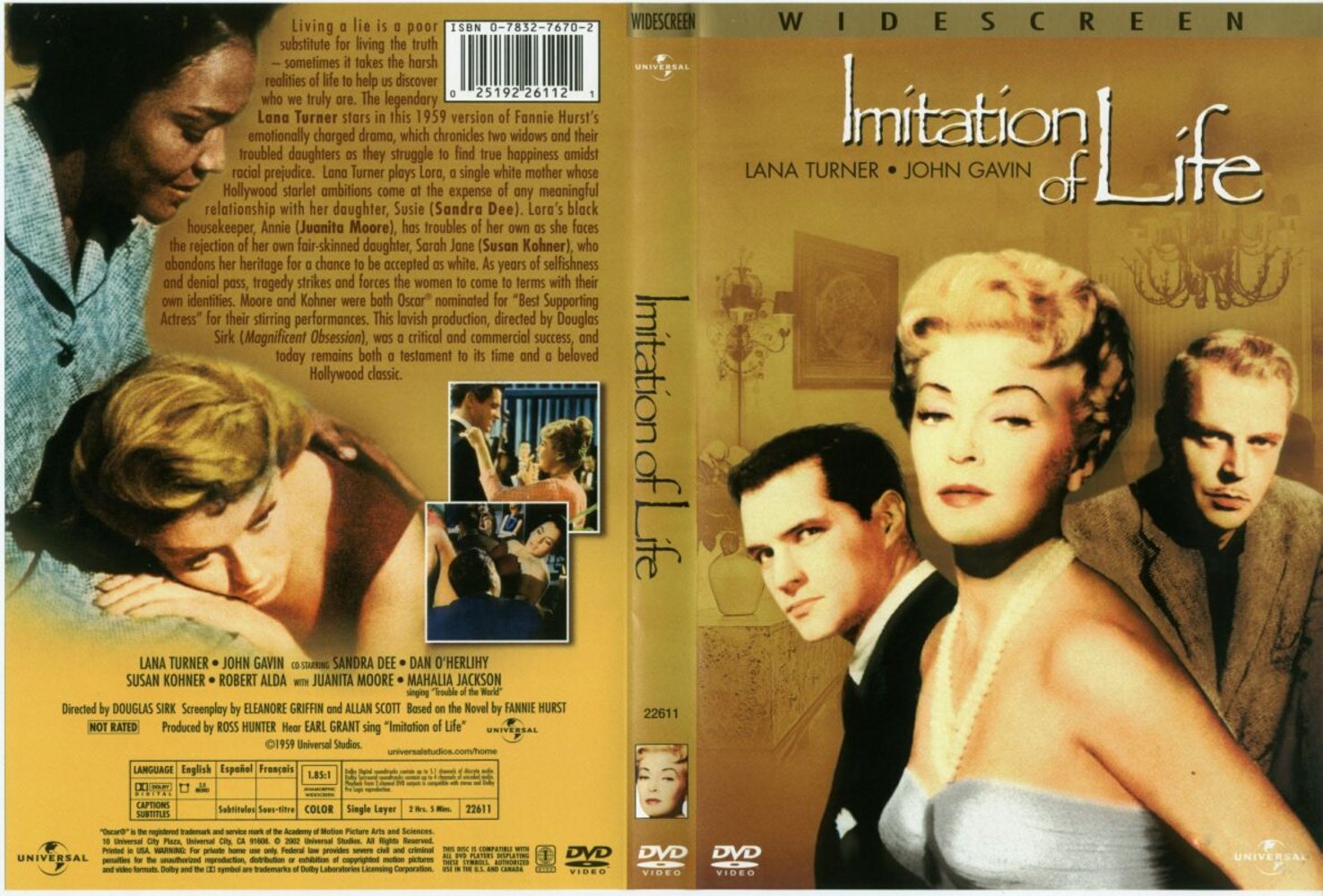 “Lora Meredith (Lana Turner) dreams of becoming a famous Broadway actress. Losing track of her young daughter Susie at the beach (portrayed as a child by Terry Burnham), she asks a stranger named Steve Archer (John Gavin) to help her find the girl. Susie is found and looked after by Annie Johnson (Juanita Moore), a black single mother who also has a daughter, Sarah Jane (portrayed as a child by Karin Dicker), who is about Susie’s age. Sarah Jane inherited her father’s fair skin and can pass for white. She does this with fierce zeal and fervor, taking advantage of her European heritage and features. In return for Annie’s kindness, Lora temporarily takes in Annie and her daughter. Annie persuades Lora to let her stay and look after the household, so that the widow can pursue an acting career.”
– Wikipedia
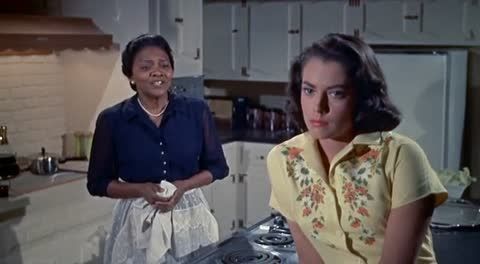
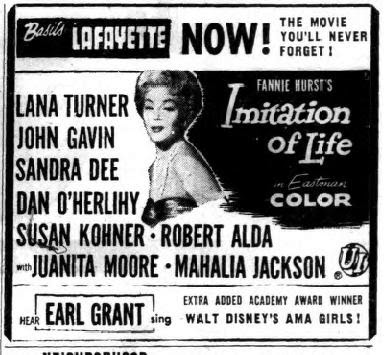
Though Imitation of Life was the fourth-most successful motion picture of 1959, grossing $6.4 million and Universal-International’s top-grossing film that year, there are mixed feelings among critics as to the social messages of the film in that time. Critic Molly Haskell once described ‘Imitation’s’ double-vision: “The black girl’s agonizing quest for her identity is not seen from her point of view as much as it is mockingly reflected in the fun house mirrors of the culture from which she is hopelessly alienated.”
For me, I am about to watch it again, my first time in a long time, as study material. I am 28 years old in 2015, and as I cozy up on the sofa, pen, pad (and snacks) in hand, it is fascinating to ponder how those who lived in this time, black and white, saw the films message and how they viewed the influence of the film in the Jim Crow Era. What was America’s attempt in showing a movie like this? Was it to expose the practice of Passing as practiced by many African Americans of the time? Was it for a genuine concern of the many Americans of mixed ancestry and their search for identity? Was it, as many deem it, to further degrade the African American community? Or was it to seek change in the current societal perceptions of what it means to be black and what it means to be white in America?
Trailer:
Be Beautiful

From the Foundation of the World
We bask in decisions we have already made and dance in the reward of work we have already put in. My unborn children are dancing circles around my womb. I am pregnant with goals that will give birth to the life they will one day live. Does the life you live today prepare you for the future? Have you ever wondered what makes up your final destination? Considered that the decisions you make today will determine the outcome of your life tomorrow. Or, to go deeper, that the decisions you make today will determine the outcome of my tomorrow? I am someone you do not know and you are someone I have never met, and yet the result of our decisions may very well cling onto one another as if torn from one flesh. What is my reward for being respectful today? For being considerate, for being mindful, or for being innovative. Will this be credited back to me? Can I depend on someone to love me when I am old and incapable and if so, how did I solidify that future today? Will my offspring reap the benefits of my labor? What eternal existence have we created out of the dust life birthed us with from the foundation of the world? Will we gather the elements of success into our hands so that we may mold the outcome of someone else’s future? Or will we allow the rains to devour that final taste of hope as if relinquishing our breaths to the sky in place of Noah’s ark.
Queen

We are south of Senegal, maybe Guinea, maybe Ghana, or maybe as far east as the Congo. In any event, there is a woman and she’s smiling; putting her body and her hands to work to the multitasking of the rhythm of hips, rolling shoulders and the calming beat of the sounds that influence them. You must not however get distracted by her dancing as if of some stereotypical performance the Africans must put on, for her tribes have always been comprised of dancers and musicians. After a wedding, and even after battle, the men assemble their drums and the women their bodies to tap into a spiritual formation of triumphant celebration. So, the woman is dancing, and showcasing the bright red and blue colors against her skin; the dyed cloths her mothers have handmade from fresh berries. Her hair is braided in plaits; it is strength like strong rope. The woman is gorgeous and the men stare as her chocolate skin glistens in the sun, soft and smooth like silk. He nods, returning her smile. She blushes, rolling back and forth to the appreciation of his hands, slamming with authority against djembe drums, a rope-tuned skin-covered goblet drum, as if massaging against her skin. The year is 1619, and she has just turned seventeen. Waiting this day to which he would smile at her since childhood.
Abba looks her way, it is what she calls Papa Joe, forcing her to turn off seductive eyes and transform into his innocent little girl giggling away in mama’s arms. Placing her index finger on mama’s lips she hopes she has gained enough trust in her to keep silent for daddy must not ever find out about her secret love. If so he may begin to think she no longer belongs to him, for in her village it is custom that when a woman found a man her father gives up his reign, and it now belongs to her husband. And this she can’t bring herself to fathom, that one of those fine strong men will take her away from King Joe. The one who have always protected her and was known for treating mama like a queen, yet it is what she wishes for, to be queen. For a chance to wear golden nose rings and flaring dresses— yes, to be queen is what she wants. The sounds of the village men still heard in the background of her thoughts; slamming strong hands into drums in time for her body to move in that way.
The night has come, and Papa prepares the tent for sleep, driving the stakes into the ground. The roof is thatched with reeds, the walls and floors covered with mats. She lays awake, this woman. No, better yet this princess. Her eyes wander from the plantain from which her bed is made, to the mats three feet below her. Her eyes cannot stop to think of morning when the village men will approach each tent in that they may search out their future wife. This was done every year to service the anxious seventeen year olds, young women who’d prepared for this day since infancy. Seventeen because the number seven is symbolic of perfection, and it is their belief that seventeen years represented the completeness of their womanhood, perfectly fit to become someone’s wife. For this reason alone she cannot sleep, there is just too much excitement! She would never be seen as a child again, for on this day she would officially become a woman. A man would soon leave his father and mother to cling onto her. And she would serve her husband like mama does Papa Joe and her children she would raise to be the most upright of all her country. If only upon the awakening of the sun it will rest on the heart of him, to choose her.
Yet the night is not complete. Mama screams, obliterating her thoughts into pieces of confusion as storms of men with pale faces invade the village. She cannot catch herself before falling, ropes that smell like death have embraced her space and blood creeps in from outside the tent; and then there was darkness. Pitch black darkness as if the moon, that usually sent pieces of light tapping against each tent, had suddenly run away from the men with pale faces and yellow teeth. Baby girl had never seen them before. They could have been men or they could have been monsters, she didn’t know, and had nothing else to do but wait. This woman or better yet, this princess. This semi-woman waiting in the darkness to become queen.
Writer’s Quote Wednesday – Aldous Huxley
For this week’s segment of Writer’s Quote Wednesday, as hosted by the lovely Colleen of Silver Threading, I take inspiration from Aldous Huxley:
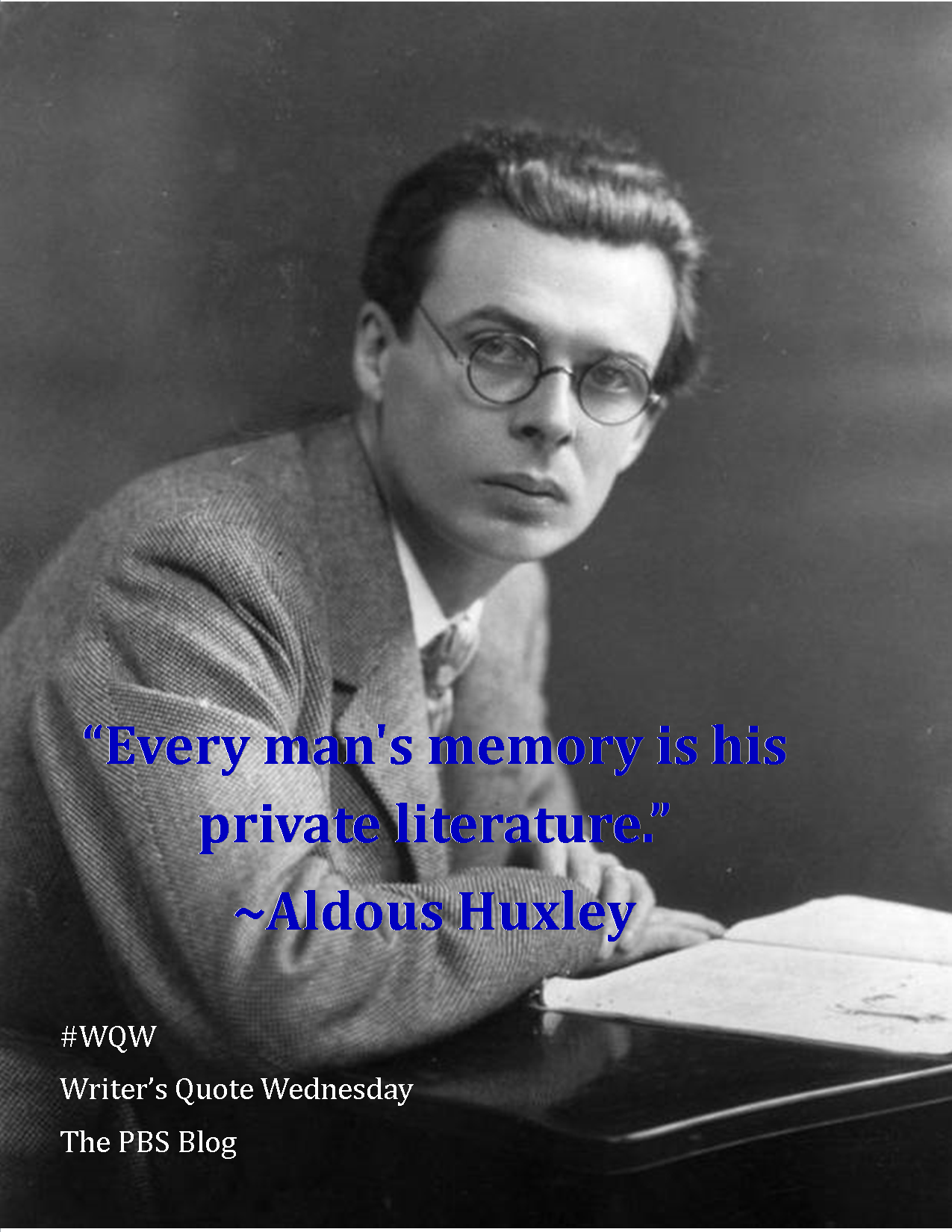 “Every man’s memory is his private literature.” ~Aldous Huxley
The influence of memory in our lives is thought-provoking. Even if it’s just the name of a character or birthplace, memory plays a part in what we write and often even how we write, which is what makes this quote so interesting. A lot of the stories in my books, for instance, take place in Chicago because I know Chicago. This is where I am from, where I was raised, and it is the city that I know. I do not have to make up the names of streets and towns and shops because I know them. I’ve been to Ford City, shopped at the Food & Liquor on 63rd and Western (it’s closed now), and lived on 47th Street. I’ve rode the Red Line through the loop, touched the people, smelled the food and heard the voices. As long as I have memory of Chicago, I’ll always have some story to tell.
About the Author:
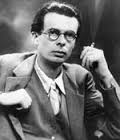
What I enjoy about this weekly prompt, in addition to the inspiring voices of authors who compel us to keep writing, is the search and discovery of new authors to explore. Sometimes it’s best to understand more about the quotes you use. I discovered for instance, that Aldous grandfather, Thomas Henry Huxley, was known as a controversial naturalist in his time, nicknamed as “Darwin’s Bulldog”, which made me think twice about whether or not to use this quote since I don’t believe in anything with the words Darwin in the same sentence. But anyway, I decided to play nice though and let Aldous hang around a bit longer, so here’s his background according to The European Graduate School website:
“Aldous Huxley, was a British writer. He was born on July 26, 1894 and died on November 22, 1963. He would become most specifically known to the public for his novels, and especially his fifth one, Brave New World, written in 1931 and published in 1932.
Aldous Huxley would come to be known mostly as a novelist and essayist but he would also write some short stories, poetry, travelogues and even film scripts. In his novels and essays Aldous Huxley would always play the role of a critical observer of accepted traditions, customs, social norms and ideals. Importantly, he would be concerned in his writings with the potentially harmful applications of so-called scientific progress to mankind”
*************
That’s it for this week’s segment. Be sure to check out the other #WQW posts from other bloggers this week. Just look for “Writer’s Quote Wednesday” in your readers :).

http://silverthreading.com/2015/08/12/writers-quote-wednesday-roald-dahl/
 The PBS Blog