A Month and A Mirror

A hundred years ago, in 1926, Dr. Carter G. Woodson planted a small but deliberate marker in time—Negro History Week—never knowing it would one day swell into a month, a memory, a reckoning.

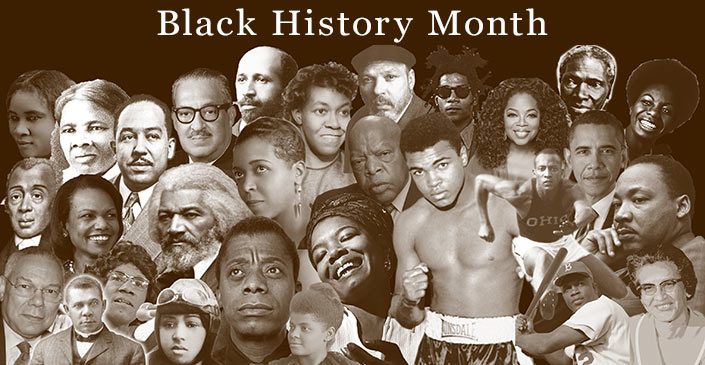
February has carried that weight ever since, in what is now known as Black History Month. It is a month crowded with remembrance, with names spoken loudly and moments replayed until they feel familiar.

But February also carries the ongoing debate over whether Black history should be relegated to a single month, primarily since Dr. Woodson himself never intended the week-long celebration to be permanent, let alone to encompass a whole month lasting 100 years.

For Woodson, he wanted Black history integrated into the mainstream curriculum, not restricted to a single week or, in our case, a single month.

For me, two things can be true.

If you’ve been following me for any amount of time, you know I spend 90% of my time reading, researching, documenting, and sharing Black historical facts year-round. Thus, I am for incorporating Black history into the mainstream curriculum and reducing its focus to a footnote or an elective.

But I do also love the idea of keeping it separate, special, and set apart, as we are.

Additionally, it’s a great time to promote reading. The harsh reality is that American reading levels are still declining. (2024 NAEP data show 12th-grade reading scores at their lowest level since 1992.) I’d bet that your average adult had not read a full-length book since High School, if even then.

Therefore, if February is a time when the minds of the people are not as distracted, then let us use it to do some good.

To quote Bob Marley, “The people who were trying to make this world worse are not taking the day off. Why should I?”

So while Black History Month is not the movement itself, I do see it as a mirror history placed in our hands. When we look into it, we do not see the past frozen in black-and-white—we see ourselves.

Our language. Our resistance. Our contradictions.

The mirror does not lie.

It shows us who we’ve been bold enough to become and who we’ve been too afraid to remember.

Don’t forget we have Black History articles on this blog under Black History Fun Fact Friday and on Substack at substack.com@yecheilyah!

Echoes of Influence

Can ya’ll believe I created this image using ChatGPT? Lol

I love Maya Angelou’s poetry, but it is not what drew me to her. What drew me to Angelou first was her story.

When I read I Know Why the Caged Bird Sings and discovered she had also written other collections of autobiographies, I was delighted by her strength and how it came out in her voice. I watched YouTube videos of her interviews and understood more about how she grew up and what led her down her path. Before Maya Angelou was one of my favorite poets, she became one of my favorite people.

The process of writing out my story on Substack has led me to question how much of what I like really belongs to me and what belongs to the world.

By the time I was born, Angelou was already 59 years old. Her name had already been carved into stone and printed inside the pages of history books. Before I was formed in my mother’s womb, Angelou had been crowned Queen.

But this isn’t really about the amazing Maya Angelou.

I am only using her as an example of how many of us drift through life as mirrors reflecting other people’s likes, passions, and preferences, not out of genuine love but habit.

Is that thing the rhythm in your soul, or is it simply the first thing whispered to you by a world that told you what to like before you liked yourself? Before you knew yourself?

Did you ever listen to that person’s music before they were your favorite artist? Did you ever trace the lyrics with your fingers or read the curve of a poet’s stanzas with your own eyes before you anointed them the best?

Did you ever actually feel the pulse of Angelou’s poetry beneath your skin? Felt her passion jump from the page to her throat and out of her mouth like the voice of many waters? Or do you carry her name like a badge, not because it speaks to you, but because it speaks to everyone else?

Have you ever wandered beyond the well-lit paths of fame into the quiet woods where lesser-known voices sing? Or, have you let the world define your taste, shaping your mind to match the music of the mainstream?

Do you like what you like because you like it or because you’ve been trained to like it?