Yecheilyah’s Book Reviews – Chains of Gold by Ken Robb

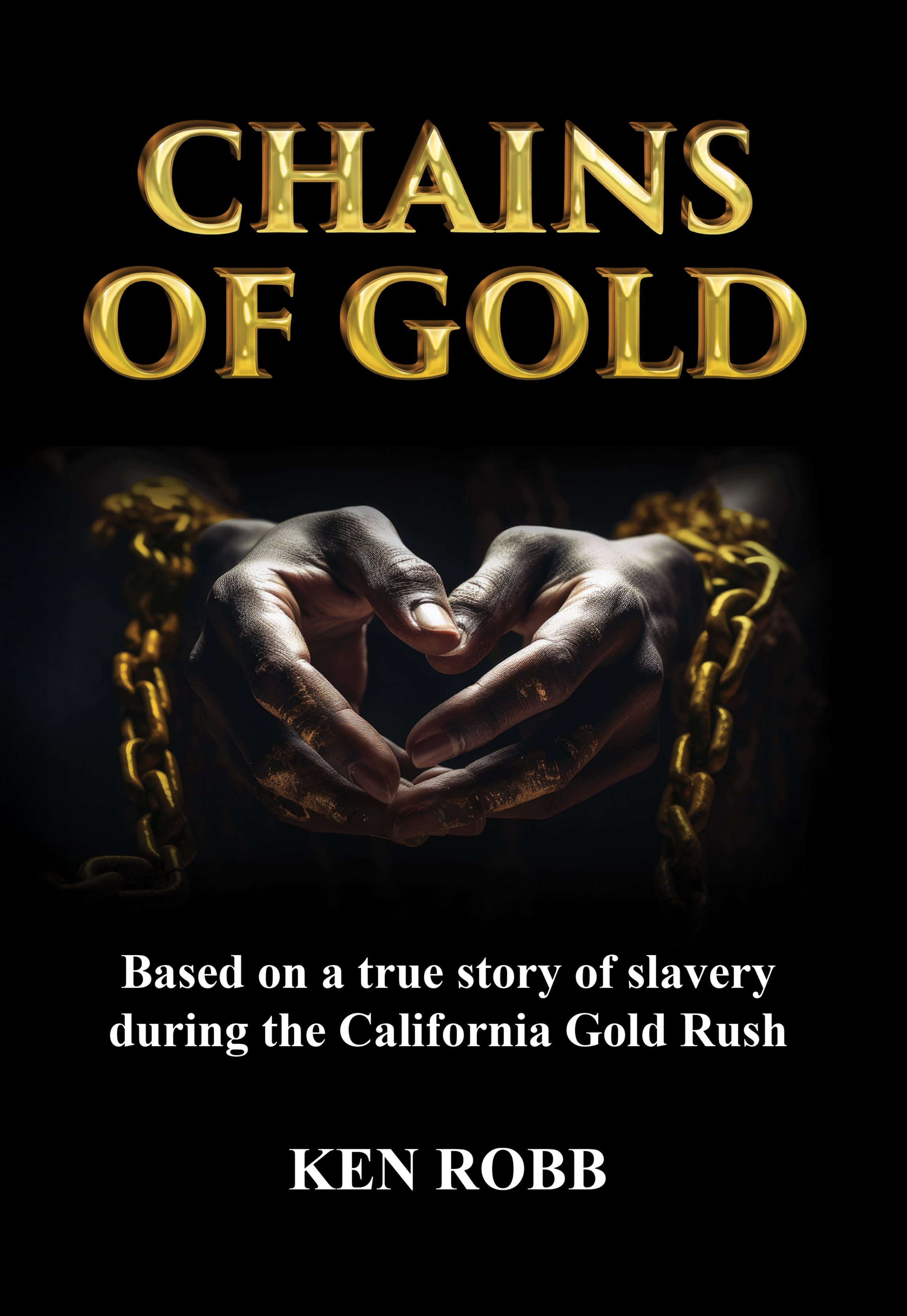
Title: Chains of Gold: Based on the True Story of Slavery During the California Gold Rush

Author: Ken Robb

PublisherWord Star Ink

Genre: Historical Fiction, US Historical Fiction

Published: September 22, 2025

Pages: 438 pages


The year is 1852, and Carter is shouting his freedom into the face of the law as deputies close in, threatening to drag him back to Mississippi in chains. From this moment of terror, the story retreats a couple of years back to the Perkins Plantation, where Carter is not free at all but enslaved, under the watch of a brutal overseer. It is here that Charles Perkins returns home from college to witness the abuse of his slaves.

Although Carter and Charles are half-brothers, playing side by side as boys, adulthood exposes the lie of that intimacy. One is granted power by birth; the other is denied ownership of his own body. I was struck by how powerfully the author juxtaposes affection and oppression throughout the story, illustrating how love can coexist with, and be corrupted by, slavery. Carter and Charles’ bond is no match for a system designed to break one man for the comfort of another.

Charles Perkins is the oldest to inherit the plantation. He was gifted land and slaves, and his father wants his sons to learn how to manage a plantation. Despite this, Charles is noticeably different from his brother. Rather than basking in the excitement of running his own plantation, Charles shows more compassion, doesn’t want the enslaved to be mistreated, and has dreams of going to California to find gold.

Carter is an intelligent Black man. He knows how to read despite being enslaved (something he hides), pays attention to details (especially details on slavery), carries his Bible everywhere he goes, and watches Charles’ back. He is more responsible and proves to be his brother’s keeper on more than one occasion.

While Carter yearns for true freedom, Charles is a man of his time. Despite how much grace he extends, he is still a slave master. As Charles reminisces about the beauty of the mansion and the land, recalling his father’s ambition and how hard their ancestors worked to farm and buy the land, Carter reminds him that “more land means more slaves.” He knows it was built with his family’s blood, sweat, and tears. (Robb 2025)

Though looking at the same view, the men see two different worlds. This is reflected throughout the story. While Charles’s love interest, Emmy, gives him a professional photo to remember her by, Carter’s love interest, Peg, gives him a charcoal drawing she made using a mirror.

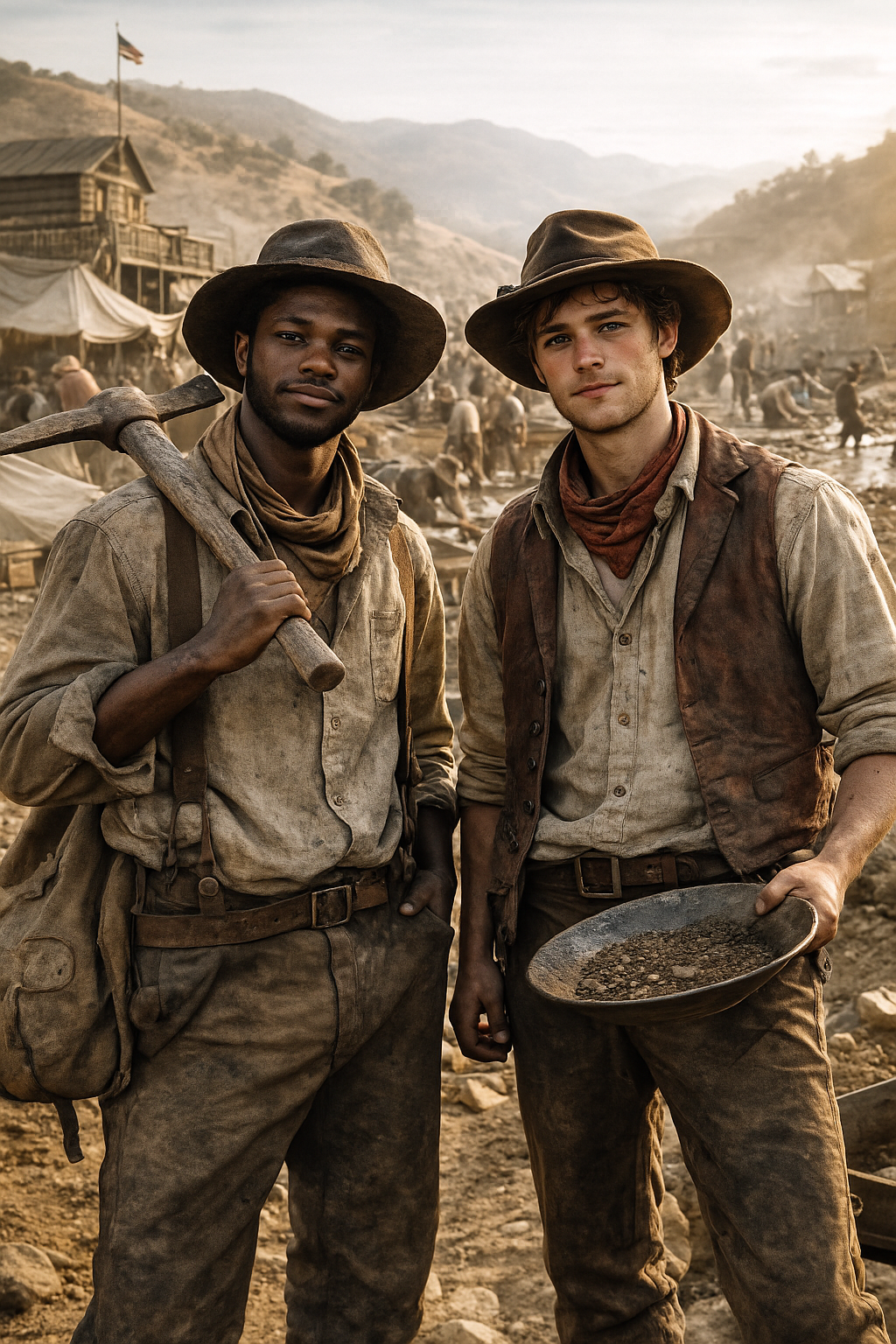
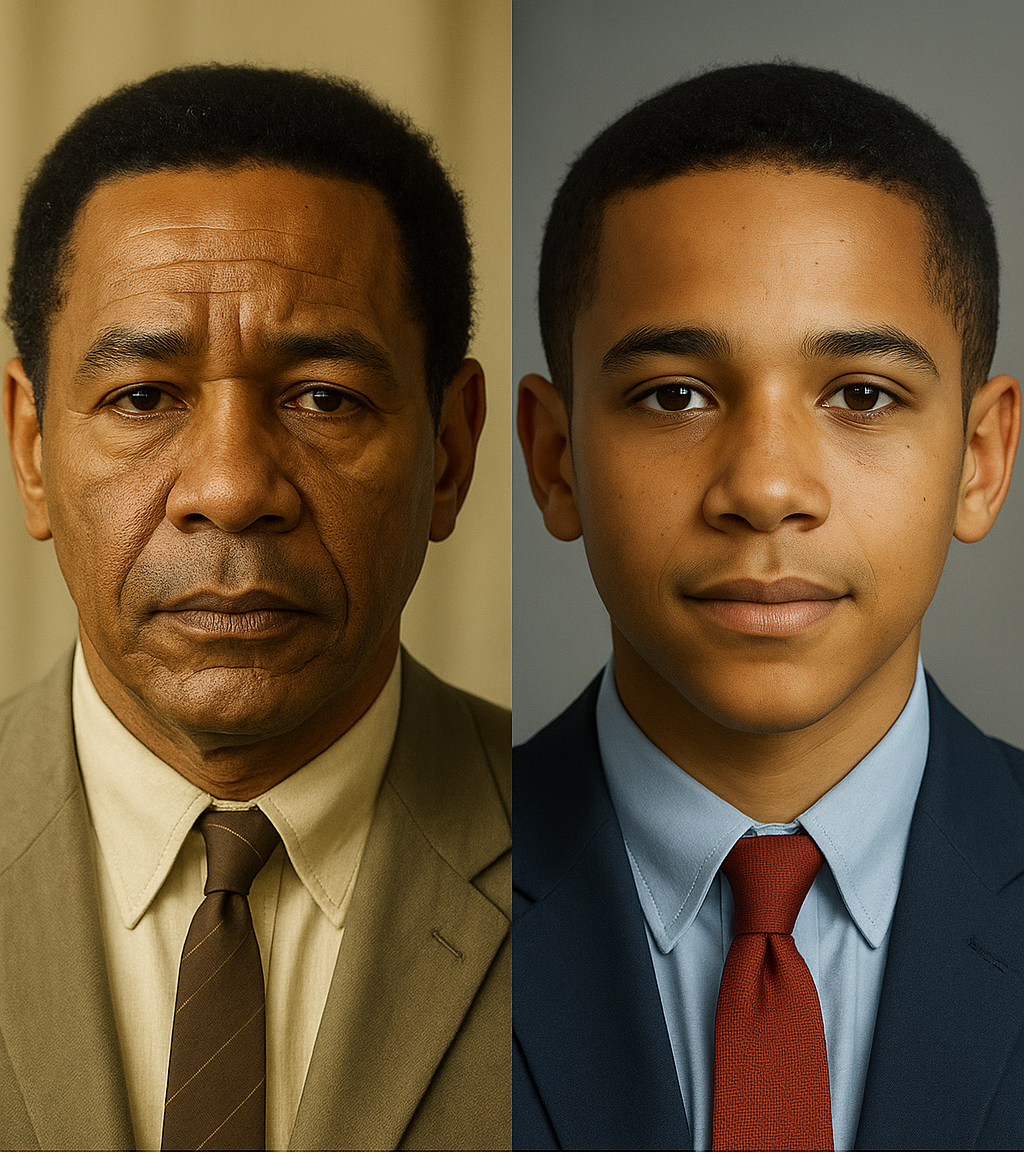
My AI rendition of Carter and Charles

The narrative eventually follows Carter and Charles westward to California in pursuit of gold, a journey the author renders with careful attention to historical details. Rather than functioning solely as an adventure, the passage underscores the persistence of racial and social hierarchies across geographic space. In California, distance from the plantation does not translate into liberation from inherited roles. Charles’s attempts at fairness are marked by visible moral ambivalence, yet the surrounding society repeatedly reasserts the boundaries between them.

This tension is crystallized in several figures throughout the book, such as Bill, the seasoned miner, whose disapproval when Carter refers to Charles as his “master” exposes the unspoken codes governing race, power, and language. This tension resurfaces in Charles’s exchange with Fritz, who asks whether Carter is paid.

Although Charles views himself as well-intentioned, his decision not to compensate Carter—and his quiet assurance that the money would not matter to him—reveals how deeply he remains anchored in the assumptions of mastery. In this moment, Charles acts not as an equal or a brother, but as a man still shaped by the privileges of ownership.

The author does a good job of highlighting the lesser-known aspects of California’s history that are not widely taught.

Slavery and unfree labor were deeply ingrained during the Gold Rush era, despite California’s 1850 admission as a “free state” prohibiting slavery. Slaveholders brought enslaved Black people to work mines, and state laws like the 1852 Fugitive Slave Law enforced this practice. This resulted in complicated legal disputes, community resistance from free Black Californians, and the persistence of servitude until the Civil War.

The best thing about this book is that it’s based on a true story. Both the characters and the Gold Rush era are also well-researched, including the scene where Charles explains to the men how to transform the gold into banknotes. We often overlook the fact that paper money was once backed by gold, until the gold standard was removed in 1971 when Nixon ended the dollar’s convertibility to gold. This is why a dollar in 1800 had far more buying power than a dollar in 2025.

In 1850, $1 could buy what about $40 buys now.


This is a long book, so it will take some time to read. However, if you are looking for some good historical fiction, this one is well worth the time! I was eager to see what would become of the characters.

I think you will too.

Ratings

  • Plot Movement / Strength: 4/5
  • Entertainment Factor: 4/5
  • Characterization: 5/5
  • Authenticity / Believable: 5/5
  • Thought Provoking: 5/5

Overall: 5/5

Chains of Gold is Available On Amazon Here!


The Review Registry is Closed for 2025.

To Be Added to the Waitlist for 2026, please email the first chapter of your book to the email listed in our review policy with “Book Review Waitlist” in the subject line. While this does not guarantee a review, it places your book at the top of the list for consideration in the new year.

To apply for 2026, click here

IMG_8994

Yecheilyah’s Book Reviews is a reputable review service that features writers from around the world, including both traditionally and self-published authors. We are listed on Kindlepreneur as a top-tier book review blog and on Reedsy as one of their vetted active book blogs that provide insightful, excellent book reviews.

*Books are read in the order they are booked.

The Stella Series: Meet the Family

As mentioned, I am reviving the Stella series with a fourth book! For those who have not read the first three books, I’ll share excerpts, nuggets, and tidbits as we prepare for the fourth installment. Today, we are refamiliarizing ourselves with some of the family. Enjoy!


Stella May

Born in 1845, Stella is the daughter of a Black woman named Deborah on Paul Saddler’s Plantation in Shreveport, Louisiana. From a young age, she can remember running through cotton fields and being loved by her family. To young Stella, life is simple and fun. She eats sweet cakes, plays with her friend Carla, and helps the grownups by carrying buckets of water to the field. Stella discovers she is a slave for the first time after Deborah’s unexplained death. Now, she learns the hard way the difference between slavery and freedom.

Solomon Curtis May

Solomon has no speaking roles, but his existence is essential for the family timeline. Solomon Curtis May is Stella’s only son, born in the fall of 1870 after she was sexually assaulted by the husband of her mistress. Solomon falls in love with a white woman and marries her after inheriting land outside Chicago. They have four girls: Deborah, named for his grandmother, Judith, Rebecca, and Sara.

Judith May

Solomon’s daughter Judith married a Black man and gave birth to a baby girl she named Stella after her grandmother. However, after enduring much teasing and discrimination for her mixed features, Judith’s daughter copes with this trauma by denying part of her ancestry. She changes her name from Stella to Sidney McNair and passes for white. After marrying a white man and having his children, Sidney lives her life on the other side of the color line.

Sidney McNair

Her aunt Sara influenced Sidney to pass for white and learn to enjoy her privileges. Sidney marries a wealthy white man named Clarence McNair, and they have four children: Edward, Karen, Joseph, and Glenda, whom they raise as white.

However, when she finally reveals the truth to her adult children in 1979, the shock of their real identity is a betrayal that stretches across generations.

Karen and Noah

Sidney’s daughter Karen McNair falls in love with a young Black man named Noah Daniels. He is a leading member of the Black Panther Party and thinks he’s dating a white girl. At this time, Karen also does not know that she is mixed race, although she has many more African American features than her siblings. The couple endures many trials because of their perceived interracial union. Together, they have a son, Noah Jr, who has a much more significant role as an adult in book four.

Edward McNair

Of all Sidney’s children, her sons are the most conflicted by their mother’s betrayal. Carrying many characteristics of his father, Clarence, Edward has not only lived his life as a white man but has also enjoyed the privileges of doing so and cannot come to grips with his new reality. In brief, Edward does not want to be Black, and his daughter, Cynthia, does not yet know about her true identity because of her father’s secrets.

However, although he appears to reject his heritage, something in Edward’s subconscious won’t allow him to completely forget it. We see this when he names his youngest son after his great-grandfather, Solomon.

Joseph McNair

Joseph is also conflicted about his mother’s decisions, but goes in another direction. Still under the illusion that he is just a white boy, he nevertheless feels sympathy for the plight of Blacks and fights for their freedom with his friends during the 1960s.

Unlike Edward, Joseph wishes he were Black. He grew up to marry a Black woman named Fae, and together, they have two children, a boy named Michael and a girl named Tanya.

Introducing Tanya and Michael…

Born in the early 90s, Tanya and Michael are the children of Joseph and Fae and are young adults in the early 2000s. They face the challenge of defining themselves in a society shaped by their father’s choices and haunted by the truths Stella once fought to conceal.

In book three, they are small children, but in book four, they are young adults. In his part, we weave together the struggles of a new generation to find their voice, identity, and place in a world still wrestling with its past. The echoes of Stella’s decisions resound, reminding us that even as times change, the threads of heritage and truth remain unbroken.


Get Started on The Stella Trilogy!

Book Four: Joseph’s Children

(Working Title)

(WIP/Coming Soon)

Stay tuned for a sneak peek at chapter one of book four!

The Stella Series Continues

I published the first book in the Stella Trilogy in 2015 and revised it in 2020. I have been working on a part four recently, and I am excited to continue this family’s story.

If you have not read the series, I highly recommend it in preparation for the next part. (If you read these books from 2015 to 2016, you are advised to read the revised editions with the alternate ending!)

Like the others, it will be a historical fiction novella or short novel.


When Cynthia McNair’s grandmother overhears her and her boyfriend joking about Blacks in a derogatory way, she has a story. Born in 1845, Stella Mae was an enslaved woman on the Saddler Plantation in Shreveport, Louisiana. Forced to stay on the plantation after Emancipation, she endures much abuse and revelation. She eventually gives birth to an only son, whom she names Solomon Curtis Mae. Stella’s story takes place in book one, Between Slavery and Freedom.

Solomon was given land by the same enslaver who freed him and Stella. As a man, Solomon married a white woman, and they had four girls: Deborah, Rebecca, Judith, and Sara.

Solomon’s daughter Judith gave birth to a baby girl named after her grandmother because they looked so much alike. However, this Stella did not take pride in who she was and lived her life as a white woman and raised her children as white. We watch her struggle from delusion to acceptance during the Jim Crow era as she navigates being married to a racist white man who doesn’t even know his wife is Black. Stella has even changed her name to Sidney McNair. Her story takes place in the second book, Beyond the Colored Line.

Sidney McNair, formerly Stella, gave birth to four children: Edward, Karen, Jospeh, and Glenda. Edward is Cynthia’s father.

Because she raised them as white, Sidney’s children did not know about their African ancestry until 1979. The person most conflicted about this was Joseph, who felt sympathy for the plight of Blacks and fought for their freedom with his friends during the 1960s. His story takes place in the third book, The Road to Freedom. In book three, we learn that Joseph married a Black woman named Fae, and they had two children, Tanya and Micheal.

Joseph’s Children: Book Four in the Stella Series (WIP)

Book Four unfolds in 2008. Tanya is now eighteen, her confidence growing as she steps into adulthood with fire in her heart and ambition in her eyes. Her sixteen-year-old younger brother Michael wrestles with the same questions of identity and purpose that once drove their father to leave home in search of answers nearly half a century earlier.

Against the backdrop of Barack Obama’s historic presidency, the heartbreak of Trayvon Martin’s murder, and the rise of Black Lives Matter, Joseph’s children navigate a new era. They face the challenge of defining themselves in a society shaped by their father’s choices and haunted by the truths Stella once fought to conceal.

The story weaves together the struggles of a new generation to find their voice, identity, and place in a world still wrestling with its past. The echoes of Stella’s decisions resound, reminding us that even as times change, the threads of heritage and truth remain unbroken, binding the present to the past.

Stay tuned for a sneak peek at chapter one!

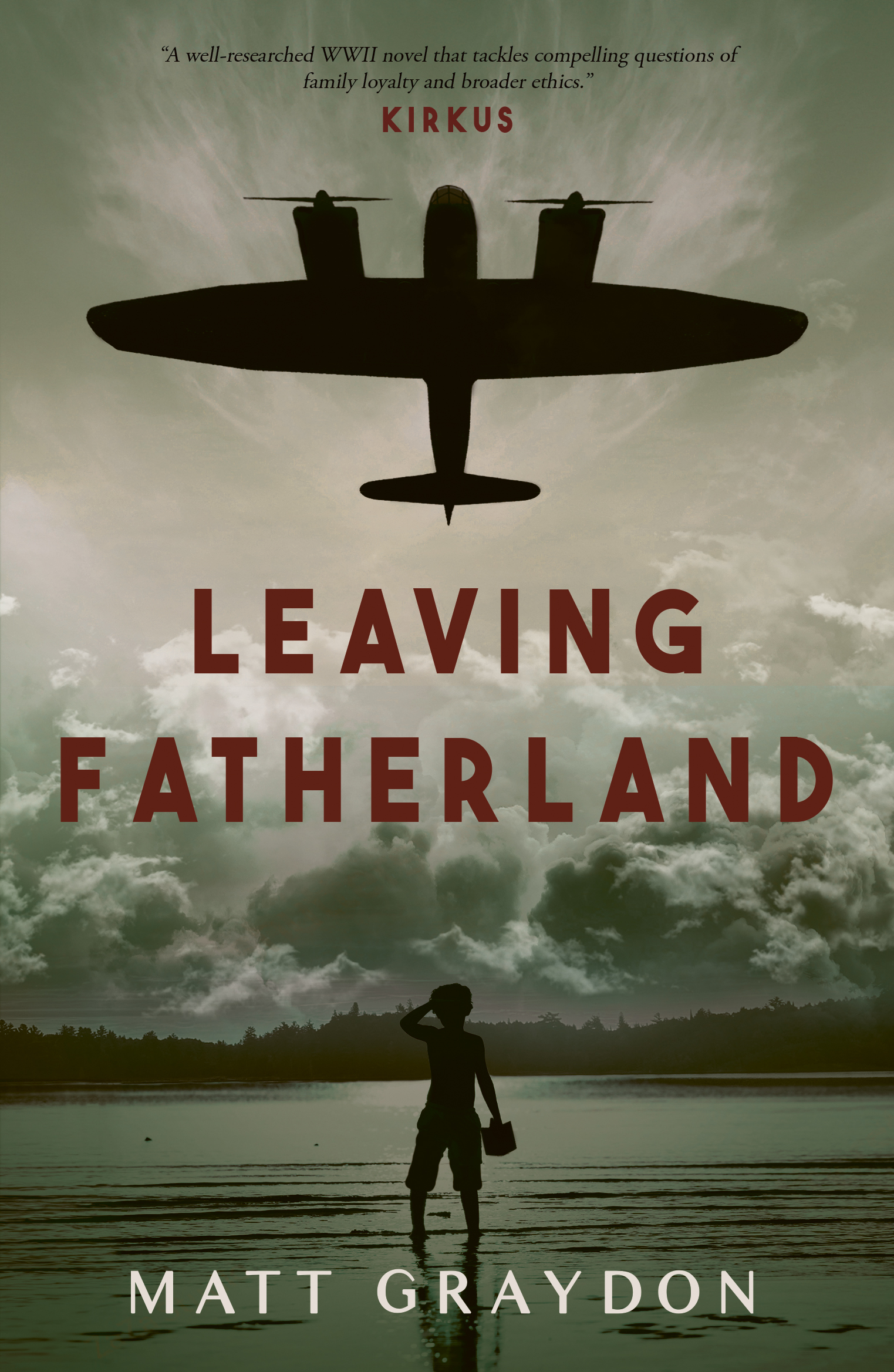
Yecheilyah’s Book Reviews – Leaving Fatherland by Matt Graydon

Title: Leaving Fatherland

Author: Matt Graydon

PublisherCranthorpe Millner Publishers

Published: August 20, 2024

Pages: 326 pages


Matt Graydon’s gripping, well-researched historical fiction debut Leaving Fatherland explores the difficulties of growing up with an abusive father in the context of World War II, Hitler’s ascent, and how our early years have a significant influence on our adult life. Right away, we are introduced to the abuse Oskar Bachmann suffers at the hands of his father, Karl, who assaults his son both physically and mentally. He refers to him as weak and wishes that he, like his brother Emil, had joined the Hitler Youth.

The first time Karl hits Oskar in the book shocked me, even though the author did an excellent job showing the cruelty that led up to it. This would profoundly affect Oskar throughout his life, a life the author shares with us in such detail that it reads like an autobiography.

Contrasted against Karl’s cruelty is his mother Aneta’s kindness and gentleness, a welcome relief. She encourages him to read, which becomes his safe space. Aneta also finds a way to buy Oskar a tourist-class ticket to America to complete his education.

“The pages of the books I wrapped around my mind and soul like blankets brought distraction and great solace from the relentless strife of home life.”

-Leaving Fatherland, Oskar Bacchman

Oskar continued on to study psychology at Manhattan’s University of New York, a decision he made especially to gain a deeper understanding of his father. Even though Karl is mean to him, Oskar still loves him, evident in his desperate attempt to understand him. In his own words: “I’ve learned it’s possible to hate what your father is and yet still yearn for his approval.” As he navigates the city and makes new friends, Oskar is still affected by his father’s actions as shocking revelations about Karl’s ties to Hitler emerge.

I love the research that went into this book, even down to the Black man taxi driver referring to the ten-dollar bill as a “sawbuck.” Even though the author is not Black, his depiction of the driver and his persona was spot on. Bachmann referring to him as a “Negro cab driver” and how he had not seen many Black people growing up in Germany also fit the times (1930s).

Although a lengthy read, Oskar’s life is filled with many secrets and unexplainable fortunes, culminating in a surprising revelation that connects everything together.

89707

Ratings

  • Plot Movement / Strength: 4/5
  • Entertainment Factor: 4/5
  • Characterization: 5/5
  • Authenticity / Believable: 5/5
  • Thought Provoking: 5/5

Overall: 5/5

Leaving Fatherland is Available Now on Amazon!

Leaving Fatherland_WEB FRONT(1)


About the Author

Matt Graydon Author Photo

Matt Graydon has loved writing since childhood. In his early career, he trained and then worked as a journalist for local and national newspapers, developing research skills that proved vital in his historical fiction writing. He later worked as a senior public relations executive for major corporations in a global context, interacting with people from many cultures around the world. In recent years he rekindled his love of creative writing, attending expert writing courses by Faber and others to develop his craft. He is an active member of the UK’s Society of Authors and belongs to the Phoenix Writing Group in Dorking. He has had both poetry and short stories published, most recently Saigo No Tatakai, an account of a kamikaze attack in the Second World War told from both sides.

Matt lives in Surrey, with his wife, adult children and an unruly cockapoo. When not writing, he spends as much time as possible outside gardening, or engaging in astronomy and photography.

Links:

Website: www.mattgraydon.com

Facebook: Matt Graydon Writes

Instagram: @matt_graydon_writes

Twitter: @graydonwrites


To have your book reviewed on this blog, apply here!

Stay tuned for our next dope read!

IMG_8994

Yecheilyah’s Book Reviews is a reputable review service that features writers from all over the world, both traditionally and independently published. We are listed on Kindlepreneur as a top-tier book review blog and Reedsy as one of their vetted active book blogs that provide insightful, excellent book reviews.

*Books are read in the order they are received.


Yecheilyah’s Book Reviews – Firsthand by A’Dreana Anderson

Title: Firsthand

Author: A’Dreana Anderson

PublisherJoyfully Unbound Publishing

Published: July 7, 2024

Pages: 332 pages


In Firsthand, Richard McLeary owns over seven hundred acres, the third largest Plantation in Chatham County. The land was given to him by his father-in-law on the condition that he marry his daughter and treat her well. However, Richard is arrogant and seeks the approval of other wealthy planters. He boasts as if his land cannot be stripped from him and violently mistreats the enslaved people working his plantation.

In just the first few chapters, we are witnesses to his brutality which includes the death of an enslaved man defending another. In this haunting and poignant historical fantasy, debut author A’Dreana Anderson is compelling in her telling of slavery to such an extent that it felt like Richard had written this story from his own personal account. I can see a racist white man who pretends he is wealthier than he actually is clearly in my mind. There are also some historical accuracies I appreciated.

When visiting the Slave Market, the auctioneer presented an enslaved woman who was pregnant. Richard frowns and decides not to bid on her. While enslavers eventually valued women of childbearing age, this was not always the case. Before 1808 and the abolition of the slave trade, many slave owners discouraged enslaved women from reproducing. They considered the infants to be time-consuming and took too much time away from the women working. It wasn’t until after 1808 when slave owners could no longer depend on the domestic supply of enslaved laborers from the trade, that they sought women who could reproduce and had already given birth to healthy children.

The story’s turning point occurs when Richard, his son Henry, and his overseer James head to the Oglethorpe’s Racecourse Slave Market outside of Savannah to replace the enslaved people he murdered. He bids on Nini, a strong, gorgeous Black mute woman who captures his eye so much that he spends $2,500 for her. He immediately lusts after her and attempts to beat her into obedience. However, Nini refuses to comply, which turns him on even more. There is something about her eyes, and Richard is going to find out the hard way when he wakes up to realize he has been condemned to live as a mute, enslaved Black man.

Some graphic scenes might be too much for some readers, though, and some of the descriptions, although well-written, slowed the story just a bit. (Richard sometimes talked too much for me.) However, this was not to the extent that it destroyed the overall reading experience.

89707

Ratings

  • Plot Movement / Strength: 4/5
  • Entertainment Factor: 4/5
  • Characterization: 5/5
  • Authenticity / Believable: 4/5
  • Thought Provoking: 5/5

Overall: 4/5

Firsthand is Available Now on Amazon!

Firsthand


To have your book reviewed on this blog, apply here!

Stay tuned for our next dope read!

IMG_8994

Yecheilyah’s Book Reviews is a reputable review service that features writers from all over the world, both traditionally and independently published. We are listed on Kindlepreneur as a top-tier book review blog and Reedsy as one of their vetted active book blogs that provide insightful, excellent book reviews.

*Books are read in the order they are received.


Yecheilyah’s Book Reviews – The Weight of Salt by Sandra Montanino

Title: The Weight of Salt: A Gripping Story of Love and Courage (Angelina Pirrello Saga Book 1)

Author: Sandra Montanino

Publisher: Edwards Publishing; 1st edition

Published: January 13, 2021

Pages: 358


The Weight of Salt follows a Sicilian Italian family as they make their way through early 1900s America via the perspective of fifteen-year-old Angelina Pirello. In detail and filled with such emotion you’d think you were in the room, the author opens with Angelina watching her mother give birth for the seventh time. We are in Ybor, Florida, and the year is 1906.

The midwife is not very helpful, the baby is breached, and the doctor is delayed because of other patients since his wife won’t tell him that the Pirellos need assistance.

The reader’s exploration of Sicilian culture, religion, and family life begins with this event. Since the family is deeply Catholic, I sensed from the beginning that Angelina would be unique. She first rejects the idea that her infant brother (the one who passed away during birth) cannot enter paradise and will remain in limbo. The doctrine holds that everyone has Adam and Eve’s original sin, which must be washed away via baptism. However, unbaptized infants who pass away live in limbo and are not entitled to the gates of heaven.

Angelina is floored, and we see glimpses of her impending rebellion against tradition.

As fate would have it, she falls in love with someone her father, Domenico disapproves of. He then tries to give her an arranged marriage. Meanwhile, he is hiding college letters.

A lot is going on here, and there’s something in this book for everyone.

In the beginning, Angelina getting into a fight with the doctor’s wife (yes!) had me dying laughing. (Like, ma’am, why are you fighting this little girl?) For romance lovers, Angelina and Fabian will scratch that itch. For history buffs, there’s something in it for us too. Angelina learns the story of her parents and neighbors’ arrival at Ellis Island and how her neighbor’s family (not being wealthy) endured long lines and cruel examinations.

This book is lengthy, and you would want to savor it slowly. I enjoyed it mainly because it gave me a break from nonfiction, which I’ve been writing and reading a lot lately. (I’ve missed fiction!) It is complex, with numerous facets, themes, fully realized characters, and a masterfully structured narrative. Readers who prefer historical romance should definitely check it out, but historical fiction fans will also love it.

Ratings:

  • Plot Movement / Strength: 5/5
  • Entertainment Factor: 4/5
  • Characterization: 5/5
  • Authenticity / Believable: 4/5
  • Thought Provoking: 5/5
    Overall Rating: 5 / 5 stars

Grab Your Copy of The Weight of Salt Here

Salt


To have your book reviewed on this blog apply here. The registry is open UNTIL AUGUST 1ST!

Be sure to apply BEFORE August even if your book releases after if you want a review on this blog.

Stay tuned for our next dope read!

Yecheilyah’s Book Reviews is a reputable review service that features writers from all over the world, both traditionally and independently published. We are listed on Kindlepreneur as a top-tier book review blog and Reedsy as one of their vetted active book blogs that provide insightful, excellent book reviews.

*Books are read in the order they are received.


Yecheilyah’s Book Reviews: Take My Hand by Dolen Perkins-Valdez

Title: Take My Hand

Author: Dolen Perkins-Valdez

Publisher: Berkley

Published: April 12, 2022

ASIN: B0998ZCQTK

Pages: 367

I have little time to read for leisure, so it excited me to squeeze in this gem.

Civil Townsend was a nurse at the Family Planning Clinic in Montgomery, Alabama, in 1973. Erica (thirteen) and India (eleven) were assigned to her case. As their nurse, Civil is to administer the Depo-Provera birth control shots.

This shocks Civil as the girls are still very young, have never been sexually active, and little India is not only mute but has yet to start her cycle. 

The Williams sisters are being raised by their father and grandmother, both illiterate, their mom having passed on. Their living conditions in rural Alabama are not fit for any human to live.

Take My Hand is a powerful historical fiction novel that tells the story of the Eugenics Movement that led to the involuntary sterilization of Black women in the twentieth century. This sterilization continued in many states until as late as the 1970s.

Eugenics, from the Greek word eugenes, was a term coined by Francis Galton, the cousin of Charles Darwin. It was a racist scientific idea that only those “well-born” or with “good” genes should be allowed to reproduce. This was a fancy way of controlling the Black population, which meant that at the center of eugenicists’ agenda were Black women.

“We don’t allow dogs to breed. We spay them. We neuter them. We try to keep them from having unwanted puppies, and yet these women are literally having litters of children.” 

Barbara Harris, Founder of Children Requiring a Caring Kommunity (CRACK),
C. 1990

Although Erica and India are fictional characters, they represent the many actual women who experienced this form of lynching. In August 1964, the North Carolina Eugenics Board met to decide if a 20-year-old Black woman should be sterilized. 

She was a single mother with one child who lived at the segregated O’Berry Center for African American adults with intellectual disabilities in Goldsboro. According to the North Carolina Eugenics Board, the woman (whose name was redacted from the records) was said to exhibit “aggressive behavior and sexual promiscuity.” She had been orphaned as a child and had a limited education. The board determined she was not capable of rehabilitation.

Take My Hand also mentions The Tuskegee Syphilis Experiment (1932-1972) and the Roe vs. Wade decision (‘73). You can tell by how Valdez brings it out that she fully intends to educate her readers on these events. As the characters are learning, so are we. 

The story opens in 2016 and is told from the perspective of an elderly Civil traveling back to Alabama to visit an adult but sick India. The story goes back and forth between 1973 and 2016.

This is a book about racism, sexism, classism, poverty, and white privilege.

But it is also a story of strength.

Although heartbreaking, I find the book well-written and historically accurate.

Ratings

Plot Movement / Strength: 5/5

Entertainment Factor: 5/5

Characterization: 5/5

Authenticity / Believable: 5/5

Thought Provoking: 5/5

Overall: 5/5