Black History Month UK


September walked out of here like she had somewhere to be, and October is strolling in with hella causes, from Breast Cancer Awareness Month to World Mental Health Day (10/10), to PAIL: Pregnancy and Infant Loss Awareness Month. (We gotta come back to this one!)

Additionally, October is Black History Month in the UK, and since I haven’t seen many people in the US discuss it, let’s do so.

If you didn’t already know, October marks Black History Month in the United Kingdom and was first celebrated in October 1987 to coincide with the 150th anniversary of the abolition of slavery in the Caribbean. (1838-1988)

The observation of October as Black History Month had its beginnings in programs and priorities of the Ethnic Minorities Unit (EMU) of the Greater London Council (GLC), and by the Principal Race Relations Adviser and Head of the Unit, Ansel Wong.

But it was Akyaaba Addai-Sebo who took it to new heights. Addai-Sebo came to the UK from Ghana to seek refuge from political persecution in 1984. Like the founder of Black History Month in America (Dr. Carter G. Woodson), Addai-Sebo wanted to challenge racism and celebrate the history and achievements of his people.

But that’s not all.

Akyaaba’s chief inspiration was young people. He says one of the reasons the celebration is in October is to appeal to children returning to school from summer break. According to one story, Akyaaba encountered a distraught mother who complained that her son (whom she had named after Marcus Garvey) asked her why he couldn’t be white.

“The inspiration for Black History Month came from an incident that happened at the GLC where I worked as the Co-ordinator of Special Projects. A colleague of mine, a woman, came to work one morning, looking very downcast and not herself. I asked her what the matter was, and she confided to me that the previous night, when she was putting her son Marcus to bed, he asked her, ‘Mum, why can’t I be white?’

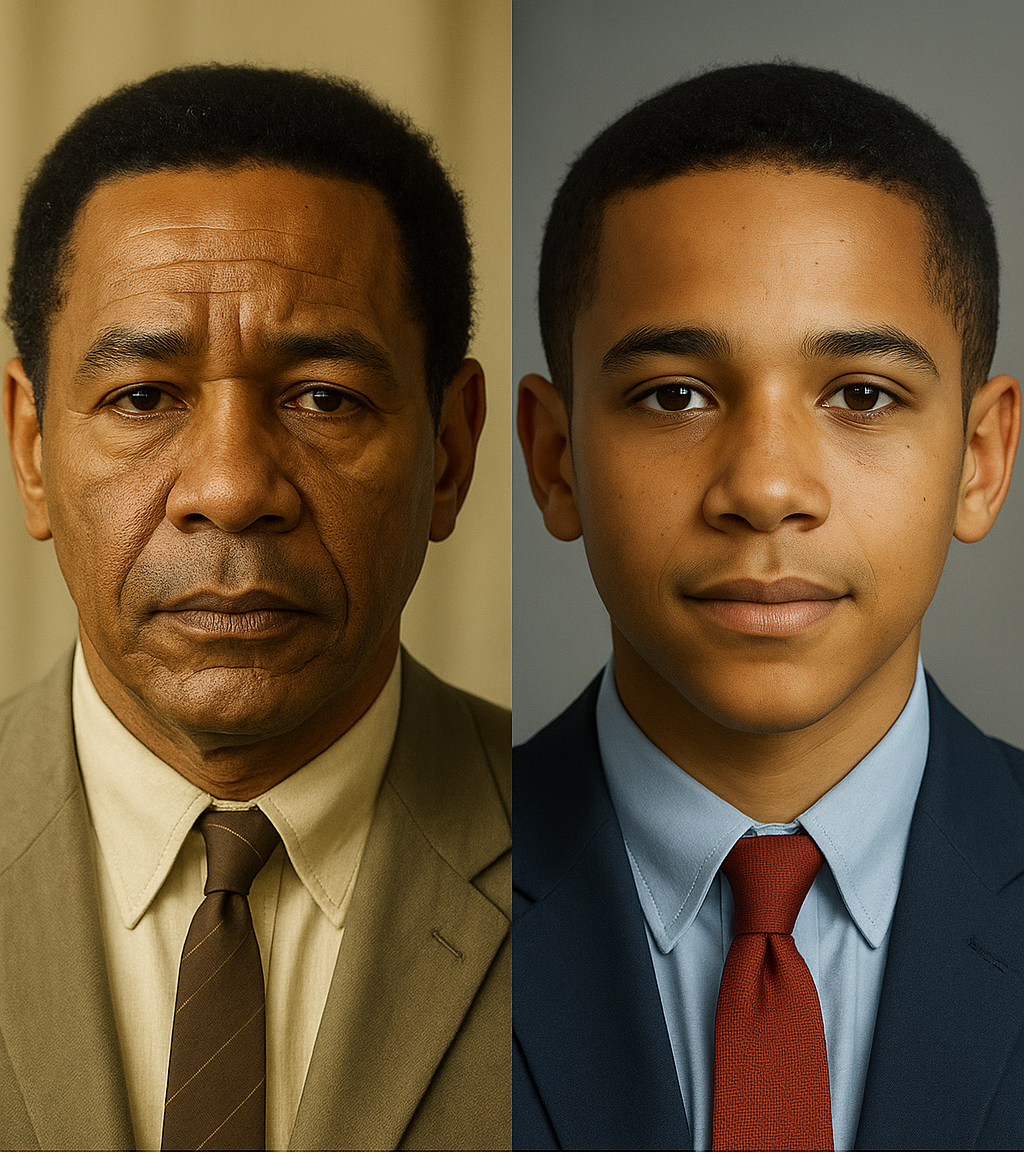
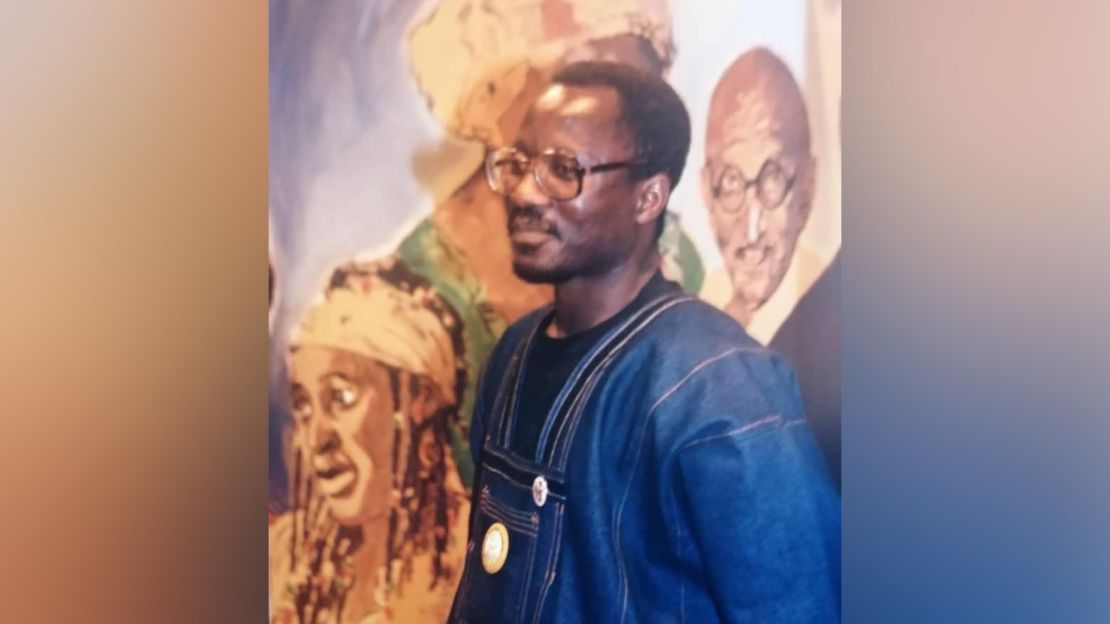
A young Akyaaba Addai-Sebo

He goes on to say:

“So when this incident with Marcus took place in London, it dawned on me that something had to happen here in Britain. I was very familiar with black history month in America, and thought that something like that had to be done here in the UK, because if this was the fountainhead of colonialism, imperialism and racism, and despite all the institutions of higher learning and research and also the cluster of African embassies, you could still find a six year old boy being confused about his identity even though his mother had tried to correct it at birth.”

– Akyaaba Addai-Sebo, www.crer.org.uk

Why It Matters

Although the overwhelming majority of enslaved Blacks were transported to the Caribbean and South America, not just North America, many Americans are still not familiar with our history in other parts of the world.

For example, the English ship that brought the first recorded enslaved Blacks to the American colonies was called The White Lion and arrived in Jamestown, Virginia, on August 20, 1619. However, we were also already being enslaved by other nations, such as being brought to Puerto Rico by Spanish conquerors as early as 1509.

“People from African and Caribbean backgrounds have been a fundamental part of British history for centuries. However, campaigners believe their value and contribution to society are often overlooked, ignored, and distorted.” (trisha@whatson.uk.com)

A Historical Moment: Meeting Michelle

Michelle Petties

I am no longer surprised to find purpose in the people I meet. I am being guided to certain people for a reason. When I complimented Michelle on her Afro at the She Wins Conference last year, I had no idea she had such a rich backstory. When I did a video about the real Great Debaters, I didn’t know Michelle had also attended Wiley College!

Here are some fun facts I learned from her essay: “GROWING UP ON THE ‘COLORED’ SIDE OF THE BORDER:

  • Meet Michelle Petties, whose grandmother and aunt attended Wiley College, a historically Black college depicted in the 2007 film The Great Debaters, starring Denzel Washington. If you follow me on TikTok, I made a video about the real debaters that you can find under my Must Watch playlist. Michelle also attended Wiley in 1974.
Photo Credit: Michelle Petties | The author’s childhood home at 1208 E. Travis St., formerly known as Border Street.
  • Michelle was born and raised in Marshall, Texas, on Border Street (now Travis St), which served as a literal line of separation between the Black community situated south of the street and the white one on the north.
Photo Credit: Michelle Petties | The author (third from right, second row) at Sam Houston Elementary School in 1965.
  • In the fall of 1965, Michelle became one of the first Black students to integrate Sam Houston Elementary School.
  • A library worker denied her entrance because she was not a “mammal.” “If that sounds strange to you,” said Michelle, “imagine how it sounded to a young Black girl growing up at a time when segregation was still very much a part of the culture.”
Photo Credit: Michelle Petties | George Foreman, perhaps Marshall, Texas’s most famous son, meets President Lyndon B. Johnson in 1968. LBJ’s wife, Lady Bird Johnson, was born on a former plantation in Karnack, Texas, which is considered the Greater Marshall area.
  • She used to play with George Foreman as a child.

You Can Read Michelle’s Full Essay Here!

The Stella Series: Meet the Family

As mentioned, I am reviving the Stella series with a fourth book! For those who have not read the first three books, I’ll share excerpts, nuggets, and tidbits as we prepare for the fourth installment. Today, we are refamiliarizing ourselves with some of the family. Enjoy!


Stella May

Born in 1845, Stella is the daughter of a Black woman named Deborah on Paul Saddler’s Plantation in Shreveport, Louisiana. From a young age, she can remember running through cotton fields and being loved by her family. To young Stella, life is simple and fun. She eats sweet cakes, plays with her friend Carla, and helps the grownups by carrying buckets of water to the field. Stella discovers she is a slave for the first time after Deborah’s unexplained death. Now, she learns the hard way the difference between slavery and freedom.

Solomon Curtis May

Solomon has no speaking roles, but his existence is essential for the family timeline. Solomon Curtis May is Stella’s only son, born in the fall of 1870 after she was sexually assaulted by the husband of her mistress. Solomon falls in love with a white woman and marries her after inheriting land outside Chicago. They have four girls: Deborah, named for his grandmother, Judith, Rebecca, and Sara.

Judith May

Solomon’s daughter Judith married a Black man and gave birth to a baby girl she named Stella after her grandmother. However, after enduring much teasing and discrimination for her mixed features, Judith’s daughter copes with this trauma by denying part of her ancestry. She changes her name from Stella to Sidney McNair and passes for white. After marrying a white man and having his children, Sidney lives her life on the other side of the color line.

Sidney McNair

Her aunt Sara influenced Sidney to pass for white and learn to enjoy her privileges. Sidney marries a wealthy white man named Clarence McNair, and they have four children: Edward, Karen, Joseph, and Glenda, whom they raise as white.

However, when she finally reveals the truth to her adult children in 1979, the shock of their real identity is a betrayal that stretches across generations.

Karen and Noah

Sidney’s daughter Karen McNair falls in love with a young Black man named Noah Daniels. He is a leading member of the Black Panther Party and thinks he’s dating a white girl. At this time, Karen also does not know that she is mixed race, although she has many more African American features than her siblings. The couple endures many trials because of their perceived interracial union. Together, they have a son, Noah Jr, who has a much more significant role as an adult in book four.

Edward McNair

Of all Sidney’s children, her sons are the most conflicted by their mother’s betrayal. Carrying many characteristics of his father, Clarence, Edward has not only lived his life as a white man but has also enjoyed the privileges of doing so and cannot come to grips with his new reality. In brief, Edward does not want to be Black, and his daughter, Cynthia, does not yet know about her true identity because of her father’s secrets.

However, although he appears to reject his heritage, something in Edward’s subconscious won’t allow him to completely forget it. We see this when he names his youngest son after his great-grandfather, Solomon.

Joseph McNair

Joseph is also conflicted about his mother’s decisions, but goes in another direction. Still under the illusion that he is just a white boy, he nevertheless feels sympathy for the plight of Blacks and fights for their freedom with his friends during the 1960s.

Unlike Edward, Joseph wishes he were Black. He grew up to marry a Black woman named Fae, and together, they have two children, a boy named Michael and a girl named Tanya.

Introducing Tanya and Michael…

Born in the early 90s, Tanya and Michael are the children of Joseph and Fae and are young adults in the early 2000s. They face the challenge of defining themselves in a society shaped by their father’s choices and haunted by the truths Stella once fought to conceal.

In book three, they are small children, but in book four, they are young adults. In his part, we weave together the struggles of a new generation to find their voice, identity, and place in a world still wrestling with its past. The echoes of Stella’s decisions resound, reminding us that even as times change, the threads of heritage and truth remain unbroken.


Get Started on The Stella Trilogy!

Book Four: Joseph’s Children

(Working Title)

(WIP/Coming Soon)

Stay tuned for a sneak peek at chapter one of book four!

The Stella Series Continues

I published the first book in the Stella Trilogy in 2015 and revised it in 2020. I have been working on a part four recently, and I am excited to continue this family’s story.

If you have not read the series, I highly recommend it in preparation for the next part. (If you read these books from 2015 to 2016, you are advised to read the revised editions with the alternate ending!)

Like the others, it will be a historical fiction novella or short novel.


When Cynthia McNair’s grandmother overhears her and her boyfriend joking about Blacks in a derogatory way, she has a story. Born in 1845, Stella Mae was an enslaved woman on the Saddler Plantation in Shreveport, Louisiana. Forced to stay on the plantation after Emancipation, she endures much abuse and revelation. She eventually gives birth to an only son, whom she names Solomon Curtis Mae. Stella’s story takes place in book one, Between Slavery and Freedom.

Solomon was given land by the same enslaver who freed him and Stella. As a man, Solomon married a white woman, and they had four girls: Deborah, Rebecca, Judith, and Sara.

Solomon’s daughter Judith gave birth to a baby girl named after her grandmother because they looked so much alike. However, this Stella did not take pride in who she was and lived her life as a white woman and raised her children as white. We watch her struggle from delusion to acceptance during the Jim Crow era as she navigates being married to a racist white man who doesn’t even know his wife is Black. Stella has even changed her name to Sidney McNair. Her story takes place in the second book, Beyond the Colored Line.

Sidney McNair, formerly Stella, gave birth to four children: Edward, Karen, Jospeh, and Glenda. Edward is Cynthia’s father.

Because she raised them as white, Sidney’s children did not know about their African ancestry until 1979. The person most conflicted about this was Joseph, who felt sympathy for the plight of Blacks and fought for their freedom with his friends during the 1960s. His story takes place in the third book, The Road to Freedom. In book three, we learn that Joseph married a Black woman named Fae, and they had two children, Tanya and Micheal.

Joseph’s Children: Book Four in the Stella Series (WIP)

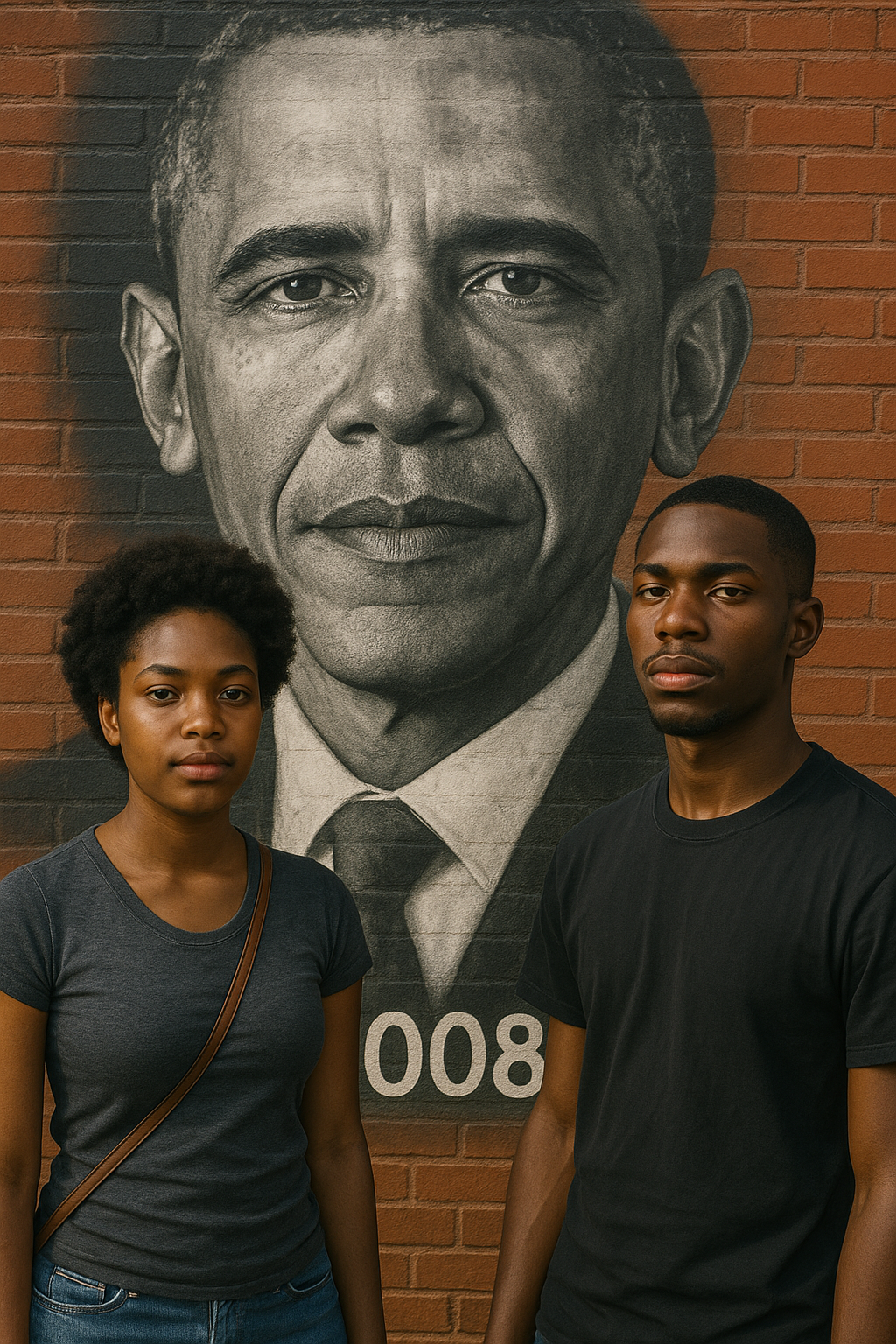
Book Four unfolds in 2008. Tanya is now eighteen, her confidence growing as she steps into adulthood with fire in her heart and ambition in her eyes. Her sixteen-year-old younger brother Michael wrestles with the same questions of identity and purpose that once drove their father to leave home in search of answers nearly half a century earlier.

Against the backdrop of Barack Obama’s historic presidency, the heartbreak of Trayvon Martin’s murder, and the rise of Black Lives Matter, Joseph’s children navigate a new era. They face the challenge of defining themselves in a society shaped by their father’s choices and haunted by the truths Stella once fought to conceal.

The story weaves together the struggles of a new generation to find their voice, identity, and place in a world still wrestling with its past. The echoes of Stella’s decisions resound, reminding us that even as times change, the threads of heritage and truth remain unbroken, binding the present to the past.

Stay tuned for a sneak peek at chapter one!

Yecheilyah’s Book Reviews – Leaving Fatherland by Matt Graydon

Title: Leaving Fatherland

Author: Matt Graydon

PublisherCranthorpe Millner Publishers

Published: August 20, 2024

Pages: 326 pages


Matt Graydon’s gripping, well-researched historical fiction debut Leaving Fatherland explores the difficulties of growing up with an abusive father in the context of World War II, Hitler’s ascent, and how our early years have a significant influence on our adult life. Right away, we are introduced to the abuse Oskar Bachmann suffers at the hands of his father, Karl, who assaults his son both physically and mentally. He refers to him as weak and wishes that he, like his brother Emil, had joined the Hitler Youth.

The first time Karl hits Oskar in the book shocked me, even though the author did an excellent job showing the cruelty that led up to it. This would profoundly affect Oskar throughout his life, a life the author shares with us in such detail that it reads like an autobiography.

Contrasted against Karl’s cruelty is his mother Aneta’s kindness and gentleness, a welcome relief. She encourages him to read, which becomes his safe space. Aneta also finds a way to buy Oskar a tourist-class ticket to America to complete his education.

“The pages of the books I wrapped around my mind and soul like blankets brought distraction and great solace from the relentless strife of home life.”

-Leaving Fatherland, Oskar Bacchman

Oskar continued on to study psychology at Manhattan’s University of New York, a decision he made especially to gain a deeper understanding of his father. Even though Karl is mean to him, Oskar still loves him, evident in his desperate attempt to understand him. In his own words: “I’ve learned it’s possible to hate what your father is and yet still yearn for his approval.” As he navigates the city and makes new friends, Oskar is still affected by his father’s actions as shocking revelations about Karl’s ties to Hitler emerge.

I love the research that went into this book, even down to the Black man taxi driver referring to the ten-dollar bill as a “sawbuck.” Even though the author is not Black, his depiction of the driver and his persona was spot on. Bachmann referring to him as a “Negro cab driver” and how he had not seen many Black people growing up in Germany also fit the times (1930s).

Although a lengthy read, Oskar’s life is filled with many secrets and unexplainable fortunes, culminating in a surprising revelation that connects everything together.

89707

Ratings

  • Plot Movement / Strength: 4/5
  • Entertainment Factor: 4/5
  • Characterization: 5/5
  • Authenticity / Believable: 5/5
  • Thought Provoking: 5/5

Overall: 5/5

Leaving Fatherland is Available Now on Amazon!

Leaving Fatherland_WEB FRONT(1)


About the Author

Matt Graydon Author Photo

Matt Graydon has loved writing since childhood. In his early career, he trained and then worked as a journalist for local and national newspapers, developing research skills that proved vital in his historical fiction writing. He later worked as a senior public relations executive for major corporations in a global context, interacting with people from many cultures around the world. In recent years he rekindled his love of creative writing, attending expert writing courses by Faber and others to develop his craft. He is an active member of the UK’s Society of Authors and belongs to the Phoenix Writing Group in Dorking. He has had both poetry and short stories published, most recently Saigo No Tatakai, an account of a kamikaze attack in the Second World War told from both sides.

Matt lives in Surrey, with his wife, adult children and an unruly cockapoo. When not writing, he spends as much time as possible outside gardening, or engaging in astronomy and photography.

Links:

Website: www.mattgraydon.com

Facebook: Matt Graydon Writes

Instagram: @matt_graydon_writes

Twitter: @graydonwrites


To have your book reviewed on this blog, apply here!

Stay tuned for our next dope read!

IMG_8994

Yecheilyah’s Book Reviews is a reputable review service that features writers from all over the world, both traditionally and independently published. We are listed on Kindlepreneur as a top-tier book review blog and Reedsy as one of their vetted active book blogs that provide insightful, excellent book reviews.

*Books are read in the order they are received.


Yecheilyah’s Book Reviews – Firsthand by A’Dreana Anderson

Title: Firsthand

Author: A’Dreana Anderson

PublisherJoyfully Unbound Publishing

Published: July 7, 2024

Pages: 332 pages


In Firsthand, Richard McLeary owns over seven hundred acres, the third largest Plantation in Chatham County. The land was given to him by his father-in-law on the condition that he marry his daughter and treat her well. However, Richard is arrogant and seeks the approval of other wealthy planters. He boasts as if his land cannot be stripped from him and violently mistreats the enslaved people working his plantation.

In just the first few chapters, we are witnesses to his brutality which includes the death of an enslaved man defending another. In this haunting and poignant historical fantasy, debut author A’Dreana Anderson is compelling in her telling of slavery to such an extent that it felt like Richard had written this story from his own personal account. I can see a racist white man who pretends he is wealthier than he actually is clearly in my mind. There are also some historical accuracies I appreciated.

When visiting the Slave Market, the auctioneer presented an enslaved woman who was pregnant. Richard frowns and decides not to bid on her. While enslavers eventually valued women of childbearing age, this was not always the case. Before 1808 and the abolition of the slave trade, many slave owners discouraged enslaved women from reproducing. They considered the infants to be time-consuming and took too much time away from the women working. It wasn’t until after 1808 when slave owners could no longer depend on the domestic supply of enslaved laborers from the trade, that they sought women who could reproduce and had already given birth to healthy children.

The story’s turning point occurs when Richard, his son Henry, and his overseer James head to the Oglethorpe’s Racecourse Slave Market outside of Savannah to replace the enslaved people he murdered. He bids on Nini, a strong, gorgeous Black mute woman who captures his eye so much that he spends $2,500 for her. He immediately lusts after her and attempts to beat her into obedience. However, Nini refuses to comply, which turns him on even more. There is something about her eyes, and Richard is going to find out the hard way when he wakes up to realize he has been condemned to live as a mute, enslaved Black man.

Some graphic scenes might be too much for some readers, though, and some of the descriptions, although well-written, slowed the story just a bit. (Richard sometimes talked too much for me.) However, this was not to the extent that it destroyed the overall reading experience.

89707

Ratings

  • Plot Movement / Strength: 4/5
  • Entertainment Factor: 4/5
  • Characterization: 5/5
  • Authenticity / Believable: 4/5
  • Thought Provoking: 5/5

Overall: 4/5

Firsthand is Available Now on Amazon!

Firsthand


To have your book reviewed on this blog, apply here!

Stay tuned for our next dope read!

IMG_8994

Yecheilyah’s Book Reviews is a reputable review service that features writers from all over the world, both traditionally and independently published. We are listed on Kindlepreneur as a top-tier book review blog and Reedsy as one of their vetted active book blogs that provide insightful, excellent book reviews.

*Books are read in the order they are received.


Black History Fun Fact Friday – Juneteenth

In honor of Juneteenth, I am reposting this from a few years ago. It was written before it became an official holiday and then updated after. I hope you can still glean something from it. Enjoy!


Many Black Americans are replacing their fourth of July celebrations with Juneteenth. For many, the day is a celebration of freedom. However, the harsh reality is that even after Juneteenth, many Blacks were still enslaved and suffering.


In the Beginning…

Born on February 12, 1809, near Hodgenville, Kentucky, Abraham Lincoln is most famous for preserving the Union during the American Civil War and bringing about the emancipation of enslaved people in the United States. However, before he wrote the esteemed Emancipation Proclamation, several efforts were made to preserve the Union without freeing the enslaved. These efforts included Colonization, or the idea that a majority of the African American population should leave the United States and settle in Africa or Central America.

On August 14, 1862, five years after The Dred Scott Decision that reiterated Blacks were not, and as “a second class of persons,” could not be citizens, Abraham Lincoln hosted a “Deputation of Free Negroes” event at the White House. Led by the Rev. Joseph Mitchell, commissioner of emigration for the Interior Department, it was the first time African Americans had been invited to the White House to weigh in on a political matter. 

Lincoln planned to produce a document that would not only free some of the enslaved but, once freed, call on them to leave the country voluntarily. This idea, Lincoln’s Panama Plan, was not new but had been circulating among white racist elites and eugenicists since the 1700s.

“In 1816, a group of white enslavers and politicians in Washington, D.C. created the American Colonization Society (A.C.S.) to promote the removal of free Black people, who would be encouraged to leave the United States and resettle in West Africa.” A.C.S. and its many chapters hoped this would rid them of free Black people while preserving slavery.”

-The 1619 Project, pg. 23

To make a long story short, Lincoln’s original plan was to have a document that, while freeing some enslaved people, also required those freedmen to, sum up, “Go back to Africa.”

87275

Let Freedom Ring?

Lincoln issued the Emancipation Proclamation on January 1, 1863, to end slavery in the States that were in Rebellion. The proclamation declared “that all persons held as slaves” within the rebellious states “are, and henceforward shall be free.”

“The Emancipation Proclamation did not apply to slave states that weren’t in rebellion; Kentucky, Delaware, Missouri, and Maryland. It also didn’t apply to territories. It didn’t apply to Tennessee, lower Louisiana, and the counties of Virginia that were to become West Virginia.”

-William Spivey 

With the passing of the 13th Amendment in January of 1865, slavery was officially deemed illegal in America, freeing all people enslaved.

82704

Well. Wait, except the people in Texas and other places.


Many Texas men, women, and children were still being held in bondage and did not know that slavery was over.

News of the supposed emancipation did not spread as quickly as the movies would have us to believe. Many slave-owners packed up their belongings and moved to Texas in mass.

“Since the capture of New Orleans in 1862, slave owners in Mississippi, Louisiana and other points east had been migrating to Texas to escape the Union Army’s reach.”

-Henry Louis Gates Jr.

More than 150,000 enslaved people had made the trek west, according to historian Leon Litwack in his book Been in the Storm So Long: The Aftermath of SlaveryAs one former enslaved person recalled, “It looked like everybody in the world was going to Texas.” For the next two years, the enslaved would live removed from the updates of the war, and slavery would go on, business as usual.

These men, women, and children were still enslaved until June 19, 1865. Union soldiers, led by Major General Gordon Granger, landed at Galveston, Texas, with news that the war had ended.

This, the freeing of the enslaved in Texas, is the reason many Black Americans celebrate Juneteenth instead of July 4th as their National Independence Day.

“The people of Texas are informed that, in accordance with a proclamation from the Executive of the United States, all slaves are free. This involves an absolute equality of personal rights and rights of property, between former masters and slaves and the connection heretofore existing between them, becomes that between employer and hired labor.”

The language of this decree is important. Enslaved people are being told they are free two and a half years after President Lincoln’s Emancipation Proclamation.

If we read further, we see that they are also being told that they must remain at their present homes (the plantation) and work (continue slave labor) for “wages.” And that any “idleness,” among them won’t be tolerated. 

“The Freedmen are advised to remain at their present homes and work for wages. They are informed that they will not be allowed to collect at military posts; and they will not be supported in idleness either there or elsewhere.”

Thus, much like the Emancipation Proclamation, this order also did not free all enslaved persons.

Juneteenth0619

“There is much evidence to suggest that southern whites—especially Confederate parolees—perpetrated more acts of violence against newly freed bondspeople in Texas than in other states.”

-Historian Elizabeth Hayes Turner in an essay titled “Juneteenth: Emancipation and Memory.” 

“Between the Neches and Sabine rivers and north to Henderson,” she continues, “reports showed that blacks continued in a form of slavery, intimidated by former Confederate soldiers still in uniform and bearing arms.” Murder, lynching, and harassment were common. “You could see lots of Negroes hanging from trees in Sabine bottom right after freedom,” reported one freed slave, “They would catch them swimming across Sabine River and shoot them.”

Celebrations

65837

African Americans celebrated their freedom with the first official Juneteenth event in 1866, where they read the Emancipation Proclamation of 1863 and praised Abraham Lincoln as “The great liberator.”

“Free them and make them politically and socially our equals? My own feelings will not admit of this; and if mine would, we well know that those of the great mass of white people will not.”

– Abraham Lincoln, August 21, 1858

“My paramount object in this struggle is to save the Union and is not either to save or to destroy slavery. If I could save the Union without freeing any slave I would do it, and if I could save it by freeing all the slaves I would do it, and if I could save it by freeing some and leaving others alone I would also do that. What I do about slavery, and the colored race, I do because I believe it helps to save the Union.”

– Abraham Lincoln, Letter addressed to Horace Greeley, Washington, August 22, 1862

The celebrations continued until coming to a halt with the institution of Black Codes and, eventually, Jim Crow. These laws essentially put Blacks back into a form of slavery where they were fully disenfranchised. After the Civil War and the end of slavery, southern states, which had amassed great wealth from slavery, found their economy in shambles. They had to figure out how to keep a slave-like system going.

10084

Black Codes

Black Codes came from slave codes, laws created to limit the rights of African Americans. They subjected them to criminal prosecution for “offenses” such as loitering, breaking curfew, vagrancy, having weapons, and not carrying proof of employment. These were the same “offenses” that would get enslaved people whipped or sold during slavery.

For example, the enslaved could not travel from place to place without a pass signed by their owner. Those without such a pass could be arrested, jailed, and detained as a runaway. Some owners wrote general passes allowing their slaves to “pass” and “repass.”

Black Codes included Pig Laws that unfairly penalized poor African Americans for crimes such as stealing a pig. It was also a crime to be unemployed.

These laws could be imposed on Black men easily, sending them to jail, and thus, former slave owners turned “entrepreneurs” could lease them to various companies that would work them to death and treat them like they were slaves. This made the states tons of money.

“The laws passed in Texas were similar to those passed in every other Confederate state. Modern-day politicians often make comparisons to Jim Crow as one of the worst periods in African American life.

Jim Crow didn’t have shit on the Black Codes, which was the South’s attempt to recreate enslavement and go back to business as usual. Mass incarceration isn’t a recent invention; during the Black Codes, Black people could do little without running afoul of the law with the penalty being sent back to the fields if they weren’t already there.”

William Spivey, Why Celebrate Juneteenth and What Did It Accomplish

Juneteenth didn’t make a full resurgence until The Civil Rights Movement when Blacks began to celebrate it fully again. And while many Blacks have celebrated it for centuries, it still did not become an official Holiday until 1980, when it was made a Texas State Holiday.

Still, it wasn’t until 1997 that Congress recognized June 19 as “Juneteenth Independence Day,” after pressure from a collection of groups like the National Association of Juneteenth Lineage and the National Juneteenth Celebration Foundation.


UPDATE:

As of  June of 2021, Juneteenth is now a National Federal Holiday.

1418

But the question remains, what exactly did Juneteenth accomplish for the Black man, woman, and child? What freedom did it bring about?

Some sum it up this way:

“Today Juneteenth commemorates African American freedom and emphasizes education and achievement. It is a day, a week, and in some areas a month marked with celebrations, guest speakers, picnics and family gatherings. It is a time for reflection and rejoicing. It is a time for assessment, self-improvement and for planning the future.

Its growing popularity signifies a level of maturity and dignity in America long over due. In cities across the country, people of all races, nationalities and religions are joining hands to truthfully acknowledge a period in our history that shaped and continues to influence our society today. Sensitized to the conditions and experiences of others, only then can we make significant and lasting improvements in our society.” – https://juneteenth.com/

But, Spivey brings out another good point worth considering:

“Texas after Juneteenth wasn’t an anomaly. Slavery continued to go on in states in the South, North, and West. In some cases, for several years. Slavery still existed in other parts of the United States and did so until the ratification of the 13th Amendment on December 6, 1865, and beyond.

Slavery still existed in Delaware and Kentucky, which resisted all Union attempts to end slavery and refused to ratify the 13th Amendment. In California, slavery was sort of outlawed in 1850 as a condition for statehood. The exception was slaves who had been brought to California and where the possibility they might return one day to their original home existed, even if that state had voted to ratify the 13th Amendment.

New Jersey had as many as 400 people remain slaves long after Juneteenth. Oregon’s provisional government banned slavery in 1844 but forbade free black people from settling in the territory. Settlers continued to bring slaves with them. General Joseph Lane, a former territorial governor, kept at least one slave on his farm until 1878, 13 years after the passage of the 13th Amendment.”

17677

It is true Blacks were not free on July 4, 1776. But it is also true many Blacks were not free on June 19, 1865, either.

Juneteenth did nothing to restore land or citizenship rights to the 40 million newly freed Blacks. Immediately after African Americans in Texas were freed from chattel slavery in June of 1865, they were required to have labor contracts, and many Blacks returned to their former slave-owners. 


1686848970

Grab Your Copy of Black History Facts You Didn’t Learn in School Here