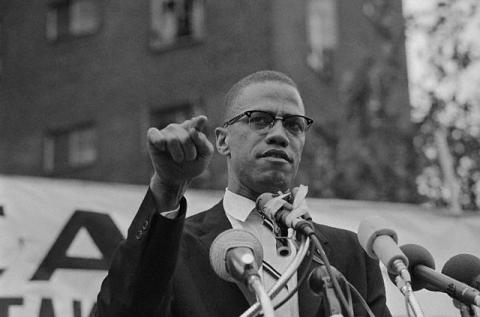
“The picture of the dry bones in the Valley, is talking about you. You are Lazarus. You are the dry bones. You are the prodigal son. You are the lost sheep. You are the people about whom the bible is speaking. Who will stand up in the last days when the trumpet is sounded. Black people are waking up. Black people are standing up. Black people are rising up.” – Malcolm X
What if you identified as one race but because of geographical differences you were told you were another race? Even if your skin tone said otherwise? Is it right to determine race by skin tone alone? Does race itself even exist?
In today’s episode of Black History Fun Fact Friday, we will explore The Race Card and how it has handicapped the life of one man who is still fighting to reclaim his identity. He is quickly becoming an important part of history as his story tells us so much about race.
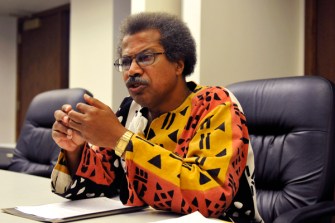
Dr. Mostafa Hefny in Detroit.(AP Photo/Detroit News, Max Ortiz) DETROIT FREE PRESS OUT; HUFFINGTON POST OUT)
Introducing Mostafa Hefny, an Egyptian Immigrant who came to the United States and was told he was white, despite his skin color. To understand this, let us first establish the U.S. racial classification system. The U.S. Census Bureau defines race as “a social category recognized by the United States and does not attempt to define race biologically, anthropologically, or genetically”. The Census Bureau recognizes five categories of race:
• White (people with origins in Europe, the Middle East, or North Africa,)
• Black or African American (Africa)
• American Indian or Alaska Native, Asian,
• Native Hawaiian
• Other Pacific Islander
Nicknames for race has also been applied to colors: White, Black, Red, and Yellow.
The census also includes a Hispanic ethnic category. It is an ethnic category rather than a race category because the Latino community is said to include many races, such as White, Black, Native American, Asian, and mixed. Keep in mind these are not classifications based on culture, land, or language, but skin tone alone. This means that anyone from Europe according to the lands designated for the specific color is considered white and anyone from Africa (according to the lands specified) is considered black.
In the ancient world, the Greeks, Romans, Israelites, Egyptians, Ethiopians, e.g. did not have racial categories. Rather people were divided according to their nationality. People from Europe may identify themselves as Irish, Russians, Greeks, Swedish, so forth and so on instead of simply whites. Likewise, people on the continent of Africa may refer to themselves as Ethiopians, Somalian’s, Nigerians, Egyptians, Israelites, Ghanaian’s, so forth and so on instead of simply blacks. The ancient Hebrews, Egyptians, Ethiopians, and Libyans didn’t speak of a place called Africa even though they were indigenous to that continent.
Since 1997, Mostafa Hefny, has been suing the U.S. government because when Hefny immigrated to America, the U.S. government told him he was no longer a black man. This is because according to the U.S. racial system of classification, we’re not supposed to realize that Egypt is in Africa, just that it is the Middle East, and as such anyone from the Middle East is considered White; obviously despite their skin tone.
“Dr. Hefny was a Bilingual Resource Teacher with Wayne County Regional Education Service Agency (Wayne County RESA) in Wayne, MI, USA for thirteen (13) years. When he stated on his employment records that he is black the Director of Human Resources sent him a letter which was copied to the Superintendent threatening him that his education career will be ruined if he did not change his racial classification on his employment records from black to white. A few days later one of the top administrators told him “If you ever say that you are black again no one will hire you and if hired you will be running from one job to the other for the rest of your life”. Even though Wayne County RESA provides support and consultant services to all of Wayne County which is 30% black, the Superintendent was white, his four Associate Superintendents were white, and 95% of the administrators and consultants were white.
Wayne County RESA did not fire Dr. Hefny, instead they denied him promotion twice, persecuted him, harassed him, called him nigger, and psychologically tortured him to the point that he left on social security psychiatric disability which lasted ten (10) years (1989-1998.) Additionally, he was hospitalized in psychiatric hospitals twice(1992 & 2000.) All the doctors who treated Dr. Hefny stated in their medical reports that his psychiatric injury was work related. When Dr. Hefny recovered and returned to the work force Wayne County RESA followed up on their threats and he was fired five times in one year.”
How did Hefny respond? He was shocked when his government-issued identification classified him as “white.”
(AP Photo/Detroit News, Max Ortiz) DETROIT FREE PRESS OUT; HUFFINGTON POST OUT
According to the Detroit News: “As a Black man and as an African, I am proud of this heritage. My classification as a white man takes away my black pride, my black heritage and my strong black identity.” – Mostafa Hefny
This begs the question, what is black and what is white? We use them for clarity, but are they colors or nations of people? What about other nations? Asians, Chinese, Japanese?
According to the Office of Management and Budget Standards for the Classification of Federal Data on Race and Ethnicity, citizens are designated as White if they have “origins in any of the original peoples of Europe, North Africa or the Middle East.” For this reason, because of Hefny’s geographical location, his classification makes sense within the context of America’s definition of race. Again, according to the U.S. racial system of classification, we’re not supposed to realize that Egypt is in Africa, just that it is the Middle East, and as such anyone from the Middle East can be considered White; obviously despite their skin tone.
“Egypt is on the coast of Africa. It is not some small village in Sweden.” – Paul Mooney
From the foundation of man, we have been divided according to our nations and lands. In Genesis Chapter 10, we find the Table of Nations. After the flood Noah and his sons and their wives were saved and from this family repopulated the Earth. How they were divided is found in The Table of Nations.
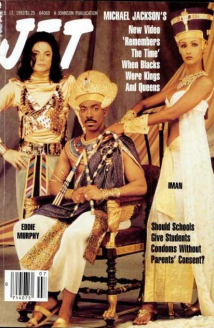
Ancient Egyptian Wall PaintingJET Magazine Cover, Michael Jackson’s “Remember the Time”
Since Ham had the most descendants we are not going to go through every last one, but he birthed the African nations populating Africa and other parts of the “Middle East.” The word Ham in Hebrew is Khwam, and it means “hot, burnt, and black.” The first-born son of Ham, Cush, forms the Kushite nation. They were also called and known as the ancient Ethiopians. Ethiopia comes from the Greek word, Aethipos, which means, “burnt or black face.” The Greeks applied this name to the people living south of Egypt. The name Egypt comes from the word Aegyptus though the Egyptians called themselves Khemet / Kemet, which is a variation of the Hebrew word Khawm (Ham). It means, “People of the black land.”
While many of us are already familiar with Ham’s sons, Shem’s descendants are not always acknowledged. Though not “Africans”, they were also black as were the Israelites who were often mistaken for Egyptians. Paul was mistaken for a black Egyptian (Acts 21:38), Moses passed as the grandson of Pharaoh for 40 years (Acts 7:22-23) and the messiah hid in Egypt:
“Now it’s very unlikely that Jesus would have been able to be HIDDEN in Egypt, if he had a very different color of SKIN from the people in Egypt.” – University of Birmingham historian, Dr. Mark Goodacre, BBC program called The Complete Jesus, 2001
Statue of King Tut
I am not sure where Henfy is today with his case. Last I read he was still fighting to be classified as black and this was back in 2012. The ancient Greek historian, Herodotus, who visited Egypt in the 5th century B.C.E., described the Egyptians as black-skinned with woolly hair and anthropologist, Count Constatin de Volney (1727-1820), spoke about the Egyptians that produced the Pharaohs. He later paid tribute to Herodotus’ discovery when he said:
“The ancient Egyptians were true Negroes of the same type as all native-born Africans. That being so, we can see how their blood, mixed for several centuries with that of the Romans and Greeks, must have lost the intensity of its original color, while retaining nonetheless the imprint of its original mold. We can even state as a general principle that the face (referring to The Sphinx) is a kind of monument able, in many cases, to attest to or shed light on historical evidence on the origins of the people.”
How do you think race influences our society today?
“ON SEPTEMBER 13, 1971, a four-day rebellion of over 1200 inmates at the Attica State Correctional Facility in bucolic upstate New York ended most horrifically after Governor Nelson Rockefeller ordered almost 600 state troopers to storm the prison. Even though the raid took only 10 minutes, when one could finally see through the haze of spent ammunition, it was immediately clear that the price of retaking this facility by force had been staggeringly high.” – Heather Thompson
Before we go on, let’s take it back…
Convict Leasing
With nearly half of all cotton investments in human bodies now gone, the end of chattel slavery no doubt left a sour taste in the mouths of slave-owners. Over four million African Americans (because who would know exactly how many?) were poured into a society that did not want them, cotton economies in shambles, cotton gins destroyed, and wealth that deteriorated before the ink could dry on the Emancipation Proclamation. A system so interwoven into the fabric of America could not just be taken away without serious consequences. Slave-owners could not sit back and watch; a reconstruction of slavery was necessary.
The Reconstruction Era, the process of rebuilding the south (which was really the time of restoring slavery to the south), introduced a new set of laws that would ensure that Blacks remained the property of landowners, sharecropping on the same plantations that held them as slaves. All of this despite General William T. Sherman’s plan to grant freedmen 40 acres on the islands and the coastal region of Georgia. But after the Civil War, blacks never did receive their “40 Acres and a mule” and were instead ordered to either sign contracts with the owners or be evicted, driven out by army troops. In the summer of 1865, all land had been ordered by the government to be returned to its original owners. Thus, millions of blacks remained poor. Still, this was not the only form of servitude to which they were subjected. In addition, something more law abiding would hold them in captivity. Ironically, within the same paragraph that abolished slavery, slavery was also reconstituted. According to the 13th Amendment:
“Neither slavery nor involuntary servitude,except as punishment for crimewhereof the party shall have been duly convicted, shall exist within the United States, nor any place subject to their jurisdiction.”
According to this law, slavery could not exist in the United States except for punishment for a crime, permitting slavery in the case of imprisonment.
New laws targeted blacks, (Black Codes) criminalizing their lives. That is, almost everything was a crime. Farm owner’s incapable of walking by the railroad or selling the products of their farm after dark. Or, the infamous Pig Laws, where stealing a pig (or any animal) could result in five years’ imprisonment. Or Sundown Towns, all white neighborhoods where Blacks were not allowed after dark. The more Blacks broke these laws and were sentenced to prison, the more slaves the plantation owners, now masked under private parties and corporations, had back into their possession. They could work the prisoners from sun up to sun down again while providing them with food, clothing, and shelter. Also known as Convict Leasing—the leasing of bodies to coal and iron companies owned by former slave owners—slavery was back. In 1883, about 10 percent of Alabama’s total revenue was derived from convict leasing. In 1898, nearly 73 percent of total revenue came from this same source.
Attica State Prison
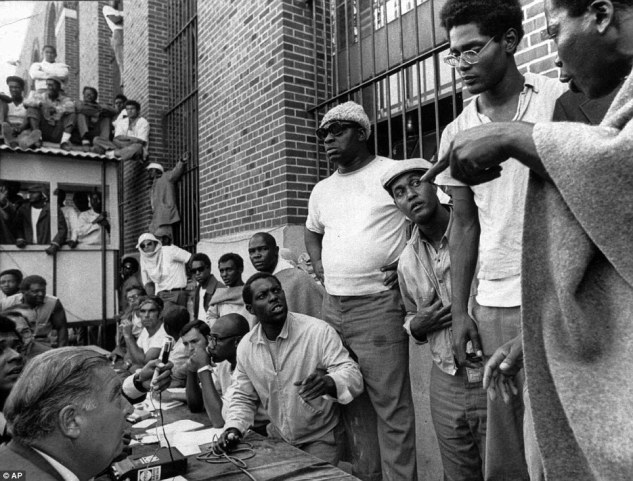
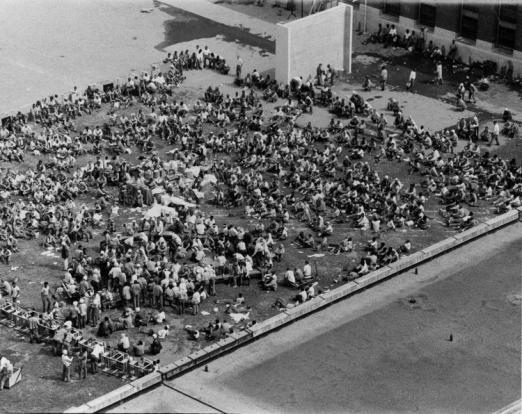
With awareness growing out of the Civil Rights Movement of the 60s, Malcolm X, The Black Panther Party, etc., Black and Latino Prisoners of 1970 began organizing rebellions against their treatment within the prison system. As with any information passed through the “grape vine” of the black community, the rebellions spread from prison to prison until it came to a head the Thursday morning of September 9, 1971. When the door prisoners used to go to the yard was locked, a fight broke out between the prisoners and the guards. As the fight grew, more prisoners joined until they broke open a gate connecting to another part of the institution and, to make a long story short, prisoners were let loose within the institution.
The Brothers locked the prison down, kicking butt and taking names. I mean (clears throat), taking staff members as hostages and implementing their own system of order within the prison. Appointing leaders to keep order and to be sure the staff was properly cared for, they demanded from the outside world better treatment within the prison system. Better medical treatment and less slave labor. But their “freedom” would not last long. When a hostage who was hit in the head at the beginning of the fight died from his injuries, the prisoners were responsible under the felony-murder rule. The felony was the riot and the murder was the death of the guard.
Inmates of Attica State Prison (right) negotiate with Commissioner Russell Oswald (lower left) inside the jail where prisoners took control
Shortly thereafter, a National Guard helicopter flew low over the yard and blew a cloud of military-grade CS gas into the crowd of men. As told to Attorney Jefferey Haas, under the name Big Black, one of the surviving prisoners of the time recalls:
“First came the tear gas. People looked for something to cover their face. When I first heard the shots, I thought they were blanks. Then the people around me in the yard starting dropping. I realized they were real bullets, and everyone ducked and ran for cover.” (September 16, 1971, Prisoner of The Attica Correctional Facility, New York, as told to Jeffrey Haas).
The gun shots Big Black is referring to are the marksmen who came in and started shooting, hitting 189 of the 1300 men in the yard and killing 31 people—29 prisoners and ten hostages. (There’s a conflict between the numbers. Some sources say 31 prisoners died and some 39. I use 31 because that is in accordance with the news articles of the time).
After the shooting, the beatings came:
Source: Getty Images. Prisoners marching naked.
“The guards stripped us naked after the shooting. They made us crawl naked in the mud through a gauntlet where they beat us.” – Big Black
Next, Big Black (Big, dark skinned and part of the security) was tortured as an example. They burned his body with cigarettes:
“They took me out of the line. They made me lie on a table naked on my back and put a football under my chin. They put their burning cigarettes out on me. Some dropped them from the catwalk above and was laughing.”
“Afterwards, a news photographer found and recorded a pair of inscriptions, in separate hands, written with a white marker on a dark steel wall that succinctly told the story of the Attica rebellion. The top one said, “Attica fell 9-9-71 – F*&k you pig!” Just underneath that was written, “Retaken 9-13-71. 31 Dead Niggers.”
– Dennis Cummingham, Prison Legal News
Riot: Prison guard hostages and inmates gather in the exercise yard of cell block D inside Attica State Prison in New York on September 9, 1971
While seeking freedom the men had forgotten one thing: slavery is abolished except as punishment for a crime. They were given slave-like treatment because as prisoners under the law, they were still slaves.
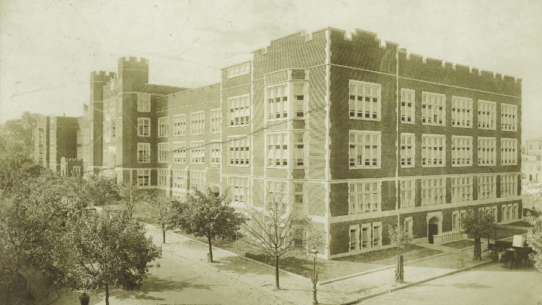
In 1870, the first Black public High School opened in Washington, D.C. or rather, the first recorded school (Aside from Tuskegee Institute–one of the first schools for African Americans financially sponsored by Blacks and Whites but headed by a Black President, the late Booker T. Washington–I do not believe Dunbar was the first High School just as Rosa Parks was not the first to refuse to give up her seat on a bus (LEARN MORE HERE) there is a lot of things that just aren’t recorded.)
The Preparatory High School for Colored Youth (renamed in 1916 to M Street Public School when its location was changed from M Street), was founded in the basement of Fifteenth Street Presbyterian Church by William Syphak, the first chair of the Board of Trustees of the Colored Public Schools in the District of Columbia. According to Dr. Thomas Sowell in an article (100 Years After Dunbar) in 1899, when it was called “the M Street School,” a test was given in Washington’s four academic public high schools, three white and one Black. The Black High School scored higher than two of the three white High Schools. Of course, this isn’t about color or race but is used as an example to highlight the success of all Black Schooling at that time.
Blacks during Segregation were more unified considering many of us had to stick together in order to build communities and schools. For this reason, many all-Black communities, as well as all Black schools, did well. There was a communal spirit among blacks during segregation that sadly deteriorated once we were capable of going outside of ourselves.
Before Brown vs. Board of Education, Dunbar acquired only the best teachers, many of them with Ph.Ds. and graduated 80% of its students. Among its students: the architect of school desegregation, Charles Hamilton Houston, Elizabeth Catlett, the artist, Billy Taylor, the jazz musician, the first Black general in the Army, the first Black graduate of the Naval Academy, and the first Black presidential Cabinet member, according to Journalist Alison Stewart, author of First Class: The Legacy of Dunbar, America’s First Black Public High School as told to NPR host Cornish on All Things Considered.
In addition, many more, including the first Black woman to receive a Ph.D. from an American institution, the first Black federal judge, and a doctor who became internationally renowned for his pioneering work in developing the use of blood plasma.
The Downfall of Dunbar
Source: Courtesy of Chicago Review Press
Unfortunately, like many Black experiences after integration, Dunbar declined. According to Sowell, senior at the Hoover Institution, Stanford University:
“For Washington, the end of racial segregation led to a political compromise, in which all schools became neighborhood schools. Dunbar, which had been accepting outstanding Black students from anywhere in the city, could now accept only students from the rough ghetto neighborhood in which it was located. Virtually overnight, Dunbar became a typical ghetto school. As unmotivated, unruly and disruptive students flooded in, Dunbar teachers began moving out and many retired. More than 80 years of academic excellence simply vanished into thin air.”
I agree with Sowell only to an extent. I do not think that “unruly and disruptive ghetto students” are responsible for the downfall of Dunbar, but rather the decline in Blacks students being taught by Black teachers concerning Black lives and Black history.
I remember a video interview Maya Angelou gave where she testified that her school was “grand” and many others of the era who described their schooling as a positive experience. Though not given the same quality of learning materials, I believe Blacks got a better education before integration. Not merely because of segregation itself, but rather because it forced us to unify in a way that does not exist today.
In short, we were educating our own. Without teachers and faculty who actually understand them, their struggles and experiences, students can find it harder to adjust. In Angelou’s words, “blacks used what the West Africans in Senegal called ‘Sweet Language'” which is still used today. For example:
“Hey, there” is used as opposed to, “Hi, how are you?”
The Hey is drawn out and spoken with a certain tone of familiarity as sweet language is dependent entirely on tone. The way that Angelou spoke herself was in a sort of sweet language where every word, even if she didn’t mean it to, sounded like poetry.
“Hey, how you?”
This is not grammatically correct or what may be referred to as “proper” and it’s not meant to be. It is the lengthening of the word, the dragging it out and using a loving tone of voice, a caring voice: “Hey.” It is something that Blacks have been doing their entire lives without effort and is something that is mostly understood by other Blacks and while deemed sweet language, I call it a language of love.
This is just one example of the kind of History Israelite, so-called Black, children do not learn in today’s schools.
As the Black teachers moved on, so did Black students interest in learning, or so it seems. Over time, at least three more schools would be named after Dunbar: Paul Laurence Dunbar High School in Baltimore, Maryland, Fort Worth, Texas, and Chicago, IL.
While segregation allowed for inferior educational experiences in some respect (such as torn and used books as opposed to new ones) who is to say that the education itself was inferior? I am more interested in what was being taught behind closed doors. The historical, archaeological, and biblical history of Blacks that I am sure to have never made it in the history books. What really made these students prosper as opposed to the students today?
Dunbar now graduates only 55% of its students according to the 2016 values based on student performance on state exit exams and internationally available exams on college-level coursework, and AP®/IB exams are unranked in the National Rankings. But what do we expect? How do we expect the people who oppress us to also teach us the truth about who we are? If you weren’t being treated right, how do you think that you were taught right?
One thing is for certain, to assume that integration made education for Blacks better is up for debate.
Two kids had already been killed down the street from the apartment complex that would one day be the center of media attention when Black Panther Chairman Fred Hampton would be murdered in his bed this same year. Teens from the Henry Horner projects had been protesting for months, a little over a year to be exact, for a traffic signal at the corner of local schools and health clinics where two teens had already been killed. The city refused. In addition, earlier this year, police kicked down the doors of a Panther office, brutally beating and injuring six people and one bystander on Madison Street.
As you can see, the climate of 1969 Chicago was already heated surrounding citizens and the city. Police brutality in Chicago is far from anything new and this year they were on a roll.
Source: JET Magazine, Oct. 30, 1969
John Soto was an active member of the protest campaigns to get a traffic light installed at the corner, a few blocks from Fred’s Apartment. Sadly, John only lived to seventeen, were killed just one day (Oct 5th) after a police raid on a Panther office. According to the reports, John fought with the police before being “accidentally” shot by them. The already agitated community grew furious and John’s brother, Michael Soto, returned home from the army to attend his brother’s funeral. Five days later, on October 10, 1969, Michael Soto too was shot and killed. The black community did not believe in coincidences.
Source: The Chicago Tribune, Oct. 11th,1969
It was said that Michael was killed because, after being stopped by police, he pulled out a gun, contrary to the account given by witnesses.
The community became even more outraged and according to the NAACP’s Commission of Inquiry, “The commission discovered that a substantial segment of the community believed that, contrary to all police reports, John and Michael Soto had been murdered by the police because of their participation in the traffic light protests.”
Source: JET Magazine, Oct. 30, 1969
According to Jeffrey Haas, Panther Lawyer of The People’s Law Office and author of “The Assassination of Fred Hampton: How the FBI and the Chicago Police Murdered a Black Panther”, (one of the books I’m reading), the coroner’s inquests in the Soto case were delayed; meanwhile, the internal police investigation found John’s death to be “accidental homicide” and Michael’s death “justifiable homicide”.
I decided to dedicate this week’s Black History Fun Fact to these brothers because of two things:
Google’s limited amount of information on them
Their minimum mention in black history
Though their lives were sadly ended, I wanted to highlight what happened to them for those who may not have been familiar. They existed and are among the many so-called Black and Hispanic men and women who died at the hands of law enforcement.
Update: Interestingly enough, I found this article and thought I’d update this post to include the link:
Chicago police use excessive force, DOJ finds
“Chicago police officers’ use of excessive force, she said, stemmed in large part from what the Justice Department found were severely insufficient training and accountability procedures — including failing to train officers to de-escalate situations.”
If you’re anything like me, you get tired of the same repeated history. Martin Luther King Jr., Rosa Parks, Frederick Douglass, Harriet Tubman, Langston Hughes, and Zora Neale Hurston. These are names to which we are exceptionally familiar. They were great but we know them. Let’s talk about something else.
Admittedly, I didn’t have a lot of time on my hands this week so I decided to compile a list of women who took part in The Harlem Renaissance to which we aren’t too familiar for this week’s fun fact. Enjoy.
Dorothy West
The daughter of a freed slave, the only child of Isaac and Rachel West, Dorothy West’s father built a fruit and vegetable business that provided the family a more affluent life among Boston’s middle class. Nicknamed “The Kid” by Langston Hughes and sharing an apartment with Zora Neale Hurston, Dorothy West was a young member of the Harlem Renaissance. Not yet 20 in 1926 when her short story ”The Typewriter” won a prize from the Urban League’s Opportunity magazine, Dorothy moved to Harlem and joined the poets, novelists, musicians and other artists.
Alice Moore Dunbar-Nelson
When I first came across Alice I kept trying to figure out what was so familiar about her name. It wasn’t until I researched her that it became apparent. She was once married to Paul Lawrence Dunbar before they separated in 1902. Alice Moore Dunbar-Nelson was born in New Orleans, Louisiana, to mixed-race parents. Documented as African American, Anglo, Native American, and Creole, her works cover the complex subjects of race, ethnicity, and oppression. Her first book, Violets and Other Tales (1895), was published when she was just 20. A writer of short stories, essays, and poems, Dunbar-Nelson was one of the few black female diarists of the early 20th century.
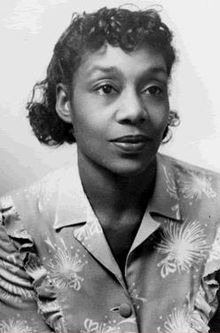
Clarissa Scott Delany
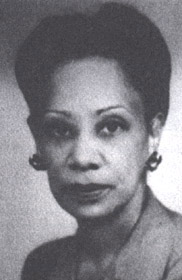
Clarissa looks as if she was fly back in the day lol.
Born in 1901 in Tuskegee, Alabama Delany is most known for her powerful poem “The Mask”. Dying at an early age (26) she did not contribute many works but still contributed by publishing poetry and journal articles into the newspaper Opportunity. After her young years in Alabama, she was sent to New England where she graduated from Wellesley College in 1923. During Delany’s years at Wellesley, she attended meetings of the Boston Literary Guild. Speakers were featured each week. Delany started writing and gained the attention and became associated with the Harlem Renaissance.
May Miller
“To read across May Miller’s life is to read across the history of 20th century America.”
– Myra Sklarew
It begins with May’s father, Kelly Miller. Born a year before Emancipation he was the first African American to attend John Hopkins University and among the first blacks to learn to read in public schools. He studied mathematics, physics, and astronomy. His daughter, May Miller was the most widely published playwright of The Harlem Renaissance. Myra writes how May often told about having to give up her childhood room for visits by W.E.B. Du Bois, author of The Souls of Black Folk, and the poet Paul Laurence Dunbar. She spoke of visits by Booker T. Washington, Carter G. Woodson, and Alain Locke.
Maria Bonner
One of four children, Marita Bonner was born in Boston to Joseph Andrew and Mary Anne Bonner. She was raised and educated in Boston, attending Brookline School, where she received musical training and in 1918 she entered Radcliffe College, concentrating in English and comparative literature. In Washington Bonner became closely associated with poet, playwright, and composer Georgia Douglass Johnson, whose “S” Street salon was an important gathering place for many of the writers and artists associated with the New Negro Renaissance of the 1920s better known as The Harlem Renaissance: Langston Hughes, Countee Cullen, Jessie Fauset, May Miller, Alain Locke, Jean Toomer, Willis Richardson, and others. She also began to publish her writing in journals like The Crisis of the NAACP and Opportunity, the official journal of the Urban League. Her first published pieces, “Hands” and “On Being Young-a Woman-and Colored,” appeared in The Crisis in 1925.
Yecheilyah Ysrayl is the YA, Historical Fiction author of eight books most notably, The Stella Trilogy, Blogger, and Poet. She is currently working on her next book series “The Nora White Story” about a young black woman writer who dreams of taking part in The Harlem Renaissance movement and her parents struggle to accept their traumatic past in the Jim Crow south. “Renaissance: The Nora White Story (Book One)” is due for release July 15-16, 2017. For updates on this project, sneak peeks of other projects, nuggets and tidbits, video tutorials, writing inspiration, and more, be sure to follow this blog and to subscribe to Yecheilyah’s email list HERE.















 The PBS Blog