Black History Lives

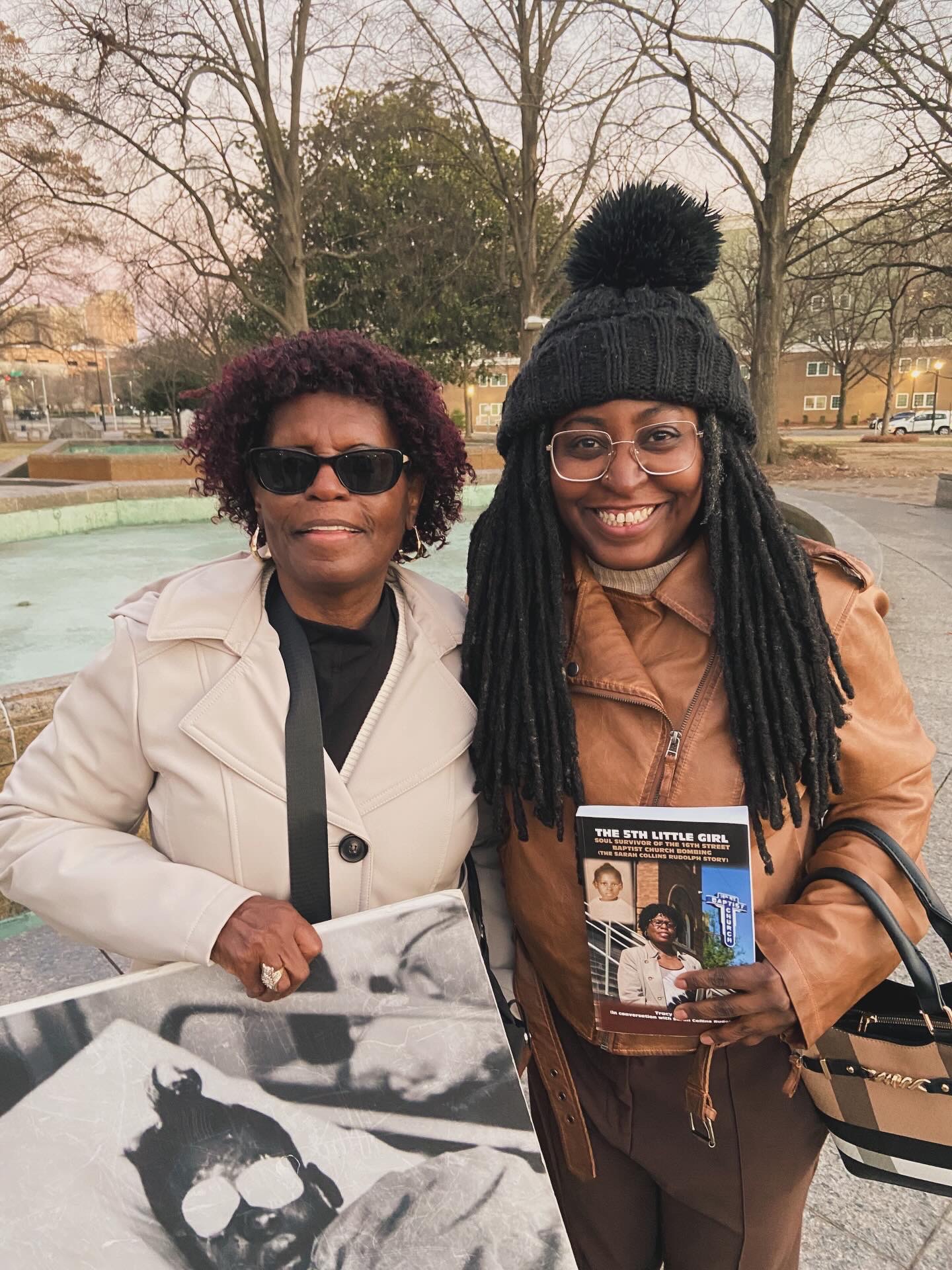
Meeting Mrs. Sarah Collins Rudolph, the lone survivor of the 16th Street Baptist Church Bombing, 1963

The more I study Black history, the more I am humbled by how close it still is to us, and how often the past breathes in the same rooms we do. It lives in the hands of my elderly aunts and uncles, in my husband’s great-aunts now in their eighties and nineties, in the quiet authority of people who remember a world entirely unlike the one we inhabit today.

When I look at them, I am struck not just by their age but by the eras they have survived. Even my late parents, born in the 1940s and 1950s, moved through a country so different from the one I know that it feels almost unrecognizable. I used to think that world was gone, and in many ways, it is. And at the same time, it is also sitting across from us at dinner tables, folding laundry, telling stories we don’t always ask to hear.

This is what makes Black history (and history in general) so accessible and so urgent. It is not only found in textbooks, memorials, museums, or the names etched into stone. It is carried by people who are still alive. People whose memories collapse the distance between then and now. It reminds us that history is not just the past, but it is also inextricably connected to the present. Those who made history were simply living their lives, never knowing their present moment would one day be named.

This weekend is the perfect example of this.

On February 7, 2026, I had the esteemed honor of meeting a woman whose story should have been in our history books, but the world barely remembers her name.

On September 15, 1963, the distance between past and present collapsed in the basement of the Sixteenth Street Baptist Church in Birmingham, Alabama. A bomb exploded beneath the church steps, ripping through a space that had long been a place for organizing and for Black resistance. In 1963, Sixteenth Street was the largest Black church in Birmingham, a heartbeat of the Civil Rights Movement.

History often tells this story in a single, devastating sentence: four little girls were killed. Addie Mae Collins, Denise McNair, Carole Robertson, and Cynthia Wesley (between the ages of eleven and fourteen) lost their lives in an act of white supremacist terror. Their names are remembered, mourned, and rightly so.

What is mentioned less often is that there were five girls in that basement lounge that morning. Addie Mae’s sister, Sarah, was also there. She lived, but survival came at a cost that would follow her for the rest of her life.

Twelve-year-old Sarah Collins Rudolph was standing nearby when the bomb went off. The blast hurled shards of glass into her body, leaving her immediately blind in both eyes. Though she eventually regained partial sight in her left eye, her right eye was so severely damaged that it had to be removed and replaced with a prosthetic. Tiny fragments of glass remained embedded in her skin, even in her eye.
“If a single strand of hair got into my right eye socket, the pain was unreal,” she says, “The skin around my eye was very sore and still healing. It felt like something was cutting my eyes whenever hair or anything sensitive brushed over this area. The hair itself felt like tiny particles of glass stuck inside my eye socket all over again.”

– Mrs. Sarah Collins Rudolph

Sarah did not die in that basement, but she carried September 15, 1963, with her into adulthood, into older age, into the present we are still living in.

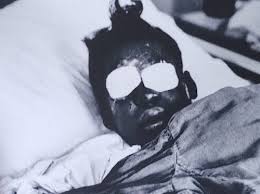
With no counseling or therapy, Sarah was forced to return to school as she struggled to heal, grieve the loss of her sister, and her old life. The world moved on. Dr. King spoke at the joint funeral for three of the girls, and it attracted over eight thousand people. Photographer Frank Dandridge took a picture of Sarah while she lay in the hospital, with patches over both eyes, and it was published in Life Magazine on September 27, 1963.

However, despite this searing image, Sarah Collins Rudolph and what happened to her faded from public consciousness, limiting her story to nothing more than a historical footnote.

It was only when Mrs. Rudolph herself felt compelled to share this story that the world began to learn about the part of that tragic day that had not been told before.
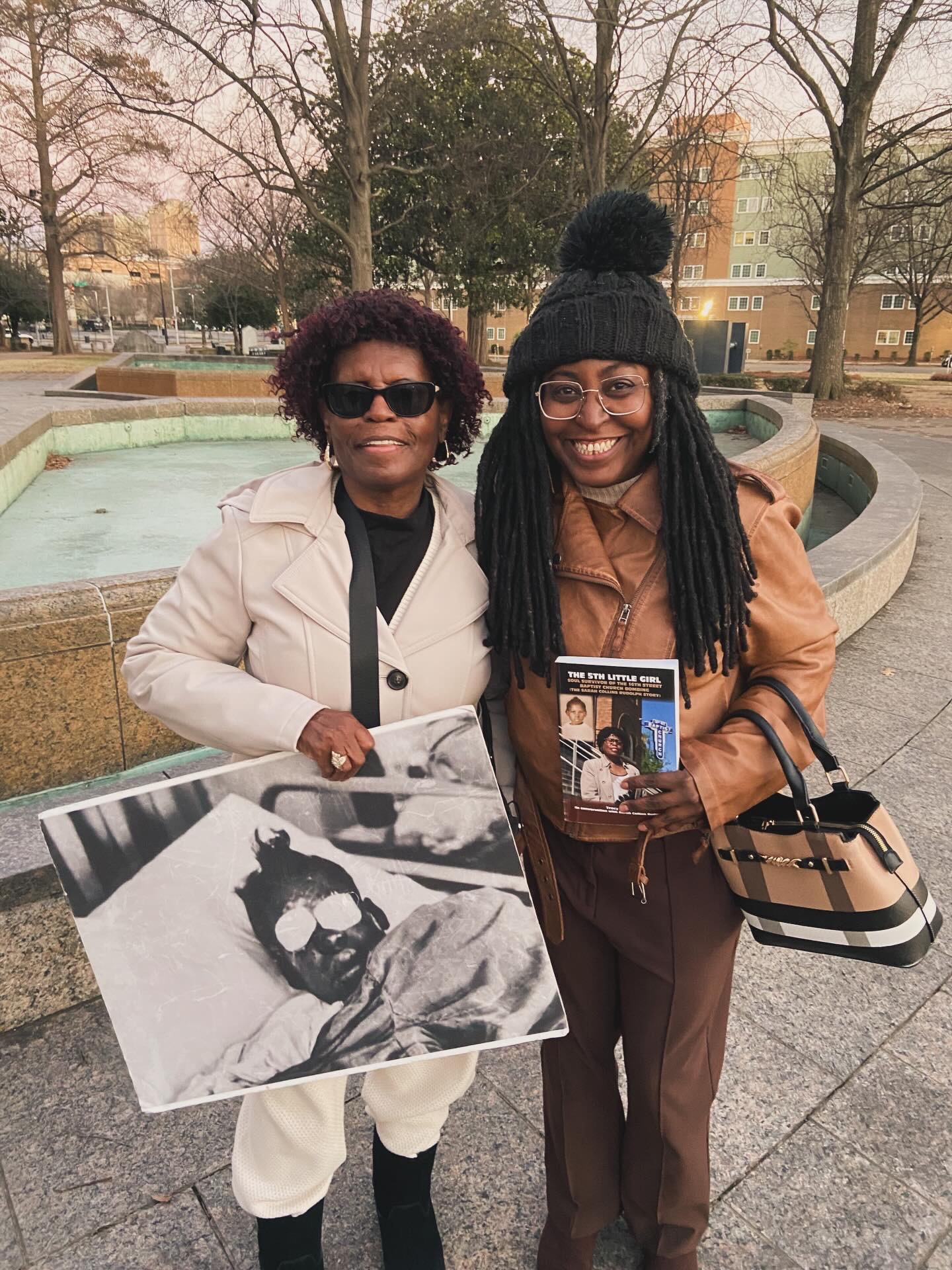
Today, Mrs. Rudolph is a social justice speaker, author, and activist speaking to people all over about what happened to her and why stories like hers matter.
Don’t forget we have Black History articles on this blog under Black History Fun Fact Friday and on Substack at substack.com@yecheilyah!

A Month and A Mirror

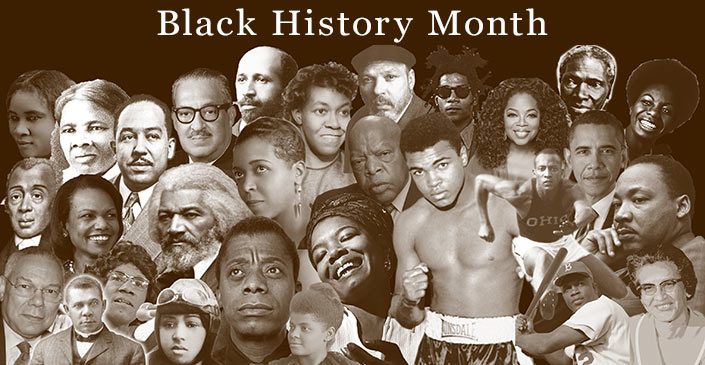
A hundred years ago, in 1926, Dr. Carter G. Woodson planted a small but deliberate marker in time—Negro History Week—never knowing it would one day swell into a month, a memory, a reckoning.

February has carried that weight ever since, in what is now known as Black History Month. It is a month crowded with remembrance, with names spoken loudly and moments replayed until they feel familiar.

But February also carries the ongoing debate over whether Black history should be relegated to a single month, primarily since Dr. Woodson himself never intended the week-long celebration to be permanent, let alone to encompass a whole month lasting 100 years.

For Woodson, he wanted Black history integrated into the mainstream curriculum, not restricted to a single week or, in our case, a single month.

For me, two things can be true.

If you’ve been following me for any amount of time, you know I spend 90% of my time reading, researching, documenting, and sharing Black historical facts year-round. Thus, I am for incorporating Black history into the mainstream curriculum and reducing its focus to a footnote or an elective.

But I do also love the idea of keeping it separate, special, and set apart, as we are.

Additionally, it’s a great time to promote reading. The harsh reality is that American reading levels are still declining. (2024 NAEP data show 12th-grade reading scores at their lowest level since 1992.) I’d bet that your average adult had not read a full-length book since High School, if even then.

Therefore, if February is a time when the minds of the people are not as distracted, then let us use it to do some good.

To quote Bob Marley, “The people who were trying to make this world worse are not taking the day off. Why should I?”

So while Black History Month is not the movement itself, I do see it as a mirror history placed in our hands. When we look into it, we do not see the past frozen in black-and-white—we see ourselves.

Our language. Our resistance. Our contradictions.

The mirror does not lie.

It shows us who we’ve been bold enough to become and who we’ve been too afraid to remember.


Don’t forget we have Black History articles on this blog under Black History Fun Fact Friday and on Substack at substack.com@yecheilyah!

This Moment

“Tomorrow has its own worries, wrapped up in its own time. For that, this moment is what you make of it.” – Yecheilyah

33348-Live-For-The-Moments-You-Cant-Out-Into-Words

In the world wind of routine and 24 hour clocks, we forget about the power we have to control this very moment. We spend 95% of our lives worrying about what the next day, the next week, or the next year will produce. In fact, we spend so much time thinking about the future that our present is cloaked with uncertainty, and we give birth to idleness. Idleness in turn leads to a loss of direction and diminishes our satisfaction for life itself. For some, it even leads to depression, for he or she has lost track of the vision. The performance of right now and the endless possibilities utterly escape us as we lay the blueprint for the next day. Always remember that we always have the power to choose and nothing is really a distraction (it is only a distraction if you’re not paying attention). Even when there are circumstances that appear so out of our control, such as emotions, there is still a choice. If I’m sad today it is because I choose to be sad. If I’m angry today it is because I choose to be angry. If my reaction to disrespect is a loss of self-control I have chosen to lose control. As such there is no one to blame for missing the opportunities each day holds because we are the ones who decide to make the decisions that lead to the outcome of every single moment. The funny thing is that this can also help with blogging. I know there are a lot of you participating in National Blog Posts and Novel Writing Months and whatnot, and you’re scratching the surface of your brains for something to write to complete the days post. But just relax, and earnestly think about what you have in this moment, and it’ll be a lot easier than just trying to put something out there. You will instead put something out that not only fulfills the challenge, but also something that will be of substance to the reader.

While planning ahead has its blessings, let us make sure that we’re also nourishing this very moment; for tomorrow has its own worries, wrapped up in its own time. And for that, this moment is what you make of it.