Black History Fun Fact Friday: Inventions

Welcome back to another episode of Black History Fun Fact Friday. I know I know, the sun will be setting soon but, better late than never right? 🙂 Tonight we’ll be looking at: 12 Black Inventors You May Not Know. I was surprised to find that many of them either died recently (2000-) or are still alive. Enjoy:

1. Lewis Latimer (1848 – 1928)

Lewis Latimer (1848 – 1928)

What He Invented: The Carbon Filament For The Light Bulb.
Why It’s Important: Latimer is one of the greatest inventors of all time. Latimer helped make the light bulb a common feature in households. In 1881, he received a patent for inventing a method of producing carbon filaments, which made the bulbs longer-lasting, more efficient and cheaper.
In 1876, he worked with Alexander Graham Bell to draft the drawings required for the patent of Bell’s telephone.

2. Patricia Bath (1942-Present)

patricia-bath--600x353
Patricia Bath

What She Invented: The Cataract Laserphaco Probe.
Why It’s Important: Her device used an innovative method of removing cataract lenses with a laser, which was more accurate than the drill-like instruments that were in common use at the time. The New York ophthalmologist’s invention, patented in 1988, helped save the eyesight of millions and even restored sight to people who had been blind for more than 30 years.

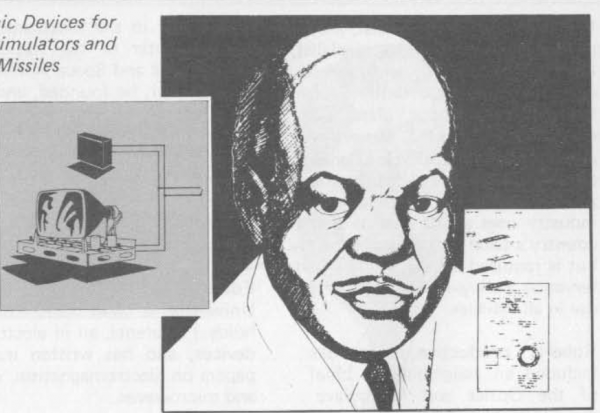
3. Otis Boykin (1920 -1982)

otis-boykin-600x413
Otis Boykin

What He Invented: The Artificial Heart Pacemaker Control Unit.
Why It’s Important: Although there were variations to the pacemaker before Boykin’s invention, the modern-day pacemaker would not exist without his work. Boykin,  also sought and received a patent for a wire precision resistor on June 16, 1959. This resistor would later be used in radios and televisions.

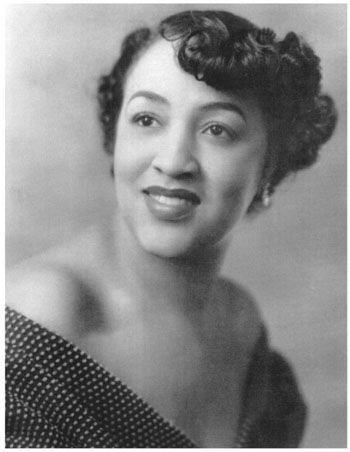
4. Marie Van Brittan Brown (1922-1999)

Marie Van Brittan Brown

What She Invented: Closed-Circuit Television Security

Why Its Important: Marie Van Brittan Brown received a patent in 1969, making her the first person to develop a patent for closed- circuit television security. Brown’s system was designed with four peepholes and a motorized camera that could slide up and down to look at each one. Her invention became the framework for the modern closed-circuit television system that is widely used for surveillance, crime prevention and traffic monitoring.

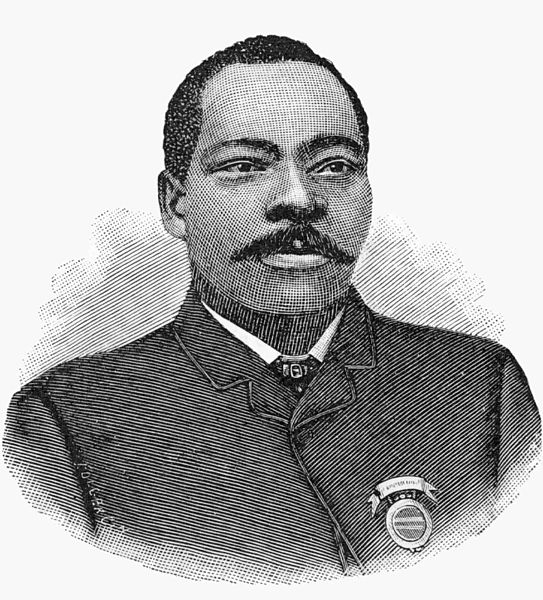
5. Granville T. Woods (1856-1910)

Granville T. Woods
Granville T. Woods

What He Invented: The Multiplex Telegraph.
Why It’s Important: The Multiplex Telegraph was a device that sent messages between train stations and moving trains. His work assured a safer and better public transportation system for the cities of the United States.

6. Mildred Kenner (1924-2004)

Mary Kenner
Mary Kenner

What She invented: The Sanitary Belt

Why Its Important: Mildred Kenner joined her sister Mary Davidson in patenting many practical inventions. Neither of the sisters had any technical education, but that didn’t stop them from inventing the Sanitary Belt in 1956. Three years later, Kenner invented the mosture-resistant pocket for the belt. While disabled from multiple sclerosis, Kenner went on to invent The Walker and the toilet-tissue holder.

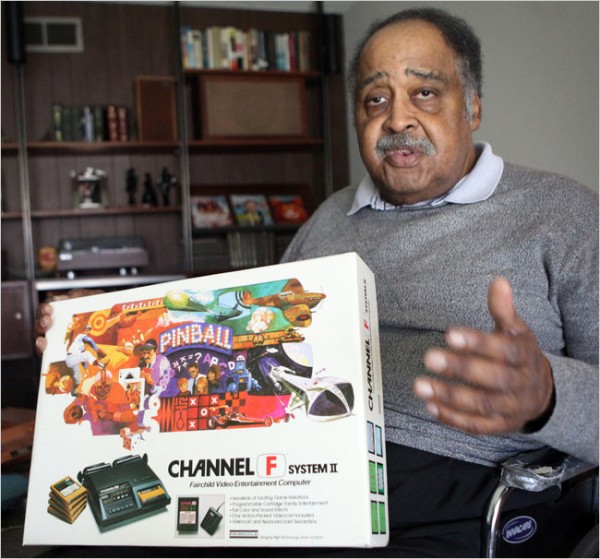
7. Gerald A. Lawson (1940 -2011)

Gerald A. Lawson
Gerald A. Lawson

What He Invented: The Modern Home-Video Gaming Console.
Why It’s Important: Anyone who owns a Playstation, Wii or Xbox should know Lawson’s name. He created the first home video-game system that used interchangeable cartridges, offering gamers a chance to play a variety of games and giving video-game makers a way to earn profits by selling individual games, a business model that exists today.

8. Sarah Goode (1855-1905)

Sarah Goode's Invention
Sarah Goode’s Invention

What She invented: The Folding Cabinet Bed

Why Its Important: Sarah Goode was an entrepreneur and inventor, who was the first African-American woman to receive a U.S. patent. Goode invented a folding cabinet bed which provided people who lived in small spaces to utilize their space efficiently. When the bed was folded up, it looked like a desk. The desk was fully functional, with spaces for storage. She received a patent for it on July 14, 1885.

9. Charles Richard Drew (1904-1950)

Charles R. Drew
Charles R. Drew

What He Invented: The Blood Bank.
Why It’s Important: His research in the field of blood transfusions led to the development of improved techniques for blood storage. He applied his expert knowledge to the development of large-scale blood banks early in World War II. His invention allowed medics to save thousands of lives of the Allied forces.
He directed the blood plasma programs of the United States and Great Britain in World War II, but resigned after a ruling that the blood of African-Americans would be segregated.

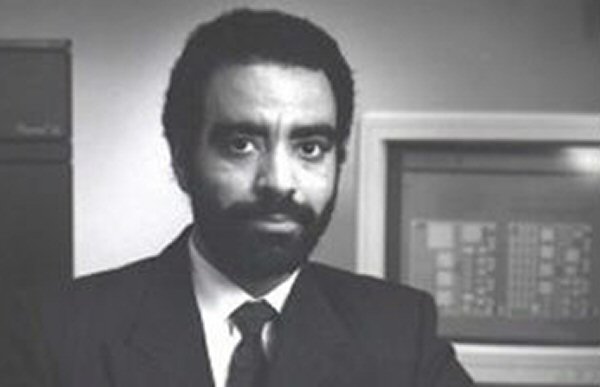
10. Marc Hannah ( 1956-Present)

Marc Hannah
Marc Hannah

What He Invented: 3-D Graphics Technology Used in Films.
Why It’s Important: Anyone awed by the special effects in the films Jurassic Park, Terminator 2 and The Abyss should thank Chicago-native Marc Hannah. The computer scientist is one of the founders, in 1982, of the software firm Silicon Graphics (now SGI), where the special-effects genius developed 3-D graphics technology that would be used in many Hollywood movies.

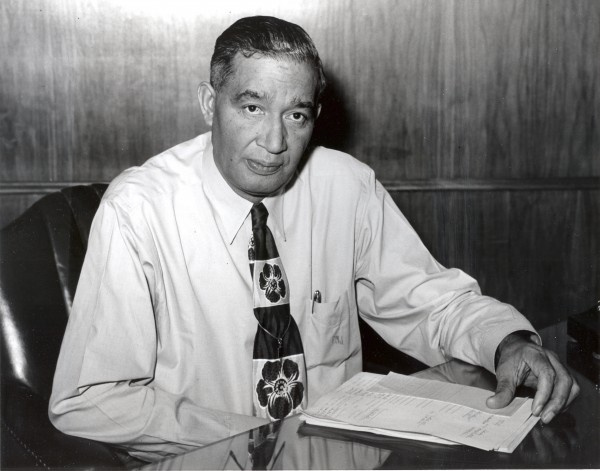
11. Frederick M. Jones (1892-1961)

Frederick Jones
Frederick Jones

What He Invented: Mobile Refrigeration
Why It’s Important: His invention allowed the transportation of perishable foods such as produce and meats, which changed eating habits across the country. Thermo King, the company he co-founded, became a leading manufacturer of refrigerated transportation. Jones also developed an air-conditioning unit for military field hospitals and a refrigerator for military field kitchens. Jones was awarded over 60 patents during his lifetime.

12. Alice Parker (1865- death date unknown)

Alice Parker's Invention
Alice Parker’s Invention

What She Invented: Central Heating

Why Its Important: In 1919, Alice Parker of Morristown, New Jersey, invented a new and improved gas heating furnace that provided central heating.

***********************************

Publicationbhff

Thanks for stopping by Black History Fun Facts. Below is last week’s episode in case you missed it:
Week #8: Timbuktu

The Measurement of Success

booker

I usually don’t like talking a lot about certain historical figures, not because I have less respect for them, but because they are so routinely used. Like, if I hear Martin Luther King and Rosa Parks one more time this month I’ll scream. There are so many other worthy individuals to discuss than to regurgitate the same ten people whose names even the most illiterate in black history knows. So there, had to get that out.

BUT, this is such a great quote 🙂 (lol)

“I have learned that success is to be measured not so much by the position that one has reached in life as by the obstacles which he has had to overcome while trying to succeed.” —Booker T. Washington

This quote does not have to limit itself to one way of seeing success, but in whatever capacity of acheivement. Whatever you put your energy into, if you have practically crossed galaxies to achieve that thing, oh how sweet the victory right? Just a quick snippet of inspiration for all you beautiful people out there. Keep going, the struggle is only gonna make the reward that much sweeter.

Black Beauty

**A little History on this Poem**

This is a 12 year old poem. It has since been revised but this is the original copy that I wrote back when I was a sophomore in High School. It was entered into a contest and it won. I was then to fly to Rio Nevada for the award ceremony but I could not afford to go. I have since performed it many times throughout my High School career at assemblies and talent shows. For me it was my first poem. It was the first poem I wrote that really spoke about something deeper than my personal adolescent issues and reached beyond the childhood perspective I was used to writing about. It was also my first Spoken Word poem, the first poem I ever shared while standing before an Audience. Today I would like to share it with you. (Keep in mind I was only like 15 when I wrote this so bear with me lol):

3e5f6a3262d9712880ca6c3c6f8a8194

BEAUTY
Wake up Black beauty!
Look up black beauty!
And see the mountain range
Stand up Black beauty, know your name
Be the Sun that shines,
I clothe in your sweetness, I see in your eyes
I notice your strength and weaknesses that lies
Time has gone and we have grown,
into these skies of disguise
we are Earth’s insects, its flies.
Walking this ground with our black feet,
sitting at tables eating our black meat,
it is beauty we see.
Working our black railroads
While listening to stories retold
Watching as oceans and seas travel for miles and miles without smirks or smiles,
licking greedy lips,
waiting for boats and ships to please its hips
we are the ground walked upon
We sing and cook with soul offering any hungry person a bowl
We realize the importance of education
that we had before civilization
that we had before coming into the truth of our very own nation.
A nation of many different colors and sizes,
all of various secrets and surprises
We are the proud combination of dark skins,
from small twos to plus sized tens,
we are ALL beautiful.

Black History Fun Fact Friday – Convict Leasing


Publicationbhff

Welcome Back everyone to another episode of Black History Fun Fact Friday! Where we present movies, products, books, audio, or article Fun Facts on a portion of the History of African American people. We cover all things Archeological, Biblical, Historical, and most importantly, Factual. Today marks our 4th week into the series and we’d like to celebrate our month in with an excellent documentary on the history of convict leasing, but first, a little History:

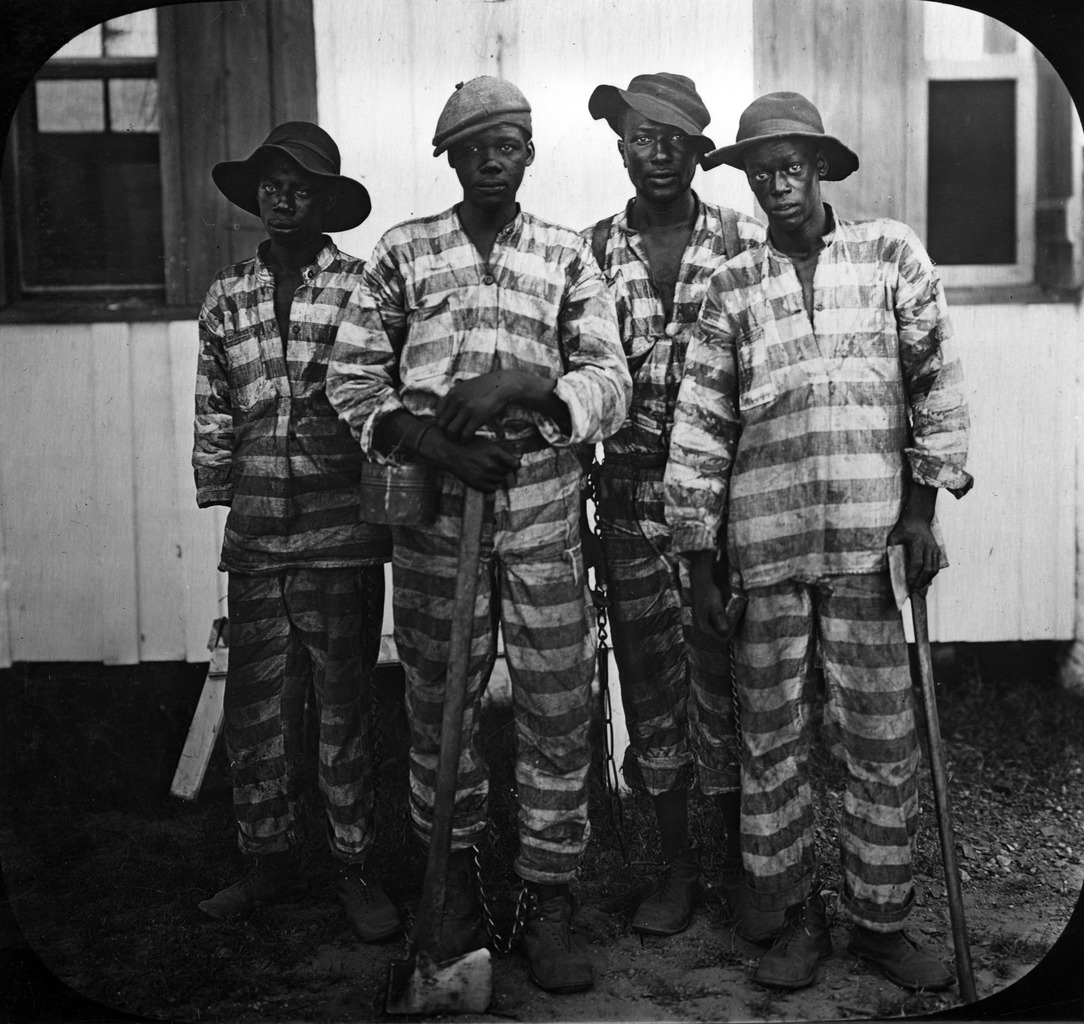
Convicts_Leased_to_Harvest_Timber

According to the 13th Amendment:
“Neither slavery nor involuntary servitude,

except as punishment for crime

whereof the party shall have been duly convicted, shall exist within the United States, nor any place subject to their jurisdiction.”

24199432

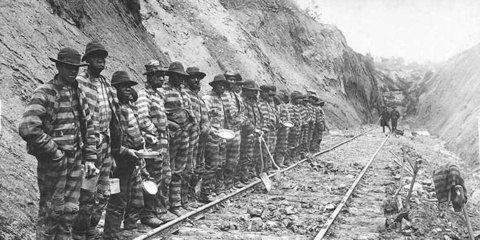
Convict leasing began in Alabama in 1846 and is recorded as lasting until July 1, 1928, however our past and present prison population speak a different language. Today, more than 60% of the people in prison are African American. For Black males in their thirties, 1 in every 10 is in prison or jail on any given day. Take a class filled with black boys and 1 in 3 has a likelihood of ending up in prison. It has gotten so bad that prisons now calculate the percentage of beds needed for cells based on whether or not black boys can read by the 4th grade.

Convict labor working on railroad line

In 1883, about 10 percent of Alabama’s total revenue was derived from convict leasing. In 1898, nearly 73 percent of total revenue came from this same source. Death rates among leased convicts were approximately 10 times higher than the death rates of prisoners in non-lease states. In 1873, for example, 25 percent of all black leased convicts died.

While most believe that the 13th Amendment abolished slavery and involuntary servitude, a loophole was opened that resulted in the widespread continuation of slavery in America–slavery as punishment for a crime.

Narrated by Lawrence Fishburne, learn from Historians and Scholars how the south reconstructed its means of financial stability after the end of the Civil War and the Emancipation of slaves:

Slavery by Another Name:

In Case You Missed It:

Hair Story

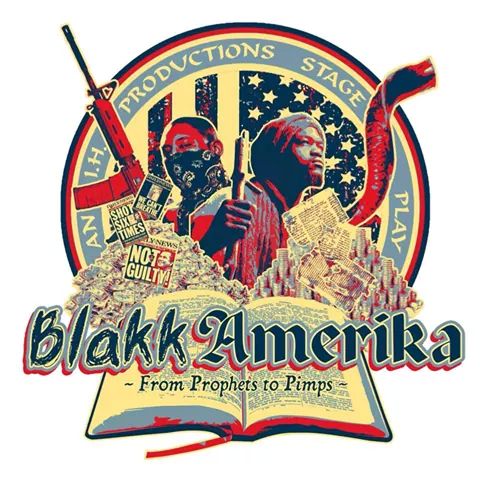
Blakk Amerika – From Prophets to Pimps

IMG_3455425796116
Image Copyright © 2015 Israylite Heritage

If you are in the Chicagoland area, I am inviting you to go and see this play! Tickets go on sale midnight and no matter your religion or nationality, you HAVE to see this play. Below is a synopsis and the link to the website, check it out if you can:

“4000 years ago bible prophecy spoke about a mighty people who would be taken captive and brought into a strange land in ships.  They would undergo mistreatment by a ruthless enemy for four hundred years.  Who are these mighty lost and suffering people? What is the true history of African Americans before slavery? Why have we endured so much hardship? The Bible foretold of our entire history in the West thousands of Years before we arrived here. Come out to witness this ground breaking stage play for a night of Truth, poetry, Song, tears, laughter and answers to Questions that have gone unanswered for hundreds of years.”

From Prophets to Pimps

Click Here to be taken to the website

Black History Fun Fact Friday

Hello there loves, and welcome back to Black History Fun Fact Friday the one day we set-apart to highlight some of the most influential African American men and women of time.

Publicationbhff

***************

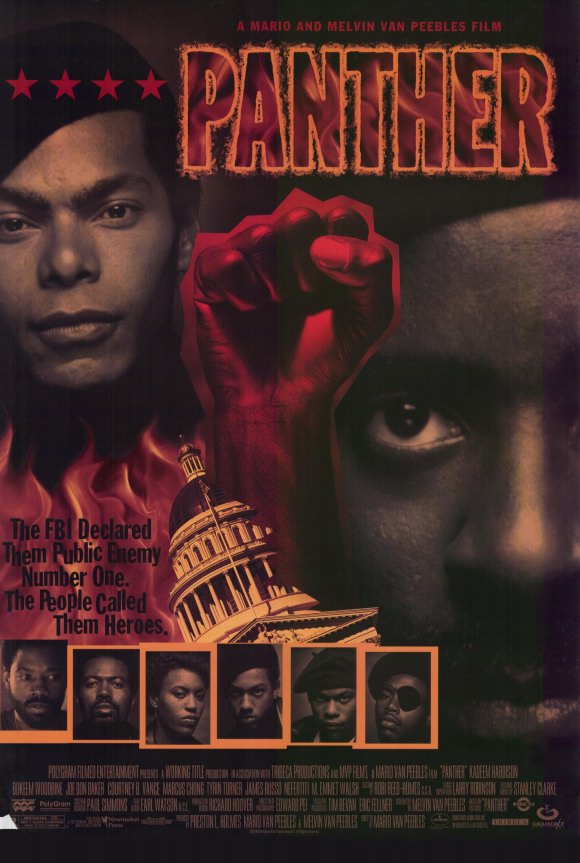
Panther1995_movie_posterToday’s Black History Fun Fact is the movie Panthers, the 1995 document of The Black Panther Party as narrated by Kadeem Hardison as Judge (based on the real life persona of Bobby Rush), and directed by Mario Van Peebles as adopted from his father Melvin Van Peebles. The film portrays the Black Panther Party for Self-Defense (aka The Black Panthers) tracing the organization from its founding through its decline. I must admit I’m going out on a limb by recommending this movie. I may soon be deemed as a promoter of militant anti-government sentiment. However, that is the opposite of why I recommend you add this movie to your collection. For the record I’m not in the business of advocating for militant behavior.

free_breakfast_programI like this movie because it showcased a lot of The Panthers outreach programs: the food distributions, medical assistance, education, and variety of businesses. Mario Van Pebble’s Panther is one of my favorite movies for the same reason Malcolm X is one of my favorite movies, not because I’m Muslim, which I am not, but because of the passion for the uplifting of the black community and the way the actors seemed to literally cement themselves into the roles. I mean, Denzel Washington may as well have been Malcolm incarnate. It’s not everyday you get a bomb story, with truth, AND actors to play it to the letter. Movies like this are very inspiring to me and keep the fire I have to restore the forgotten heritage to the forgotten people going. Just watching it alone compels you to get off your butt and do something, feed the poor or tutor some children, anything to promote progression in your communities; fueled by the passion of the youth before you. Speaking of which, you can’t miss the cast in this one: From Angela Bassett, to Kadeem Hardison, Marcus Chong, Chris Rock, Tucker, the list goes on and on with A list actors and act they did. This film is a must see.

Thank you for stopping by and checking out this week’s episode of Black History Fun Facts! We’ll see ya next week.

In the meantime, go buy that movie 🙂

Today marks our 3rd week in this series so here’s a recap in case you missed it:
Black History Fun Facts: Hair Story

Black History Fun Facts: Ray Charles

NEW BOOK – Stella: Between Slavery and Freedom

product_thumbnail.php

This February (exact date coming soon) I will be releasing a new project entitled Stella, a short story about the lives of two women living in two different time periods, their experiences colliding in an explosion of emotional revelations:

Cynthia insists she’s not a racist, and while many of her points about the state of Black America are valid, she still doesn’t believe Blacks should have the same rights as whites. She believes America has come a long way, but that integration has kept it from going further. One day, Cynthia and her boyfriend Alex decide to visit Cynthia’s Grandmother, and happen upon information that will change their lives forever.

Raised under the protection of her mother and the field hands, Stella is unaware that she is a slave. Not being accustomed to hard labor things change when Mama dies and she falls into the cruel hands of “Mars Saddler”. Years later, when The Louisiana Constitutional Convention of 1864 abolishes slavery in the parish, Stella learns of Saddlers plan to keep her on the plantation. She then agrees to accompany Saddlers daughter Miss Carla and her husband John to The Windy City.

Together, Cynthia and Stella learn the hard way the difference between slavery and freedom.

Stella will be available in the following formats as well as in print:

Apple iBookstore, Barnes & Noble NOOK, Amazon Kindle, Kobo, and everything else. Visit http://www.theliterarykorner.com for additional details.