Black History Fun Fact Friday – The Immortal Life of Henrietta Lacks

Originally Published February 27, 2015

Publicationbhff

Today is a special Friday because we’re going to be talking about a special woman in history. She’s a unique study because there is not a lot of information on her. While technology has blessed us with the internet so that we no longer have to sit through 500-page books and encyclopedias, the best way to research her life is actually through books, and I have a perfect one for you to check out. It is because of this book that search engines are just now coughing up information about it. I didn’t intend to make another book recommendation, but this one goes hand in hand with last week’s post so much, so I could not help it. It is almost a single example that alone validates Harriet’s study. For last week’s post, Medical Apartheid, Click Here.
marcusMany of you have heard of her in biology class, but you probably didn’t know you were studying her cells. If you have ever sat through a class on cells and heard the term HeLa, you’ve heard of her. Your science professor more than likely described it like this:

“A HeLa cell, also Hela or hela cell, is a cell type in an immortal cell line used in scientific research. It is the oldest and most commonly used human cell line. “

That was probably the extent of the explanation. There is even a scientific name for HeLa, and it’s called Helacyton Gartleri.

HeLa cells were the first line of human cells to survive in vitro (in a test tube). The cells were taken from tissue samples and grown by a researcher named Dr. George Gey in 1951. Dr. Gey quickly realized that some of the cells were different from ordinary cells. While those died, they just kept on growing. After more than 50 years, there are billions of HeLa cells in laboratories all over the world. It’s the most commonly used cell line, and it’s known to be extremely resilient.
Henrietta-Lacks-2-thumb-400xauto-7959-Edit

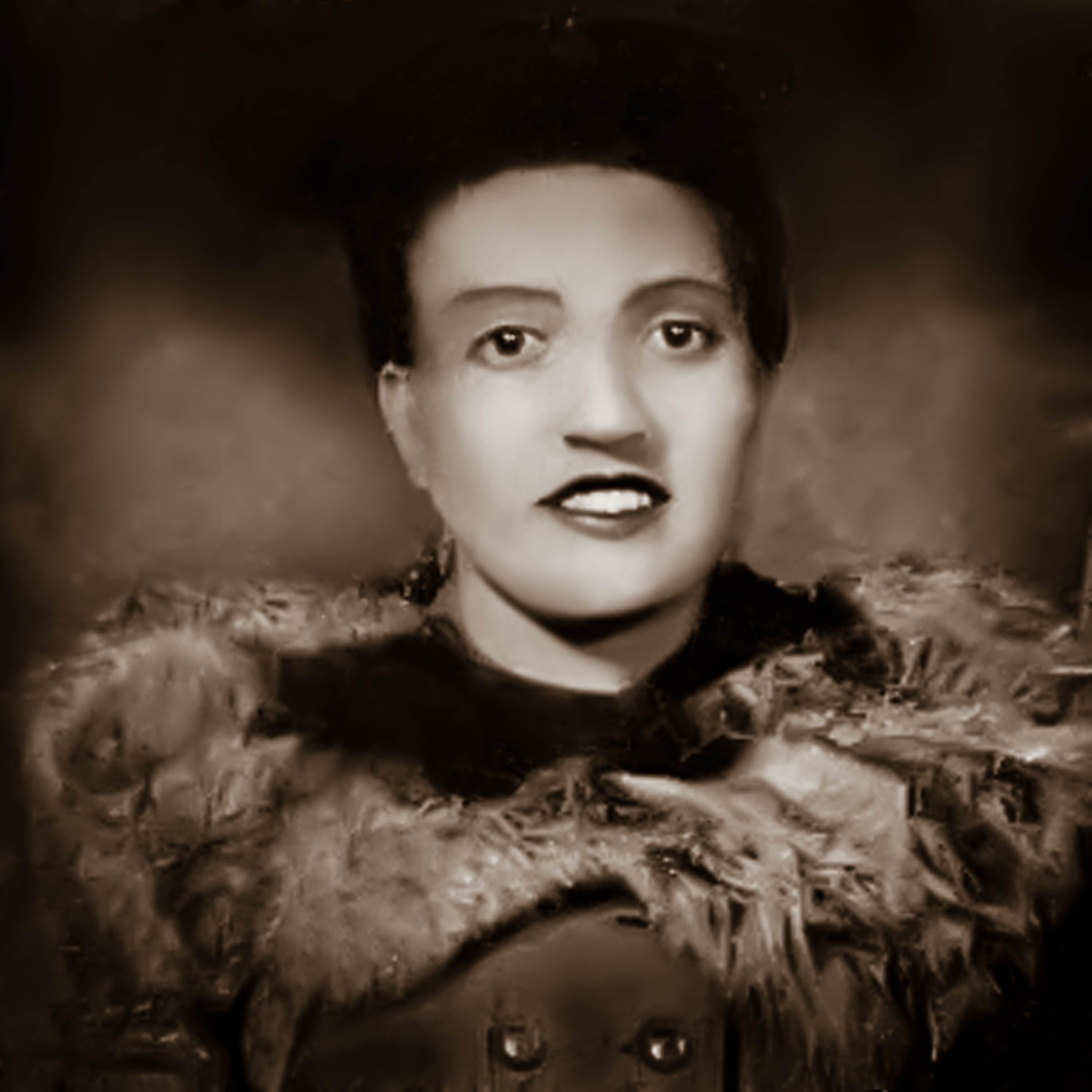
In 1951, a black woman was diagnosed with aggressive cervical cancer, and when she died, doctors took her cells without permission, and these cells never died. Her name was Henrietta Lacks, but scientists know her as HeLa. She was a poor black tobacco farmer whose cells became the foundation for groundbreaking research. From developing the polio vaccine to cloning to gene mapping, her cells helped to make blood pressure medicines and antidepressant pills; they helped develop drugs for treating herpes, leukemia, influenza, hemophilia, and Parkinson’s disease, and more.
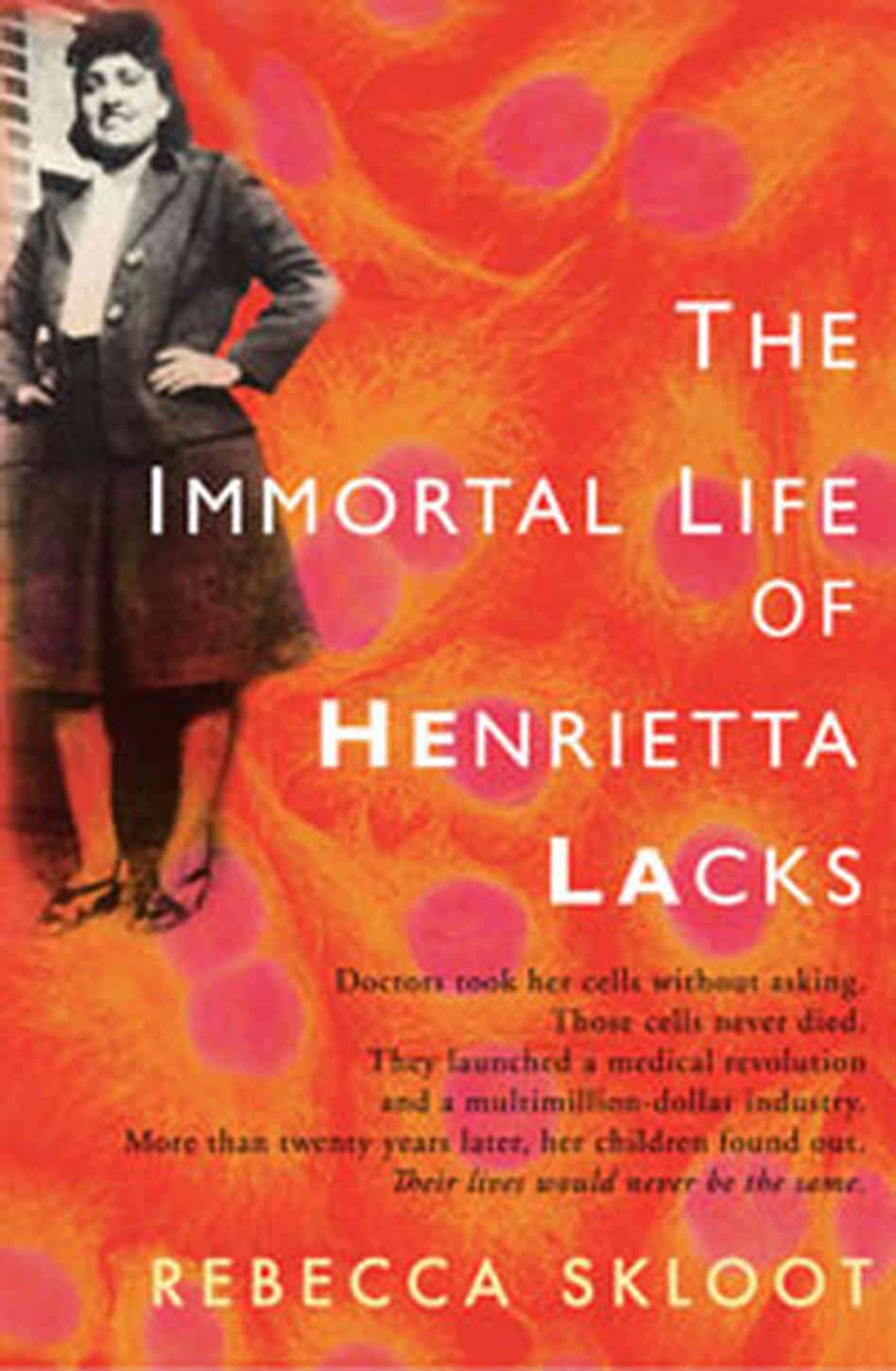
The fact that HeLa cells have been used in some fundamental medical research is impressive enough, but there’s another part of the story — and that part is why Oprah might be making a movie about HeLa. Henrietta Lacks had no idea that her cells were taken and used in this way, and neither did her family. And while the cells became commercialized (researchers can buy a vial of them for $250), Lacks’ family has lived without healthcare and in poverty. Since Henrietta and her family never knew about her cell usage, The Immortal Life of Henrietta Lacks is not a story about her contribution to medical research, so much as the ethics of biomedical research and the practice of informed consent.

Rebecca Skloot documents how one woman’s cells continue to live outside of her body. She achieves this using thousands of hours of interviews, lawyers, ethicists, scientists, Journalists who wrote about the Lack’s family, great archival photos, scientific and historical research, and the personal journal of Deborah Lacks.

Black History Fun Fact Friday – Jan Matzeliger

black-history

Growing up, my brother was a collector of the latest Nikes. He was the Air Force One version of the Air Jordan lover. He’ll collect all kinds of pairs of “Air Ones” and stack them in his room or in the basement. It was truly a work of art and since he actually is an artist, sometimes he even drew on them! In any event, it’s no secret, black people love shoes! I don’t say that in a discriminatory way, for African Americans are known to set the trend. There’s nothing wrong with our love for fashion which is often mimicked all over the world. It makes sense then, why it was an African American man who helped to revolutionize the shoe making industry. Meet Jan Matzeliger.

jan-matzeliger

Jan Matzeliger was born in Surinam, formerly known as Dutch Guiana, in South America. Of mixed ancestry, Jan’s father was a Dutch engineer and his mother of African ancestry. Naturally, since his dad was an engineer, Jan would accompany his father to work and developed a skill for repairing complicated equipment.

At nineteen, Jan left home to explore the rest of the world, and began work aboard an Indian ship. He found his way to America and settled in Pennsylvania where he became interested in shoe making and worked at a shoe making factory.

Jan Matzeliger Machine
The Lasting Machine

Though Jan was interested in improving how shoes were made, two obstacles were in his way: He could barely speak English and at that time shoes in the U.S. all came from the small town of Lynn, Massachusetts where “Hand Lasters” (people who could attach the different parts of the shoe together by hand), could only produce 50 pairs of shoes per ten-hour day. Though paid well, Jan had the discernment to see that what Hand Lasters were doing was not as good as everyone thought. There had to be a better way.

Specifically, there was no machine that could attach the upper part of a shoe to the sole and this is basically what the “Hand Lasters” were doing and they were the experts. According to them, “No matter if the sewing machine is a wonderful machine. No man can build a machine that will last shoes and take away the job of the Laster, unless he can make a machine that has fingers like a Laster – and that is impossible.” Jan Matzeliger thought they were wrong and set out to build a machine that would do just that.

Jan's Finished Lasting Machine
Jan’s Finished Lasting Machine

Jan is a great inspiration for setting out to achieve something that no one thought would work. He worked hard on this machine using whatever he could find – cigar boxes, nails, paper, scrap wire—and after six months had a workable model. Jan however, did not have much money. He also kept his project secret. Still, the “expert” Hand Lasters found out and made fun of him for his project. Someone offered him $50.00 for the machine but Jan wasn’t having it. They tried to play him, but he was smarter than that. He turned down more and more offers and continued perfecting his machine until a better offer came from which he could acquire the tools to perfect the machine even more.

In March of 1883, the United States Patent Office issued a patent for Jan’s machine, which could produce 700 pairs of shoes a day, to the Hand Lasters 50 pair and the rest is history. Jan had officially revolutionized the shoe making industry.

Some of my brother’s art, “The Shoe King”

130320_0020 130320_0030 130320_0032 130320_0034

How does Jan’s invention help us today?

Today, shoe making involves four departments: Clicking or Cutting, Closing or Machining, Lasting & Making, Finishing Department and the Shoe Room. The Lasting and Making part is where Jan’s invention would come in. “In the early days of shoe making, shoes were made mainly by hand. For proper fit, the customer’s feet had to be duplicated in size and form by creating a stone or wooden mold called a “last” from which the shoes were sized and shaped. Since the greatest difficulty in shoe making was the actual assembly of the soles to the upper shoe, it required great skill to tack and sew the two components together. It was thought that such intricate work could only be done by skilled human hands.” (Wikipedia)

That is until Jan’s machine. Today, soles, which were once laboriously hand-stitched on, are now more often machine stitched or simply glued on by shoe making manufacturing.

In Case You Missed It:

Black History Fun Fact Friday: Sarah Rector

Sources.

Jan Ernst Matzeliger

https://en.wikipedia.org/wiki/Jan_Ernst_Matzeliger

Now Everyone Can Afford Decent Shoes.”5 Dec 2012. https://web.archive.org/web/20120821203314/http://www.users.fast.net/~blc/xlhome9.htm Archived from the original on August 21, 2012.

“Jan Matzeliger”. The Black Inventor Online Museum.

Jan H. Liedhard. “No. 522: Jan Matzeliger (transcript of radio show Engines of Our Ingenuity episode)”. University of Houston.

“Jan Ernst Matzeliger ‘Lasting Machine'”. Lemelson-MIT. Massachusetts Institute of Technology. Retrieved 29 February 2016.

Reference: Hayden, Robt. C., Eight Black American Inventors. Addison-Wesley, 1972

Black History Fun Fact Friday – Sarah Rector

black-history

Welcome Back to Black History Fun Fact Friday!

I introduce to you Sarah Rector who was just eleven when she received international attention for being a millionaire.

In 1913, The Kansas City Star publicized the headline, “Millions to a Negro Girl.”

Sarah Rector was born on March 3, 1902, in Twine, Oklahoma, on Muscogee Creek, Native American land where her family had been enslaved.

The Dawes Act of 1887 was created by the United States to “bridge the gap” concerning their acquisition of Indian Land. Authorized to survey American Indian tribal land and divide it into allotments for individual Indians and their families, Native Americans were offered U.S. Citizenship in return.

This included land for the people they formerly had enslaved.

In 1907, The Dawes Allotment Act divided the land among the Creeks and their former slaves, and thus, Sarah and her family all received land.

“Long before the births of Sarah and her three siblings, the Creek Nation agreed with the federal government to emancipate their 16,000 slaves, giving them citizenship in their nation and entitling them to equal interest in soil and national funds. They became known as Freedmen.”

-Steve Gerkin, The Unlikely Baroness

One fact this story brings to light is the ownership of blacks as enslaved people by the Five Civilized Native American Tribes. The Cherokee, Choctaw, Chickasaw, Creek, and Seminole Nations all had Blacks as slaves. In fact, Sarah and her family had a rich history as enslaved by the Creeks.

“Sarah’s father Joe Rector was the son of John Rector, a Creek Freedman. John Rector’s father Benjamin McQueen, was a slave of Reilly Grayson a Creek Indian.  John Rector’s mother Mollie McQueen was a slave of Creek leader, Opothole Yahola.  Their history is a rich one. The son Joe was enrolled with them on the same card.”

-Angela Y. Walton-Raji  Educator, Genealogist, Author & Researcher

Per the Act, the head of a family would receive a grant of 160 acres, and this is what Sarah and her family received. “The Creek Nation was sliced up into 160-acre squares, “more or less,” and doled out to the Natives and former slaves; each received 120 acres for agriculture and 40 acres for homesteading.” (Gerkin)

This is when the story gets interesting concerning Sarah’s portion.

To help with taxes on the land, Sarah’s father leased her portion to the Devonian Oil Company of Pittsburgh, and in 1913, everything changed when it struck gold. The oil was booming, bringing in 2500 barrels a day, bringing Sarah $300 a day. Multiple new wells were productive, and Rector’s portion became part of the Cushing-Drumright Field in Oklahoma, “The most prolific early oil field in Oklahoma discovered in Creek County about twelve miles east of Cushing and one mile north of present Drumright.” (Oklahoma Historical Society)

As word of Sarah and her wealth circulated, many people sought to ask for her hand in marriage and acquire loans, and perhaps the most bizarre is her change in identity. Sarah went from a young black girl to a white one.

sarahheadline sarah2

Being that this was the early 1900s, after all, many whites could not accept that someone like Sarah could have so much money. Thus, many began to seek to change her from black to white. Even more, Sarah’s guardianship, like our story last week, also changed, switching from her parents to a white man named T.J. Porter.

An article published in 1914 by The Chicago Defender claimed that Sarah was being ill-cared for by her “ignorant” parents, that she was uneducated, dressed in rags, and lived in unsanitary conditions.

On the contrary, Sarah and her siblings attended an all-black school in an all-black town (Taft, a town in Muskogee County, Oklahoma) in a five-room house. Rector would also go on to attend Children’s House, a boarding school for teens at Tuskegee Institute in Alabama, now Tuskegee University. This could have something to do with her acquaintance with men like Booker T. Washington, and W.E.B. Dubois.

diaspora_02-14-16c

Sarah left Tuskegee when she turned eighteen and moved to Kansas City, Missouri, with her family. By now, she was a full-fledged millionaire owning a Busy Bee Café, boarding house, and bakery, stocks, and bonds. As Sarah’s money increased, so did her male suitors. At twenty, she married Kenneth Campbell, and together, they had three sons. The couple divorced, and she married again, this time to  William Crawford.

Sarah Rector died on July 22, 1967, at 65. Though there is much speculation on the remainder of her life, I believe that because she is not as known as some, Sarah shielded herself and her family from the spotlight as much as possible. After the false claims and accusations concerning her identity, her life seemed to fade away in the background. She went on to college and afterward moved to a different state where she and the family lived in what is known as The Rector Mansion today.


Sources: Special to The Chicago Defender

The Chicago; Nov 15, 1913; ProQuest Historical Newspapers The Chicago Defender (1910 – 1975)

Remembering Sarah Rector, Creek Freedwoman

http://african-nativeamerican.blogspot.com/2010/04/remembering-sarah-rector-creek.htmlThe Unlikely Baroness by Steve Gerkin http://thislandpress.com/2015/03/24/the-unlikely-baroness/

CUSHING-DRUMRIGHT FIELD.

http://www.okhistory.org/index.php?full

Find more Articles at Black History Fun Fact Friday

Black History Fun Fact Friday – The Fultz Sisters

black-history

As a twin, I could not help but be attracted to this story, and as I studied their life in preparation for writing this article, it wouldn’t take long for me to see the red flags. From the media perspective, you’d think the quads and their families were wealthy, with a house on 150-acres of land and the live-in nurse.

This couldn’t be further from the truth.

19a5122c74098a54eab59283a181042bMary Louise, Mary Ann, Mary Alice, and Mary Catherine were born on May 23, 1946, at Annie Penn Hospital in North Carolina. Known as “The Fultz Quadruplets,” they were the first recorded identical black quadruplets globally and the first set of quads to survive in the South.

If the fact they are all named marry isn’t weird enough for you, their white doctor, Dr. Fred Klenner, delivered and named the girls after women in his family. His wife, Mary Ann, his aunt Mary Alice, his daughter Mary Louise and his great aunt Mary Catherine.

The girls were born at the segregated hospital wing, which was really just the basement. Mr. Fultz (whose name was James, not Pete as he was called) was a Sharecropper, and Mrs. Fultz being both deaf and mute, couldn’t read and write according to “And Then There was One” by Lorraine Ahearn, (August 2002). Besides this, the Fultz’s had six other children without a car, electricity, phone, and running water.

Thus, they didn’t debate when Klenner negotiated a deal with a Pet Milk Company that paid all medical expenses, food, land, a house, and a live-in nurse to care for the girls. All of this was in exchange for using the girls for promotional purposes. Klenner even created a schedule where people could come and visit the quads, who were put on display behind a glass screen.

world-famous-fultzPet Milk sales skyrocketed as the girls helped to brand the product, becoming the face of Pet Milk. Pet Milk?

“And so it was that the Fultz Quadruplets left Annie Penn Hospital: under contract, named after their white doctor’s relatives, headed home to a glass-enclosed nursery and driven there in a pair of McLaurin Funeral Home ambulances.”

– Lorraine Ahearn

Blogger Ladyrayne on Talking Stuff, who wrote a post on the Quads after listening to The Tom Joyner Morning Show last year wrote, “According to Edna Saylor, the nurse who worked at the Annie Penn Hospital and who would eventually become the quads legal guardian, the farm that was given to the Fultz family really didn’t amount to much and PET could have done a better job when it came to helping the Fultz family. Ms. Saylor stated that PET took advantage of the Fultz family because they were considered backwoods type of people.”

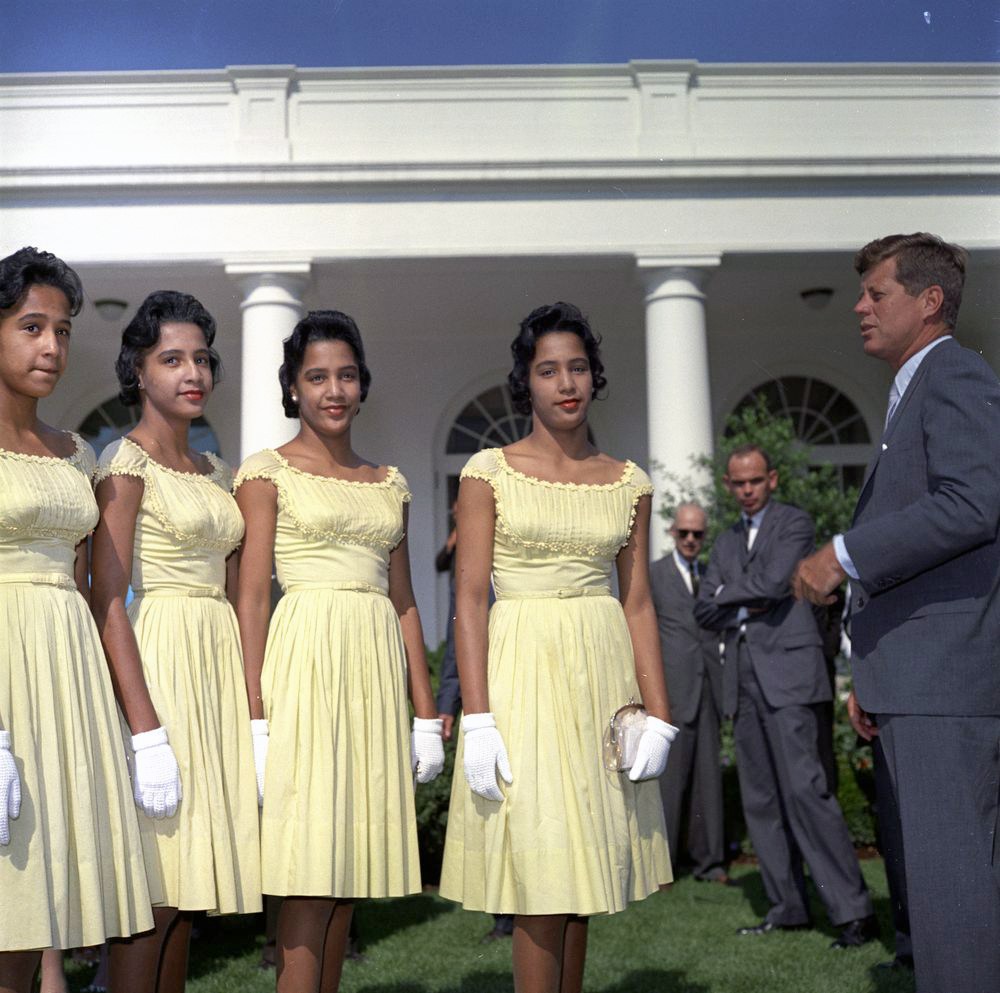
The Quads were adopted by Charles and Elma Saylor, who moved them to Yanceyville, and their travels became more frequent. They flew to Chicago at the invitation of Ebony publisher Johnnie Johnson. He featured them on his cover four times, appeared in Chicago’s star-studded Bud Billiken Parade, went on TV with Roy Rogers and Texas Pete, and would go on to appear in many more ads and make TV appearances. At thirteen (1959), the sisters performed as a string quartet in the annual Orange Blossom Festival in Miami, Florida, and at sixteen (‘ 62), they were featured in a Pet Milk ad for an autographed picture. Many remember them most from their visit to meet Presidents Harry S. Truman and John F. Kennedy.fultz-quads

fultzquads1

Pet Milk became the first to offer nonfat dry milk, an advance over the powdered milk developed in the 1920s. Sales soared when Pet Milk took advantage of the post-war baby boom and promoted The Fultz Sisters, a national sensation due to their rarity, making 1950 the all-time-high sales year for Pet Evaporated Milk.

“For no matter what the public thought, the highly publicized Pet Milk advertising contracts had brought in just enough money—$350 a month— to keep the Fultz Quads off North Carolina’s welfare rolls.” (Chares L. Sanders, Ebony Magazine, November 1968)

Sadly, all the Fultz sisters developed breast cancer later in life, with only one sister who survived it (Mary Catherine).

SOURCES:
EBONY, “The Fultz Quads” by Charles L. Sanders, Nov. 1968.

Ebony’s Spread on the Sisters can be found on Google Books HERE (Page 212) (Its cool going through the Ads from 1968 too!)

News & Record

http://wc.rootsweb.ancestry.com/cgi-bin/igm.cgi?op=GET&db=caswellcounty&id=I37423

“And then there was one” by Staff Writer Lorraine Ahearn, Aug. 2002.

http://www.roccomanzi.it/IMP-VITAMINERALI/SCIENZIATI/scienziati-docu/klenner/FultzQuadswasone_file/FultzQuadswasone.htm

Talking Stuff Blog

https://talkinstuff.wordpress.com/2015/06/10/the-fultz-quadruplets/

Unfamiliar Faces – Lost to History: Afro Puerto-Ricans, Cubans, Jamaicans, Haitians

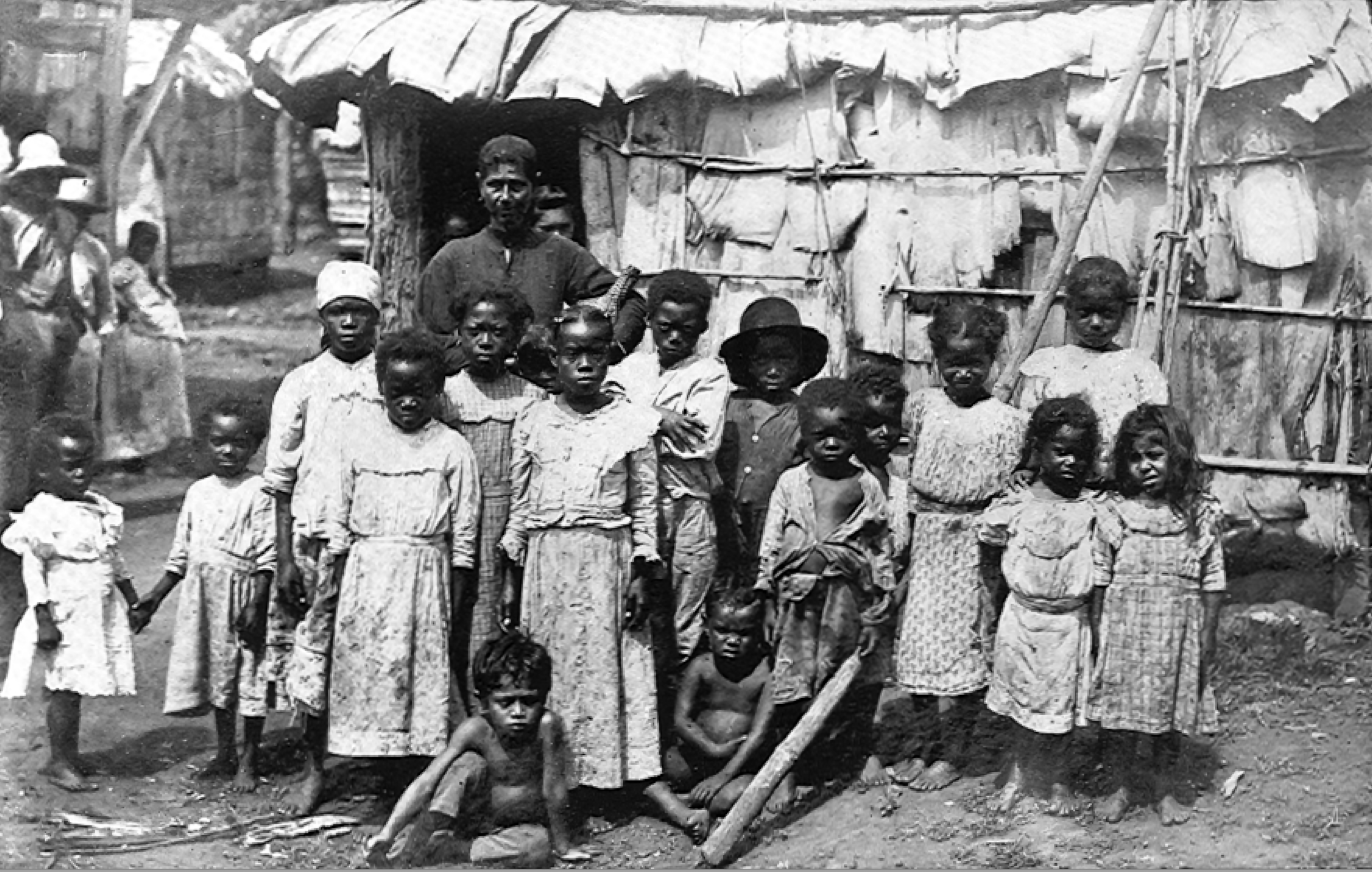
porto_rican_peones_puerto_rican_peons-_children
Enslaved Afro Puerto Rican children

Though many students will learn about slavery in the U.S. at some point, our teachings are usually narrow in that we only learn about the European Slave Trade and the wrongs that Europeans have done. We won’t be told that we weren’t just dropped off in America. We won’t be told that every people, from Jews to the Five Civilized Native American Tribes, held us as slaves. We won’t be told of the difference between the Africans themselves who had slaves and those who were enslaved, and we won’t be told of the many different tribes and nations of black people that occupy the continent.

Contrary to popular belief, mostly brought on by television and movies, slave traders did not go into the interior of Africa to pick up any “African” but they were looking for a specific people. However, since the continent has been lumped up into one big mass, all blacks are assumed to be the same people and as a result, many ancient practices and truths faded from memory.

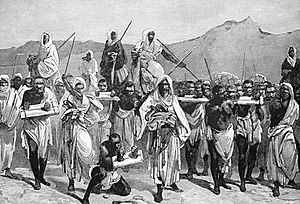
Engraving of Arab slave-trading caravan transporting African slaves across the Sahara.

The trade of slaves across the Sahara has a long history. Dr. John Alembellah Azumah in his 2001 book, The Legacy of Arab-Islam in Africa estimates that over 80 million black people died en route to the Islamic world. Having enslaved blacks about one thousand years before the Europeans, the Arabs had already identified the people of the book. That is the people of the covenant. The people of scripture. The chosen and the prophecies surrounding their captivity.

Indeed, they were not after just any African, but the ones who held principles that were distinct from the other tribes. Differing by way of culture and spirituality, these blacks could easily be spotted by way of their traditions. Olaudah Equiano, known as Gustavus Vassa, captured, enslaved, and then freed, told in his book, The Interesting Narrative of the Life of Olaudah Equiano, of his life in Africa before the abduction.

Born among the Ibo people in the kingdom of Benin, along the Niger River, Olaudah recounts in his narrative of how they still held many Hebrew customs and traditions, such as the circumcision, the division of the tribes by twelve, and the marrying of their brother’s wife after death just to name a few. What is not recounted is that not only did Olaudah’s family uphold such traditions but so did many so-called African tribes.

That said, many of the slaves who came to Puerto Rico were from Congo, the Ashanti, Yoruba, Igbo and Bantu tribes. In all, 31 known African tribes were brought to the island from Central and West Africa through the slave trade but they weren’t the only ones.

Not only was Afro-Puerto Ricans largely made up of these Hebrew tribes, but so were the Jamaicans, Dominicans, Cubans, and so-called African Americans of today. Though we see each other as separate, the truth is that many of us (even if we’ve mixed) are all the same people and were all part of the dispersion.

Today’s lost to history segment focuses not on one individual but a group of individuals who have gone on to war within themselves due to the lost historical fact that we are not a different people but the same. Having been separated by land, we were taken from the same areas because we are descendent of the same people. The only difference is that we were dropped off in different places. Some to Jamaica, some to Haiti, some to Puerto Rico, and so on. As a result, some of us speak English, some of us speak Spanish, and some of us speak French.

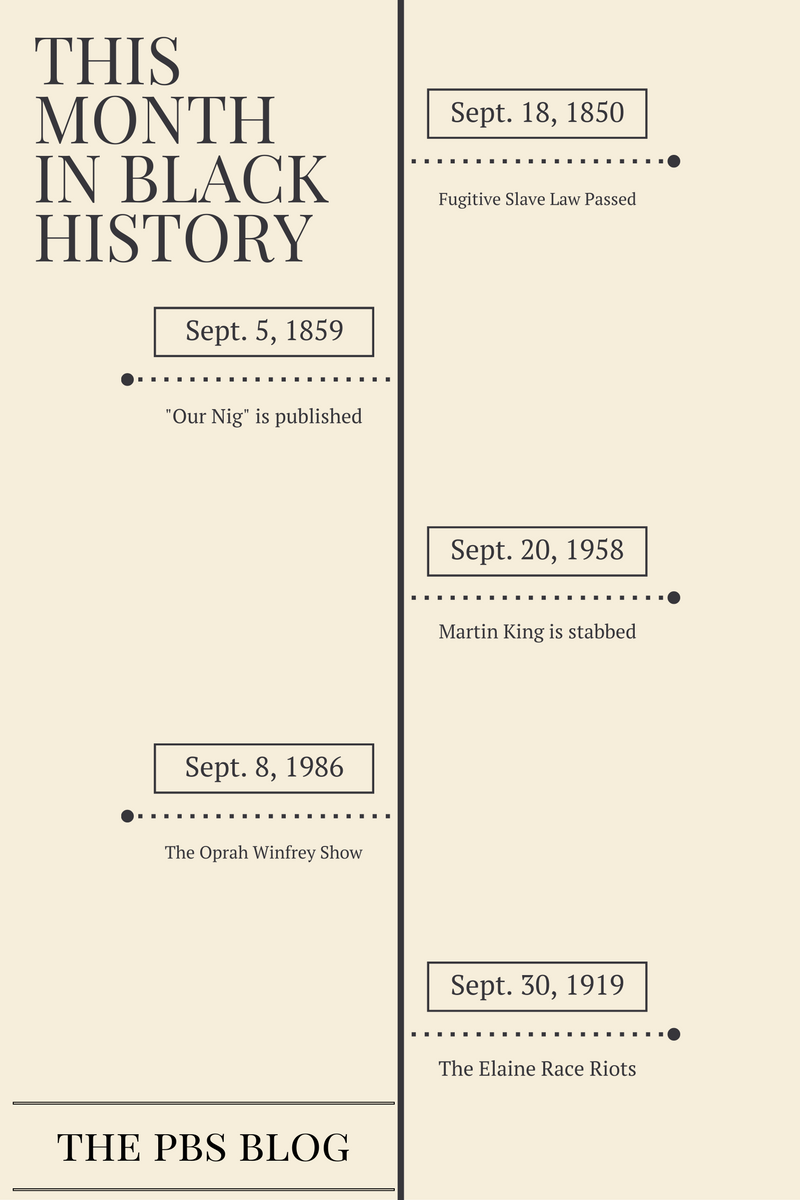
This Month in Black History – September

this-monthin-blackhistory

This month sped by so fast I almost missed this month’s history wrap up!

******

September 5, 1859 – Harriet Wilson’s novel Our Nig is published

September 8, 1965 – Dorothy Dandridge found dead

September 8, 1986 – The Oprah Winfrey Show debut

September 9, 1739 – The Stono Rebellion, the largest slave uprising in the British mainland colonies prior to the American Revolution, occurs in South Carolina

September 10, 1963 – Schools in Alabama desegregated

September 11, 1977 – Roots wins 9 Emmy Awards

September 12, 1905 – Master Horseman John Ware is killed when his horse trips, crushing him and breaking his neck

September 12, 1913 – Jessie Owens is born

September 12, 1947 – Jackie Robinson named rookie of the year

September 13, 1885 – Alain Locke of the Harlem Renaissance is born

September 15, 1963 – The 16th Street Baptist Church is bombed in Birmingham Alabama leaving 4 little girls dead and one blind in one eye

September 15, 1978 – Muhammad Ali becomes the WBA Champ

September 16, 1794– The French Abolish Slavery. (Slavery is reinstituted under Napoleon in 1802 along with the reinstitution of the “Code noir”, prohibiting Blacks from entering French colonial territory or intermarrying with whites).

September 17, 1858 – Dred Scott dies of Tuberculosis 17 months after emancipation

September 18, 1850 – The Fugitive Slave Law is passed by Congress

September 18, 1919 – Frederick Douglass “Fritz” Pollard is the first African American professional football player for a major team

September 18, 1970 – Jimi Hendrix dies in London (at the young age of 27)

September 20-24th 1830 – The First National Negro Convention met in Philadelphia

September 20, 1958 – Martin Luther King Jr. stabbed in the chest while signing copies of Stride Toward Freedom in Blumstein’s department store in Harlem

September 24, 1957 – Eisenhower orders the 101st Airborne Division to Little Rock Arkansas to force desegregation at Little Rock Central High School

September 24, 1935 – Joe Louis defeats Max Baer at Yankee Stadium, Bronx New York

September 26, 1967 – Riots erupt in Tampa, FL after police shoot Martin Chambers, an unarmed  black teen

September 28, 1991 – Miles Davis dies

September 30, 1919 – Oct 1 –  The Elaine Race Riots (also known as The Elaine Massacre) occurs in the Elaine town of Phillips County Arkansas

****

In Case You Missed It: This Month in History – August

Discover My Top 8 Historical Reads (That you’ve probably never read!) Get it Here.

This Month in History – August

THis MonthIn BlackHistory

  • 1834 – Slavery was abolished throughout the British Empire – Slavery Abolition Act 1833 came into effect.
  • August 2, 1850 – The start of The Underground Railroad, a network of secret routes and safe houses used by 19th-century enslaved people in the United States in efforts to escape to free states and Canada. The Underground Railroad was neither underground nor a railroad. It got its name because its activities had to be carried out in secret, using darkness or disguise, and because railway terms were used by those involved with system to describe how it worked. Various routes were lines, stopping places were called stations, those who aided along the way were conductors and their charges were known as packages or freight.
  • August 2, 1924 – James Baldwin, author of Go Tell It On The Mountain, The Fire Next Time, and Another Country, is born.
  • August 3, 1800 – Gabriel Prosser, a literate enslaved blacksmith, planned a large slave rebellion in the Richmond  area in the summer of 1800. Information regarding the revolt was leaked prior to its execution, and he and twenty-five followers were taken captive and hanged in punishment.
  • August 4, 1901 – Jazz trumpet player Louis Armstrong was born in New Orleans, Louisiana. Known as “Satchmo,” he appeared in many films and is best known for his renditions of It’s a Wonderful Worldand, Hello, Dolly.Three young civil rights workers, James Chaney, Andrew Goodman and Michael Schwerner, were found murdered and buried in an earthen dam outside Philadelphia, Mississippi.
  • August 5, 1962 – Nelson Mandela imprisoned.
  • August 11, 1841– Frederick Douglass, an escaped slave, spoke before an audience in the North for the first time.
  • August 11, 1965 – Watts Riots: In Los Angeles, racial tension reaches a breaking point after two white policemen fight with a black motorist suspected of drunk driving. An angry crowd gather near the corner of Avalon Boulevard and 116th Street to watch the arrest and soon grew angry by what they believe to be another incident of racially motivated abuse by the police. A riot kicks off and lasts for five days (ending on the 16th) with 34 dead and 1,032 injured.
  • Roots author Alex Haley was born in Ithaca, New York. His Pulitzer Prize-winning novel, published in 1976, explored seven generations of his family from its origins in Africa through slavery in America and eventual hard-fought freedom. Roots was translated into 37 languages and also became an eight-part TV miniseries in 1977 which attracted a record American audience and raised awareness concerning the legacy of slavery. A remake of Roots aired in on May 30, 2016.
  • August 18, 1859 – Harriet Wilson’s Our Nig is first novel published by a black writer.
  • August 20, 1619 – 1st known African Americans (approx. 20) land at Jamestown Virginia aboard Dutch vessel then sold or traded into servitude for supplies.
  • August 21-22 1831 – In Southampton County, Virginia, on August 21-22, 1831, Nat Turner, led the first slave revolt of magnitude. The revolt was crushed, but only after Turner and his band had killed some sixty whites and threw the South into panic. After hiding out, Turner was captured on October 30, 1831, and hanged in Jerusalem, Virginia, on November 11th. Thirty other blacks were also implicated and executed. It was not until John Brown’s raid on Harpers Ferry, Virginia, in 1859 that another slave revolt became known.
  • August 21, 1971 – George Jackson assassinated by prison guards during a Black prison rebellion at San Quentin on August 21, 1971. Three prison guards were also killed during that rebellion and prison officials charged six Black and Latino prisoners with the death of those guards. These six brothers became known as the San Quentin Six.
  • August 23, 1926 – Carter Woodson, historian, author, inaugurated Negro History Week and later producer of the Negro History Bulletin. Negro History Week would later be known, as it is today, as Black History Month.
  • August 25, 1908 – National Association of Colored Nurses founded.
  • August 26, 1900: Hall Woodruff was born. He was a nationally known print-maker, draftsman and painter and a leading artist of the Harlem Renaissance. He died in 1980.
  • August 27, 1935 – Mary McLeod Bethune founds the National Council of Negro Women.
  • August 28, 1955 – While visiting family in Money, Mississippi, 14-year-old Emmett Till from Chicago, is brutally murdered for flirting with a white woman four days earlier. His assailants–the white woman’s husband and her brother–made Emmett carry a 75-pound cotton-gin fan to the bank of the Tallahatchie River and ordered him to take off his clothes. The two men then beat him nearly to death, gouged out his eye, shot him in the head, and then threw his body, tied to the cotton-gin fan with barbed wire, into the river. (Duet. 28:49-50)
  • August 28, 1888 – Granville T. Woods patents railway telegraphy.
  • August 29, 1920 – Saxophonist Charlie “Bird” Parker born
  • August 30, 1967 – Thurgood Marshall ~ became first Black Supreme Court Justice
  • August 30, 1838 – The first African American magazine, Mirror of Freedom, begins publication in New York City.
  • August 31, 1836 – Henry Blair patents cotton planter (also patented a corn planter), and became the second African American to hold a United States patent.