Blakk Amerika – From Prophets to Pimps

IMG_3455425796116
Image Copyright © 2015 Israylite Heritage

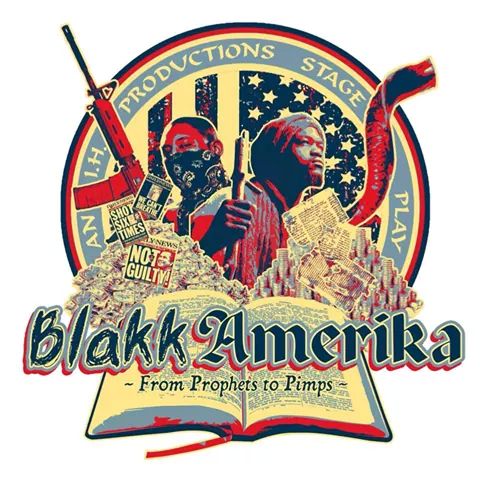
If you are in the Chicagoland area, I am inviting you to go and see this play! Tickets go on sale midnight and no matter your religion or nationality, you HAVE to see this play. Below is a synopsis and the link to the website, check it out if you can:

“4000 years ago bible prophecy spoke about a mighty people who would be taken captive and brought into a strange land in ships.  They would undergo mistreatment by a ruthless enemy for four hundred years.  Who are these mighty lost and suffering people? What is the true history of African Americans before slavery? Why have we endured so much hardship? The Bible foretold of our entire history in the West thousands of Years before we arrived here. Come out to witness this ground breaking stage play for a night of Truth, poetry, Song, tears, laughter and answers to Questions that have gone unanswered for hundreds of years.”

From Prophets to Pimps

Click Here to be taken to the website

NEW BOOK – Stella: Between Slavery and Freedom

product_thumbnail.php

This February (exact date coming soon) I will be releasing a new project entitled Stella, a short story about the lives of two women living in two different time periods, their experiences colliding in an explosion of emotional revelations:

Cynthia insists she’s not a racist, and while many of her points about the state of Black America are valid, she still doesn’t believe Blacks should have the same rights as whites. She believes America has come a long way, but that integration has kept it from going further. One day, Cynthia and her boyfriend Alex decide to visit Cynthia’s Grandmother, and happen upon information that will change their lives forever.

Raised under the protection of her mother and the field hands, Stella is unaware that she is a slave. Not being accustomed to hard labor things change when Mama dies and she falls into the cruel hands of “Mars Saddler”. Years later, when The Louisiana Constitutional Convention of 1864 abolishes slavery in the parish, Stella learns of Saddlers plan to keep her on the plantation. She then agrees to accompany Saddlers daughter Miss Carla and her husband John to The Windy City.

Together, Cynthia and Stella learn the hard way the difference between slavery and freedom.

Stella will be available in the following formats as well as in print:

Apple iBookstore, Barnes & Noble NOOK, Amazon Kindle, Kobo, and everything else. Visit http://www.theliterarykorner.com for additional details.

Black History Fun Facts: Ray Charles

Publicationbhff

Starting tonight, I am launching a new Blog Series:

Black History Fun Facts

…that will come to you every Friday from now on through February. This post will be a list of Fun Facts about the cultural, archeological, biblical, or historical identity of African Americans. Sometimes it will be a bio, sometimes it will be an amazing invention, and sometimes it will be a book or movie recommendation.

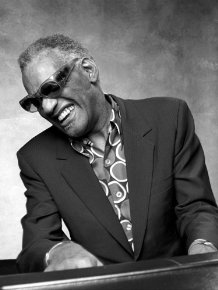
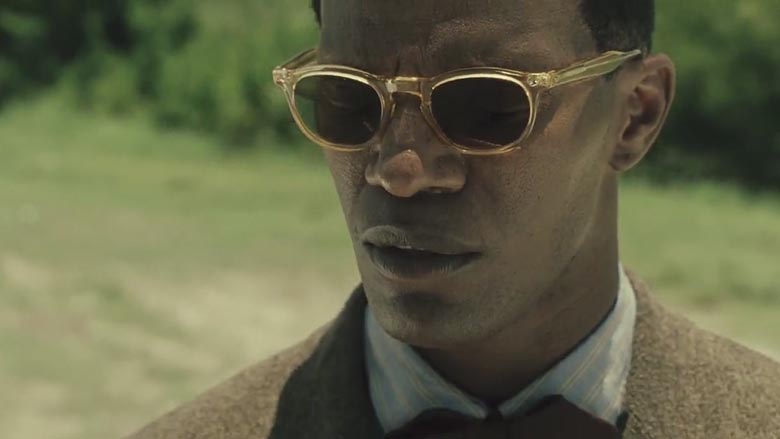
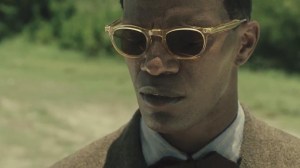
My Black History Fun Fact for today is Ray Charles and the movie Ray starring Jamie Fox on the life of Ray Charles. Released in 2004, this is one of my favorite movies. The story is about the life and career of the legendary rhythm and blues musician Ray Charles, from his humble beginnings in the South, where he went blind at age seven after the death of his little brother, to his rise to stardom during the 1950s and 1960s. I like it more because of his talent and life than his rise to fame; the musical genius of Ray and the emotional complexity of the story, which is hard not to love. Here are some fun facts:

61Uz9ROcwhL._SL290_

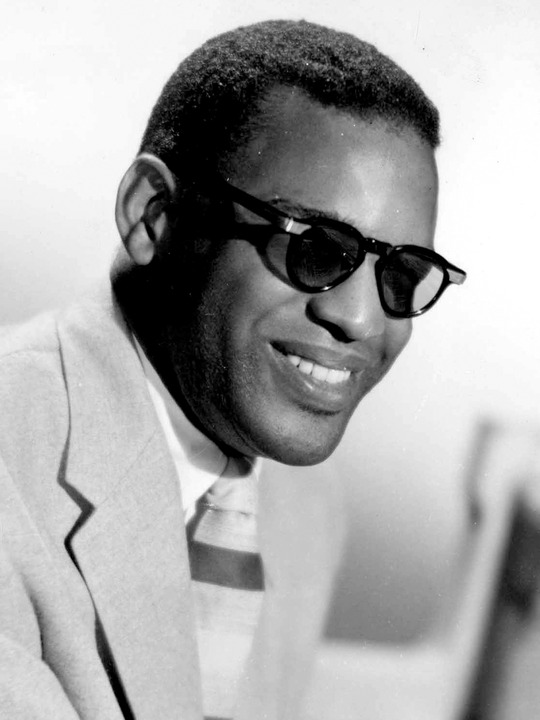
Ray Charles Robinson was born on September 23, 1930, in Albany, Georgia. His father, a mechanic, and his mother, a sharecropper, moved the family to Florida when he was an infant. One of the most traumatic events of his childhood was witnessing the drowning death of his younger brother.

Soon after his brother’s death, Charles gradually began to lose his sight. He was blind by the age of 7, and his mother sent him to a state-sponsored school, the Florida School for the Deaf and the Blind in St. Augustine, Florida—where he learned to read, write and arrange music in Braille. He also learned to play piano, organ, sax, clarinet and trumpet. The breadth of his musical interests ranged widely, from gospel to country, to blues.

Charles’s mother died when he was 15, and for a year he toured on the “Chitlin’ Circuit” in the South. While on the road, he picked up a love for heroin.
ray01

At the age of 16, Charles moved to Seattle. There, he met a young Quincy Jones, a friend and collaborator he would keep for the rest of his life. Charles performed with the McSon Trio in 1940s. His early playing style closely resembled the work of his two major influences—Charles Brown and Nat King Cole. Charles later developed his distinctive sound.

By 1953, Charles landed a deal with Atlantic Records. He celebrated his first R&B hit single with the label, “Mess Around.”

RAYCHARLESRETRO RAY CHARLES SMP / GLOBE PHOTOS,INC

The year 1960 brought Charles his first Grammy Award for “Georgia on My Mind,” followed by another Grammy for the single “Hit the Road, Jack.” For his day, he maintained a rare level of creative control over his own music. Charles broke down the boundaries of music genres in 1962 with Modern Sounds in Country and Western Music. On this album, he gave his own soulful interpretations of many country classics. While thriving creatively, Charles struggled in his personal life. He continued to battle with heroin addiction. In 1965, Charles was arrested for possession.

In 2003, Charles had to cancel his tour for the first time in 53 years. He underwent hip replacement surgery. While that operation was successful, Charles soon learned he was suffering from liver disease. He died on June 10, 2004, at his home in Beverly Hills, California. During his lifetime, Charles recorded more than 60 albums and performed more than 10,000 concerts.

Ray Charles was a pioneer of soul music, integrating R&B, gospel, pop and country to create hits like “Unchain My Heart,” “Hit the Road Jack” and “Georgia on My Mind.” A blind genius, he is considered one of the greatest artists of all time.

400 years…

saggy-pants

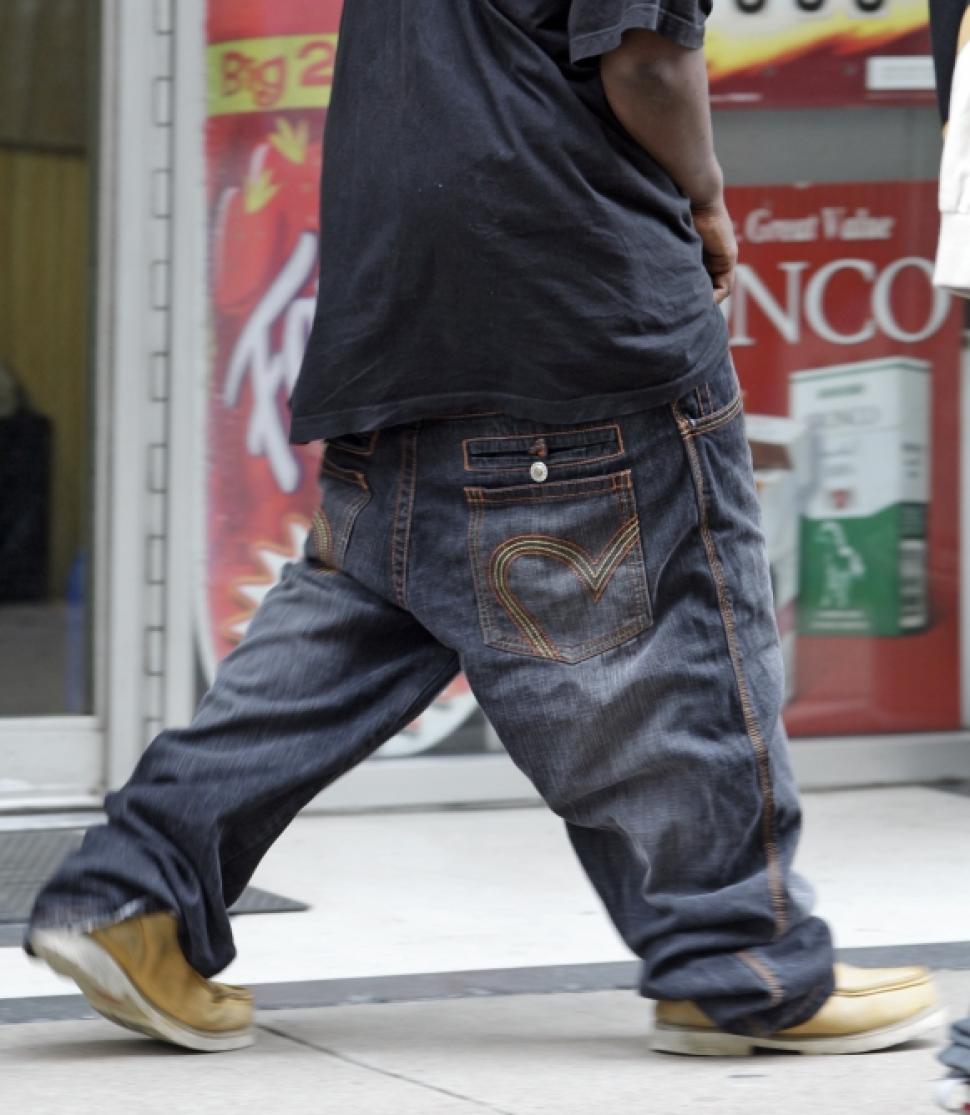
Corner entrepreneurs stand guard unknown to gay innuendos like
pants sagged below assets of homosexual down lows
with
packs stuffed between squeezed butt cheeks and stiff gym socks
New Millennium kids
going all natu-ral
with no real knowledge as to the dred locs
see I’m thinkin outside the box
trying to contemplate the mindset of the end of days,
a cursed people, who walk around as if with no brains
from
video games to spinning rims
from the hottest Jordan’s to the newest timbs
corner entrepreneurs…. introducing, the black SIMS.
you see this is a place where success stories are only filled with those who are known around the block as the ish,
hood thugs lack motivation……except to be hood rich
and
black girls have graduated from turning the biggest tricks
slapping high fives screaming that’s my (laugh)
kitty fights scratching finger nails sprayed mace and sharp knives
no ambitions of a family
baby mama over wives
heroin addicts too proud to scratch away that last itch,
whoring has no fingers to point,
no preference of where it may sit
sick
sickness embedded in the depths of men’s bones,
spiritual zombies spend cash to sport skull and bones
t-shirts
they are aware
they have no spiritual home
independent black women who pretend not to be alone
400 years,
400 years how long?
how long will you continue to bring to life stereotypes of song singing cotton pickers
transformed into blonde, weave wearing, pants sagging, hood niggaz?
we shall overcome,
but only when some white man has pulled the trigger
and who you’ve mistaken as your own
is referred to as nigga, by the “nonviolent” civil rights leaders?
ya leaders
ya leaders have pulled the trigger.
but when will you take it back?
take back what’s yours
until there are no more
Niggaz.
400 years…

His Birth Pains

shutterstock133423679

There’s a woman
laying in the hospital
and armed with the next generation in her womb,
and she’s about to give birth real soon
she breathes
in another breath as her body jerks,
to the sound of the television… it is the news.
reporting another mass murder of black men
he moves
inside of her
tucking his head underneath his soft bones
she moans
at another kick
to her ribs
his tiny fingers have just curled around them
holding her insides with the delicate force of a newborn
he hesitates “This is it.”
The end of nine months only to see another nine years
of bars
he fears
this new place
leaving no more space
for his body to stretch out
than his face
pressed tightly against
the skin of his mother’s uterus.
Of this new world he thought he’d be curious
but the sounds of the outside has only made him furious
the sounds of police in the distance
kicking,
he kicks again this is resistance
forcing the woman into painful sensations
but he kicks
constantly
cause this is not an invitation to leave
it is a plea to stay
“Don’t worry lil man”, the doctor says, “Mama’s just a lil tense,
but he shutters at homelessness
debating to himself if to pass up his first breath is worth it
his ground iron
his heavens bronze
his prayers polluted like falling stars
trying to break lose what’s already bent
rocking his mother’s body once more
this can’t be heaven sent
but
it’s too late
something has pushed him out of his place
and its holding him tightly,
his screams echo, “let go of me.”
but he has already lost his authority
and he doesn’t even know his name
and these are just the beginning
of his birth pains.

Stereotypes and Choices

rated-r

FYI: The images used in this post are Rated R per nudity.


When 20 year old Sara Baartman got on a boat that was to take her from Cape Town to London in 1810, she could not have known that she would never see her home again. Nor, as she stood on the deck and saw what had become her home disappear behind her, could she have known that she would become the icon of racial inferiority and black female sexuality for the next 100 years.

b6c5814df46f1eb123939111e6a2fd8a

Sarah “Saartjie” Baartman (before 1790 – 29 December 1815) was the most famous of at least two Khoikhoi women who were exhibited as freak show attractions in 19th century Europe under the name Hottentot Venus—“Hottentot” considered an offensive term, and “Venus” in reference to the Roman goddess of love. While in her teens, Saartje migrated to an area near Cape Town, where she was a farmer’s slave until she was bought in Cape Town by William Dunlop, a doctor on a British ship. At age 20, Saartje headed for London with Dr. Dunlop where, it was agreed, that they would get rich by displaying her body to Europeans; catering to the people’s’ sexual fascination with aboriginal peoples. Prancing in the nude, with her jutting posterior and extraordinary genitals, she provided the foundation for racist and pseudo-scientific theories regarding black inferiority and black female sexuality. The shows involved Saartje being “led by her keeper and exhibited like a wild beast, being obliged to walk, stand or sit as ordered.” Saartje’s predicament drew the attention of a young Jamaican, Robert Wedderburn, who was agitated against slavery and racism. Subsequently, his group pressured the attorney general to stop this circus. Losing the case on a technicality, Saartje spent four years in London and then went to Paris where she was exhibited in a traveling circus, and seen frequently controlled by an animal trainer in the show.

It was here that she crossed paths with George Cuvier, Napoleon’s surgeon-general, who was also considered to be the dean of comparative anatomy. In his capacity of social anthropologist, he arrogantly and erroneously concluded that she was the missing link. She turned to prostitution and when she died poor in 1816, almost immediately Cuvier had her body cast in wax, dissected and the skeleton articulated. Her organs, including her genitals and brains, were preserved in bottles of formaldehyde. Her remains were displayed at the Musée de L’Homme in Paris until as late as 1974.

“Stay on guard this wicked land will try to strip your soul… got our men selling blow our women on the stripper pole. Once your morals hit the floor do anything to pay the bills, 400 years still ain’t on the level playing field.”

tumblr_m09tr3uTyU1qfvy6ho1_1280

While one cannot control what is forced upon them, one can make the decision to choose a different path. While the treatment of Sara and the retaining of her body parts were horrific, we cannot neglect her choice to prostitute herself. We have all been in positions where we felt we did not have a choice, for struggle and oppression has a tendency to do away with all logic. But what I would like to remind us of today is the importance of not making excuses for those choices. There’s a difference between making a mistake and making a commitment to willfully do. Often we set out to blame outside forces for what we have become because we’ve been deceived into thinking we have no choice. This is not to judge the actions of Sara as a slave, but what we need to understand is that today many Black women are slaves and they are slaves without permission or coercion. There is little difference between Sara Baartman  and the current  Video Vixen. They are both slaves. Today, the Black woman’s mentality leaves her shackled to a  mental incapability of thinking outside of the way she was taught to do so within the physical institution of slavery. She cannot think independently on a physical, mental, or spiritual level outside of what her captives have taught her because of her unwillingness to take responsibility for her own ignorance.

nickisarah

As a result, every time someone attempts to show the so called Black women the error of her ways she is apt to point to an instance, circumstance, person or persons outside of herself. She may very well bring up facts, but she is unable to see the role she plays to make manifest those statistics. It is always a situation where men have abused or disrespected her. It is always everyone else fault except hers. Either a man did it or the white man did it.  Many of the women seen on TV, such as the Niki Minaj’s are showing women examples of what it means to be a whore, to prostitute one’s body and to be proud of it. Sadly, many of you idolize these women. You sit back and you allow your little girls to be entertained by such filth. Beyonce is a married woman (allegedly) and yet she prances around the stage half naked and you think it’s cute. You do not teach your little girls about Proverb 31 women and about the Sara Baartman’s; you teach them about the Beyonces. As a result, many young women, crossing all ethnicity’s, grow up with aspirations to put basic morals and values on the back burner while they twerk.

The reality however is that everything is not a stereotype. It is not all a conspiracy. Abuse exists but there is still a choice we must begin to understand about the role we play in deception. It’s not always about deception, but it is also about our willingness to be deceived.

tumblr_mijckwsuLC1rtx8buo1_500