Black History Month in the UK + Interview

Did you know that October is Black History Month in the UK?

Yes!

The event began in the 1920s but was not celebrated in the UK until 1987.

In its honor, I am visiting V.M. Sang’s blog today with an interview and presentation of my book, Black History Facts You Didn’t Learn in School, released in February during Black History Month in the U.S. You can read more at the link below!

Black History Fun Fact Friday – Juneteenth

In honor of Juneteenth, I am reposting this from a few years ago. It was written before it became an official holiday and then updated after. I hope you can still glean something from it. Enjoy!


Many Black Americans are replacing their fourth of July celebrations with Juneteenth. For many, the day is a celebration of freedom. However, the harsh reality is that even after Juneteenth, many Blacks were still enslaved and suffering.


In the Beginning…

Born on February 12, 1809, near Hodgenville, Kentucky, Abraham Lincoln is most famous for preserving the Union during the American Civil War and bringing about the emancipation of enslaved people in the United States. However, before he wrote the esteemed Emancipation Proclamation, several efforts were made to preserve the Union without freeing the enslaved. These efforts included Colonization, or the idea that a majority of the African American population should leave the United States and settle in Africa or Central America.

On August 14, 1862, five years after The Dred Scott Decision that reiterated Blacks were not, and as “a second class of persons,” could not be citizens, Abraham Lincoln hosted a “Deputation of Free Negroes” event at the White House. Led by the Rev. Joseph Mitchell, commissioner of emigration for the Interior Department, it was the first time African Americans had been invited to the White House to weigh in on a political matter. 

Lincoln planned to produce a document that would not only free some of the enslaved but, once freed, call on them to leave the country voluntarily. This idea, Lincoln’s Panama Plan, was not new but had been circulating among white racist elites and eugenicists since the 1700s.

“In 1816, a group of white enslavers and politicians in Washington, D.C. created the American Colonization Society (A.C.S.) to promote the removal of free Black people, who would be encouraged to leave the United States and resettle in West Africa.” A.C.S. and its many chapters hoped this would rid them of free Black people while preserving slavery.”

-The 1619 Project, pg. 23

To make a long story short, Lincoln’s original plan was to have a document that, while freeing some enslaved people, also required those freedmen to, sum up, “Go back to Africa.”

87275

Let Freedom Ring?

Lincoln issued the Emancipation Proclamation on January 1, 1863, to end slavery in the States that were in Rebellion. The proclamation declared “that all persons held as slaves” within the rebellious states “are, and henceforward shall be free.”

“The Emancipation Proclamation did not apply to slave states that weren’t in rebellion; Kentucky, Delaware, Missouri, and Maryland. It also didn’t apply to territories. It didn’t apply to Tennessee, lower Louisiana, and the counties of Virginia that were to become West Virginia.”

-William Spivey 

With the passing of the 13th Amendment in January of 1865, slavery was officially deemed illegal in America, freeing all people enslaved.
82704

Well. Wait, except the people in Texas and other places.


Many Texas men, women, and children were still being held in bondage and did not know that slavery was over.

News of the supposed emancipation did not spread as quickly as the movies would have us to believe. Many slave-owners packed up their belongings and moved to Texas in mass.

“Since the capture of New Orleans in 1862, slave owners in Mississippi, Louisiana and other points east had been migrating to Texas to escape the Union Army’s reach.”

-Henry Louis Gates Jr.

More than 150,000 enslaved people had made the trek west, according to historian Leon Litwack in his book Been in the Storm So Long: The Aftermath of SlaveryAs one former enslaved person recalled, “It looked like everybody in the world was going to Texas.” For the next two years, the enslaved would live removed from the updates of the war, and slavery would go on, business as usual.

These men, women, and children were still enslaved until June 19, 1865. Union soldiers, led by Major General Gordon Granger, landed at Galveston, Texas, with news that the war had ended.

This, the freeing of the enslaved in Texas, is the reason many Black Americans celebrate Juneteenth instead of July 4th as their National Independence Day.

“The people of Texas are informed that, in accordance with a proclamation from the Executive of the United States, all slaves are free. This involves an absolute equality of personal rights and rights of property, between former masters and slaves and the connection heretofore existing between them, becomes that between employer and hired labor.”

The language of this decree is important. Enslaved people are being told they are free two and a half years after President Lincoln’s Emancipation Proclamation.

If we read further, we see that they are also being told that they must remain at their present homes (the plantation) and work (continue slave labor) for “wages.” And that any “idleness,” among them won’t be tolerated. 

“The Freedmen are advised to remain at their present homes and work for wages. They are informed that they will not be allowed to collect at military posts; and they will not be supported in idleness either there or elsewhere.”

Thus, much like the Emancipation Proclamation, this order also did not free all enslaved persons.

Juneteenth0619

“There is much evidence to suggest that southern whites—especially Confederate parolees—perpetrated more acts of violence against newly freed bondspeople in Texas than in other states.”

-Historian Elizabeth Hayes Turner in an essay titled “Juneteenth: Emancipation and Memory.” 

“Between the Neches and Sabine rivers and north to Henderson,” she continues, “reports showed that blacks continued in a form of slavery, intimidated by former Confederate soldiers still in uniform and bearing arms.” Murder, lynching, and harassment were common. “You could see lots of Negroes hanging from trees in Sabine bottom right after freedom,” reported one freed slave, “They would catch them swimming across Sabine River and shoot them.”

Celebrations

65837

African Americans celebrated their freedom with the first official Juneteenth event in 1866, where they read the Emancipation Proclamation of 1863 and praised Abraham Lincoln as “The great liberator.”

“Free them and make them politically and socially our equals? My own feelings will not admit of this; and if mine would, we well know that those of the great mass of white people will not.”

– Abraham Lincoln, August 21, 1858

“My paramount object in this struggle is to save the Union and is not either to save or to destroy slavery. If I could save the Union without freeing any slave I would do it, and if I could save it by freeing all the slaves I would do it, and if I could save it by freeing some and leaving others alone I would also do that. What I do about slavery, and the colored race, I do because I believe it helps to save the Union.”

– Abraham Lincoln, Letter addressed to Horace Greeley, Washington, August 22, 1862

The celebrations continued until coming to a halt with the institution of Black Codes and, eventually, Jim Crow. These laws essentially put Blacks back into a form of slavery where they were fully disenfranchised. After the Civil War and the end of slavery, southern states, which had amassed great wealth from slavery, found their economy in shambles. They had to figure out how to keep a slave-like system going.

10084

Black Codes

Black Codes came from slave codes, laws created to limit the rights of African Americans. They subjected them to criminal prosecution for “offenses” such as loitering, breaking curfew, vagrancy, having weapons, and not carrying proof of employment. These were the same “offenses” that would get enslaved people whipped or sold during slavery.

For example, the enslaved could not travel from place to place without a pass signed by their owner. Those without such a pass could be arrested, jailed, and detained as a runaway. Some owners wrote general passes allowing their slaves to “pass” and “repass.”

Black Codes included Pig Laws that unfairly penalized poor African Americans for crimes such as stealing a pig. It was also a crime to be unemployed.

These laws could be imposed on Black men easily, sending them to jail, and thus, former slave owners turned “entrepreneurs” could lease them to various companies that would work them to death and treat them like they were slaves. This made the states tons of money.

“The laws passed in Texas were similar to those passed in every other Confederate state. Modern-day politicians often make comparisons to Jim Crow as one of the worst periods in African American life.

Jim Crow didn’t have shit on the Black Codes, which was the South’s attempt to recreate enslavement and go back to business as usual. Mass incarceration isn’t a recent invention; during the Black Codes, Black people could do little without running afoul of the law with the penalty being sent back to the fields if they weren’t already there.”

William Spivey, Why Celebrate Juneteenth and What Did It Accomplish

Juneteenth didn’t make a full resurgence until The Civil Rights Movement when Blacks began to celebrate it fully again. And while many Blacks have celebrated it for centuries, it still did not become an official Holiday until 1980, when it was made a Texas State Holiday.

Still, it wasn’t until 1997 that Congress recognized June 19 as “Juneteenth Independence Day,” after pressure from a collection of groups like the National Association of Juneteenth Lineage and the National Juneteenth Celebration Foundation.


UPDATE:

As of  June of 2021, Juneteenth is now a National Federal Holiday.

1418

But the question remains, what exactly did Juneteenth accomplish for the Black man, woman, and child? What freedom did it bring about?

Some sum it up this way:

“Today Juneteenth commemorates African American freedom and emphasizes education and achievement. It is a day, a week, and in some areas a month marked with celebrations, guest speakers, picnics and family gatherings. It is a time for reflection and rejoicing. It is a time for assessment, self-improvement and for planning the future.

Its growing popularity signifies a level of maturity and dignity in America long over due. In cities across the country, people of all races, nationalities and religions are joining hands to truthfully acknowledge a period in our history that shaped and continues to influence our society today. Sensitized to the conditions and experiences of others, only then can we make significant and lasting improvements in our society.” – https://juneteenth.com/

But, Spivey brings out another good point worth considering:

“Texas after Juneteenth wasn’t an anomaly. Slavery continued to go on in states in the South, North, and West. In some cases, for several years. Slavery still existed in other parts of the United States and did so until the ratification of the 13th Amendment on December 6, 1865, and beyond.

Slavery still existed in Delaware and Kentucky, which resisted all Union attempts to end slavery and refused to ratify the 13th Amendment. In California, slavery was sort of outlawed in 1850 as a condition for statehood. The exception was slaves who had been brought to California and where the possibility they might return one day to their original home existed, even if that state had voted to ratify the 13th Amendment.

New Jersey had as many as 400 people remain slaves long after Juneteenth. Oregon’s provisional government banned slavery in 1844 but forbade free black people from settling in the territory. Settlers continued to bring slaves with them. General Joseph Lane, a former territorial governor, kept at least one slave on his farm until 1878, 13 years after the passage of the 13th Amendment.”

17677

It is true Blacks were not free on July 4, 1776. But it is also true many Blacks were not free on June 19, 1865, either.

Juneteenth did nothing to restore land or citizenship rights to the 40 million newly freed Blacks. Immediately after African Americans in Texas were freed from chattel slavery in June of 1865, they were required to have labor contracts, and many Blacks returned to their former slave-owners. 


1686848970

Grab Your Copy of Black History Facts You Didn’t Learn in School Here

Black History Fun Fact Friday – Emmit McHenry

The internet. We all know it, and in 2024, babies are born with it in their hands.

In today’s world, looking something up on the web is normal behavior, and for some, the first thing they do when they wake up in the morning. Whether you grab your phone or use the computer to log in at work, we don’t go a day without typing something into a search bar or scrolling on social media.

But it was not always this way.

Before anyone ever heard of the internet, its seeds were planted in 1957 in the historical context of the Cold War. In the 1960s, government researchers also used it to share information.

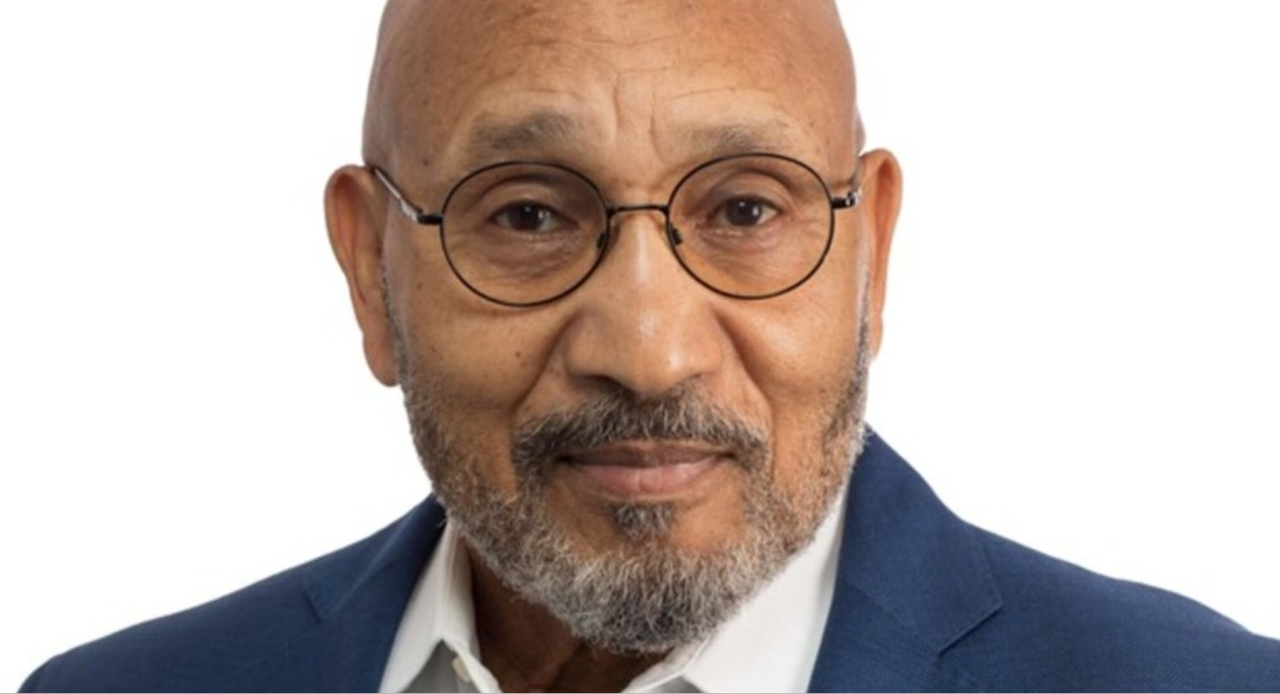
Today, we are learning about the man who created the computer code for .com.

Emmit McHenry was born in Forrest City, Arkansas, in 1943 and was raised in Tulsa, Oklahoma, renowned for being a prosperous Black community. While McHenry came of age years after the Tulsa Race Riot, footage from Pastor Solomon Sir Jones shows that by 1925 and even into the 1940s, Black Wall Street was rebuilt.

Thus, McHenry grew up surrounded by people with a strong sense of community and entrepreneurship.

“It was in a way kind of an extended family and they took pride in your doing well. So if you did well, the teachers really got excited about that and worked with you on it. Yeah, it was a really wonderful experience for me.”

– Emmit McHenry on growing up in Greenwood

The Victory of Greenwood

Emmit McHenry

McHenry’s great-grandfather was a carpenter and whiskey still operator by trade. Great-grandmother McHenry was a businesswoman in addition to a farmer. When it came time to bring their crops to market, the Black farmers and sharecroppers in Arkansas knew they could rely on her to negotiate fair rates for them.

Emmit McHenry graduated from Booker T. Washington High School and pursued a Bachelor of Science in Communications from the University of Denver on a wrestling scholarship. He majored in physics, but when he discovered communications, he changed his major. He graduated with a degree in communications in 1966.

McHenry and his partners established the engineering firm Network Solutions in 1979. However, like many other black-owned businesses, they had trouble getting funding. McHenry and his associates maxed out their credit cards and mortgaged their residences. The business prospered. Still, a deal with the National Science Foundation was the diamond in the crown for Network Solutions. The first internet domain name addressing system for the US government was covered under the contract.

That’s when McHenry created a complex computer code that was not complex to ordinary people searching the web. It allowed those of us without communications degrees to understand the internet and send and receive emails without having to study computer science.

We know McHenry’s invention today as .com.

Emmit McHenry’s work paid off on Dec. 31, 1992, when Network Solutions was the only bidder on a National Science Foundation grant to further develop the domain name registration service for the Internet. Network Solutions was granted an exclusive contract as the sole domain name registrar for .com, .net, and .org. These top-level domain (TLD) names continued the work Network Solutions was already doing. 


For More Black History Fun Facts You Didn’t Learn in School, be Sure to Visit the Archives Here

And Grab Your Copy of the Book Here!

Black History Fun Fact Friday – Lonnie Johnson and the Super Soaker Water Gun

Black History Fun Fact Friday is back!


May has always been an exciting month. As a kid, I looked forward to the school year ending and the warm weather welcoming me just in time for my birthday at the end of the month. Summer also means swimming and dancing in the water from the fire hydrant and water guns!

Introducing Lonnie Johnson, the inventor of the super soaker!

LJ

Lonnie Johnson was born in Mobile, Alabama, on October 6, 1949. Signs of Lonnie’s brilliance could be seen when he was a child reverse-engineering his sister’s baby doll to understand how the eyes closed. He also built his own go-cart from a lawnmower engine he attached to scraps he found in the junkyard. 

Before enlisting in the Air Force, he worked as a research engineer at Oak Ridge National Laboratory. He also worked at the Air Force Weapons Laboratory in Albuquerque, New Mexico, as the acting chief of the Space Nuclear Power Safety Section.

Johnson holds a B.S. degree in Mechanical Engineering, an M.S. degree in Nuclear Engineering, and an honorary Ph.D. in Science from Tuskegee University.

In 1989, Johnson formed his own engineering firm and licensed his most famous invention, the super soaker. It generated over $200 million in retail sales and became the number-one-selling toy in America.

Today, Johnson is president and founder of Johnson Research and Development Co., Inc., a technology development company, and its spin-off companies, Excellatron Solid State, LLC; Johnson Electro-Mechanical Systems, LLC; and Johnson Real Estate Investments, LLC.

As of 2023, Lonnie Johnson’s net worth was an estimated $160 million. This substantial fortune is primarily the result of the royalties he received for the Super Soaker, which generated billions of dollars.

So the next time your child plays with a super soaker, be sure they know about its amazing inventor!

gettyimages-50472413


For More Black History Facts You Didn’t Learn in School, Be Sure to Get Your Copy of the Book Here!

1687711849

Black History Facts Book Review by Jeremy Lamkin

The reviews are coming in! Here’s what Jeremy had to say!

“This book is full of the kind of history that should be taught in school but instead, is relatively unknown. The author did an outstanding job putting this material together, which took ten years and tons of research. It’s a must-read for anyone who’s into history.

The author focuses on people and groups who have been pivotal in black history. She gives a voice to the marginalized and makes us aware of the contributions of the family of historical figures like Frederick Douglas and Martin Luther King Jr. Each chapter gets the dirt on whitewashed or forgotten pieces of history.

Read this book to learn about the aftermath of the Civil War and how slavery was reconstructed in the form of criminal justice. The book is compelling and hard to put down as you discover a series of horrific truths about history.

This book contributed significantly to my view of American history, as it has put a lot of things in perspective. I see how slavery was reworked into other forms of slavery and evolved in complexity into the Bernaysian economic system based on Freud’s fear of human nature.

Reading this, a lot of light bulbs went off for me. It dawned on me that nothing that ever happened is ever really over, like slavery and public relations. I can’t recommend this book enough!”

Jeremy Lamkin, Amazon Customer Review

Thanks so much Jeremy!

If you read this book, please be sure to leave a review on Amazon and Goodreads! The book is also on Barnes and Noble; reviews are welcome there as well!

Here’s how:

Facts to Know:

  • You don’t have to like a book to review it. All reviews help the author!
  • If you don’t have the book, it is currently 99 cents for Women’s History Month (all March) and free with Kindle Unlimited. After march, the ebook goes back to its original price of $9.99.
  • Blog reviews count! Simply link to my blog or let me know you’ve reviewed it and I’ll repost it.

Review or Grab Your Copy Here!

Women’s History Month: Limited Time Offer

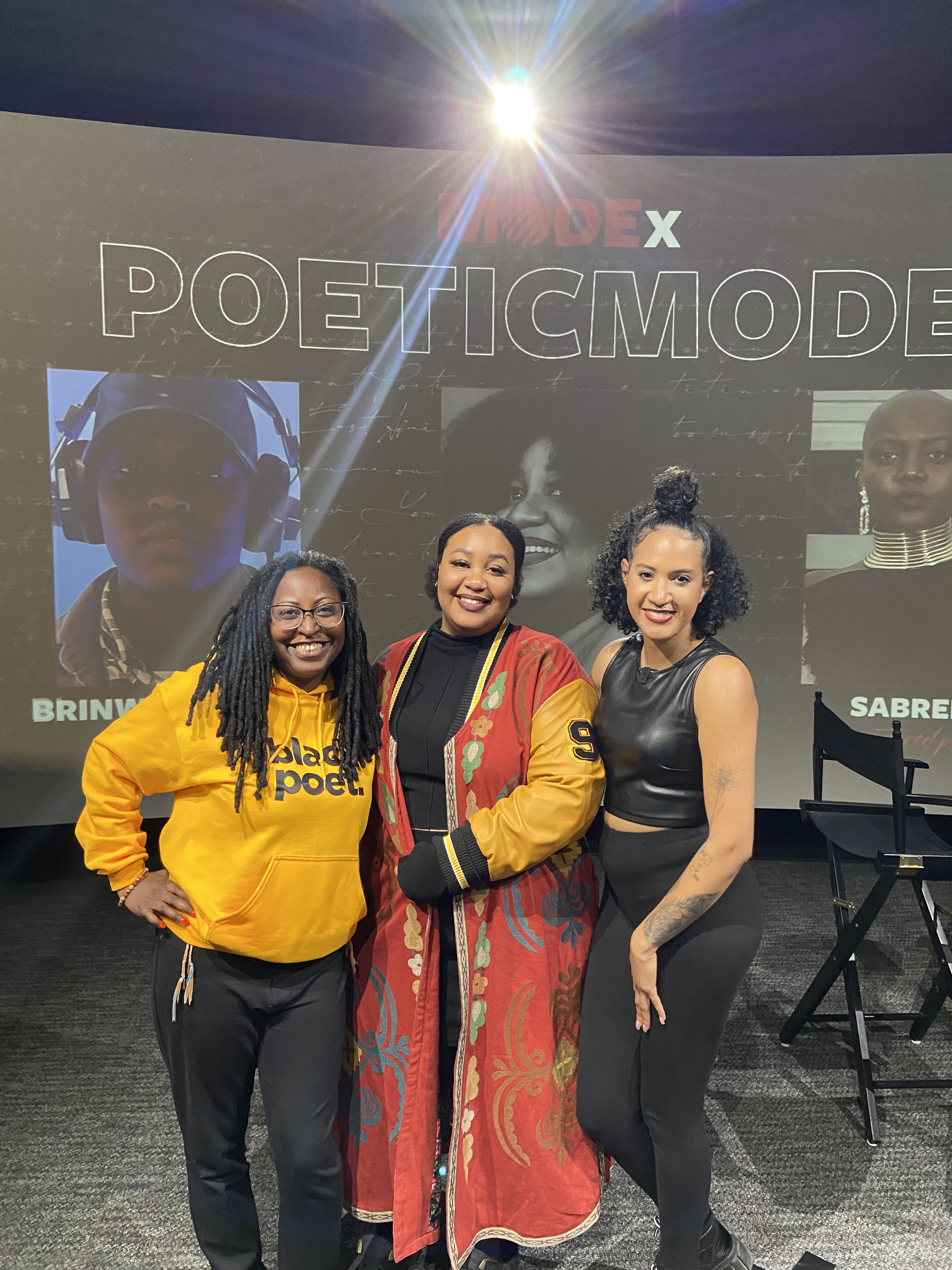
PoeticMode at Modex Atlanta

First things, first. A quick update.

I met up with some amazing poets in Atlanta (there were more of us, but it was late and several poets had already left) for Modex’s first Poetic Mode feature on Wednesday night. There were three open-mic poets, four features, and the host also did a poem.

I was honored to be one of the features. The difference is the featured poets are paid to perform. *Does happy dance.*

The only downside (which is not a downside in the grand scheme of things) is that I felt out of place, considering I have not done much spoken word lately, let alone in Atlanta, so they were talking about stuff I didn’t know anything about, lol. But I listened humbly and vowed I’d get more involved.

At the end of the sessions, there was a panel where we were asked questions so the audience could learn more about us. I liked this part the most because the questions had us thinking deeply and going inward, and I love a good thought-provoking convo.

I wished it had been longer so that more audience members could have asked their questions, but it was at the end and we were tired and hungry from such a long day. We had been there since six, not counting travel time to the venue, which for me meant leaving the house at 4-ish (because I’m an hour away from the city and Atlanta’s traffic is trash), and it was now approaching 10 pm.

Either way, it was nice to meet poets and talk about poetry stuff outside of the internet. I love ya’ll, but talking to people face-to-face was refreshing.

Now, for today’s exciting book news:

As the reviews start to come in, I want to give more of you a chance to get your hands on this book.

In honor of Women’s History Month, the ebook version of Black History Facts is 99 cents for March.

After March, the price will return to $9.99, so don’t wait!

Take this chance to get your copy, and don’t forget to leave a review on Amazon when you are done!

About.

“Black History Facts You Didn’t Learn in School” is a historical guide on Black Americans’ accomplishments, contributions, and struggles. It includes the experiences of Black individuals who have often been marginalized, overlooked, or omitted from mainstream historical accounts.

From the resilience of women like Anna Douglass, first wife of Frederick Douglass, to the many Black communities that prospered, recognizing and celebrating Black history helps to ensure that these stories are acknowledged and that the achievements and resilience of Black people are valued and appreciated.

Here’s what readers have to say:

“The author has taken the time to identify the importance of black individuals that sacrificed and or gone to the extra mile to contribute. Why these people are often forgotten is unfortunately seen on a regular basis. Over time all those forgotten will be highlighted as this book does. An excellent read.”

Louis Glass

“I remember her sharing these facts that were on her blog weekly and I looked forward to them. The fact that she compiled them and expounded on what was there to give you all this black history atlas is a blessing. Not many people are giving you the history that isn’t washed over and dressed up in a new outfit. It’s commendable and appreciative for someone to provide this level of nuggets that are given.”

Natashia Crawford

“This book provides readers with a thorough examination of lesser-known but incredibly significant facets of the black experience, serving as a monument to the richness and diversity of black history. From African ancient civilizations to the American civil rights movement, each chapter reveals a historical jewel that offers priceless insights into the tenacity, inventiveness, and accomplishments of black people across time.”

SLT

“Black History Facts You Didn’t Learn in School!!! Well-researched and thought-provoking book that sheds light on the powerful but often overlooked contributions of Black Americans. Super informative and educational. Highly recommend it!!”

Emir

Grab Your 99c Ebook Here

If you preordered a book, it has shipped and you should be getting it real soon!

Black History Facts: The First Amazon Review is In!

Heyy, ya’ll hey. Our first review for Black History Facts is in!

This is from SLT on Amazon. Thanks so much!

“The enlightening compilation “Black History Facts You Didn’t Learn in School” questions the traditional historical narratives and highlights a multitude of noteworthy occasions, personalities, and movements that are frequently disregarded or sidelined in traditional schooling.

This book provides readers with a thorough examination of lesser-known but incredibly significant facets of the black experience, serving as a monument to the richness and diversity of black history. From African ancient civilizations to the American civil rights movement, each chapter reveals a historical jewel that offers priceless insights into the tenacity, inventiveness, and accomplishments of black people across time.

By emphasizing Black history’s crucial significance in influencing communities and cultures all around the world, it undermines the limited perception of Black history as merely a footnote in the greater story.”

My new book, Black History Facts You Didn’t Learn in School, is available now on Amazon!

Note: If you’d like to review this book on your blog, let me know!