I know what kind of girls you’re used to.
I know that
kindergarten fingers on small hands don’t know how to hold you
like I do see
she pushes buttons on your heart like that
cause she’s not hip to the fact that a man can lose focus too
but see she’s just a little girl
so she plays catch with your emotions
cause she feels that if she hits you hard enough
you’ll start coughing up tokens for her to play games with
see
I know that your body to these little girls is merely a myth
And every trip to your mouth is a quiz
enveloped in living water that she ain’t learned how to swim in yet
so she apologizes for getting lost in your kiss
and every vibration of your body simply doesn’t make sense to her
and every word of truth coming from your lips is like a puzzle
that she ain’t figured out yet
and she’s insecure because what she’s selling has failed
and its cause the way you love to her is reminiscent of fairy tales
see
they mistake my trust for you as some kind of façade
don’t know what a real man is so they think you are a God to me
mistaken the heavenly embrace of your arms for wings
cause I told ‘em I’m willing to fly away with you
and they mistakenly discern that you grant me wishes like the milky ways
and the stars
cause they see me praying for you
and your mind they can’t dissect
your ways are hidden from them like the life of tiny insects
so she dismisses you as too perfect and she ain’t ready for all that yet
you’re just too nice for her
yea, I know what kind of girls you’re used to
But what I promise you
Is a woman
I promise you support sweeter than any tea you could fathom
I promise you words of love and not temper tantrums
I promise to be strong so when it comes to bearing my burdens you don’t have to
Because I promise to help and not hinder you
I promise to cry tears on your shoulders so I can properly communicate with you
And I promise to bear soldiers and little soliderettes for you
You see I promise not to walk in your shoes
cause I’m woman enough to know that you’re the head of me
And like the neck I support you
Cause what I promise you
I promise you, not a little girl,
but what I promise you
is a woman.
A Supernatural Meme that has nothing to do with this post
Does the writer in you get in the way of certain normal activities? Do you react differently in certain situations because of how you analyze the writing in it? Maybe you used to read books strictly for entertainment, but now you can’t stop noticing run-on sentences and comma splices. Well, maybe that’s more along the lines of the Grammatical Geeks (of which I happen to not be one of them, for those of you who’ve counted all of my grammatical mistakes in the first two sentences of this post) but you get the point. For instance, watching movies is not just about watching movies anymore. I don’t know about you, but TV means so much more now than entertainment on a number of levels. One of those levels is writing. When I sit down to watch a good TV show or movie, one thing I notice is how well (or poorly) the writer outlined a scene. Sure the director and actors play a major role, but I’m also looking at how the story was written, what was left out, and why. Its kinda weird I’ll admit. I’m probably the only person who yells at the screen:
“What? That doesn’t even make any sense. Who wrote this?”
On occasion I do blame the actors but mostly for me its the writers. I mean, don’t say Sara hates the color red and then have her skipping down the street in red platforms. And please don’t overdue the dialogue. The second season of American Horror Story almost lost me, way too much talking going on between the head guy of the catholic mental institution and the demonically possessed Nun (yea, forgot both their names). That season just seemed to be a lot slower than the first one. The writer in me therefore sought to mentally ask the writer what happened. Supernatural on the other hand is totally awesome when it comes to dialogue. I love the conversations between Sam and Dean, the humor that is incorporated into the story, and the carrying out of the roles by the actors. Speaking of awesome, when a TV show is excellent the writer again gets all of my praise. It rarely occurs to me that the actors merely improvised or that the director deleted a scene. In the end, I just can’t help the writers eye. But believe it or not this actually helps me in my own writing. When I write, I like to picture it playing out like a movie. I figure if I picture the story unfolding like a movie, chances are I’ll critique it with the same level of attention. Nope,. doesn’t always work but I still do it. In the same way, when I watch TV shows or movies I sometimes see it as a manuscript. I mean, someone had to write it first… write?
Lying, thinking
Last night
How to find my soul a home
Where water is not thirsty
And bread loaf is not stone
I came up with one thing
And I don’t believe I’m wrong
That nobody,
But nobody
Can make it out here alone.
Alone, all alone
Nobody, but nobody
Can make it out here alone.
There are some millionaires
With money they can’t use
Their wives run round like banshees
Their children sing the blues
They’ve got expensive doctors
To cure their hearts of stone.
But nobody
No, nobody
Can make it out here alone.
Alone, all alone
Nobody, but nobody
Can make it out here alone.
Now if you listen closely
I’ll tell you what I know
Storm clouds are gathering
The wind is gonna blow
The race of man is suffering
And I can hear the moan,
‘Cause nobody,
But nobody
Can make it out here alone.
Alone, all alone
Nobody, but nobody
Can make it out here alone.
I love the smell of summer. Though you really can’t experience it until the sun starts to set and darkness sets in. Right now the sun is overtaking any whiff of delicacy in the air with its blazing heat, so you’d have to wait a while to experience what I mean. It has to be the perfect mixture of cool and warm mixed in a giant bowl called your backyard. I would describe it like freshly cut grass or the new growth of leaves on tree branches. Or maybe we can associate it with the smell of a coming rain. These aren’t very good descriptions. I know I have not enticed your creative mind to the extent of sight. I know you have not tasted the air of freshness melting on your tongue and all, but I have no other way to describe it aside from these basic examples. Besides, how does one explain the fragrance of life? Sometimes you can see a flower pouring all of its insides out, and cracking shells; shedding the once imperfect exterior to one more fitting for the season. Its growth is in many ways like our own. On first sight it looks like total destruction, and there is no gold at the end of the rainbow, at least not until we have weathered the storm. Always the hard stuff first, pain, suffering, tears, loneliness, doubt. I imagine it is a difficult process too for the flower. So much work to be done and change to endure early on. Only when it has shed its old casing do we begin to see the pretty pinks and reds of softer petals peek out from under the new coat of skin, see the dazzling beauty of what it has now become, and taste of the fresh smells of life.
A Short Story, coming August, 2015: Available in Print, Amazon, B&N, Kobo, and the Apple iBookstore. Visit my author website to see the Book Trailer or to learn more and to Sign-Up for the Newsletter. More information about the pending launch campaign, to include contests and free promotional products, will be available soon.And thanks so much for your support.
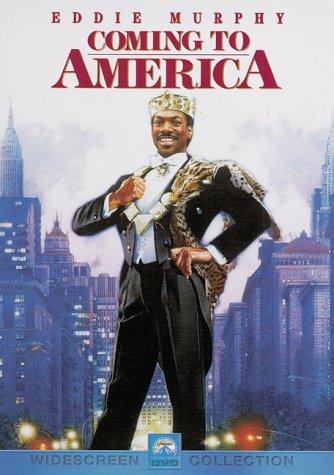
It is a treasure to find movies that have it all, and Coming to America is one of those movies. Comedy, History, and Symbolism.
For the most part, I fell in love with this movie for the same reason that everyone else did, because of its humor. If you need something to help make you laugh then put this movie in. I’m not even going to ask you if it’s part of your collection. I mean, you do have Coming to America…..right???? But as time went on I also started to notice other information of importance that surpassed the laughs. Not only is this movie extremely hilarious, but it also includes many messages.
Starring Eddie Murphy and Arsenio Hall, Coming to America is about Akeem Joffer, the crown prince to the throne of the wealthy African nation of Zamunda, who lives a prosperous life. But having been appointed a wife from birth and forced to marry her, Akeem is unfulfilled to take a woman who would obey him and submit to him. He is also uneasy with the idea of the arranged marriage. In fact, he is sick of being pampered in general. As a result, he decides to take a trip to America to find his bride; as he puts it, “someone who will excite his intellect, as well as his loins.” To make a long story short, he takes with him his friend (or personal side kick whichever fits), named Semmi and together they end up in Queens New York, an impoverished part of New York City, and opt to stay in a run-down apartment in one of the most disgusting rooms in the building (“it’s a shame what they did to that dog”…lol)
Now, since there is so much here, I’m going to take only a couple aspects of the movie that I see that involve a deeper message than the ability to tickle the funny bone.
#1: Authority and Submission
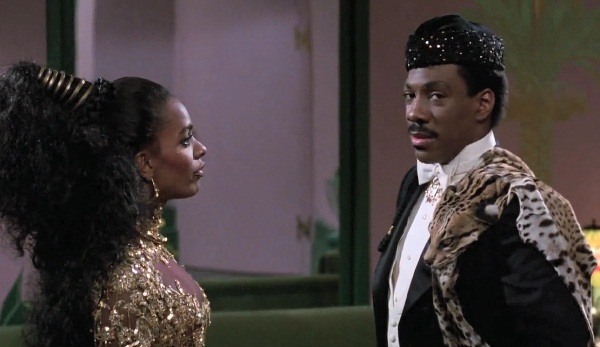
To start, part of Akeem’s travels is that he is not interested in taking a submissive woman as wife. It’s more than the arranged marriage; it is also the woman’s trained obedience to his authority. The famous, “Whatever you like…” scene showcases this well. While many of us laughed at this and threw our “I know that’s rights!” into the air, smashing our judgmental comments of Imani Izzi (arranged bride-to-be seen here) at the screen, in truth there was nothing wrong with what she said. Of course they had to exaggerate it, but the point is that a woman is supposed to obey her husband. She is his helpmate and her desire is his desire. Contrary to popular belief, authority has nothing to do with money. A man is not the head of his household because he’s supposed to make the money and a woman’s money does not appoint her as the head either. This is society’s definition of authority and it is the reason many women think they can step all over a man because they make more money than he does. And isn’t it a shame? That the one thing we value most in a man, many of our men do not have. No wonder 70% of black women are single.
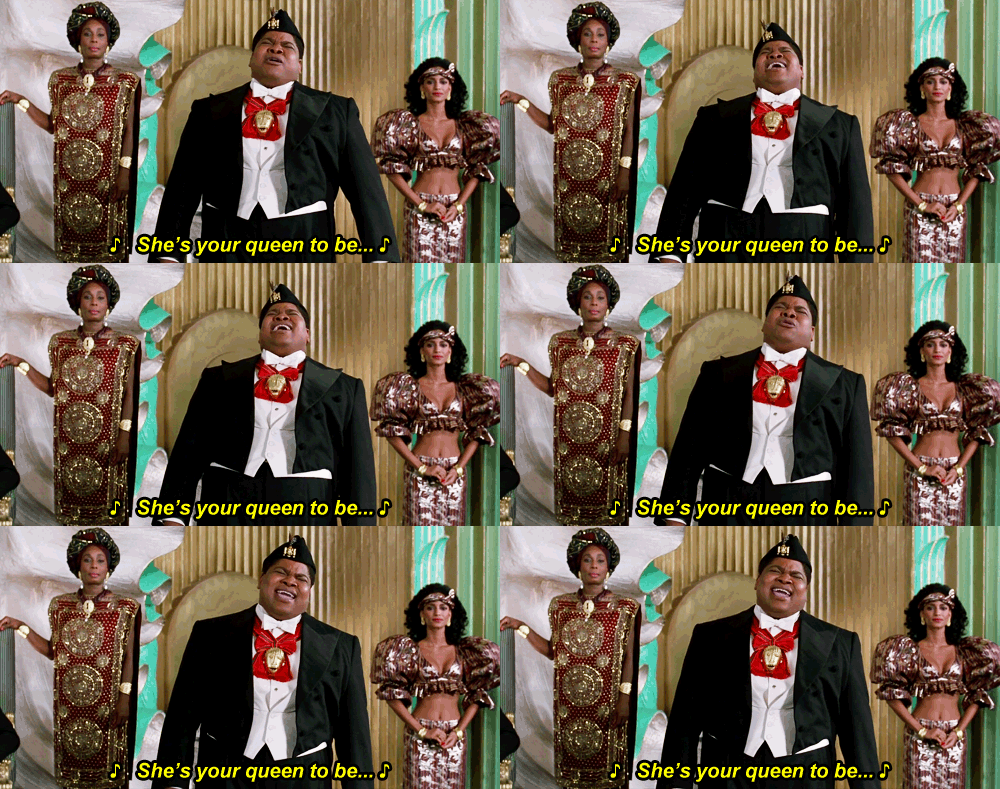
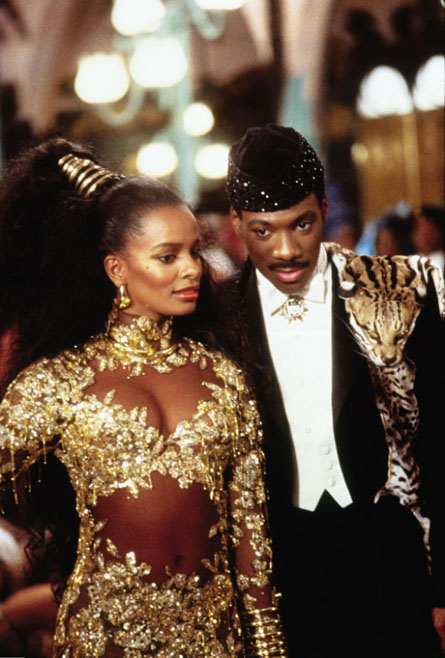
A man’s authority is to be the leader and the protector of the family. A man provides more than just money. He provides protection, leadership, and guidance just to name a few. Contrary to feminist thought, submission does not mean weak nor is it synonymous with slave. Submission just means to give respect and to be in agreement. When a woman is respectful and in agreement with her husband she is following his direction. In addition, she strives to keep him happy in every aspect. The saying that a woman is a lady in public and a freak in the bedroom is not made up by happen chance. It just means that a woman works to keep her man happy in every capacity. Even something as subtle as King Jaffe sitting on the throne and Queen Aeoleon standing by his side; this is an accurate portrayal of how it should be. It is no wonder the King walks around with a lion hanging from his shoulders. In the animal kingdom, the lioness hunts down the food, she brings it to the lion, and he is the first to eat. Like I said, respect. As you can see from this example, the woman is by no means idle and her job is not insignificant. She must work to keep the family strong just as he does and ensure her home is a happy and thriving one for her family. She may do this by working or staying at home. Either way, she is helping to add to the strength of this business of sorts called family. She makes decisions and suggestions as well but this authority does not surpass that of her man’s. There can be only one CEO of this business and he stands up to pee for a reason.
In short, Akeem refuses a woman from his own cultural background who will be obedient and respectful to him, and instead seeks a woman from America who is more independent-minded.
#2 Identity
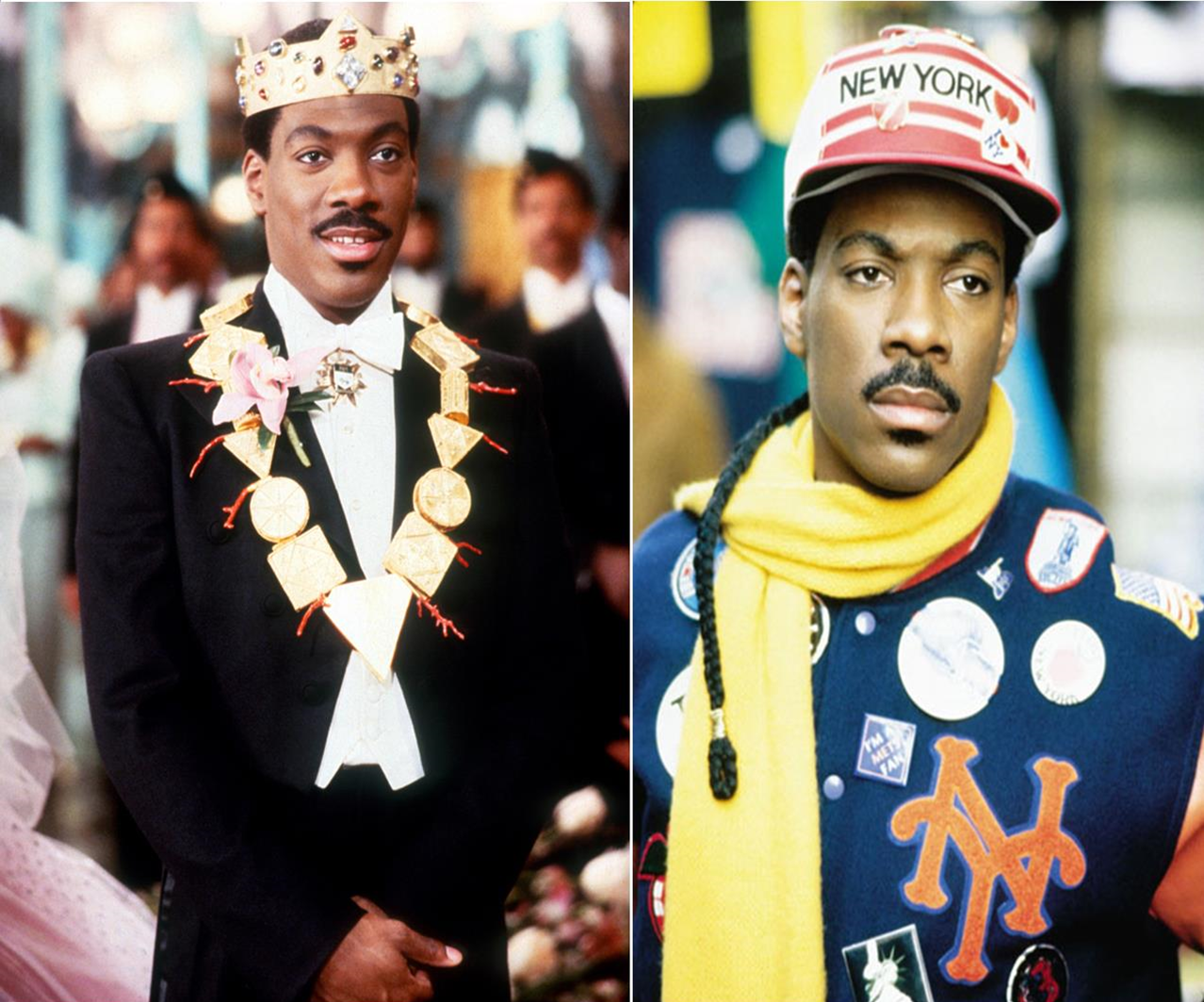
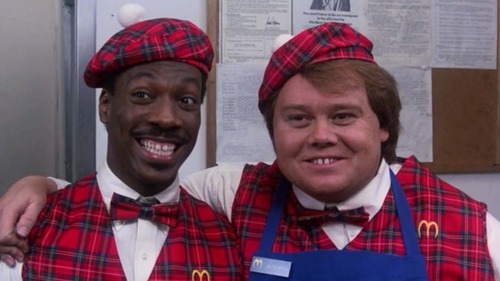
Akeem is in line to receive his father’s possessions. He is the royal descendent of a great people, much like the children of Israel. As he and Semmi maneuver their way around the “Land of the Free”, you start to notice an unraveling of their culture. They do not desire to be a set-apart nation of priests; they are simply, “Ordinary Americans.” They go from living in a palace to living in poverty; from letting their hair grow long to cutting it off; to being draped in gold, to designer jackets; from being pampered and provided for by a King, to having to work a 9-5 at a restaurant. Akeem and Semmi go from being among a powerful and set-apart people, to a downtrodden and despised people. They go from being in line to inherit the blessings, to accepting of the curse. In America, Akeem is not proud of his cultural heritage, he is ashamed of it.
Even the end of the movie is significant, but I will leave that part alone for the 2-3 people reading this who have not seen Coming to America (smh).
Trailer:
Funny Movie Mistakes:
When Akeem and Semmi get their apartment, the landlord says that the room has only one window facing a brick wall. But when Akeem is out on the fire escape, he yells out to a street, not a wall. And there are two windows.
Watch the movie and see if you can spot the knot!
“What’s your favorite movie? Is this among your collection? Why do you love it?”








 The PBS Blog