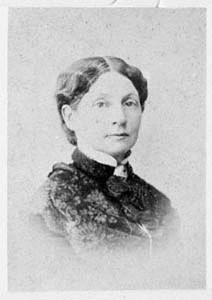
First, I want to say that Birth of a Movement is a good documentary on Netflix and is the inspiration behind this post.
We are familiar with the name W.E.B. Dubois but I do not hear much concerning William Monroe Trotter and that’s a shame. While I do not agree with his dissension with Booker T. Washington (I admire Washington, obviously), I do admire Monroe’s drive to stop a movement that ultimately led to a resurgence and second wave of one of the most terrorist groups in America, The Klu, Klux, Klan.
William Monroe Trotter was an African American newspaper editor and real estate businessman in Boston, Massachusetts born on April 7, 1872, in Chillicothe, Ohio. Raised in Hyde Park, Boston, his father, James, was a writer and former civil rights lieutenant who worked in real estate. Trotter excelled in academics growing up, becoming his predominantly-white high school’s class president and attending Harvard University in the early 1890s. He was a friend of W.E.B. Dubois who also attended Harvard alongside him. The friends graduated in 1895, the same year that Booker T. Washington delivers the famous 1895 Atlanta Compromise Speech.
Trotter was an early activist for Black Civil rights and produced similar Civil Rights results in 1915 as that of the 1960s marches. He was an early opponent of Booker T. Washington (sigh… I just think Booker had a point but whatever), and in 1901 founded the Boston Guardian, an independent African-American newspaper, as a vehicle to express that opposition.
In 1905, Trotter joins W.E.B. DuBois in founding the Niagara Movement, the precursor to the NAACP. However, Trotter did not agree entirely with the organization. The NAACP’s top officers were white men and it only made sense to Trotter that the National Association for the Advancement of “Colored” People is run and operated by “Colored” people. It was not. The NAACP was founded by Jews and ran by the same. For this, Trotter decided to part with the organization. Instead, he founded his own organization called The National Equal Rights League. He also co-founded the Boston Literary and Historical Association (the oldest nationwide human rights organization founded in Syracuse, New York in 1864 dedicated to the liberation of black people in the United States) with colleague George Forbes and established The Guardian newspaper. The publication pushed for Black equality.
Trotters most famous acts of Civil Rights is his stand against David Wark Griffith’s, landmark film, The Birth of a Nation, a racists play turned movie by author Thomas Dixon. Originally called The Clansmen, the book turned play became a massive bestseller. It also had the endorsement of The White House as it was screened at the house and praised as “History as Lightening” (Wilson).
Trotter began a campaign against Dixon’s play turned film when it opened in Boston in 1910, which portrayed the Ku Klux Klan as heroes. While his protests succeeded in closing the production, The Clansmen changed its name to The Birth of a Nation and in April 1915 was scheduled to open in Boston. Trotter rushed back to lead protests against the film. In April, the Tremont Theatre was denying African American’s admission, to include Trotter. When blacks refused to leave the lobby, plainclothes police moved in, sparking a fight. Trotter and ten others were arrested; other protests took place both inside and outside the theater. It resulted in a mini-riot. Trotter, united with other African-American community members, could not get the film banned in Boston. Interestingly enough, Booker T. Washington dies later this year, November of 1915 in Tuskegee Alabama.
The KKK had a revival for a decade after 1915, especially in industrial cities and the Midwest. In 1919, Trotter appeared at the Paris Peace Conference in an unsuccessful effort to have the organization outlaw racial discrimination. But, in 1921, Trotter was successful in shutting down new screenings of The Birth of a Nation in Boston. He also led demonstrations against events, plays, and films that glorified The Ku Klux Klan. William Monroe Trotter died on April 7, 1934, in Boston.
Far as finances is concerned, it’s still unknown exactly how much The Birth of a Nation grossed, but it did very well in sales. D.W. Griffith is still recognized as the man who pioneered modern cinematic techniques with his use of advanced camera and narrative techniques. Griffith is also one of the founders of the Academy of Motion Picture Arts and Sciences and popularized the use of the close-up shot and his skill is still taught in film school. Meanwhile, in the 1920s, his film The Birth of a Nation continued to spark a resurgence of the Klu Klux Klan, which produced a second wave in Atlanta, Georgia, inspired by the film. This terrorist organization would go on to terrorize millions of blacks over the years.
You know what I would really love? If you guys could mark Revolution as ‘to read’ on Goodreads! That would be totally awesome. So, could you, would you? Thanks!
UPDATE: I mean no disrespect but please don’t just like this post. I am not looking for likes. I am looking for support. There are over 2,000 subscribers to this blog. It costs nothing but a few minutes seconds of your time to mark this book as ‘to read’ on Goodreads. This is one of the many free ways that you can support an Indie Author.
Its late but Friday is not over people! Well, not for some of us anyway so we’re going to squeeze this article on in.
Today, we have a special fun fact for you. My maiden name is Hereford and I have a mother, brother, and sisters who still carry this last name. In fact, I’ve met very few people with this name I was not related to. Unlike Johnson, Brown or Jackson (no shade to those with these last names), Hereford is not as common. So when I came across this man online, I was noticeably interested. My mother says that my grandfather, her father, is from Alabama and that Sonnie looks like her dad. This has prompted me to do more research on the man and to plan a visit to Alabama to discover more. It’s possible we had a Civil Rights Activist in the family and didn’t know it. In 1961, Hereford was one of the plaintiffs suing the Huntsville school system to end segregation, and in 1963, his son, Sonnie Hereford IV, was one of the first four black children to enroll in a previously all-white public school in Alabama. But, let’s start from the beginning.
Dr. Sonnie Wellington Hereford III was born on January 7, 1931, in Huntsville, Alabama. The family had no running water or electricity and Sonnie had to walk seven miles to school. The school, next to a garbage dump, didn’t have a library or cafeteria, much like most black schools at the time. Hereford was a farmer but developed a love for education. Even though his school had no library, the teachers were invested in him as they were in all their students. Though lacking in resources, black schooling at the time was exceptional, involving a strong community spirit and discipline. Teachers took on more than just a role as a teacher but they were also mothers, fathers, and mentors. For this, Sonnie received a good education and decided he wanted to become a doctor.
Sonnie graduated first in his class and applied to the University of Alabama for their pre-med program. However, Sonnie’s application was denied because of his color so he enrolled at Alabama A&M University instead. Hereford graduated from A&M in 2 years and went on to receive his medical degree from Meharry Medical College. He began his career at Huntsville Hospital in Huntsville Alabama and went on to play important roles in the struggle for Civil Rights. Not only was he a doctor but he also helped to aid men and women attacked during the Selma to Montgomery march, welcomed Martin Luther King Jr., to the city in 1962 and helped to integrate the city at various establishments. In fact, school desegregation is what Sonnie became most known for.
Sonnie IV was among four children chosen to desegregate schooling in Alabama and on September 3, 1963, Hereford took his six-year-old son to school but they could not get in. Instead, a mob waited for them and none of the other children were admitted to the other schools either. Sonnie didn’t give up, he returned but the school was locked down and guarded every day with armed troops. Eventually, Hereford contacted the federal judge and over time an order was issued to desegregate the schools in Huntsville. On Monday, September 9, 1963, Hereford successfully enrolled his son at Fifth Avenue School making Sonnie Hereford IV the first African-American student admitted to a previously all-white public school in Alabama. That following week, Sunday, September 15, the church bombing occurred in Birmingham killing four little girls at the 16th Street Baptist Church.
Sonnie died at 85 years old, two weeks before the ribbon cutting ceremony at the Sonnie Hereford Elementary School in Huntsville Alabama, named for him by the Huntsville board of education. The school ranges from Pre-K to sixth grade.
Learn more about Sonnie at the informative video below!
Some of the most common forms of protection for women during their cycles were grass, rabbit skins, sponges, rags, menstrual aprons, homemade knitted pads, or other absorbents. Usually, women used some form of cloth back in the day. These cloths are why “she’s on the rag” is a popular expression used to refer to menstruating women.
While she did not invent the modern version of the Maxi Pad, Mary Beatrice Davidson Kenner developed the sanitary belt, one of the first versions of the modern-day pad.
Mary was born in Monroe, North Carolina, on May 17, 1912, and came from a family of inventors. Her sister invented a children’s board game that explored family ties called “Family Treedition.” Mary’s father, Sidney Davidson, patented a pants presser in 1914. According to historian and former U.S. Patent Examiner Patricia Sluby, a maternal grandfather of the daughters was of German and Irish descent who invented a tricolor train light. It’s safe to say that developing things was in Mary’s blood, pun intended.
The sanitary belt was a belt used to hold pads in place before designing self-adhesive maxi pads.
Mary invented the sanitary belt with a moisture-proof napkin pocket, but the company that showed interest in the pads rejected the invention because Mary was a black woman. For this, the sanitary belt didn’t become widespread until 1956, thirty years after its design. Learning this has taught me the power of patience and how everything comes to be in its time. It may have seemed like a lifetime to Mary, but eventually, her invention saw the light of day. Mary received five patents for her invention between 1956 and 1987.
While mostly known for her invention of the sanitary belt, Mary had other groundbreaking designs like the toilet paper holder, and the mounted back scrubber and washer for showers. Mary has been an entrepreneur from the start, operating her own floral business in Washington, D.C., when she was not inventing things.
Adhesive Maxi Pads (a sticky side that stuck to the lining of a woman’s panties) were invented in the 1970s, so the sanitary belt did not last very long. But without the belt, someone would not have thought to make things easier by eliminating the belt and just going with the napkin.
If you are a young woman like me and have never used the belt, you can Google Sanitary Napkins (or talk to your mom or grandmother), and learn that the strap was uncomfortable and inconvenient. While tampons existed, using them for younger women was considered sexually improper. (A pretty good article to study up on the evolution of pads can be found HERE.)
Life happens in stages, and good things come to be because someone took a risk on something others may not have found useful. Mary’s invention helped women who didn’t want to use tampons to get by and paved the way for all of the pads currently on the market.
With the success of the Black Panther movie based on the super-hero comic, I am re-posting this Black History Fun Fact from two years ago based on real-life super-heroes for those of you new to this blog (or who missed it the first time around). To understand our present, we must understand our past so that in the future we do not make the same mistakes. The Black Panther Organization actually did more community-outreach than they did protest. The protest is what we saw the most on television however it is not the bulk of their work. They were not a hate group, they were not supremacists and they were not a “black only” group. The Panthers promoted ALL POWER to ALL PEOPLE with an organization comprised of many nationalities of people.
Has history been accurate in its portrayal of the group affectionately known as The Panthers?
In Whitewashing the Black Panthers, Michael Moynihan argues that PBS’s documentary The Black Panthers: Vanguard for The Revolution, tries to excuse a “murderous and totalitarian cult” saying, “Almost anything that reflects poorly on the Panthers is ignored or dismissed and no critics of the party are included. The story is told entirely through the testimony of former Panthers and sympathetic historians.”
(Umm, so is every European, Western focused story ever made, but we won’t go there).
Often portrayed as a militant, black supremacists hate group, it’s amazing to me that this group of people wrote a ten-point program outlining the details of their belief system and there are still misconceptions about who they were and what they stood for.
For the record, I did not set out to write about The Panthers based on Michael’s article (I came across it much later), or because of the documentary. After doing some reading I decided today’s Black History Fun Fact Friday will focus on three basic principles that everyone should by now, understand about The Panthers. But first, we must cover some additional facts.
The Freedom Movement has always been portrayed as a southern only movement on television and even in some books. Mississippi, Alabama, and Georgia are states where trees no doubt bore the remnants of strange fruit. We could see it on the news, the newspapers, and from the mouths of relatives who grew up there. If we didn’t see it, the whole world did when Chicago native Emmett Till went down south and never came back and the whole world saw the ugly face of America. At that time, I am sure, we all had the same consensus on our hearts (among other things): “If only he would have stayed home, this would not have happened.”
This is because seldom did we then, and even today, hear about the racism and discrimination that took place in Northern cities like New York, Chicago, and California. Many blacks, no doubt, escaped the southern states for better opportunities in the North. Still, even this part of history is only a half-truth as not all blacks left because they did not have.
There were many African American’s who, after slavery, suffered tremendously economically but not all of them. Not every black family had to sharecrop or endure poverty. On the contrary, many families started their own businesses, educated their own people, and founded their own communities. From the Mound Bayou in Mississippi, Blackdom of New Mexico, or the famed Black Wall Street in Tulsa it is clear, not all blacks were financially incapacitated. For this, it is only a half-truth that blacks escaped the south for a better financial and economic opportunity in the North and it is only a half-truth that they all left to escape Jim Crow. In truth, many of us sold what we did have to flee North because we were told (both by whites and black elites) that it was better. Many blacks were told that the North was the land of “Milk and Honey” so we sold our land, packed up our families, and left the Jim Crow South only to run into the police brutality of the North.
Martin Luther King, Jr., is hit in the head with a brick Marching in an all white Chicago neighborhood
It was Martin Luther King Jr., who said his trip to Chicago’s segregated Cicero was worse than Alabama and Mississippi. “I have never seen, even in Mississippi and Alabama, mobs as hateful as I’ve seen here in Chicago,” King told reporters. That statement is saying a lot considering what we know about the brutality of these states and had I not been born and raised in the city (Chicago), I’d doubt King’s words were true. But as I was born in Chicago and spent the first nine years of my life in the concentrated poverty-stricken projects of The Robert Taylor Homes on Federal Street, the most segregated and poorest urban city in the United States at the time, I can tell you that what King said was no exaggeration.
The truth is that while many segregationist laws were abolished in the South, poverty increased in the North. Black unemployment was higher in 1966 than in 1954, 32% of Black people were living below the poverty line, 71% of the poor living in metropolitan areas were Black, and by 1968, two-thirds of the Black population lived in ghettos, or impoverished communities, also known as slums. And so, it was for this hushed truth concerning the brutality of northern cities that two young men from Oakland California founded what would one day become the most hated black revolutionary organization of its time.
Founded in 1966 by Huey Newton and Bobby Seale in Oakland California, The Panthers took notice of the police brutality taking place in their own lives and the lives of members of the black community. They saw black men, and women, being beaten (some of them to their deaths) and nothing being done about it. They saw children who were malnourished because they didn’t have food at home and families denied access to proper medical care and education. Having met at The Meritt Junior College and is active in political movements there, Seale and Newton came together to form the Panthers. Following the passion of men like Malcolm X, and Stokely Carmichael, who were against the passive resistance movements of men like King, Newton, and Seale set out to be examples of what they saw was needed.
This leads me to three basic truths concerning why The Black Panthers were started and while I am not a black panther or black nationalist enthusiast (nor do I agree with their beliefs), I thought this would be a great way to re-introduce to you what this organization was initially built on and the things that they did that rarely made, and rarely make, the news:
Community Protection
One of the first reasons for the organizing of this group was to assist in the protection of members of the black community. Specifically, the Panthers wanted to protect blacks from police brutality, whether it was helping the elderly across the street, being human traffic signals, or standing between police and civilians to ensure the laws of California, of the time, were being adhered to. Being students of history and discipline, The Panthers were aware of the laws governing where they lived and they made sure both civilians and the police understood those laws and acted accordingly. Bobby Seale recounts, in Seize The Time: The Story of the Black Panther Party:
“He (Huey) defended himself in court and had beaten a petty theft case, and he was running it down how he got Olsen. Olsen was the dean of Merritt College. Dean Olsen had got up on the stand and testified to the fact that he had called the police in to have Huey P. Newton arrested, and had the police bring Huey to his office because some paddy boy over in the store had accused Huey of stealing a book. Huey explained to me that Olsen had asked him if those were his books. Huey said:
“Yes, this is my property.”
Olsen: “Well, I’ll just keep these books.”
Huey: “No, you won’t keep those books. That’s my property and I’ll keep them myself. You called me in the office for something. I don’t know what you want me for, but I’ll keep my property.” And Huey snatched the books back out of his hand and said, “If you want to arrest me, you’ll have to arrest me, but I’m not going to stand here talking.” And he walked right on out of the office. So, the same thing came up on the stand, and Huey asked Olsen on the stand, “Dean Olsen, why didn’t you have me placed under arrest if you thought I had stolen the books?”
Olsen: “Well, at that time, I just didn’t know my rights as to whether or not I had the right to arrest you.”
Huey: “Mr. Olsen, you’re a dean at a college; have a Ph.D. in education. Here I am a student in the college, learning my rights, and you’ve got a Ph.D., and you tell me you didn’t know your rights?”
(Caution. I post this excerpt as an example that The Panthers were aware of the laws of their state, not for anyone to mimic. With the number of black men gunned down for nothing, I do not advocate for anyone to try this at home. This was in 1966, this is 2016. I would not want anyone to be hurt for trying to mimic the actions of Huey as stated above. It’s important to obey the governing authorities, diffusing the situation if it is at all in your power to do so).
Free Breakfast Program and Medical Care
In 1966, students were not given free lunch as they are given today. Part of that revolution was due to the free breakfast program set in place by The Panthers where they fed children who would otherwise not have anything to eat. The Panthers had a lot to do with why the Public schools offer free lunches to students today. In addition, they implemented their own schools and system of medical care. The Panthers were, in short, of service to their community for no one knows the trouble we see and no one knows our sorrows. Preaching can only go so far, for if a man is hungry physically he won’t hear you spiritually. There must be physical action to accompany the spiritual and that is what The Panthers instilled in their communities: Physical and practical action.
All Power to All People
I do not want this article to be too long as I believe I’ve said enough, but I don’t want to leave without reiterating that despite all the black, The Panthers were not a black-only organization. Having recruited members of all nations they recounted repeatedly that they stood for restoring “All power, to all people”. In fact, they were separate from the black nationalist groups often associated with them and conflicted often with them. In his own words, Bobby Seale states:
“Cultural nationalists and Black Panthers are in conflict in many areas. Basically, cultural nationalism sees the white man as the oppressor and makes no distinction between racist whites and non-racist whites, as the Panthers do…Although the Black Panther Party believes in Black nationalism and Black culture, it does not believe that either will lead to Black liberation or the overthrow of the capitalist system and are therefore ineffective.”
– Bobby Seale
The truth is indeed stranger than fiction and for that most conscious grassroots organizations are deemed cults and militant to prevent, what Cointel pro deems, “the rise of a black messiah.” The Black Panthers were seeking to empower black people and that in itself is dangerous, for in the words of the poet Brook Yung, “They used to put to death people like me.”
Willie James Howard was born on July 13, 1928, in Live Oak Florida. At fifteen years old he was in the 10th grade and worked at the Van Priest Five and Dime Store downtown.
According to the story, Willie sent Christmas cards to employees of the store for the Christmas Holiday. One of the employees, a popular white girl named Cynthia, was offended by the gesture. According to the account (which has just as many variations as Emmett’s story), at the bottom of the card for Cynthia, Willie indicated the letter “L” for love. Later, Willie wrote Cynthia a letter, this time apologizing. He signed this one with a little poem:
“I love your name. I love your voice, for a S.H (sweetheart) you are my choice.”
On January 2, 1944, Cynthia’s father Phil Goff, who saw the letter (most likely by Cynthia showing it to him as some accounts suggest) and two of his friends arrived at Willie’s home and the three men dragged the boy from his mother’s arms. They also kidnapped his father. They drove to the Suwannee River and bound Willie James by his feet and hands and made him stand at the edge of the river where, according to his father’s testimony, he was told he could either jump into the river or be shot. The boy jumped in and drowned.
The Suwannee County sheriff ordered Ansel Brown, the local black undertaker, to retrieve the boy’s body from the river and bury it immediately. To cover up the incident, Phil and his friends forced Willie’s father to sign a document alleging that Willie jumped into the river on his own accord. According to their written statement which was included in the Lanier Report, the three men admitted taking the boy from his home and tying him up on the way to the river but they said he fell in accidentally. This conflicts with the first story that the boy jumped into the river. Either the boy jumped into the river on his own or he slipped accidentally. It was obvious the men were not telling the truth but there was never an arrest.
After signing the document, Willie’s father (also named James) packed up his family and moved to Orlando. No death certificate was ordered for his only son and the grave was unmarked for 60 years.
Thurgood Marshall demanded a full investigation and after hearing about Willie’s case, it was picked up by Harry T Moore of the NAACP who had gone to school with Lula Howard, Willie’s mother. Moore received documented proof from Willie’s parents explaining what really happened. They stated that Willie’s father had been threatened and forced to sign the document. However, a grand jury did not indict Goff and his friends and prosecution were never achieved.
Moore continued fighting for the case and in 1947 wanted to reopen it but Thurgood Marshall was unwilling to dedicate any more NAACP funding.
I found that Howard’s story mirrors that of Emmett Till’s in chilling ways. Though Emmett’s death was far more brutal, Willie is one of those unfamiliar faces we do not hear much about. Like Claudette Colvin and Rosa Parks, Emmett Till and Willie Howard are on the same side of History.
Willie James Howard was born in July (7/13)
Emmett Louis Till was born in July (7/25)
Willie was 15 years old when he died
Emmett was 14 years old when he died
Willie wrote a letter to a white girl
Emmett whistled at a white girl (allegedly)
Willie was taken from his home
Emmett was taken from his home
Willie died in the Suwannee River
Emmett ’s brutally beaten body was found weighed down by a cotton gin in the Tallahatchie River
Willie died in 1944
Emmett was only 3 years old when Willie was murdered. He would be killed exactly 10 years later in 1955.
Both boys murderers were acquitted
The similarities here are chilling so when you remember Emmett Louis Till this August, remember Willie James Howard too.
Welcome back to Black History Fun Facts where I am still not finished with my original article (lol), but I got you covered.
Now, we are familiar with Langston Hughes, Zora Neale Hurston and many of the writers and musicians of The Harlem Renaissance Movement. What we are not always familiar with are the painters, photographers, and sculptors. That is why when I find someone great, I like to highlight them.
Before we go on, take a moment and dig into your purse, wallet or coin jar (or coin purse….I know some of ya’ll still have them!) Wherever you keep your change, pick out a dime.
In the 1920s, Selma Burke became one of the African American women of the Harlem Renaissance through her relationship with the writer Claude McKay. The two shared a Manhattan apartment but McKay was mean, destroying her work when he didn’t like it, and the relationship was a strange one. Nonetheless, it was through Claude that Burke got introduced to the Harlem community. She studied under another black woman sculptor of the movement, Augusta Savage.
Selma Burke in her studio, Peter A. Juley & Son Collection, Smithsonian American Art Museum J0100403.
An educator, Burke later taught at the Harlem Community Art Center and founded the Selma Burke Art School in New York City and the Selma Burke Art Center in Pittsburgh. (This makes her one of my heroes since I do want to start my own school one day.) Burke is most famous for her 1944 sculpture of Franklin D. Roosevelt, which was the model for his image on the dime, though she never received credit for it. Only now are people starting to recognize that she was the inspiration behind the image.
Burke’s sculpting of the image came about as part of a contest, where she wrote the White House stating that she could not sculpt the image from a photo alone. The White House responded and granted her a sitting with the president. The credit for the plaque was given to U.S. Mint Chief Engraver John Sinnock but it was Burke who created the original design. Burke also sculpted Booker T. Washington and later, Martin Luther King, Jr.
Burke made sculpture by shaping white clay from her parents’ farm as a child. After being educated at what is now Winston-Salem State University and trained as a nurse at St. Agnes Hospital Nursing School in Raleigh, Burke moved to New York City to work as a private nurse.
“Selma Burke was born on December 31, 1900, in Mooresville, North Carolina, the seventh of 10 children of Neil and Mary Colfield Burke. Her father was an AME Church Minister who worked on the railroads for additional income. As a child, she attended a one-room segregated schoolhouse and often played with the riverbed clay found near her home. She would later describe the feeling of squeezing the clay through her fingers as the first encounter with sculpture, saying “It was there in 1907 that I discovered me.” – Wikipedia
After completing a Masters of Fine Arts at Columbia University in 1941, Burke began to teach art, first at the Harlem Community Art Center and later at schools she founded in New York and Pittsburgh.
Burke’s last monumental work, a statue of Martin Luther King, Jr. in Marshall Park in Charlotte, was completed in 1980. Selma Burke died in 1995 in New Hope, Pennsylvania.