Black History Fun Fact Friday – The Chicago Black Renaissance

black-history

Many of us have heard of The Harlem Renaissance, the literary, musical, and artistic movement that exploded during the 1920s in Harlem New York. Also known as The New Negro Renaissance, the New Negro Movement, the Negro Renaissance, and the Jazz Age, the Great Migration of blacks from the south to northern cities like New York produced a national movement centered around black culture and tradition.

Music, poetry, literature, art, and theatre was brought to the mainstream from a black perspective in a huge way. Magazines such as The Crisis (the NAACP monthly journal) and Opportunity (the monthly publication of the Urban League) employed Harlem Renaissance writers on their editorial staff, published their poetry and short stories, and promoted African American literature through articles, reviews, and annual literary prizes. Names like Alain Locke, Langston Hughes, and Zora Neale Hurston come to mind.

However, though termed Harlem Renaissance, the time was much more complex than Harlem itself (which in many ways can make it hard to define). While standing as the anchor for the movement, Harlem was just one piece of a much larger puzzle. Across the United States and the Caribbean, The Renaissance was taking place. In fact, only some of the writers, musicians, and artists were native to Harlem itself. The Renaissance did not just happen in Harlem but a Black Metropolis was brewing in other big cities as well, such as Chicago.
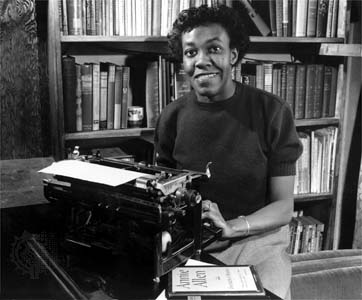
Gwendolyn Brooks
Gwendolyn Brooks

As the Harlem Renaissance was winding down, The Chicago Black Renaissance was getting started, or rather, continuing. Creativity and activism was blooming from the great number of blacks coming up from the south to escape Jim Crow and The Great Depression. While it’s true many blacks did not suffer as much during the depression due that many of us were already struggling (having been depressed since we got here) there were some who came to Chicago from southern states like Mississippi and secured well paying jobs that were no longer available. While at first blacks could work at factories, meat packing places, and steel mills, the great depression shut this down.

Blacks were also dealing with extremely poor living conditions and fighting housing discrimination. As more and more blacks moved to Chicago the city was also still getting a large immigrant population pouring in from Europe so there was always competition for jobs and since segregation was in full effect, many blacks found themselves at a loss. However, there is great beauty that often springs from the depths of struggle and The Black Mecca of Chicago’s South Side was quite literally a diamond in the rough.

The black belt of Chicago’s South Side, as it was called, was the location for such diamonds.  Jazz, Blues, and Literature flourished as an outlet for blacks to voice their discontent not only about the city but also the whole of the black experience in America in general, and when Gwendolyn Brooks passed a pool hall in a Chicago neighborhood and took notice of a group of young men standing around, “We Real Cool” (a poem that speaks from the point of view of these seven young men, see my analysis of the poem here) was born. Chicago exploded in culture from the 1930s through the 1950s and the south side remains the most cultured part of city today.

Music, art, literature, and journalism were all part of The Chicago Renaissance. Though never deemed “Chicago Renaissance” officially, there are many who contributed to the movement whose names we’ve grown to know. The writers: Richard Wright (born in Mississippi but moved to Chicago in 1927), Frank Yerby, Margaret Walker, Willard Motley, John H. Johnson (publisher of Ebony), St. Clair Drake and Horace R. Cayton (who later co-authored Black Metropolis), Gwendolyn Brooks, Arna Bontemps, and Lorraine Hansberry; entertainers Nat King Cole, Ray Nance and Oscar Brown, Jr.; dancers Katherine Dunham and Talley Beatty; photographer Gordon Parks, and the artists Elizabeth Catlett and Hughie Lee Smith.


Yecheilyah Ysrayl is the YA, Historical Fiction author of eight books, most notably The Stella Trilogy. She is currently working on her next book series “The Nora White Story” about a young black woman who dreams of taking part in The Harlem Renaissance movement and her parents struggle to accept their traumatic past in the Jim Crow south. “Renaissance: The Nora White Story -Book One” is due for release summer, 2017. For updates on this project, sneak peek of chapters and the pending book cover release for this project, be sure to follow this blog and to subscribe to Yecheilyah’s email list HERE.

Black History Fun Fact Friday – Free Frank

black-history

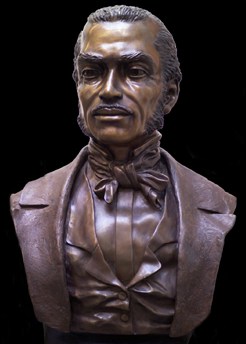
This is a man who was free in more ways than one. Welcome back to Black History Fun Fact Friday. Meet, Free Frank.

The first African American to found his own town in the United States, Free Frank was born Frank McWorter on September 7, 1777 as a slave in South Carolina to a West African woman named Juda. Having been abducted and then enslaved it is commonly assumed that his father was the Scots-Irish master George McWhorter. In any event, Frank was leased by McWhorter to neighbors as a laborer. This experience (despite the situation) lead to him gaining entrepreneurial skills and businesses skills being around those he was leased to.

free-frank

He later married an African American woman from another plantation named Lucy.  Together they had four children. The extra money Frank was making gave him the opportunity not only to free himself but also his wife ($800) and oldest son. Earlier in life he’d founded a saltpeter plant which he sold later in exchange for the freedom of Frank Jr. who was a fugitive in Canada. Lucy and Frank also had three more freeborn children.

Free Frank did more than free individuals from slavery but he was also an entrepreneur. Frank and his family moved to Pike County, Illinois in 1830 and in 1836 founded what is now Philadelphia Illinois. Frank built the community on 80 acres of land, but it didn’t stop here. Limited by state statutes, McWorter petitioned the Illinois General Assembly using a legislative loophole, and by 1836 he and his sons owned 600 acres in Hadley Township without restriction. Frank leased plots to both white and black residents.

Although the railroad sliced through Pike County in 1869, there were some parts of the community that remained active until the 1920s and is considered one of the most famous antebellum towns.

The town size grew to approximately 160 people, 29 households, and several craftspeople and merchants by 1865. Frank witnessed that growth until his death in 1854 at the age of 77 years, while Lucy lived to 99 years of age, raising their family until her death in 1870.

Black History Fun Fact Friday – The Immortal Life of Henrietta Lacks

Originally Published February 27, 2015

Publicationbhff

Today is a special Friday because we’re going to be talking about a special woman in history. She’s a unique study because there is not a lot of information on her. While technology has blessed us with the internet so that we no longer have to sit through 500-page books and encyclopedias, the best way to research her life is actually through books, and I have a perfect one for you to check out. It is because of this book that search engines are just now coughing up information about it. I didn’t intend to make another book recommendation, but this one goes hand in hand with last week’s post so much, so I could not help it. It is almost a single example that alone validates Harriet’s study. For last week’s post, Medical Apartheid, Click Here.

marcusMany of you have heard of her in biology class, but you probably didn’t know you were studying her cells. If you have ever sat through a class on cells and heard the term HeLa, you’ve heard of her. Your science professor more than likely described it like this:

“A HeLa cell, also Hela or hela cell, is a cell type in an immortal cell line used in scientific research. It is the oldest and most commonly used human cell line. “

That was probably the extent of the explanation. There is even a scientific name for HeLa, and it’s called Helacyton Gartleri.

HeLa cells were the first line of human cells to survive in vitro (in a test tube). The cells were taken from tissue samples and grown by a researcher named Dr. George Gey in 1951. Dr. Gey quickly realized that some of the cells were different from ordinary cells. While those died, they just kept on growing. After more than 50 years, there are billions of HeLa cells in laboratories all over the world. It’s the most commonly used cell line, and it’s known to be extremely resilient.

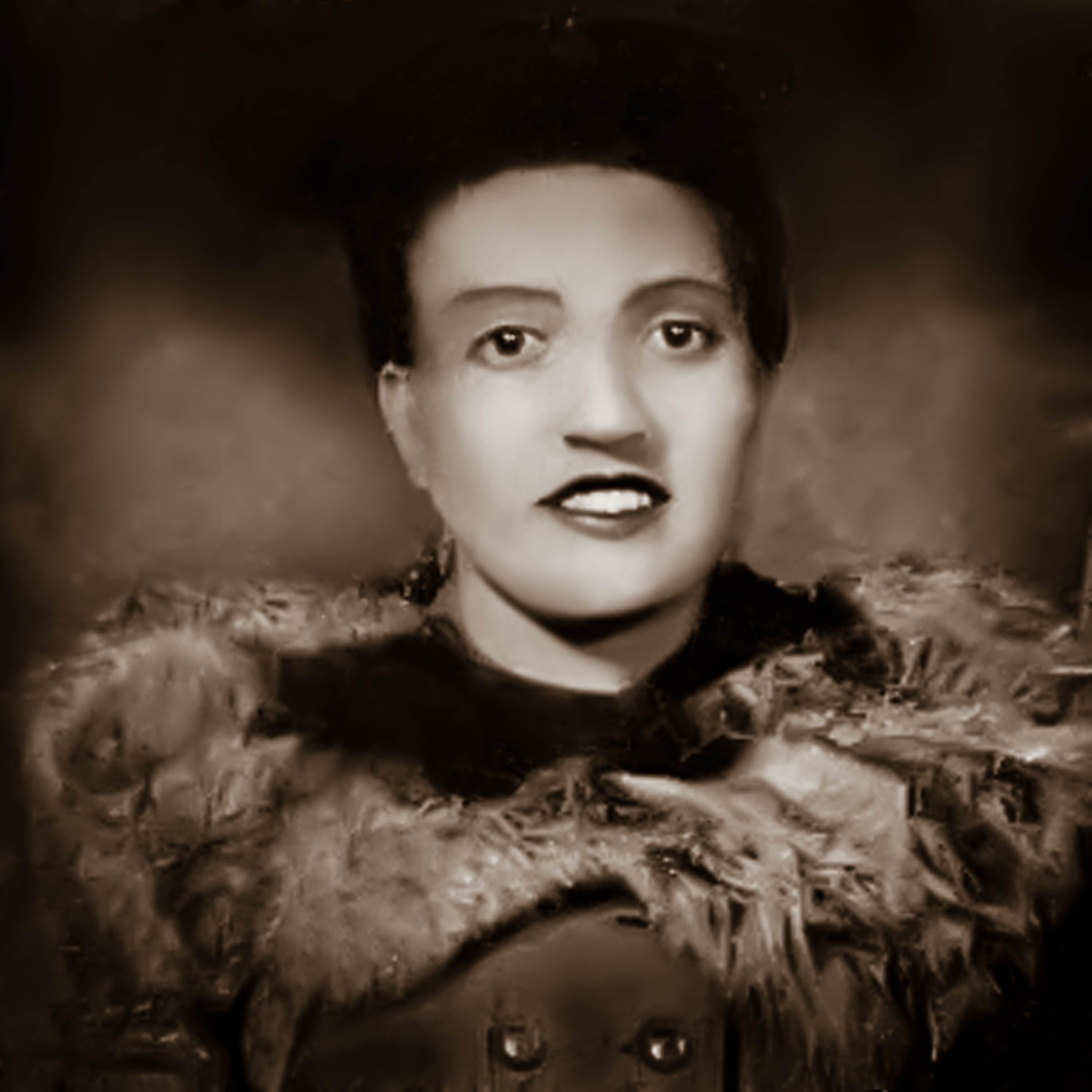
Henrietta-Lacks-2-thumb-400xauto-7959-Edit

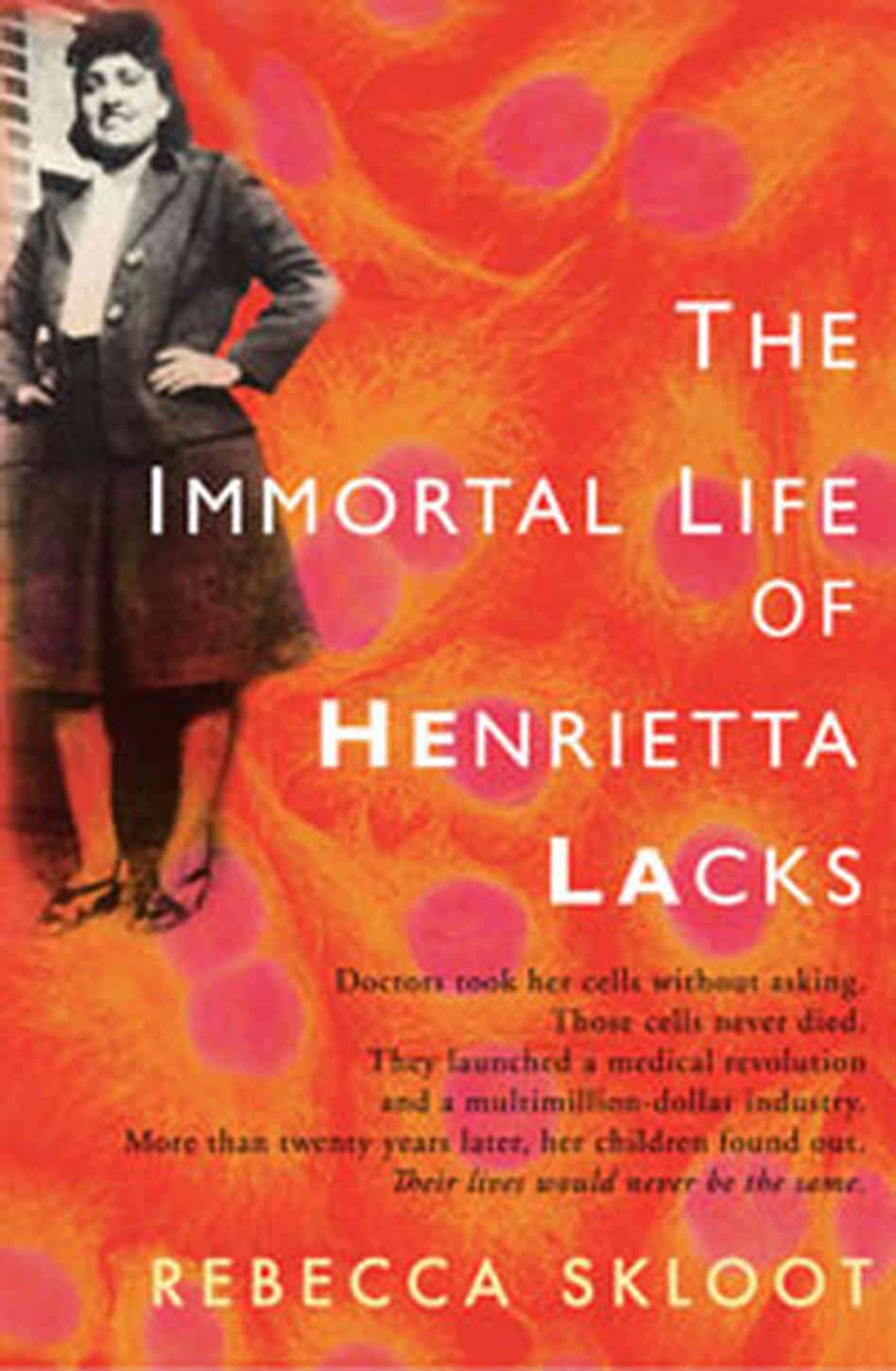
In 1951, a black woman was diagnosed with aggressive cervical cancer, and when she died, doctors took her cells without permission, and these cells never died. Her name was Henrietta Lacks, but scientists know her as HeLa. She was a poor black tobacco farmer whose cells became the foundation for groundbreaking research. From developing the polio vaccine to cloning to gene mapping, her cells helped to make blood pressure medicines and antidepressant pills; they helped develop drugs for treating herpes, leukemia, influenza, hemophilia, and Parkinson’s disease, and more.

The fact that HeLa cells have been used in some fundamental medical research is impressive enough, but there’s another part of the story — and that part is why Oprah might be making a movie about HeLa. Henrietta Lacks had no idea that her cells were taken and used in this way, and neither did her family. And while the cells became commercialized (researchers can buy a vial of them for $250), Lacks’ family has lived without healthcare and in poverty. Since Henrietta and her family never knew about her cell usage, The Immortal Life of Henrietta Lacks is not a story about her contribution to medical research, so much as the ethics of biomedical research and the practice of informed consent.

Rebecca Skloot documents how one woman’s cells continue to live outside of her body. She achieves this using thousands of hours of interviews, lawyers, ethicists, scientists, Journalists who wrote about the Lack’s family, great archival photos, scientific and historical research, and the personal journal of Deborah Lacks.

Black History Fun Fact Friday – Jan Matzeliger

black-history

Growing up, my brother was a collector of the latest Nikes. He was the Air Force One version of the Air Jordan lover. He’ll collect all kinds of pairs of “Air Ones” and stack them in his room or in the basement. It was truly a work of art and since he actually is an artist, sometimes he even drew on them! In any event, it’s no secret, black people love shoes! I don’t say that in a discriminatory way, for African Americans are known to set the trend. There’s nothing wrong with our love for fashion which is often mimicked all over the world. It makes sense then, why it was an African American man who helped to revolutionize the shoe making industry. Meet Jan Matzeliger.

jan-matzeliger

Jan Matzeliger was born in Surinam, formerly known as Dutch Guiana, in South America. Of mixed ancestry, Jan’s father was a Dutch engineer and his mother of African ancestry. Naturally, since his dad was an engineer, Jan would accompany his father to work and developed a skill for repairing complicated equipment.

At nineteen, Jan left home to explore the rest of the world, and began work aboard an Indian ship. He found his way to America and settled in Pennsylvania where he became interested in shoe making and worked at a shoe making factory.

Jan Matzeliger Machine
The Lasting Machine

Though Jan was interested in improving how shoes were made, two obstacles were in his way: He could barely speak English and at that time shoes in the U.S. all came from the small town of Lynn, Massachusetts where “Hand Lasters” (people who could attach the different parts of the shoe together by hand), could only produce 50 pairs of shoes per ten-hour day. Though paid well, Jan had the discernment to see that what Hand Lasters were doing was not as good as everyone thought. There had to be a better way.

Specifically, there was no machine that could attach the upper part of a shoe to the sole and this is basically what the “Hand Lasters” were doing and they were the experts. According to them, “No matter if the sewing machine is a wonderful machine. No man can build a machine that will last shoes and take away the job of the Laster, unless he can make a machine that has fingers like a Laster – and that is impossible.” Jan Matzeliger thought they were wrong and set out to build a machine that would do just that.

Jan's Finished Lasting Machine
Jan’s Finished Lasting Machine

Jan is a great inspiration for setting out to achieve something that no one thought would work. He worked hard on this machine using whatever he could find – cigar boxes, nails, paper, scrap wire—and after six months had a workable model. Jan however, did not have much money. He also kept his project secret. Still, the “expert” Hand Lasters found out and made fun of him for his project. Someone offered him $50.00 for the machine but Jan wasn’t having it. They tried to play him, but he was smarter than that. He turned down more and more offers and continued perfecting his machine until a better offer came from which he could acquire the tools to perfect the machine even more.

In March of 1883, the United States Patent Office issued a patent for Jan’s machine, which could produce 700 pairs of shoes a day, to the Hand Lasters 50 pair and the rest is history. Jan had officially revolutionized the shoe making industry.

Some of my brother’s art, “The Shoe King”

130320_0020 130320_0030 130320_0032 130320_0034

How does Jan’s invention help us today?

Today, shoe making involves four departments: Clicking or Cutting, Closing or Machining, Lasting & Making, Finishing Department and the Shoe Room. The Lasting and Making part is where Jan’s invention would come in. “In the early days of shoe making, shoes were made mainly by hand. For proper fit, the customer’s feet had to be duplicated in size and form by creating a stone or wooden mold called a “last” from which the shoes were sized and shaped. Since the greatest difficulty in shoe making was the actual assembly of the soles to the upper shoe, it required great skill to tack and sew the two components together. It was thought that such intricate work could only be done by skilled human hands.” (Wikipedia)

That is until Jan’s machine. Today, soles, which were once laboriously hand-stitched on, are now more often machine stitched or simply glued on by shoe making manufacturing.

In Case You Missed It:

Black History Fun Fact Friday: Sarah Rector

Sources.

Jan Ernst Matzeliger

https://en.wikipedia.org/wiki/Jan_Ernst_Matzeliger

Now Everyone Can Afford Decent Shoes.”5 Dec 2012. https://web.archive.org/web/20120821203314/http://www.users.fast.net/~blc/xlhome9.htm Archived from the original on August 21, 2012.

“Jan Matzeliger”. The Black Inventor Online Museum.

Jan H. Liedhard. “No. 522: Jan Matzeliger (transcript of radio show Engines of Our Ingenuity episode)”. University of Houston.

“Jan Ernst Matzeliger ‘Lasting Machine'”. Lemelson-MIT. Massachusetts Institute of Technology. Retrieved 29 February 2016.

Reference: Hayden, Robt. C., Eight Black American Inventors. Addison-Wesley, 1972

Black History Fun Fact Friday – Sarah Rector

black-history

Welcome Back to Black History Fun Fact Friday!

I introduce to you Sarah Rector who was just eleven when she received international attention for being a millionaire.

In 1913, The Kansas City Star publicized the headline, “Millions to a Negro Girl.”

Sarah Rector was born on March 3, 1902, in Twine, Oklahoma, on Muscogee Creek, Native American land where her family had been enslaved.

The Dawes Act of 1887 was created by the United States to “bridge the gap” concerning their acquisition of Indian Land. Authorized to survey American Indian tribal land and divide it into allotments for individual Indians and their families, Native Americans were offered U.S. Citizenship in return.

This included land for the people they formerly had enslaved.

In 1907, The Dawes Allotment Act divided the land among the Creeks and their former slaves, and thus, Sarah and her family all received land.

“Long before the births of Sarah and her three siblings, the Creek Nation agreed with the federal government to emancipate their 16,000 slaves, giving them citizenship in their nation and entitling them to equal interest in soil and national funds. They became known as Freedmen.”

-Steve Gerkin, The Unlikely Baroness

One fact this story brings to light is the ownership of blacks as enslaved people by the Five Civilized Native American Tribes. The Cherokee, Choctaw, Chickasaw, Creek, and Seminole Nations all had Blacks as slaves. In fact, Sarah and her family had a rich history as enslaved by the Creeks.

“Sarah’s father Joe Rector was the son of John Rector, a Creek Freedman. John Rector’s father Benjamin McQueen, was a slave of Reilly Grayson a Creek Indian.  John Rector’s mother Mollie McQueen was a slave of Creek leader, Opothole Yahola.  Their history is a rich one. The son Joe was enrolled with them on the same card.”

-Angela Y. Walton-Raji  Educator, Genealogist, Author & Researcher

Per the Act, the head of a family would receive a grant of 160 acres, and this is what Sarah and her family received. “The Creek Nation was sliced up into 160-acre squares, “more or less,” and doled out to the Natives and former slaves; each received 120 acres for agriculture and 40 acres for homesteading.” (Gerkin)

This is when the story gets interesting concerning Sarah’s portion.

To help with taxes on the land, Sarah’s father leased her portion to the Devonian Oil Company of Pittsburgh, and in 1913, everything changed when it struck gold. The oil was booming, bringing in 2500 barrels a day, bringing Sarah $300 a day. Multiple new wells were productive, and Rector’s portion became part of the Cushing-Drumright Field in Oklahoma, “The most prolific early oil field in Oklahoma discovered in Creek County about twelve miles east of Cushing and one mile north of present Drumright.” (Oklahoma Historical Society)

As word of Sarah and her wealth circulated, many people sought to ask for her hand in marriage and acquire loans, and perhaps the most bizarre is her change in identity. Sarah went from a young black girl to a white one.

sarahheadline sarah2

Being that this was the early 1900s, after all, many whites could not accept that someone like Sarah could have so much money. Thus, many began to seek to change her from black to white. Even more, Sarah’s guardianship, like our story last week, also changed, switching from her parents to a white man named T.J. Porter.

An article published in 1914 by The Chicago Defender claimed that Sarah was being ill-cared for by her “ignorant” parents, that she was uneducated, dressed in rags, and lived in unsanitary conditions.

On the contrary, Sarah and her siblings attended an all-black school in an all-black town (Taft, a town in Muskogee County, Oklahoma) in a five-room house. Rector would also go on to attend Children’s House, a boarding school for teens at Tuskegee Institute in Alabama, now Tuskegee University. This could have something to do with her acquaintance with men like Booker T. Washington, and W.E.B. Dubois.

diaspora_02-14-16c

Sarah left Tuskegee when she turned eighteen and moved to Kansas City, Missouri, with her family. By now, she was a full-fledged millionaire owning a Busy Bee Café, boarding house, and bakery, stocks, and bonds. As Sarah’s money increased, so did her male suitors. At twenty, she married Kenneth Campbell, and together, they had three sons. The couple divorced, and she married again, this time to  William Crawford.

Sarah Rector died on July 22, 1967, at 65. Though there is much speculation on the remainder of her life, I believe that because she is not as known as some, Sarah shielded herself and her family from the spotlight as much as possible. After the false claims and accusations concerning her identity, her life seemed to fade away in the background. She went on to college and afterward moved to a different state where she and the family lived in what is known as The Rector Mansion today.


Sources: Special to The Chicago Defender

The Chicago; Nov 15, 1913; ProQuest Historical Newspapers The Chicago Defender (1910 – 1975)

Remembering Sarah Rector, Creek Freedwoman

http://african-nativeamerican.blogspot.com/2010/04/remembering-sarah-rector-creek.htmlThe Unlikely Baroness by Steve Gerkin http://thislandpress.com/2015/03/24/the-unlikely-baroness/

CUSHING-DRUMRIGHT FIELD.

http://www.okhistory.org/index.php?full

Find more Articles at Black History Fun Fact Friday

Black History Fun Fact Friday – The Fultz Sisters

black-history

As a twin, I could not help but be attracted to this story, and as I studied their life in preparation for writing this article, it wouldn’t take long for me to see the red flags. From the media perspective, you’d think the quads and their families were wealthy, with a house on 150-acres of land and the live-in nurse.

This couldn’t be further from the truth.

19a5122c74098a54eab59283a181042bMary Louise, Mary Ann, Mary Alice, and Mary Catherine were born on May 23, 1946, at Annie Penn Hospital in North Carolina. Known as “The Fultz Quadruplets,” they were the first recorded identical black quadruplets globally and the first set of quads to survive in the South.

If the fact they are all named marry isn’t weird enough for you, their white doctor, Dr. Fred Klenner, delivered and named the girls after women in his family. His wife, Mary Ann, his aunt Mary Alice, his daughter Mary Louise and his great aunt Mary Catherine.

The girls were born at the segregated hospital wing, which was really just the basement. Mr. Fultz (whose name was James, not Pete as he was called) was a Sharecropper, and Mrs. Fultz being both deaf and mute, couldn’t read and write according to “And Then There was One” by Lorraine Ahearn, (August 2002). Besides this, the Fultz’s had six other children without a car, electricity, phone, and running water.

Thus, they didn’t debate when Klenner negotiated a deal with a Pet Milk Company that paid all medical expenses, food, land, a house, and a live-in nurse to care for the girls. All of this was in exchange for using the girls for promotional purposes. Klenner even created a schedule where people could come and visit the quads, who were put on display behind a glass screen.

world-famous-fultzPet Milk sales skyrocketed as the girls helped to brand the product, becoming the face of Pet Milk. Pet Milk?

“And so it was that the Fultz Quadruplets left Annie Penn Hospital: under contract, named after their white doctor’s relatives, headed home to a glass-enclosed nursery and driven there in a pair of McLaurin Funeral Home ambulances.”

– Lorraine Ahearn

Blogger Ladyrayne on Talking Stuff, who wrote a post on the Quads after listening to The Tom Joyner Morning Show last year wrote, “According to Edna Saylor, the nurse who worked at the Annie Penn Hospital and who would eventually become the quads legal guardian, the farm that was given to the Fultz family really didn’t amount to much and PET could have done a better job when it came to helping the Fultz family. Ms. Saylor stated that PET took advantage of the Fultz family because they were considered backwoods type of people.”

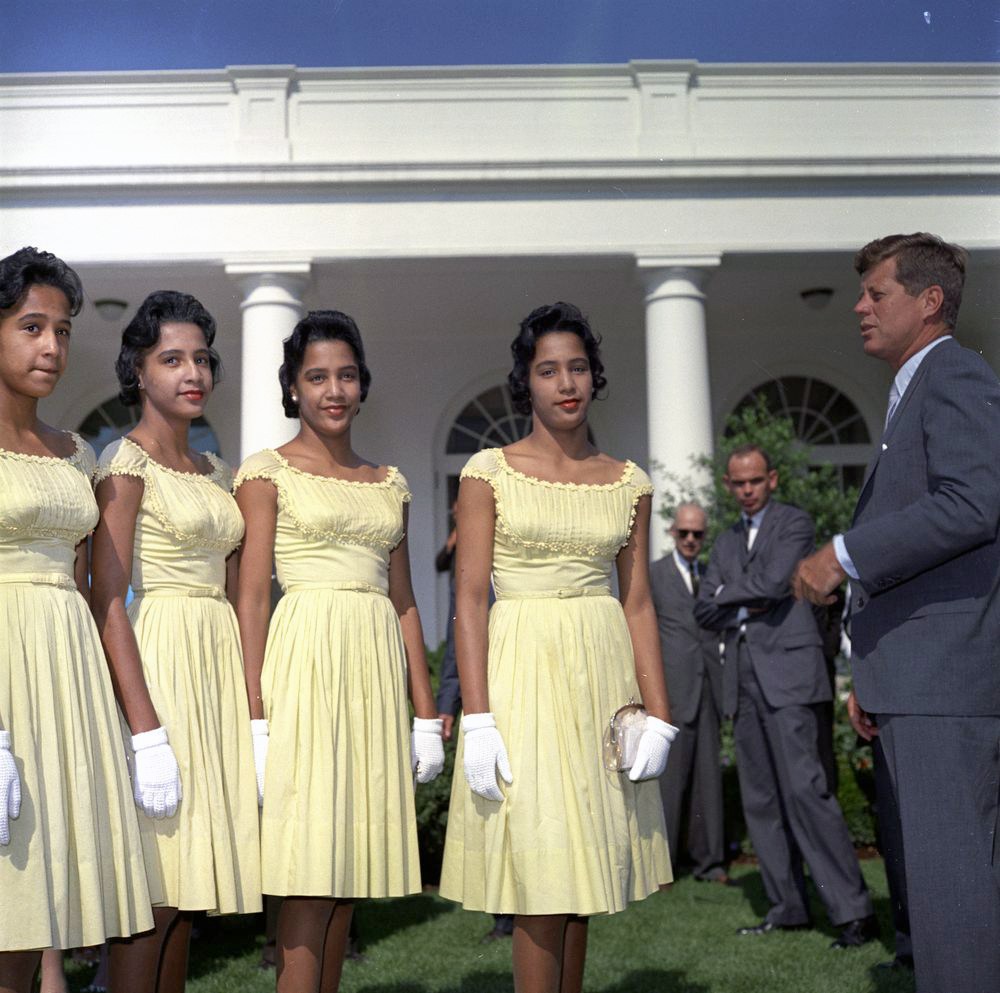
The Quads were adopted by Charles and Elma Saylor, who moved them to Yanceyville, and their travels became more frequent. They flew to Chicago at the invitation of Ebony publisher Johnnie Johnson. He featured them on his cover four times, appeared in Chicago’s star-studded Bud Billiken Parade, went on TV with Roy Rogers and Texas Pete, and would go on to appear in many more ads and make TV appearances. At thirteen (1959), the sisters performed as a string quartet in the annual Orange Blossom Festival in Miami, Florida, and at sixteen (‘ 62), they were featured in a Pet Milk ad for an autographed picture. Many remember them most from their visit to meet Presidents Harry S. Truman and John F. Kennedy.fultz-quads

fultzquads1

Pet Milk became the first to offer nonfat dry milk, an advance over the powdered milk developed in the 1920s. Sales soared when Pet Milk took advantage of the post-war baby boom and promoted The Fultz Sisters, a national sensation due to their rarity, making 1950 the all-time-high sales year for Pet Evaporated Milk.

“For no matter what the public thought, the highly publicized Pet Milk advertising contracts had brought in just enough money—$350 a month— to keep the Fultz Quads off North Carolina’s welfare rolls.” (Chares L. Sanders, Ebony Magazine, November 1968)

Sadly, all the Fultz sisters developed breast cancer later in life, with only one sister who survived it (Mary Catherine).

SOURCES:
EBONY, “The Fultz Quads” by Charles L. Sanders, Nov. 1968.

Ebony’s Spread on the Sisters can be found on Google Books HERE (Page 212) (Its cool going through the Ads from 1968 too!)

News & Record

http://wc.rootsweb.ancestry.com/cgi-bin/igm.cgi?op=GET&db=caswellcounty&id=I37423

“And then there was one” by Staff Writer Lorraine Ahearn, Aug. 2002.

http://www.roccomanzi.it/IMP-VITAMINERALI/SCIENZIATI/scienziati-docu/klenner/FultzQuadswasone_file/FultzQuadswasone.htm

Talking Stuff Blog

https://talkinstuff.wordpress.com/2015/06/10/the-fultz-quadruplets/

Black History Fun Fact Friday – Timbuktu

2344_1timbuktu_060Timbuktu is a city in the West African nation of Mali, situated north of the River Niger on the southern edge of the Sahara Desert. Founded by nomads, it is most known as “The City of Gold.” While some scholars and proposed travelers attempt to debunk the “myth” (claiming to have reached the city where the homes are made of mud bricks), Timbuktu was one of the most important centers of trade and intellectual life in West Africa, flourishing through participation in long-distance trade networks directed north across the Sahara. The city is known as having traded goods that flowed through the center including salt, ivory, and gold. One of the reasons for Timbuktu’s wealth is the water supply. There are many wells containing sweet water in Timbuktu, where the Niger in flood canals delivers the water to the city. Grain and animals are abundant, so that much milk and butter is consumed.

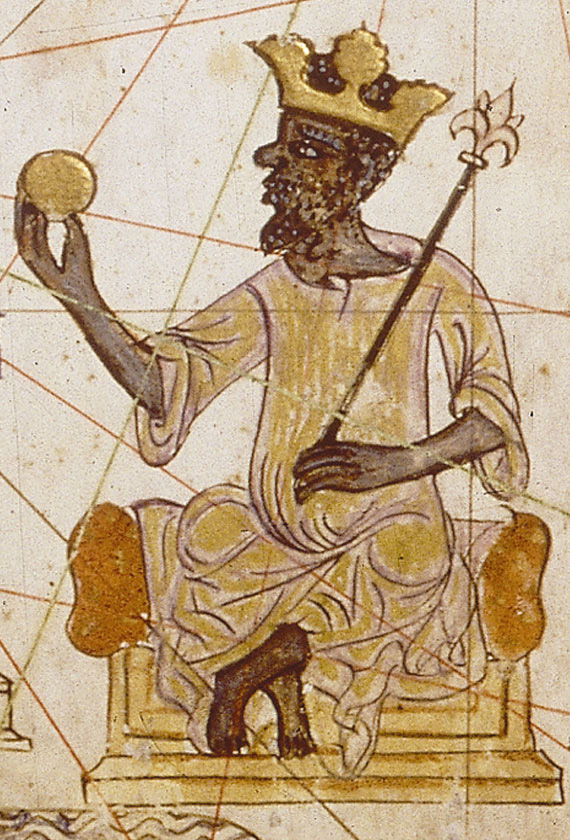
A picture from a medieval atlas, drawn in modern day Spain. It shows the King of Mali, Mansa Musa, who reigned between 1312 and 132, wearing a Gold Crown, Gold Ingot, and Gold Scepter.

During the fourteenth century, the story of Timbuktu as a rich cultural center spread throughout the world. The beginnings of which can be traced to 1324, when the Emperor of Mali made his pilgrimage to Mecca via Cairo. In Cairo, the merchants and traders were impressed by the amount of gold carried by the emperor, who stated that the gold was from Timbuktu. Furthermore, in 1354 the explorer Ibn Batuta wrote of his visit to Timbuktu and told of the wealth and gold of the region. Thus, Timbuktu became renowned as an African El Dorado, a city made of gold.

A great book to read is “From Babylon to Timbuktu” by Rudolph R. Windsor:

61nHWsjEGjL._SY344_BO1,204,203,200_“Until comparatively recent times, knowledge that black Africa was the seat of highly evolved civilizations and cultures during a time when Europe stagnated was limited to a small group of scholars. That great empires, such as Ghana, and later, Mali flourished for centuries while Europe slept through its Dark Ages almost has been ignored by historians. Thousands of years before that, civilization began with the black races of Africa and Asia, including the Hebrews, who were jet black. Because of the scarce literature on the contributions of blacks to world civilization, most people today hold the erroneous opinion that the black races have little real history. It was not known, for instance, that the ancient Hebrews, Mesopotamians, Phoenicians, and Egyptians were black. Now, a growing body of literature is presenting the illustrious history of blacks and their enormous contributions.”

And that’s it for this week’s episode of Black History Fun Facts. Below is last weeks episode in case you missed it:

Publicationbhff


Week #7:

The Immortal Life of Henrietta Lacks