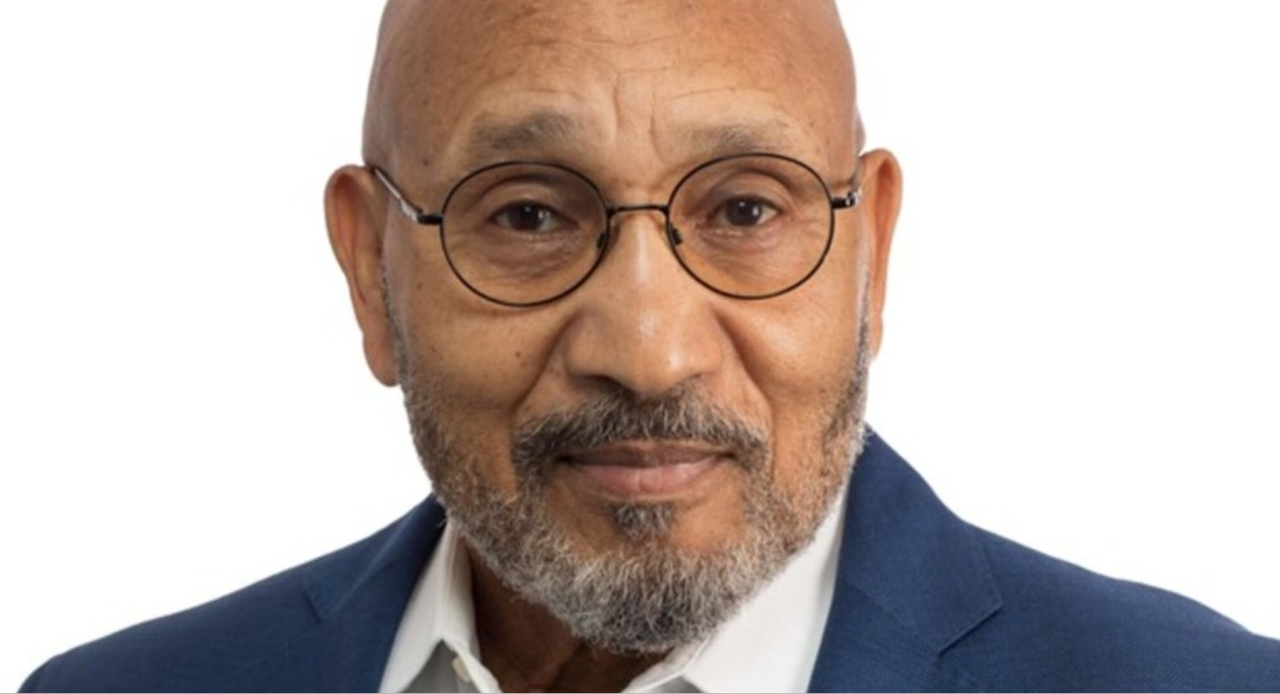
Black History Fun Fact Friday – Emmit McHenry

The internet. We all know it, and in 2024, babies are born with it in their hands.

In today’s world, looking something up on the web is normal behavior, and for some, the first thing they do when they wake up in the morning. Whether you grab your phone or use the computer to log in at work, we don’t go a day without typing something into a search bar or scrolling on social media.

But it was not always this way.

Before anyone ever heard of the internet, its seeds were planted in 1957 in the historical context of the Cold War. In the 1960s, government researchers also used it to share information.

Today, we are learning about the man who created the computer code for .com.

Emmit McHenry was born in Forrest City, Arkansas, in 1943 and was raised in Tulsa, Oklahoma, renowned for being a prosperous Black community. While McHenry came of age years after the Tulsa Race Riot, footage from Pastor Solomon Sir Jones shows that by 1925 and even into the 1940s, Black Wall Street was rebuilt.

Thus, McHenry grew up surrounded by people with a strong sense of community and entrepreneurship.

“It was in a way kind of an extended family and they took pride in your doing well. So if you did well, the teachers really got excited about that and worked with you on it. Yeah, it was a really wonderful experience for me.”

– Emmit McHenry on growing up in Greenwood

The Victory of Greenwood

Emmit McHenry

McHenry’s great-grandfather was a carpenter and whiskey still operator by trade. Great-grandmother McHenry was a businesswoman in addition to a farmer. When it came time to bring their crops to market, the Black farmers and sharecroppers in Arkansas knew they could rely on her to negotiate fair rates for them.

Emmit McHenry graduated from Booker T. Washington High School and pursued a Bachelor of Science in Communications from the University of Denver on a wrestling scholarship. He majored in physics, but when he discovered communications, he changed his major. He graduated with a degree in communications in 1966.

McHenry and his partners established the engineering firm Network Solutions in 1979. However, like many other black-owned businesses, they had trouble getting funding. McHenry and his associates maxed out their credit cards and mortgaged their residences. The business prospered. Still, a deal with the National Science Foundation was the diamond in the crown for Network Solutions. The first internet domain name addressing system for the US government was covered under the contract.

That’s when McHenry created a complex computer code that was not complex to ordinary people searching the web. It allowed those of us without communications degrees to understand the internet and send and receive emails without having to study computer science.

We know McHenry’s invention today as .com.

Emmit McHenry’s work paid off on Dec. 31, 1992, when Network Solutions was the only bidder on a National Science Foundation grant to further develop the domain name registration service for the Internet. Network Solutions was granted an exclusive contract as the sole domain name registrar for .com, .net, and .org. These top-level domain (TLD) names continued the work Network Solutions was already doing. 


For More Black History Fun Facts You Didn’t Learn in School, be Sure to Visit the Archives Here

And Grab Your Copy of the Book Here!

Black History Fun Fact Friday – Lonnie Johnson and the Super Soaker Water Gun

Black History Fun Fact Friday is back!


May has always been an exciting month. As a kid, I looked forward to the school year ending and the warm weather welcoming me just in time for my birthday at the end of the month. Summer also means swimming and dancing in the water from the fire hydrant and water guns!

Introducing Lonnie Johnson, the inventor of the super soaker!

LJ

Lonnie Johnson was born in Mobile, Alabama, on October 6, 1949. Signs of Lonnie’s brilliance could be seen when he was a child reverse-engineering his sister’s baby doll to understand how the eyes closed. He also built his own go-cart from a lawnmower engine he attached to scraps he found in the junkyard. 

Before enlisting in the Air Force, he worked as a research engineer at Oak Ridge National Laboratory. He also worked at the Air Force Weapons Laboratory in Albuquerque, New Mexico, as the acting chief of the Space Nuclear Power Safety Section.

Johnson holds a B.S. degree in Mechanical Engineering, an M.S. degree in Nuclear Engineering, and an honorary Ph.D. in Science from Tuskegee University.

In 1989, Johnson formed his own engineering firm and licensed his most famous invention, the super soaker. It generated over $200 million in retail sales and became the number-one-selling toy in America.

Today, Johnson is president and founder of Johnson Research and Development Co., Inc., a technology development company, and its spin-off companies, Excellatron Solid State, LLC; Johnson Electro-Mechanical Systems, LLC; and Johnson Real Estate Investments, LLC.

As of 2023, Lonnie Johnson’s net worth was an estimated $160 million. This substantial fortune is primarily the result of the royalties he received for the Super Soaker, which generated billions of dollars.

So the next time your child plays with a super soaker, be sure they know about its amazing inventor!

gettyimages-50472413


For More Black History Facts You Didn’t Learn in School, Be Sure to Get Your Copy of the Book Here!

1687711849

Add “Black History Facts” on Goodreads!

We are a month away from release!

If you are on Goodreads, please be sure to add my new book, Black History Facts You Didn’t Learn in School, to your Want to Read list!

You may post your review there now if you’ve reviewed an early copy.

If you want a free ecopy to read in exchange for an honest review, I have a few I am willing to give away! The only requirement is to leave a review on Amazon.

You can preorder the paperback, hard copy, eBook, or bundle now at blkhistorybook.com.

About.

Black History Facts You Didn’t Learn in School is a historical guide on Black Americans’ accomplishments, contributions, and struggles. It includes the experiences of Black individuals who have often been marginalized, overlooked, or omitted from mainstream historical accounts.From the resilience of women like Anna Douglass, first wife of Frederick Douglass, to the many Black communities that prospered, recognizing and celebrating Black history helps to ensure that these stories are acknowledged and that the achievements and resilience of Black people are valued and appreciated.


Order Your Copy Here

http://www.blkhistorybook.com | 2.24.24

Black History Fun Fact Friday – The 400th Year

Welcome to the first Black History Fun Fact Friday episode of 2019! BHFFF was founded in 2015 on this blog where we give doses of Black History year around. For more episodes, be sure to visit the page where we have archived all our episodes so far HERE.


Q. Why are people talking so much about the 400th Year? What is this?

2019 is being called the 400th Year because it marks the 400 years since American slavery. Founded in 1607, America celebrated her 400 year anniversary in 2007. Twelve years from 1607 (1619) she brought to her shores the first 20 persons of African descent to begin American slavery.

At the top of the year, a group of celebrities traveled to Ghana to celebrate the opening of 2019.  Ghana is one of many African countries offering African Americans easy return in a second exodus type commemoration they are calling The Year of Return, Ghana 2019. While as early as May 1616, blacks from the West Indies were at work in Bermuda providing knowledge about the cultivation of tobacco and in 1526, enslaved “Africans” were part of a Spanish expedition to establish an outpost on the North American coast in present-day South Carolina, 1619 remains an important  part of Black American history because it was the beginning of American slavery as we know it today, where the first Blacks appeared in Virginia as captives to begin the American Trans-Atlantic Slave Trade. August 2019 marks 400 years and many are commemorating it with what has been coined The Year of Return.

“A Dutch ship carrying 20 Africans arrived in Jamestown, Virginia, on Aug. 20, 1619, a voyage that would mark the beginning of slavery in the American colonies. The number of slaves continued to grow between the 17th and 18th centuries, as slave labor was used to help fuel the growing tobacco and cotton industries in the southern states. At the end of the Civil War in 1865, some 4 million slaves were set free. However, racial inequalities and violence toward newly freed slaves would persist in the country throughout the 1860s and 1870s.” – BET National News

In September of 2010, I had the opportunity to visit Jamestown Virginia and to stand on the banks of the James River where 20 of the first documented arrival of “Africans” were brought to the colony of Virginia. The 20 captives were removed from the Portuguese slave ship, San Juan Bautista, following an encounter the ship had with the White Lion and her consort, the Treasurer, another English ship as documented by John Rolfe, Virginia’s first tobacco planter. He wrote about the account of the African landing in a letter to the Virginia Company of London. The captain of a Dutch warship that arrived in Jamestown in August 1619 “brought not any thing but 20 and odd Negroes, wch the Governor and Cape Marchant bought for victuale . . . at the best and easyest rate they could.”

“The slaves were herded onto a Portuguese slave ship in Angola, in Southwest Africa. The ship was seized by British pirates on the high seas — not brought to Virginia after a period of time in the Caribbean. The slaves represented one ethnic group, not many, as historians first believed.” – Lisa Rein, Mystery of Va.’s First Slaves Is Unlocked 400 Years Later

It is interesting that historians have now verified that the enslaved represented one ethnic group and not many because for too long we’ve grouped the many peoples of Africa into one category. We have been brainwashed into referring to them as Africans instead of by their true nationality. Africa is a continent made up of over fifty countries and many different nationalities. When the first 20 Blacks were brought to the Americas, they were not just Africans. They were part of an entire nation of people. They were descendants of the ancient Israelites and brought to America as part of biblical prophecy. (Gen. 15:13) The most revealing account of the Hebrew heritage of these Africans is told in the memoir of Olaudah Equiano, known in his lifetime as Gustavus Vassa, a writer, and abolitionist from the Igbo region of what is today southeastern Nigeria according to his memoir. He states:

“And here I cannot forebear suggesting what has long struck me very forcibly, namely, the strong analogy…which appears to prevail in the manners and customs of my countrymen and those of the Jews, before they reached the land of promise and particularly the patriarchs…an analogy which would induce me to think that one people sprang from the other. We practiced circumcision like the Jews and made offerings and feasts on that occasion in the same manner they did. Like the Israelites in their primitive state, our government was conducted by our chiefs or judges, our wisemen and elders; and the head of the family, with us, enjoyed a similar authority over his household with that which is ascribed to Abraham and the other patriarchs.” – The Life of Olaudah Equiano, Chapter 1, pp 22-24)

Other examples can be found among the Ashanti Tribe of Ghana, where the priesthood is hereditary to a specific family, such a family has little or no possessions, is exempt from all taxes, supplied with food and advises the king. Compare this with the Levites of ancient Israel. While not all “Blacks” are Israelites (Africa is filled with many nations of Black people), it is clear that many of the cultural differences of the many nations of Africa are Hebraic in nature and that many of these customs have been hidden from the world. For example, The name Ashanti, the predominant tribe in Ghana, formerly known as the Gold Coast, comes from the Hebrew word “Ashan” meaning, “smoke.” The name Ashan was the name of a city located in southern Israel.

“Their sanitation laws closely mirror that of what is written in the Torah. They were originally a pastoral people until they were forced to move into the bush, which is similar to what has happened to the Igbos. The selling of prisoners of war as slaves or the enslavement of their fellow man in order to pay off debt as it is found in the Torah, the five Books of Moses. Also when one dies, the place in which a person has expired is cleansed and locked up for nine days, which is like how in Leviticus 14 a room is shut up for seven days. They never fought on Saturday (Sabbath) they started their calendar in the fall like Jews and Hebrews. The Ashanti society is a Patriarchal one.” – Ashanti of Ghana, Hebrew Igbo

Slavers went into the interior of the African continent in search for a specific people. They may have practiced the laws of the Old Testament, wore fringes, kept the Sabbath and lived their lives in striking resemblance of the Israelites of the bible, their ancestors.

“The early 1600s was a time of war and empire-building in Southwest Africa; Portuguese traders under the rule of the king of Spain had established the colony of Angola. The exporting of slaves to the Spanish New World was a profitable enterprise. The Portuguese waged war against the kingdoms of Ndongo and Kongo to the north, capturing and deporting thousands of men and women. They passed through a slave fortress at the port city of Luanda, still Angola’s capital.” – Rein, L.

The Treasurer and the White Lion each took 20 to 30 enslaved Israelites before the San Juan Bautista continued to Veracruz. They landed at Jamestown within four days of each other and traded the Hebrews for provisions. The Treasurer then sailed to Bermuda, dropping off more of the enslaved, and returned to Virginia a few months later, trading the final nine or ten more. In 1640, John Punch, a runaway indentured servant, was the first documented slave for life and in 1662, slavery was recognized in the statutory law of the colony.

In 1662, Virginia legally recognized slavery as a hereditary, lifelong condition. Even before this statute appeared, however, many blacks were being held as slaves for life, and as black laborers gradually replaced white indentured servants as the principle source of agricultural labor during the second half of the seventeenth century, laws restricting the activities of Africans were being introduced, codifying slavery as a race-based system.- The Slave Experience: Legal Rights and Government.

And now you know why 2019 is being deemed the 400th Year, why this is a great time to revisit history (not just the bad stuff but the amazing contributions of Blacks to America over the years as well) and why many of your favorite celebrities brought in 2019 on the continent of Africa.

August 20, 1619 – August 20, 2019 = 400 years.

Black History Fun Fact Friday – A Brief History of Race Riots in America

New Orleans Riot, 1886 – On July 30, 1886, white men attacked blacks parading outside the Mechanics Institute in New Orleans, where a reconvened Louisiana Constitutional Convention was being held. Republicans in Louisiana had called for the convention as they were angered by the legislature’s enactment of the Black Codes.

Wilmington North Carolina, 1898 – The most popular accusation in history was that Black men raped white women. So much so that most of the lynchings that took place was because of it. And when D.W. Griffith’s 1915 film “Birth of a Nation”, portrayed black men as savages seeking to rape white women contrasted against the positive portrayal of the Klan, it produced a second wave of the organization that began in Atlanta, Georgia, and quickly spread to a peak membership of millions by the 1920s. So, when a prominent black newspaper editor named Alex Manly wrote an editorial suggesting that relations between White women and Black men were consensual, 500 white men burned Manly’s office and fourteen African Americans were killed in the riot.

East St. Louis, 1917 – On July 1, 1917, a Black man was rumored to have killed a white man. A riot thus followed with whites shooting, beating and lynching African Americans. The violence continued for a week and the deaths range from 40 – 200. As a result, some 6,000 Blacks fled St. Louis.

Red Summer, 1919 – As you can ascertain, this year was referred to as Red Summer because of the mass blood spill of race riots this year. Twenty-six cities experienced riots including, but not limited to: Longview TX, Washington, DC, Knoxville, TN, Omaha NE, and Chicago. As I speak of often, the racial tension did not just occur in the South and in 1919 particularly, racial tensions were especially high in the North. Chicago experienced the most violence when on July 27, 1919, seventeen-year-old Eugene Williams was swimming with his friends in Lake Michigan and entered a “Whites Only” area. White men threw rocks at Williams and hitting him in the head, he drowned. After police refused to arrest the murderer, fights between White and Black gangs became the spark that started a race riot that lasted through August 3rd. It escalated so that the state militia had to be called in.

Tulsa, Oklahoma, 1921 – Of course, the renowned Tulsa Race Massacre Riot. A young white woman accused Dick Rowland of grabbing her arm in an elevator. After arresting Rowland, accounts of the assault were exaggerated and a mob gathered outside the courthouse. A mob of Black men went to the courthouse, armed, to protect Rowland and after gunfire exchanged, as they say, it “all hell broke loose.” The Greenwood neighborhood of North Tulsa, the wealthiest Black community in the country, was systematically burned to the ground. Thousands of homes were destroyed, bombs fell from the sky, and The Oklahoma National Guard was called in. Lost forever was over 600 successful businesses.

Rosewood, 1923 – A neighborhood of predominantly Black entrepreneurs, trouble started in Rosewood when a white woman from a nearby town called Sumner said (once again) that she had been raped and also beaten by a Black man. White men from several nearby towns lynched a random black man in Rosewood in response, causing an outcry among blacks who rallied together. A full on riot was the end result with mobs of whites hunting for black people, lynching them and burning Rosewood homes and structures.

The incident was the subject of the 1997 film, “Rosewood”, directed by John Singleton staring Ving Rhames and in 2004, the state designated the site of Rosewood as a Florida Heritage Landmark.

Harlem Race Riot, 1943 – On August 1st and 2nd, a race riot broke out in Harlem, New York when officer James Collins, shot and wounded Robert Bandy, a Black soldier. It was one of six riots that year related to black and white tensions during World War II.

Detroit, 1943 – Considered one of the worst race riots of the WWII era, The Detroit Riot of 1943 started with a fist fight. (Racial tensions were already high due to confrontations between white and blacks when the Sojourner Truth Housing Projects opened (1942) in a white neighborhood and whites tried to stop blacks from moving in.) A White man and a Black man got into a fight at the Belle Isle Amusement Park in the Detroit River. This turned into a fight between a group of whites and blacks and spilled over into the streets. The violence ended when 6,000 federal troops were ordered in the city. Twenty-Five Blacks and nine whites are reported killed with seventeen Blacks killed by the police.

By now I hope that you are starting to see a trend. A race riot ensues and following is usually some kind of military intervention. (…pay attention.)

The Groveland Four, 1949 – On July 16, 1949, a white couple was traveling and their car stopped on a rural road in Groveland, Florida. The next day, 17-year-old Norma Padgett accused four Black men of raping her. Sheriffs arrested Charles Greenlee, Sam Shepherd, and Walter Irvin. The fourth man, Ernest Thomas, fled the county and was hunted down and killed by a mob of over 1,000 armed Sheriffs. When word spread about the arrest of “The Groveland Four”, an angry crowd of white Klansmen surrounded the jail and the men were hidden and transported to Raiford State Prison. The mob was not pleased. They went on to attack the black section of Groveland, a small town in South Lake County where two of the accused men’s families lived. Black residents were urged to leave town and The National Guard was called in. Meanwhile, the accused men were severely beaten, two sentenced to death (Shepherd, Irvin) and one (Greenlee) to life in prison because of his age.

Watts, 1965 – August has had its share of historical events for sure. From Emmet Till (8/28/55) to the Watts Riots. The Watts Riots began August 11th through August 17th after a white patrolman arrested 21-year-old Marquette Frye, a black motorist. A fight broke out involving Frye, his brother, mother, and the police. Both his mother and brother were arrested and the number of people gathered increased. Almost 4,000 National Guardsmen were deployed, in addition to about 1,600 police officers. Martial law was declared and a curfew implemented. More than 30,000 people participated in the riots, fighting with police, looting white-owned homes and businesses, and attacking white residents. The riots left 34 dead, more than 1,000 injured, and about 4,000 arrested.

Newark, 1967 – On July 12th, a Black cab driver, John Smith, was arrested for illegally passing a police car. He was taken to a police station that happened to also be across the street from the projects. These residents reported that the police beat this man and dragged him from the cab into the station. Word got to Civil Rights Leaders who organized a protest but the protest turned violent. Rioting followed for the next several nights, and the National Guard was deployed. Still, even with the Nations Guard present, the rioting continued.

MLK Riots, 1968 – For those of you under thirty, you may not fully understand the extent to the outcry in the Black community over the assassination of Martin Luther King Jr. It was huge. Riots broke out in 125 cities following the April 4, 1968, assassination. The worst riots occurred in Baltimore, Washington D.C. and Chicago. I remember my Aunt telling us stories about it. I am originally from Chicago and my Aunt (born and raised in Chicago as well) was saying that they had to wear paper bags over their heads going home from school the day the world found out King was dead. Black people were beyond outraged. It was simply dangerous to be on the street. On April 5, looting, arson, and attacks on police increased, and as many as 20,000 people participated in the riots. The National Guard and Marines were dispatched. The riots reached within two blocks of the White House. Twelve people were killed, and more than 1,200 buildings were destroyed.

Crown Heights Race Riots, 1991 – August, this month makes history again. On Aug. 21, 1991, in the Crown Heights neighborhood of Brooklyn New York, a car driven by Yosef Lifsh hit another car and then crashed into two black children, both age 7. Residents of Crown Heights gathered and began attacking Lifsh and other Hasidic Jews. A city ambulance crew and the Hasidic-run Hatzolah ambulance service arrived on the scene. The Hatzolah service brought injured Jews to the hospital, and the black children were transported by the city crew. Gavin Cato, one of the black children, died. Black residents felt the Jews were given preferential medical treatment and began throwing rocks and bottles at police and at the homes and businesses of Hasidic Jews. The riots raged for three days. More than 150 officers about 40 civilians were injured in the rioting.

Rodney King Riots, 1992 – On March 3, 1991, Rodney King was pulled over for driving recklessly and someone videotaped the encounter with the police from his apartment balcony. The video shows the officers severely beating Rodney King. On April 29, 1992, a jury acquitted three of the officers and predominantly Black areas of Los Angeles erupted in violence, and six days of riots led to 50 deaths, thousands of arrests and an estimated one billion dollars in property damage.

Ferguson, Missouri, 2014 – On Aug. 9th, officer Darren Wilson shot and killed Michael Brown, an unarmed 18-year-old teenager in Ferguson, Mo. Details of the shooting have been under dispute since the incident. Police said that Brown was shot during an altercation with Wilson. However, a friend who was with Brown at the time said that Wilson shot Brown when he refused to move from the middle of the street and that Brown’s hands were over his head at the moment of the shooting. The following night, protesters filled the streets near the shooting. Police officers arrived on the scene with riot gear, including rifles and shields. The protest turned violent and images from cell phones went viral on social media, including several accounts of looting.

Baltimore, MD, 2015 – After the funeral of Freddie Gray, the 25-year-old African American who died of a severe spinal cord injury suffered while in police custody, angry residents took to the streets of northwest Baltimore to protest another death of a black man at the hands of police. Gov. Larry Hogan declared a state of emergency, called in the National Guard, and set a curfew as rocks were thrown, cinder blocks and buildings and cars set on fire.

***

I’ll stop here as there is no time for the countless historical accounts of race wars and riots in this (U.S.) country. What is happening is very much American and there is nothing new about it. In fact, it has been going on nearly 400 years. What is happening is what has been happening for a long time and the fact that people are outraged is just proof that we have not been paying attention, and have thus bought into the hype that “those days” were over. (There’s been Lynchings as late as 2010, such as 26 year old Frederick Jermaine Carter, a Black man found hanging in a Mississippi tree in a white suburb on Friday, December 3, 2010.) What has been done, is what will be done, and there is nothing new under the sun. Don’t marvel, just pay attention.

Black History Fun Fact Friday – Historic Rivals: W.E.B. Dubois vs. Booker T. Washington

Today, I thought I’ll do something fun. I would like to do a few of these so let’s call this part one. Let’s see who was at war and why. Of course, we have to start with the famous rivalry of all time:

W.E.B. Dubois vs. Booker T. Washington

Yecheilyah sits in a chair with papers as W.E.B. Dubois and Booker T. Washington step into the ring. Dubois adjusts his tie, shaking hands with members of the NAACP (National Association for the Advancement of Colored People….am I the only one who finds it odd this organization still refers to us as Colored people?? Deuteronomy 28:37…anyway, as usual, I digress lol).

Washington sits in a chair. Surrounded by students, he crosses his legs and flips through a book.

“Ya know,” Washington looks up, “I’ve read The Souls of Black Folk. I must say I am not very impressed.”

Dubois brushes lint from his jacket, “I didn’t think you would be.”

EC: *Clears throat*. Alright gentlemen. We’re about to start.

NAACP members and students step down from the ring and sits in the audience with those reading this blog.

Washington puts his book to the side. “Noted”, he said staring at Dubois. “Besides, I must say Yecheilyah, I love what you’re doing with your work. It is my belief that we should be accountable for ourselves in every way.

EC: “Than…”

“Booker, your proposal”, interrupted Dubois, “that we should take accountability for ourselves is not only unfounded but also paradoxical. It would be difficult for Negros to gain any real power, for instance, if they are denied the right to vote.”

Washington put up a hand, “IF, Negros had real power, it would be in education in the crafts, industrial and farming skills and ownership of their own businesses.”

“And how, Mr. Washington, do you suppose Negros could operate these businesses sufficiently without an education?”

Washington sighs, “I do not care to venture here an opinion about the nature of knowledge. It is clear to anyone who reflects on the matter that the only kind of knowledge that has any sort of value for a race is knowledge that has some definite relation to the daily lives of the men and women who are seeking it.”

Dubois throws his hands into the air, “You’re promoting submissiveness by asking the Negro to relinquish fundamental privileges. First, you ask him to relinquish his political rights and then his civil rights. This only speeds up the process to which Negros have regressed.”

Washington stands, pointing his finger at Dubois “You’re taking my words out of context. I am simply stating that it is my aim to teach students to live a life and make a living by which after they graduate they can return to their homes and find profit and satisfaction in building up the communities from which they’ve come.”

EC: Gentlemen, please. We don’t have time for this. I respectfully ask for you to both be silent so that we can give the people a little bit of a background on you. Is that alright?

NAACP member runs up to ring, hands Dubois a drink of water as he loosens his collar and takes a drink. Member returns to his seat among the bloggers, “I concur. Let’s move on”, said Dubois.

Washington returns to his seat, crosses his legs, “Indeed.”

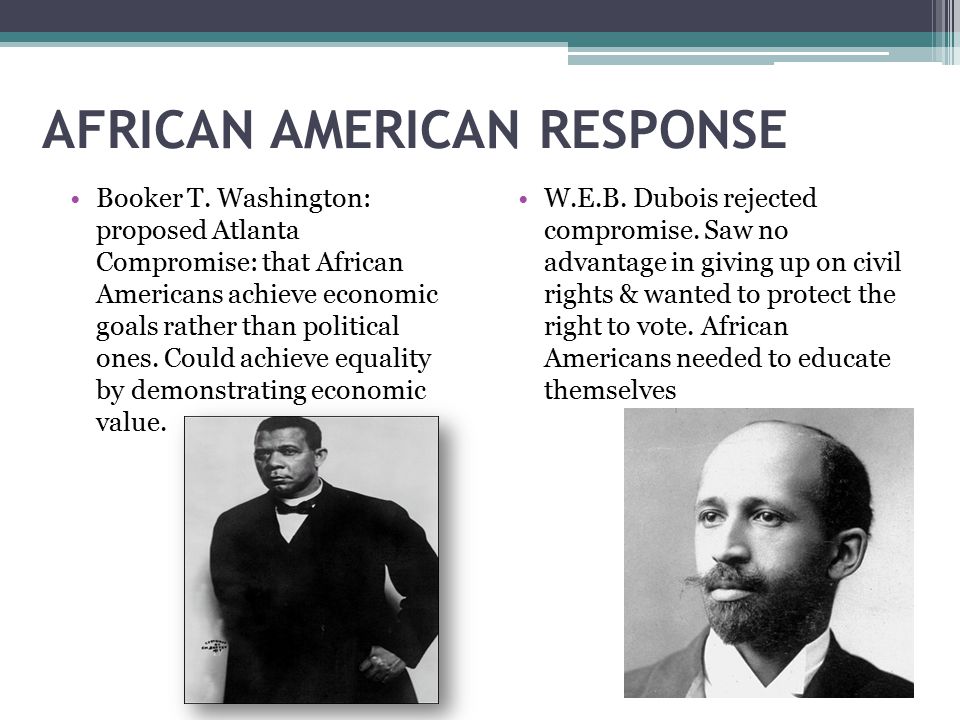
As you can see, these two were not besties. Tensions always existed among Black intellectuals and Blacks who were more grassroots and this separation exists today. W.E.B. Dubois and Booker T. Washington are great examples of this.

William Edward Burghardt DuBois was born free in 1868 in Great Barrington, Massachusetts in an integrated community. He attended local schools and excelled in his studies. When Dubois finally encountered racism, the experience changed him and he decided to further his education with a focus on equal rights for Black Americans. Dubois was the first Black man to earn his Ph.D. from Harvard in 1895.

Cheers erupt from members of the NAACP. Dubois takes a bow.

Booker T. Washington was born into slavery in 1856 in Virginia. After the Civil War, he worked in a salt mine and as a domestic for a white family and eventually attended Hampton Institute, one of the first all-black schools in America. After completing his education, Washington began teaching and in 1881 was selected to head The Tuskegee Normal and Industrial Institute in Alabama. The school’s purpose was to give African Americans practical, hands-on skills and would later be known as Tuskegee University.

Whistles come from Washington’s students. He waves.

Dubois wanted to focus on creating an educated black intellectual class he called The Talented Tenth, in which ten percent of the intelligent of the race would lead and guide the direction of the other ninety percent.

Dubois: That is right. Political power and sovereignty should remain important.

*Washington rolls eyes*

Washington on the other hand, born into slavery, thought former slaves and their descendants should be financially independent and that black communities could prosper only by way of owning their own businesses.

Washington: Indeed. Blacks should elevate themselves through hard work and material prosperity.

*Dubois coughs*

Both sought to advance the plight of African Americans and by the early 20th century both Washington and Dubois were two of the most influential Black men in the country. However, their ideologies were very different. Dubois was more focused on education and civil rights as the only way to achieve equality. Washington was more grassroots and focused on fundraising for the Institute and teaching young people how to work with their hands, farm, and entrepreneurship. Dubois and Washington’s differences came to a head in 1903…

Washington: How do you young people say it now? ‘Bring that up.’

Dubois: Let’s hear the entirety of the matter first.

EC: Umm. If I can just finish this real quick. I’m almost done.

Washington: May I ask a question?

EC: Sure, of course.

Washington: What is a Bestie?

EC: Its just short for like Best Friends.

Washington: I see. And I assume one would have to be friends first before they are best friends. Am I correct in this assumption?

Dubois: You are taking up all the time.

EC: We do need to move on but I’d love to explain it to you later.

Washington: I would like that.

*Dubois shakes his head*

The men go silent. Smiles and waves at readers.

Dubois and Washington’s differences came to a head in 1903 when Dubois published The Souls of Black Folk where he directly criticized Washington and his approach.

EC: That’s a little below the belt, don’t you think?

Dubois: Well, Negros should stand up against Washington’s contentions.

EC: Dang.

Washington: I am not going to justify that with a response.

Dubois: Then don’t respond.

Washington: Do not tempt me, Mr. Dubois.

EC: Well, that’s our time. Gentlemen, thank you, both for taking the time out of your super busy schedules to have this discussion. I know you have lives to save. Literally. I do hope you can find some common ground.

Washington: I doubt it.


In the end, Dubois and Washington did agree on something. Though they had two different ways of going about it, they each thought education was important to advancing ones life.

Stay tuned for our next rivals!

Black History Fun Fact Friday – Medical Apartheid

This Week’s episode of Black History Fun Fact Friday is the recommendation of Harriet Washington’s Groundbreaking book Medical Apartheid.

ec2d5b63c1c9fe0a8ec648f7f75c3fd1

Medical Apartheid is about the deliberate infection of people with deadly or debilitating diseases, exposure of people to biological and chemical weapons, human radiation experiments, injection of people with toxic and radioactive chemicals, surgical experiments, interrogation and torture experiments, tests involving mind-altering substances, and a wide variety of others. Medical experiments on children, the sick, mentally disabled individuals, and most especially Blacks, often under the guise of “medical treatment” go back for centuries.


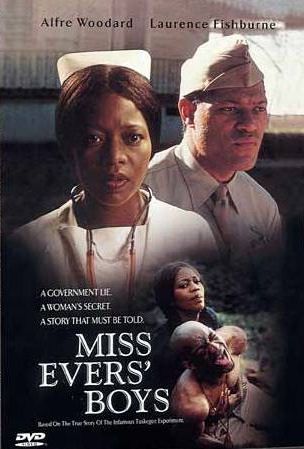
ea_d_38868_0_MissEversBoysOne well-known case of experimentation on Blacks is The Tuskegee Syphilis Experiment, a clinical study conducted between 1932 and 1972 by the U.S. Public Health Service to study the natural progression of untreated syphilis in rural African-American men in Alabama. Mrs. Evers Boys starring Alfred Woodard and Lawrence Fishburne is a movie modeled after this experiment. The men were told that they were receiving free health care from the U.S. government and for forty long years had to tackle the deadly side effects of a disease many of them didn’t know they had. Also, it must be stated that many of these men did not previously have the disease before the experiments began.

The Public Health Service started working on this study in 1932 during the Great Depression, in collaboration with the Tuskegee Institute, a historically black college in Alabama. Investigators enrolled in the study a total of 600 impoverished sharecroppers from Macon County, Alabama. Of these men, 399 had previously contracted syphilis before the study began, and about 201 did not have the disease. Because these men were poor and often had no access to free medical care, the enticing sound of free medical care, meals, and free burial insurance for participating in the study prompted many of the most reluctant to take part. None of the men infected was ever told he had the disease, nor was any treated for it with penicillin after this antibiotic became proven for treatment.

According to the Centers for Disease Control, the men were told they were being treated for “bad blood“, a local term for various illnesses that include syphilis, anemia, and fatigue.

9780385509930_custom-11bb499dd9e2430b63af7a3b00d4cbf9b26dd62c-s6-c30The product of years of research, Medical Apartheid is an excellent book and source of study by Harriet A. Washington on the dark history of medical experimentation on Blacks from the colonial times to the present. She speaks in depth about the history of such organizations as Planned Parenthood and The Negro Project, known previously as The American Birth Control League (whose true purpose was to rid the world of so-called “weak breeds” who were downgrading the American population through a system known as Eugenics), to other frightening tools on unwilling and unknown people.

Throughout the 1840s, J. Marion Sims for example, often referred to as “the father of gynecology”, performed surgical experiments on enslaved African women, without anesthesia. The women—one of whom was operated on 30 times—regularly died from infections resulting from the experiments. In order to test one of his theories about the causes of trismus (locked jaw) in infants, Sims performed experiments where he used a shoemaker’s awl to move around the skull bones of the babies of enslaved women. He also addicted the women in his surgical experiments to morphine, only providing the drugs after surgery was already complete, in order to make them more compliant.

A documentary that is a great compliment to Harriet’s book is called MAAFA, an explosive exposé of the racist eugenics agenda of the abortion industry in the United States. It makes the case that, though abortionists claim to advocate privacy, women’s rights, and reproductive choice, their true motive is racial genocide and ethnic cleansing and goes back for centuries.

MAAFA can be watched for free on YouTube HERE.

Get Medical Apartheid on Amazon HERE.


Publicationbhff

And that’s it for this week’s episode of Black History Fun Facts. Here’s Last Week’s Post in case you missed it:

Week #5: Negro Spirituals