Black History Fun Fact Friday: Inventions

Welcome back to another episode of Black History Fun Fact Friday. I know I know, the sun will be setting soon but, better late than never right? 🙂 Tonight we’ll be looking at: 12 Black Inventors You May Not Know. I was surprised to find that many of them either died recently (2000-) or are still alive. Enjoy:

1. Lewis Latimer (1848 – 1928)

Lewis Latimer (1848 – 1928)

What He Invented: The Carbon Filament For The Light Bulb.
Why It’s Important: Latimer is one of the greatest inventors of all time. Latimer helped make the light bulb a common feature in households. In 1881, he received a patent for inventing a method of producing carbon filaments, which made the bulbs longer-lasting, more efficient and cheaper.
In 1876, he worked with Alexander Graham Bell to draft the drawings required for the patent of Bell’s telephone.

2. Patricia Bath (1942-Present)

patricia-bath--600x353
Patricia Bath

What She Invented: The Cataract Laserphaco Probe.
Why It’s Important: Her device used an innovative method of removing cataract lenses with a laser, which was more accurate than the drill-like instruments that were in common use at the time. The New York ophthalmologist’s invention, patented in 1988, helped save the eyesight of millions and even restored sight to people who had been blind for more than 30 years.

3. Otis Boykin (1920 -1982)
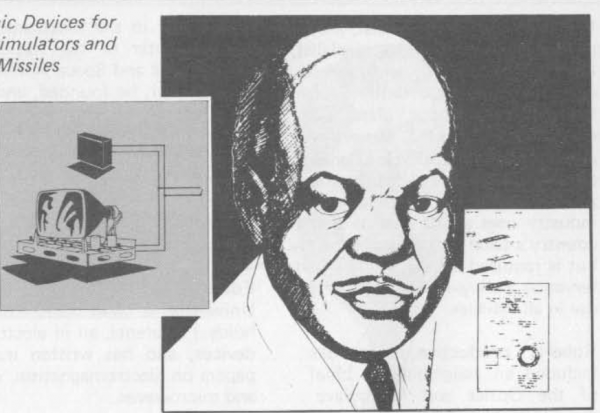
otis-boykin-600x413
Otis Boykin

What He Invented: The Artificial Heart Pacemaker Control Unit.
Why It’s Important: Although there were variations to the pacemaker before Boykin’s invention, the modern-day pacemaker would not exist without his work. Boykin,  also sought and received a patent for a wire precision resistor on June 16, 1959. This resistor would later be used in radios and televisions.

4. Marie Van Brittan Brown (1922-1999)

Marie Van Brittan Brown

What She Invented: Closed-Circuit Television Security

Why Its Important: Marie Van Brittan Brown received a patent in 1969, making her the first person to develop a patent for closed- circuit television security. Brown’s system was designed with four peepholes and a motorized camera that could slide up and down to look at each one. Her invention became the framework for the modern closed-circuit television system that is widely used for surveillance, crime prevention and traffic monitoring.

5. Granville T. Woods (1856-1910)
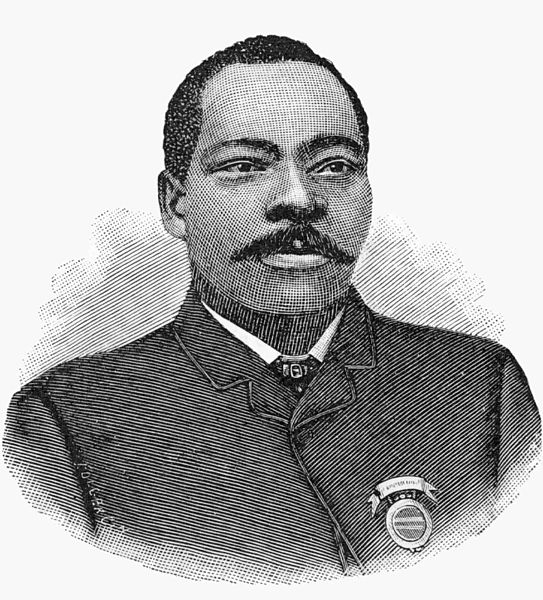
Granville T. Woods
Granville T. Woods

What He Invented: The Multiplex Telegraph.
Why It’s Important: The Multiplex Telegraph was a device that sent messages between train stations and moving trains. His work assured a safer and better public transportation system for the cities of the United States.

6. Mildred Kenner (1924-2004)
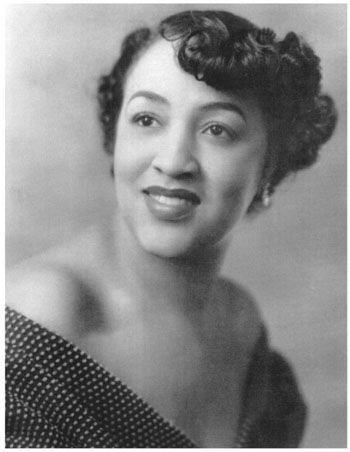
Mary Kenner
Mary Kenner

What She invented: The Sanitary Belt

Why Its Important: Mildred Kenner joined her sister Mary Davidson in patenting many practical inventions. Neither of the sisters had any technical education, but that didn’t stop them from inventing the Sanitary Belt in 1956. Three years later, Kenner invented the mosture-resistant pocket for the belt. While disabled from multiple sclerosis, Kenner went on to invent The Walker and the toilet-tissue holder.

7. Gerald A. Lawson (1940 -2011)
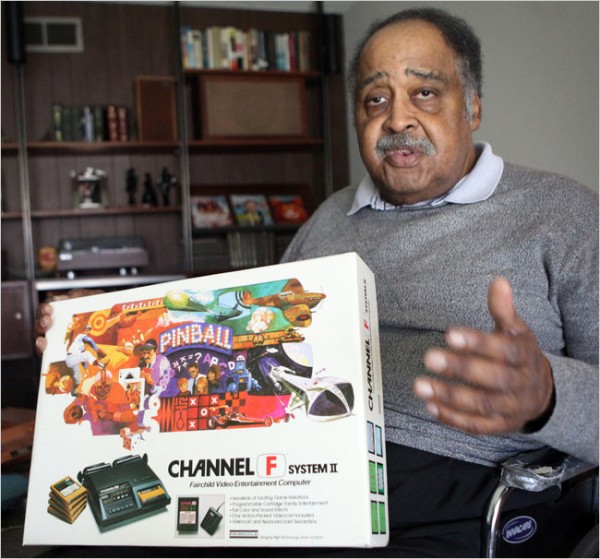
Gerald A. Lawson
Gerald A. Lawson

What He Invented: The Modern Home-Video Gaming Console.
Why It’s Important: Anyone who owns a Playstation, Wii or Xbox should know Lawson’s name. He created the first home video-game system that used interchangeable cartridges, offering gamers a chance to play a variety of games and giving video-game makers a way to earn profits by selling individual games, a business model that exists today.

8. Sarah Goode (1855-1905)

Sarah Goode's Invention
Sarah Goode’s Invention

What She invented: The Folding Cabinet Bed

Why Its Important: Sarah Goode was an entrepreneur and inventor, who was the first African-American woman to receive a U.S. patent. Goode invented a folding cabinet bed which provided people who lived in small spaces to utilize their space efficiently. When the bed was folded up, it looked like a desk. The desk was fully functional, with spaces for storage. She received a patent for it on July 14, 1885.

9. Charles Richard Drew (1904-1950)

Charles R. Drew
Charles R. Drew

What He Invented: The Blood Bank.
Why It’s Important: His research in the field of blood transfusions led to the development of improved techniques for blood storage. He applied his expert knowledge to the development of large-scale blood banks early in World War II. His invention allowed medics to save thousands of lives of the Allied forces.
He directed the blood plasma programs of the United States and Great Britain in World War II, but resigned after a ruling that the blood of African-Americans would be segregated.

10. Marc Hannah ( 1956-Present)
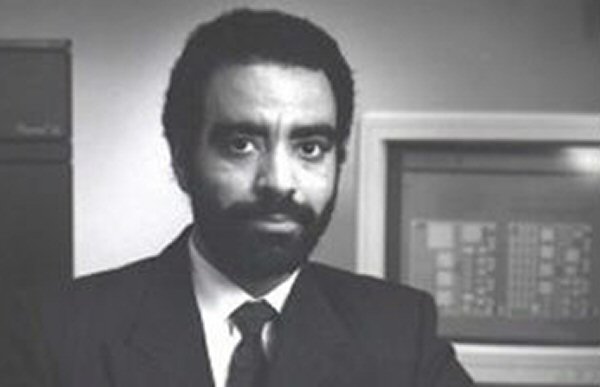
Marc Hannah
Marc Hannah

What He Invented: 3-D Graphics Technology Used in Films.
Why It’s Important: Anyone awed by the special effects in the films Jurassic Park, Terminator 2 and The Abyss should thank Chicago-native Marc Hannah. The computer scientist is one of the founders, in 1982, of the software firm Silicon Graphics (now SGI), where the special-effects genius developed 3-D graphics technology that would be used in many Hollywood movies.

11. Frederick M. Jones (1892-1961)
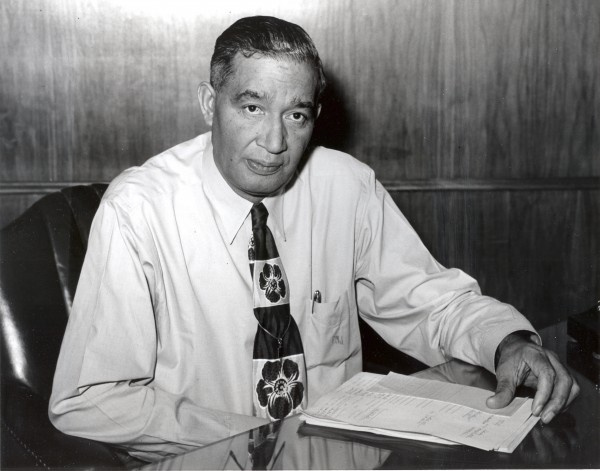
Frederick Jones
Frederick Jones

What He Invented: Mobile Refrigeration
Why It’s Important: His invention allowed the transportation of perishable foods such as produce and meats, which changed eating habits across the country. Thermo King, the company he co-founded, became a leading manufacturer of refrigerated transportation. Jones also developed an air-conditioning unit for military field hospitals and a refrigerator for military field kitchens. Jones was awarded over 60 patents during his lifetime.

12. Alice Parker (1865- death date unknown)

Alice Parker's Invention
Alice Parker’s Invention

What She Invented: Central Heating

Why Its Important: In 1919, Alice Parker of Morristown, New Jersey, invented a new and improved gas heating furnace that provided central heating.

***********************************

Publicationbhff

Thanks for stopping by Black History Fun Facts. Below is last week’s episode in case you missed it:


Week #8: Timbuktu

The Problem With Natural Hair On TV

d76c14824b2956a3eece726e3df53d2b7ac5765d
PHOTO: COURTESY OF ABC.

An article was recently published about the rise of Natural Hair among black women on TV. Below is the featured article. What are your thoughts?  Is there a conscious awareness connected to the sudden surge of natural hairstyles from Blacks? Do you think it matters what state the hair is in?

The Problem with Natural Hair on TV

by Taylor Bryant

“If you tuned in to “How to Get Away with Murder” recently, you know that Viola Davis has spent some screen time without her wig on. It proved not only to be a raw and emotional episode, but it displayed a rare moment: a Black woman with natural hair on a mainstream TV network.

Turn back the clock 20 years, and you’d be hard-pressed to see a Black actress with hair that was anything other than just-got-out-of-the-salon laid. Flip through the tube in 1995, and you might find: the ladies from Living Single, all with straight strands (with some weaves thrown in), the freshly blowdried ‘do’s of Laura and Harriette on Family Matters, and Gina and Pam’s permed-out hair on Martin. Fast-forward a couple more years, and there’s some more representation with a two-for-one curly appearance in the form of the Mowry twins onSister, Sister. But, even their coils were straightened later in the series. As writer, fashion expert, and image activist Michaela Angela Davis points out, non-curly hairstyles that dominated the small screen in the ’90s were very much a sign of the times. “We were in a very conservative moment,” she says. “Relaxers were easier to get, easier to use, weaves came in…and getting straight hair just got more accessible.”

the-walking-dead-clear3danai-gurira11

While we’ve seen Black women’s natural hair on the small screen before the present-day era — these kinds of landmark moments date back to Cicely Tyson’s ’60s role in East Side/West Side — it’s becoming more common, and the new movement has been a long time coming.

6fdc496ef4525cc1cc3bdf5ebefd6b40caba8d5b
PHOTO: COURTESY OF ABC.

What does this modern evolution look like? Actress Tracee Ellis Ross has worn her curly crown in all its glory since 2000 on the (sorely missed) show Girlfriends, and continues to do so today, as the lead actress on ABC’s Black-ish. “I’m very conscious of how I wear my hair on the show, and yet it’s the way I wear my hair as Tracee,” she told Entertainment Weekly in December. “You hire me, you hire my hair, and you hire my ass. It’s all coming with me.” And, who could forget Davis’ wig-removal scene in earlier episodes of HTGAWM, which spurred many a think piece? According to Kent Nelson, the show’s hair-department head, Davis’ character Annalise is “unmasking” herself. “The armor and mask that she goes to work in every day is coming off,” he says. It signifies vulnerability, intimacy, and a shedding of society’s expectations. Which brings us to the problem with natural hair on TV right now: Yes, there are a lot more instances of it, but the way characters with it are depicted is not necessarily positive.

Take the Netflix series Orange Is the New Black, where the characters embrace, arguably, the widest range of textured styles in a series today (with the exception of Laverne Cox’s character, who, let’s be honest, would look fabulous with any style). There’s cornrows on Taystee, a short TWA style on Poussey, and, of course, Crazy Eyes’ signature bantu knots. “We really haven’t seen that many characters [like the OITNB ladies] on TV before,” says lead hairstylist Angel DeAngelis. “I think that’s why the show is so relatable and popular; because these prisoners look like people that are out there.”

MSN Reports: “These twins can teach us a lot about racial identity”

As many of you already know, I also happen to be a twin. So naturally, I was drawn to this story. Racial identity also happens to be the central theme of the short story series (Stella Trilogy) I’m writing, each part surrounding a person’s search for identity, knit together by the same blood. Book #1: Between Slavery & Freedom is available now on Amazon, B&N, Kobo, Lulu, iBookstore, etch. In the meantime, check out this article.

BBibCwu.img
© Provided by Vox.com Lucy and Maria Aylmer as children (YouTube)

MSN News Article:

“There’s a set of biracial twins in the UK who are turning heads because one is black and the other is white.” That’s how the New York Post introduced a profile of Lucy and Maria Aylmer, 18-year-olds whose father identifies as white and whose mother is “half-Jamaican” (and, we’re to assume, thinks of herself as black).

It’s just the most recent story of fraternal twins born with such dramatic variations in complexion they’re seen by many — and even see themselves  — as members of two different racial groups.

Each of these situations and their accompanying striking images, is a reminder of how fluid and subjective the racial categories we’re all familiar with are.

What “black and white twins” can teach us about race: it’s not real

Lucy and Maria’s story, and all the other sensational tales in the ” Black and White Twins: born a minute apart” vein are actually just overblown reports on siblings who, because of normal genetic variations that show up in more striking ways in their cases, have different complexions.

But they’re fascinating because they highlight just how flimsy and open to interpretation the racial categories we use in the US and around the world are.

Even the Post’s description of the Aylmer twins is clumsy, asserting that they’re each “biracial,” but stating in the very same sentence that one is white and the other is black.

And the fact that the two, despite having the same parents,  see themselves as belonging to two different racial groups ( “I am white and Maria is black,” Lucy told the Post) proves that there’s a lot more than biology or heritage informing racial identity.

It’s a reminder that the racial categories we use are fickle, flexible, open to interpretation, and have just as many exceptions as they do rules when it comes to their criteria for membership— that’s why they have been described as “not real,” meaning:

  • They’re not based on facts that people can even begin to agree on. (If we can’t even get a consensus that people with the same parents are the same race, where does that leave us?)
  • They’re not permanent. (If Lucy decides one day, like many other people with similar backgrounds, that her Jamaican mother is black and therefore, so is she, who’s to stop her?)
  • They’re not scientific. (There’s no blood test or medical assessment that will provide a “white” result for Lucy and a “black” one for Maria.)
  • They’re not consistent (Other twins with the same respective looks and identical parentage as these twins, might both choose to call themselves black or biracial.)

“Not real” doesn’t mean not important

Of course, none of this changes the fact that the concept of race is hugely important in our lives, in the United States, in the UK where the twins live, and around the world.

There’s no question that the way people categorize Lucy and Maria, and the way they think of themselves, will affect their lives.

That’s because, even though race is highly subjective, racism and discrimination based on what people believe about race are very real. The racial categories to which we’re assigned, based on how we look to others or how we identify, can determine real-life experiences, inspire hate, drive political outcomes, and make the difference between life and death.

But it’s still  important to remember that these consequences are a result of human-created racial categories that are based on shaky reasoning and shady motivations. This makes the borders of the various groups impossible to pin down — as the “black and white” twins demonstrate — and renders modern debates about how particular people should identify, futile.”

The Measurement of Success

booker

I usually don’t like talking a lot about certain historical figures, not because I have less respect for them, but because they are so routinely used. Like, if I hear Martin Luther King and Rosa Parks one more time this month I’ll scream. There are so many other worthy individuals to discuss than to regurgitate the same ten people whose names even the most illiterate in black history knows. So there, had to get that out.

BUT, this is such a great quote 🙂 (lol)

“I have learned that success is to be measured not so much by the position that one has reached in life as by the obstacles which he has had to overcome while trying to succeed.” —Booker T. Washington

This quote does not have to limit itself to one way of seeing success, but in whatever capacity of acheivement. Whatever you put your energy into, if you have practically crossed galaxies to achieve that thing, oh how sweet the victory right? Just a quick snippet of inspiration for all you beautiful people out there. Keep going, the struggle is only gonna make the reward that much sweeter.

Black Beauty

**A little History on this Poem**

This is a 12 year old poem. It has since been revised but this is the original copy that I wrote back when I was a sophomore in High School. It was entered into a contest and it won. I was then to fly to Rio Nevada for the award ceremony but I could not afford to go. I have since performed it many times throughout my High School career at assemblies and talent shows. For me it was my first poem. It was the first poem I wrote that really spoke about something deeper than my personal adolescent issues and reached beyond the childhood perspective I was used to writing about. It was also my first Spoken Word poem, the first poem I ever shared while standing before an Audience. Today I would like to share it with you. (Keep in mind I was only like 15 when I wrote this so bear with me lol):

3e5f6a3262d9712880ca6c3c6f8a8194

BEAUTY
Wake up Black beauty!
Look up black beauty!
And see the mountain range
Stand up Black beauty, know your name
Be the Sun that shines,
I clothe in your sweetness, I see in your eyes
I notice your strength and weaknesses that lies
Time has gone and we have grown,
into these skies of disguise
we are Earth’s insects, its flies.
Walking this ground with our black feet,
sitting at tables eating our black meat,
it is beauty we see.
Working our black railroads
While listening to stories retold
Watching as oceans and seas travel for miles and miles without smirks or smiles,
licking greedy lips,
waiting for boats and ships to please its hips
we are the ground walked upon
We sing and cook with soul offering any hungry person a bowl
We realize the importance of education
that we had before civilization
that we had before coming into the truth of our very own nation.
A nation of many different colors and sizes,
all of various secrets and surprises
We are the proud combination of dark skins,
from small twos to plus sized tens,
we are ALL beautiful.

Black History Fun Fact Friday – Convict Leasing


Publicationbhff

Welcome Back everyone to another episode of Black History Fun Fact Friday! Where we present movies, products, books, audio, or article Fun Facts on a portion of the History of African American people. We cover all things Archeological, Biblical, Historical, and most importantly, Factual. Today marks our 4th week into the series and we’d like to celebrate our month in with an excellent documentary on the history of convict leasing, but first, a little History:

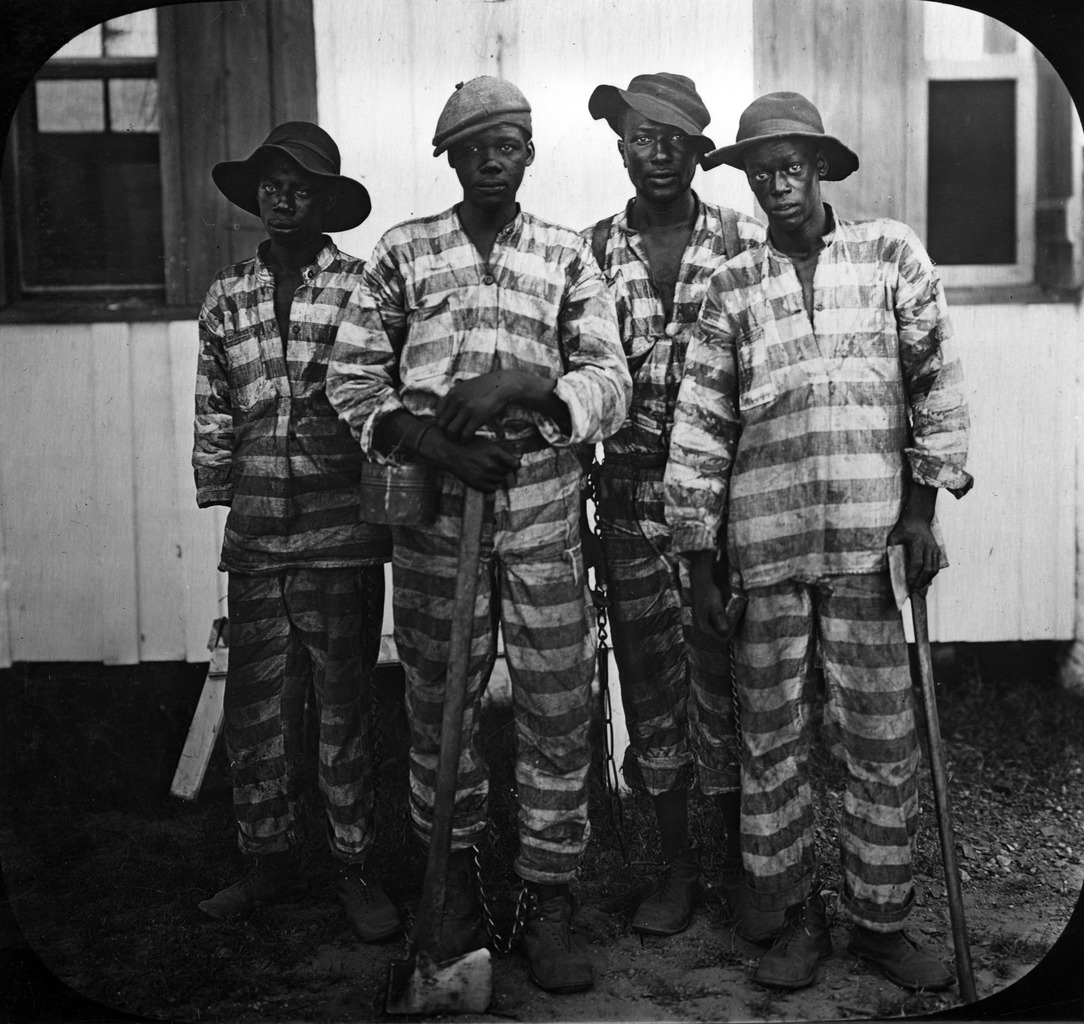
Convicts_Leased_to_Harvest_Timber

According to the 13th Amendment:
“Neither slavery nor involuntary servitude,

except as punishment for crime

whereof the party shall have been duly convicted, shall exist within the United States, nor any place subject to their jurisdiction.”

24199432

Convict leasing began in Alabama in 1846 and is recorded as lasting until July 1, 1928, however our past and present prison population speak a different language. Today, more than 60% of the people in prison are African American. For Black males in their thirties, 1 in every 10 is in prison or jail on any given day. Take a class filled with black boys and 1 in 3 has a likelihood of ending up in prison. It has gotten so bad that prisons now calculate the percentage of beds needed for cells based on whether or not black boys can read by the 4th grade.

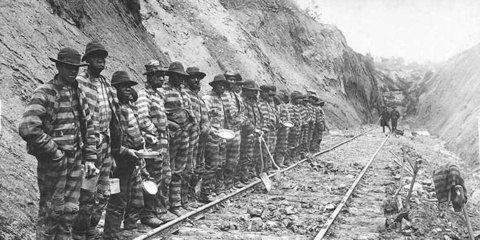
Convict labor working on railroad line

In 1883, about 10 percent of Alabama’s total revenue was derived from convict leasing. In 1898, nearly 73 percent of total revenue came from this same source. Death rates among leased convicts were approximately 10 times higher than the death rates of prisoners in non-lease states. In 1873, for example, 25 percent of all black leased convicts died.

While most believe that the 13th Amendment abolished slavery and involuntary servitude, a loophole was opened that resulted in the widespread continuation of slavery in America–slavery as punishment for a crime.

Narrated by Lawrence Fishburne, learn from Historians and Scholars how the south reconstructed its means of financial stability after the end of the Civil War and the Emancipation of slaves:

Slavery by Another Name:

In Case You Missed It:

Hair Story

False Leaders & Mentors

Speaking of Black History Month, there’s a desperate need for fresh leadership within our community. A lot of people look to figures like Al Sharpton and Benjamin Crump as leaders but the truth is that men like this are leading a lot of you astray. These men do nothing for black people except manipulate situations and line their pockets. While it is true that young black men are murdered, the aftermath of these kinds of events is sadder. Not only are black men murdered, but afterward your leaders come in and the objective of the situation is altered. Trayvon Martins parents are rich from their son’s death. Al Sharpton took them under his wing and collected garbage cans filled with money and Mike Brown’s parents are well on their way. There is nothing fake or conspiracy theory about the deaths of these men this is conspiracy fact, but it is the aftermath that is manipulated. For what reason does a mother need a lawyer when her son is murdered? She needs a lawyer only when she is told to sue for civil rights transgressions. Meanwhile, your human rights are continually violated and your leaders do nothing about it. The saddest thing about the deaths that continue to pile alongside the streets of black communities is oddly not the deaths themselves. The saddest thing about it is the can of whitewash the leaders of these people hold in their pockets, prepared to spill deception at the first sight of blood. How long will we continue to give birth to death still lying on the bed of Sharpton’s dream?