
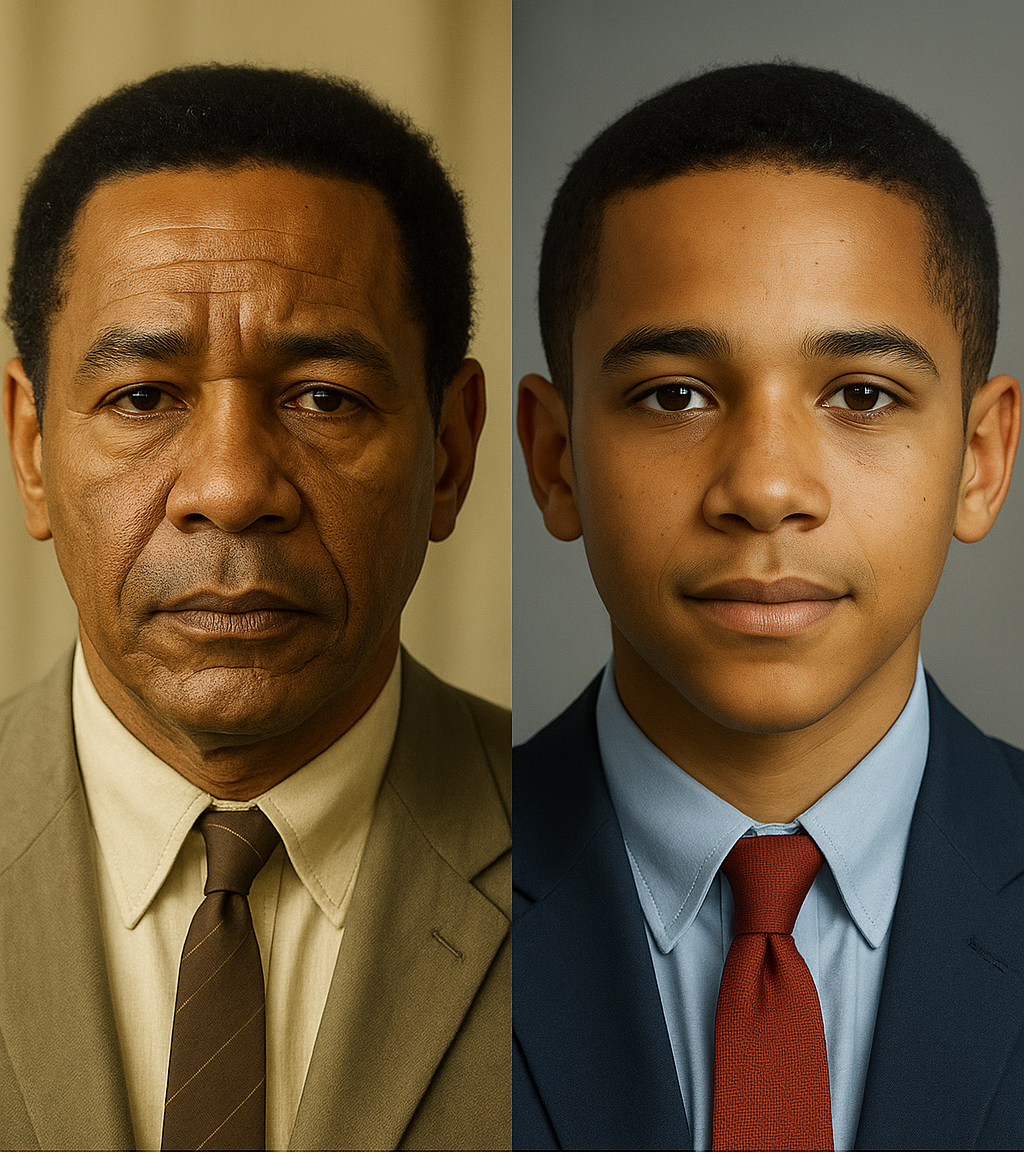
People knew his father and what he had contributed to the movement. They still spoke Joseph’s name with a kind of reverence, as though saying it might conjure the courage of another time. His photograph—creased at the corners, and yellowed with time, hung in barbershops and church foyers, beside posters for fish fries and gospel concerts.
Every February, Joseph’s face reappeared on classroom walls, a reminder of marches and megaphones, of a generation that refused to bow. For the community, Joseph was history come to life.
For Michael, he was just Dad.
Michael and his friends walked past the bulletin board in the school hallway. There it was again: his father’s face, eyes sharp, mouth set like a promise. Michael paused, thinking about his first days at Lindbloom.
“Ey, Mike! Mike!” a classmate had called. “Yo man, so how is it being famous? What was it like?”
Today, he would tell the person to go to hell, but back then, he just shook his head, a small, polite refusal that spoke louder than words.
Michael kept walking, shoulders tight, mind elsewhere, like the chess match he had lost last night. If he had not been hungover, his opponent would not have stood a chance. He didn’t particularly enjoy the taste of liquor, but it got his mind off thinking about walking in a legend’s shadow.
Tanya carried the legacy easily, quoting speeches and smiling at cameras as if born for the stage. But Michael kept to the edges. He wanted to be noticed for his own quiet triumphs—for the way his mind worked over a chessboard, or how the basketball arced perfectly from his fingertips.
Instead, people only ever asked about “The Movement,” their eyes expectant, as if he held some sacred story he refused to tell.
His father’s name was everywhere, in every conversation, every display, every “remember when” retold by people who seemed to think history lived only in him. Not in Michael. Not in the quiet hours he spent imagining, planning, thinking. They acted like he was Martin Luther King’s son.
So what, his father took part in the Freedom Rides? What did that have to do with him? Michael didn’t care about no Barack Obama either. He wasn’t his Savior. He was just another politician. He swallowed hard, tasting the bitterness of being overlooked for the wrong reasons.
History had chosen him without asking, which is why he couldn’t admit to his friends or himself that he had a crush on a white girl.

 The PBS Blog