
Tag: truth

Dear Chandelier,

Some of us are just too close to the ground to see what the sky looks like and yet you, in your own way, have become the hanging crystal of inspiration. You stand unaffected among grand halls and ballrooms; of corporate offices and living rooms. I watch at the coming and going of guests. Some of them important, some not. They wrap themselves in fruitless conversation and rest their bottoms in chairs that hug the table beneath you. They shout with laughter and hold their noses in the air and yet they live on the ground. They have to look up to you and gasp in awe. So modest and rooted is this simple fixture in a room. I watch as your radiance pulls their mouths to the floor. Watch your occasional swing shift their eyes; watch your gracefulness stop their breaths. Softly and delicately, your crystals spark reflection like the conviction of a mirror, in which we are all forced to see ourselves. We try to move to a less luminous part of the room, but we are powerless to scorch your light. Voices rise to distract from your daintiness. The people scream and yell, come and go, but they are incapable of stealing your glory, let alone catch its shadow bouncing off the walls and chipping at the faces of guests. It is you oh Chandelier. You who remains steadfast and immovable, yet moving. Silent, and yet you sing. Fragile, and yet strong. Beautiful, and yet delicate. Modest, and yet shinning.
We Can Move Mountains
Huge mountains
and great hills
they tower above our heads
like father’s to sons
the intimidating weight
of experience
to our youth
like a mother’s instruction
heavy with discipline
is the carved stone
the frightening rock
but it is true
we can move mountains
if we tried
if we faith-ed
one pebble at a time
one pen to a rhyme
one stuttering syllable
and leaking ink
we scatter mustard seeds
and stumbling blocks
like children at play
except
there are no toys
no plastic dolls
or wind up cars
just similes
and metaphors
passing pebbles
and conquering mountains
Why Do People Think Black History Starts With Slavery and Ends With MLK?
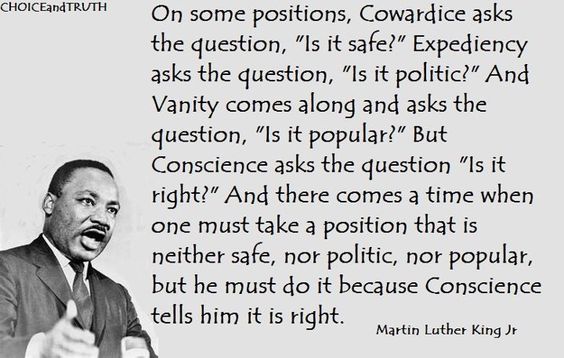
Writer’s Quote Wednesday – Because It’s Right
Welcome to another segment of Writers Quote Wednesday as hosted by Colleen of Silver Threading. Today, I take my inspiration from someone I rarely speak about. I rarely speak about him, not because he wasn’t important, but because I try to speak about people we may be less familiar with and this man, well, we are all familiar with his name.
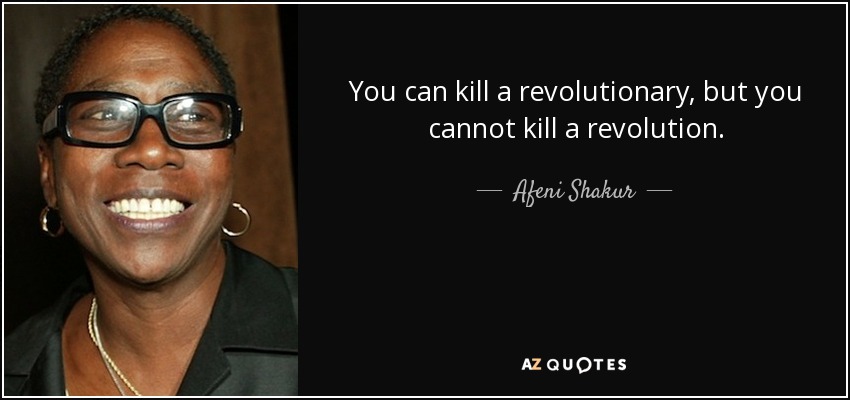
She reads the bible but does not go to Church. She’s not a Christian.
She doesn’t eat pork but does not call on Allah. She’s not Muslim.
She speaks of black identity but shows love to all men.
She’s not Afrocentricity.
She says the Egyptians were black but she’s not Egyptology.
She says the Israelites were black but she’s not Jewish.
She advocates for positive change. She’s not political.
She’s not….she’s not…she’s not…..
People will always try and figure you out. Why do you say the things that you do? Why do you speak the way that you speak? This quote is a reminder that sometimes there is no agenda. Sometimes truth must be spoken not because it is political. Not because it is religious. Not because it is in popular demand but because it is right. I speak the truth simply because the truth is always right no matter who says it.
********

Black History Fun Fact Friday – Negro Spirituals
Welcome Back to Black History Fun Fact Friday. Today we’re talking about Negro Spirituals.

“Go down Moses
Way down in Egypt’s land
Tell ole
Pharaoh
To let my people go!”
 When you take someone and make them a slave, the first thing you must do is take away their identity. Starting with the removal of the name, you take away all traces of their former selves. You do not just remove a people from their environment, but you remove those things that influence that environment. The slave must have no connection to his former self least he realize he is a slave. If the slave realizes he is a slave, you will have a hard time keeping him in a perpetual state of captivity.
 During slavery in the United States, there were systematic efforts to strip the identity of the captive. As such slaves were forbidden from speaking their native tongue and generally converted to Christianity. When the so-called African was taken from the West coast of Africa, it was not a simple transition of country, to ship, to land, but he had to undergo an entire initiation process before stepping foot on the plantations of America. His name, being the most important, was taken from him, his way of life stripped from him, and his history book taken from him. In turn he was given the religion of his slave masters, and his new name reflected the name of their gods. He was made into a Negro.
Being unlawful for the Negro to read and to write, the Negro Spiritual becomes an intriguing study of its own. How did a people who were not allowed to read the bible sing songs with such deep spiritual concepts?
 The words of the earliest known Negro spirituals are taken directly from biblical scripture, are very much poetic, and can be considered in the truest form the literal Spoken Word. The passion in which these songs were sung most certainly adds to the rhythm, texture, melody, tempo, variation, and emotional depth of words. So much so that we must understand that the power in which these songs were sung did not come from a people who made stuff up along the cotton filled aisles of Mississippi and Alabama. These songs were sung with such power because of a people who lived them.
Wade in the Water
Wade in the Water children
Wade in the Water…
See that band all dressed in white….
The leader looks like that Israelite…
See the band all dressed in red…
Looks like the band that Moses led…
 If one was to study the Physical Appearance of the ancient Israelites one will see that they were a dark skinned people. Moses, Abraham, The Prophets and even the Messiah, would have looked like your typical Negro had they walked the earth today. Wade in the Water is a very revealing song, and for this reason it has been revised over and over again. But the original song is a very revealing one. It even compares the captivity of the Israelites to the Captivity of the African who has been brought to a new Egypt, only this time in ships.
 But the Negro Spiritual did more than reveal factual information that talked about the Old Testament; it was also a way of communication for the slaves who could not otherwise communicate under normal circumstances. Wade in the water was one of those songs that gave hint to the runaway to go into the water when he is being chased. He goes into the water because the dogs will lose track of his scent. Therefore, if he is being hunted down he is being told to “Wade in the Water”.
The same is true for “Swing Low Sweet Chariot”, which was also a song of dual meaning:
“I looked over Jordan,
And what did I see,
Comin for to carry me home
A band of angels comin after me
Coming for to carry me home
Swing low, sweet chariot,
Comin forth to carry me home;
Swing low, sweet chariot,
Comin forth to carry me home“
Swing Low Sweet Chariot is a very powerful song. It is not a song about dying and going neither to heaven, but this song could only be sung by people who knew what they were talking about, and who had great biblical understanding. In brief, we see that it echoes the lyric of Revelations which talks about the New Jerusalem coming down like a bride adorned for her husband (‘looked over Jordan’ what’s over Jordan? Israel is over Jordan) and about the messiah coming down with his bands of angels in a chariot.
On the other hand, Swing Low was also a song about The Underground Railroad. Swing low, Sweet Chariot also refers to Ripley, a “station” of the underground railroad where fugitive slaves were welcomed. But this town was on a hill by Ohio River, which is not easy to cross. So, to teach this place, fugitives had to wait for help coming from the hill. “Swing low, sweet chariot.”
“Halleluyah I’m a travelin
Halleluyah ain’t it fine?
Halleluyah I’m a travelin
down freedom’s main line”
– 1961 Freedom Song
Negro Spirituals did not stop at slavery, but for every movement of African American people, each was followed by a certain cultural theme. The times did not change without a change in tune, in clothing, in hair style, and in thought. From the plantations of chattel slavery to Jim Crow and Civil Rights, to Black Power and Revolution, every movement we have been or are a part of, has had its own unique sound that taught you something about the state of Black people during that time, about the movement and even how to move. Our music is therefore in a sense always an extension of The Negro Spiritual.
Thank you for stopping by for this week’s episode of Black History Fun Fact Friday. Here is last week’s episode in case you missed it:
 The PBS Blog