Little Known Facts About Emmett Till, the Trial, and Aftermath

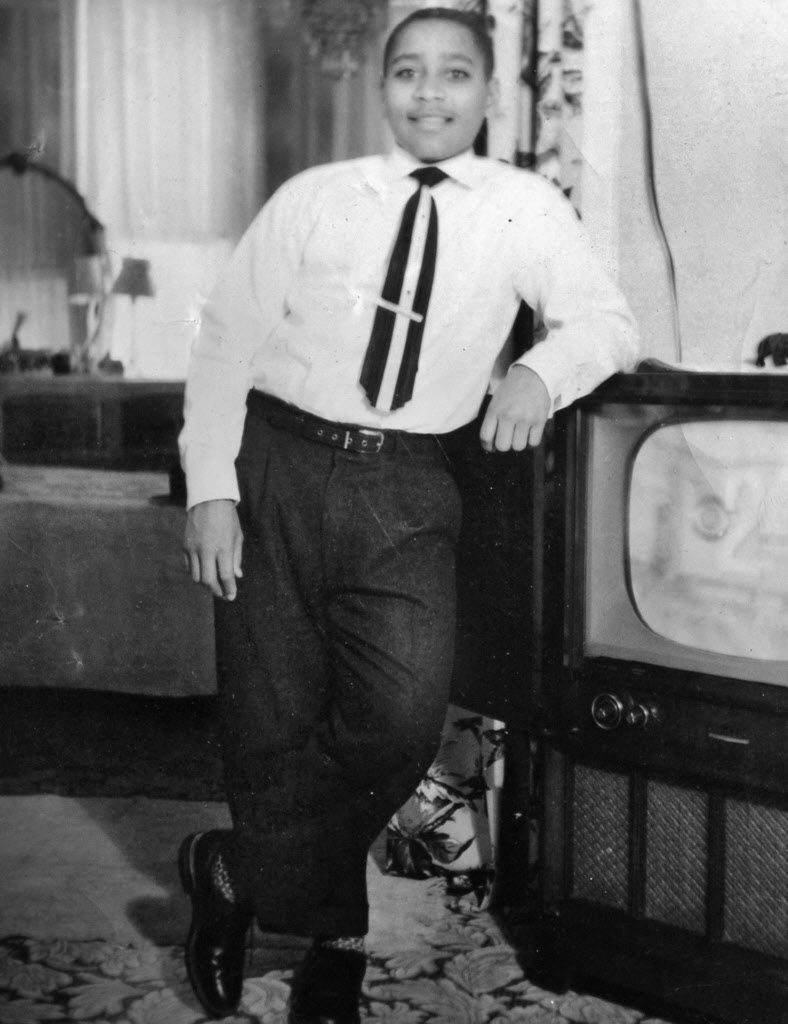
FILE – This photo provided by his family shows Emmett Till in Chicago, about six months before he was killed in Aug. 1955 while visiting relatives in Mississippi. (AP Photo)
  • Emmett was born Emmett Louis Till on July 25, 1941, at Cook County Hospital in Chicago.
  • His nickname was Bobo, and his babysitter was Iberia Hampton, mother of Black Panther Party Chairman Fred Hampton.
  • At 5 years old, Emmett had polio, which left him with a stutter.
  • Emmett’s Father, Louis Till, was a WW2 soldier. Sadly, he was murdered for allegedly raping and murdering some Italian women along with another soldier.
  • It was Louis Till’s ring that Emmett wore to Mississippi. He begged his mom, Mamie Till-Mobley if he could wear it and show it off to his cousins. Because he wore this ring, his great uncle Moses Wright could identify his body.
  • Carolyn Bryant did not only accuse Emmett of whistling (which his cousins said he did whistle). Carolyn also testified that he was physically aggressive and that he propositioned her. According to the transcripts acquired by the FBI in 2004, Mrs. Bryant made it seem that Emmett Till sexually assaulted her, holding her hands and putting his hands around her waist.
  • After being kidnapped from his family’s home, Emmett Till was taken to a barn in Drew Mississippi where he was beaten according to the testimony of then-18-year-old Willie “Reed” Louis who heard his cries. A few Black men were also alleged to have helped Milam and Bryant. Leroy “Too Tight” Collins, Lee Logins, and Frank Young.
  • Mississippi tried to cover up the murder by hurrying to bury Emmett’s body. However, Mamie Till got the body shipped to Chicago. Upon arriving back in Chicago on the morning of September 2, 1955, the first stop for Till’s body was the A. A. Rayner Funeral home which, in 1955, was located at the corner of 41st and Cottage Grove. The casket arrived locked and sealed with the state seal of Mississippi, with orders that the casket was not to be opened. If Mississippi authorities could not bury the body in a nameless cotton field, they hoped their seal would keep Till’s story under wraps. But Mamie wasn’t going for that. She forced the casket open.
  • In 2004, the body was exhumed, and DNA testing was performed, conclusively identifying it as the body of Emmett Louis Till.

On learning of the death of her son, Mamie-Till Mobley made 3 key decisions that forever changed the Civil Rights Movement and cemented her son into history:

  1. She demanded Emmett’s body be returned to Chicago.
  2. She demanded an open casket.
  3. She allowed Jet Magazine to take pictures of Emmett’s battered body and publish them for the world to see.

Had Till’s mother not intervened and reclaimed her son’s body, Till’s lynching may have been recorded in the history books alongside the likes of George Lee and Lamar Smith. Like Till, Lee and Smith were lynched in Mississippi in the summer of 1955 days before Emmett arrived. But unlike Till, their stories have been largely forgotten.

  • The same train that took Emmett to Money is the same train that brought his remains back to Chicago.
  • In early 2022, a filmmaker found the kidnapping warrant for JW Milam and Roy Bryant. The warrant also listed Carolyn Bryant, but she was never arrested. (Source: LeFlore Count Courthouse, Greenwood MS, Elmus Stockstill, LeFlore County Court Clerk)
  • Emmett’s body was taken to the A.A. Rayner Funeral home before arriving at Roberts Temple Church of God in Christ on the South Side of Chicago for the funeral on September 4, 1955. He was buried on September 6th.
  • The trial began on September 19, 1955, and the white people in the area raised $10,000 for JW Milam and Roy Bryant’s defense fund.
  • The man in charge of picking the list of jurors for the Emmett Till case was the county attorney who was also one of Milam and Bryant’s defense attorneys.
  • Still, three of the men on the jury thought Milam and Bryant were guilty until they eventually agreed with the majority. Though they knew the men were not innocent, they also did not think “justifiable homicide”— was a fitting punishment for a Black boy who insulted a white woman.
  • Mamie Till stayed at the home of TRM Howard in the all-black community of Mound Bayou during her time in the trial. The community was secure, armed, and well-guarded. People said getting into it was like trying to get into the white house.
  • In 1956, JW Milam and Roy Bryant confessed to killing Emmett Till in Look Magazine for $4,000.
  • In 2007, Carolyn Bryant admitted she lied about the details of Emmett Till to Duke University senior research scholar Timothy Tyson. However, in an unpublished memoir from 2008 titled: I am More than a Wolf Whistle: The Story of Carolyn Bryant Donham as written by Marsha Bryant, Bryant stands by her story that Emmett put his hands on her. She declares she is a victim as well as Emmett.

Her confession to Tyson was made public in 2017.

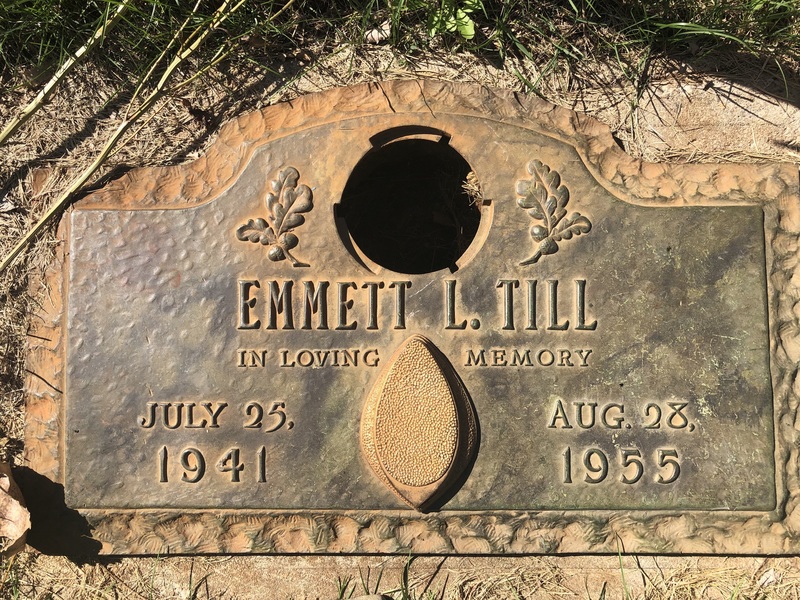
Emmett Louis Till, July 25, 1941 – August 28, 1955

New Film Documents Mamie Till-Mobley’s Fight for Justice for Her 14-Year-Old Son, Emmett Louis Till

I remember learning about Emmett Till as early as third grade and then again, in about sixth grade.

Now, Whoopi Goldberg and Danielle Deadwyler will star in Chinonye Chukwu’s upcoming film “Till,” about Mamie Till-Mobley’s fight for justice for her 14-year-old son, Emmett Louis Till. All American star Jayln Hall has been cast to play the role of Emmett.

“Till” chronicles Mamie’s decision to have an open casket at Emmett’s funeral and to allow Jet magazine publish David Jackson’s funeral photos, in order to ensure people everywhere saw the true horrors of her son’s murder. The decision from the grieving mother was a galvanizing moment that led to the creation of the civil rights movement.”

https://variety.com/2021/film/news/whoopi-goldberg-emmett-till-movie-danielle-deadwyler-1235026380/

Emmett Till was brutally murdered early on August 28, 1955, one month and three days after his 14th birthday, after being falsely accused of whistling at a white woman. His mother, Mamie Elizabeth Till-Mobley, showed his body in an open casket so the whole world could see what they did to her son. “Let the world see what I’ve seen,” she said, which became a call-to-action after Jet Magazine published the photos.

Emmett Till was in Money, Mississippi, visiting his relatives when he encountered Mrs. Bryant at a store for the summer. There are multiple variations of what supposedly took place. I’ve been following the story of Emmett for a long time, and I’ve seen pretty much every documentary made of him.

Some people say he showed his cousins a picture of his school in Chicago, an integrated class, and bragged about how he would speak to that white woman. Other accounts claim he grabbed Bryant’s hand while she was stocking candy. “What’s the matter, baby,” he allegedly said, “can’t you take it?” The most infamous accusation is that he whistled at her.

None of these accusations are true, and in “The Blood of Emmett Till,” a book by Timothy Tyson, Carolyn Bryant admits she lied.

Days after the alleged incident, Roy Bryant and his brother-in-law, J.W. Milam, kidnapped Emmett from his great uncle’s home and brutally murdered him. They then tied a cotton gin fan blade to his body with barbed wire and dumped him in the Tallahatchie River.

If you are familiar with the show, All American, you know Hall has a lisp, which could explain why he’s a good fit for the role outside of his acting skills. According to Mamie, Emmett had a speech impediment that made it impossible for him to have whistled at Carolyn.

Black Trauma

Whenever I post this kind of content, I get feedback from people saying I shouldn’t be talking about it. Some have even said they should not make the film.

I get it.

I understand the perpetuation of black trauma by the media, and I empathize with the fed-upness of black death.

I also want to acknowledge people who experience high sensitivity to these sorts of things. This post is in no way dismissive of that, and I understand if you can’t view these sorts of things.

But aside from this, consider the proverb, “Until the lion learns how to write, every story will glorify the hunter.”

If we do not tell our side of the story, our children will continue to receive a watered-down version of their history.

Memphis, TN, Wither’s Collection Museum. Photo by Yecheilyah Ysrayl, 2021. Used with permission.

Three months after his death, Rosa Parks communicated with Mamie Till that she thought about Emmett as she sat on that bus and refused to move. This resistance led to the Montgomery Bus Boycott and the opening of the floodgates for what we now know as The Civil Rights Movement.

But that is not the full story.

Rosa Parks was not some feeble old lady our childhood textbooks make her out to be, and she was not the only black woman who refused to give up her seat in defiance of segregation. Parks was 41 years young and was already working with Dr. King and served as secretary for the NAACP, where her husband, Raymond Parks, was already an active member.

Parks’ cemented her place in history, and I am sure she thought of Emmett, but she wasn’t an old lady. She was tired alright, but not physically.

“Parks wasn’t physically tired and was able to leave her seat. She refused, on principle, to surrender her seat because of her race.”

https://constitutioncenter.org/blog/rosa-parks-journey-as-a-civil-rights-icon

The NAACP was already organizing and looking for a test case about segregation on Montgomery’s bus system, but their first potential test case was pregnant and did not fit the image they wanted to represent the movement. The whole thing was carefully orchestrated in a campaign to end segregation on buses.

“They said they didn’t want to use a pregnant teenager because it would be controversial and the people would talk about the pregnancy more than the boycott.” – Colvin

This in no way dismisses Park’s historical actions (because planned or not, she didn’t have to do it) but seeks to shine a light on the other “Rosa’s” who also refused to give up their seat to support integration. We have forgotten the Claudette Colvin’s, Aurelia Browder’s, and Irene Morgan’s of the world because the writers of his-story never told their stories.

There is an entirely new generation of children who do not know the racist history of this (America) nation and how it is relatable to our current times. They can’t compare Trayvon Martin to Emmett Till because they don’t know who Emmett Till was. They can’t connect housing discrimination with Red Lining because they don’t know what Red Lining is. They can’t connect the crack epidemic of the 1980s with the Iran-Contra Affair because they don’t know history.

How did crack cocaine end up in black communities? How did it destroy black families?

As Furious Styles says in Boyz N The Hood, “How you think the crack rock gets into the country? We don’t own any planes. We don’t own no ships. We are not the people who are flyin’ and floatin’ that shit in here.”

Yes, he’s a fictional character, but a real black man (John Daniel Singleton) wrote the script.

“Why do you think there’s a liquor store on every corner? The same reason there’s a gun store on every corner. They want us to kill ourselves.” (Boyz N The Hood, 1991)

Do I think black people should be inundated with negativity and brutality, constantly subjected to the image of black men and women dying in the streets? Of course not. Black history is not only black trauma.

But no one tells the Jews to stop talking about the holocaust or Americans to stop talking about 9/11.

I believe that we encourage them to be forgotten by not retelling these stories. We can do this in various ways, not only through the display of horrific images on television.

Black women are putting this film together because they understand what it means to lose black sons, not only in 1955 but also in 2021.

I know black mothers don’t raise their sons to be murderers just as much as I know they don’t raise them to be murdered.

Jasmine Mans