Yecheilyah’s Book Reviews -Menopause and the Black Woman by April S. Lily

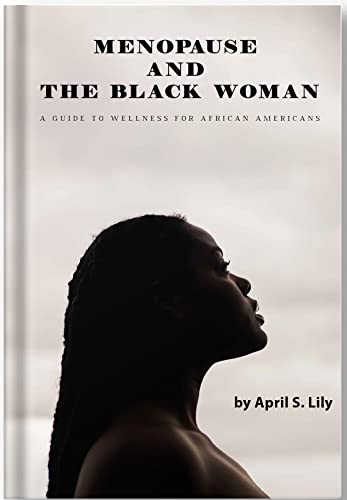
Title: Menopause and the Black Woman: A Guide to Wellness for African Americans

Author: April S. Lily

Publisher: April Lily

Published: June 15, 2022

Pages: 103


As women learn about the lack of knowledge on the subject, the discussion of menopause and perimenopause is becoming more common. (Even Oprah Winfrey is in on it.) The author highlights the significance of normalizing this topic in Menopause and the Black Woman: A Guide to Wellness for African Americans.

We learn that despite all women going through it, over a third of American women between the ages of 40 and 65 who participated in the State of Menopause research said they had never looked into menopause before going through it. Additionally, almost half were unaware of the distinction between perimenopause and the actual menopause.

The author explains how, in many traditional West African communities, elderhood was to be cherished and respected and held tremendous rank and influence, in contrast to modern American culture, where growing older is something individuals attempt to avoid. We should prepare for and accept these changes as a normal part of life rather than feeling ashamed of our bodies as we age.

“I want my grandchildren to grow up in a world that understands that menopause is normal, natural, and something that women shouldn’t be afraid of anymore.”

-April Lily

In the same way that we had to get ready for our first periods, we should learn about menopause and perimenopause, the symptoms associated with them, and how to prepare for the journey.

The author also shares her journey of experiencing hot flashes and night sweats that stopped her from getting a peaceful night’s rest and other signs and symptoms to be aware of, such as hair thinning, vaginal dryness, weight gain, dry skin, aches and pains, and more. These issues are accompanied by solutions to make the transition from perimenopause to menopause smoother such as exercise, diet, and natural supplements.

Women who have already been on this journey and have already done individualized research may find the book basic as it does not get too deep. It is a conversation starter, though, and I applaud the author for helping us de-stigmatize menopause and perimenopause.

While the title suggests this is exclusive to Black women, I think it is a good beginner guide for all women on this journey across ethnicity as it reads like a message to women in general.

IMG_3600

Ratings:

  • Strong Introduction: 4/5
  • Authenticity / Believable: 5/5
  • Organization: 5/5
  • Thought Provoking: 4/5
  • Solid Conclusion: 4/5
  • Overall: 4/5

Grab Your Copy of Menopause and the Black Woman Here
B0B4BFBJNB.01._SCLZZZZZZZ_SX500_


To have your book reviewed on this blog apply here. The registry is open UNTIL AUGUST 1ST!

Stay tuned for our next dope read.

Yecheilyah’s Book Reviews is a reputable review service that features writers from all over the world, both traditionally and independently published. We are listed on Kindlepreneur as a top-tier book review blog and Reedsy as one of their vetted active book blogs that provide insightful, excellent book reviews.

*Books are read in the order they are received.
 

Breaking the Silence: Part I

Photo by Alina Blumberg from Pexels


“If you are silent about your pain, they’ll kill you and say you enjoyed it.”

Zora Neale Hurston

Friday, November 13, 2020

It felt like I had given birth with nothing to show for it.

I was lying on my back in the emergency department of Wellstar Paulding Emergency Hospital with my legs open, my feet in the stirrups. I prayed the doctors examining and whispering over my vajayjay would hurry up. At first, it was just one doctor, but her face did not do a good job of concealing her concern. I could tell the amount of blood was overwhelming her. She called in someone else, and before I knew it, there were three doctors down there.

“Press down like you are having a bowel movement,” said one of them. She looked like she was in charge, and I was instantly terrified.

“What?”

“Just a little bit. Press down.”

So basically, you are telling me to push. Push what? OMG.

I pressed down until she said stop, and I could see them trying to stop the bleeding. I felt like I was on an episode of Grey’s Anatomy.


I was thirteen years old in the summer of 2000, and my dad was sick and dying of cancer. The adults decided we should not witness his last days and sent us to Mississippi with our big sister. (My twin sister Tracey and me are the youngest of my dad’s crew, our other sibling’s already well into adulthood.) Here, at my sister’s house, I had the experience of my first period, and it was not modest or merciful. It came in as if it had been here before and stayed for a full seven days. 

No one had explained menstrual cycles to me, we were not being taught about it in school yet, and my sister was at work. Shocked, I cried as Tracey looked on in astonishment. We were terrified. We knew about it, but we did not fully understand it. My stepmother predicted mine would come soon, and every time she brought it up, I would get upset.

“What you gonna do? Stop it from happening? You gonna be the first woman to not have a period?”

I sat on the edge of her bed, brought my eyebrows together, wrinkled my forehead, and curled my lips up with eyes that said, “Yup.”

In my mind, I really thought I could stop it. That’s because I had no idea why it needed to happen in the first place. 

We eventually found my sister’s pads, but no one had taught us how to put them on, so I stuffed my panties with tissue and waited until my sister got home. 

Sadly, my story is not unique. When it comes to the woman’s body, many topics are considered so taboo they are rarely talked about or spoken of at all. Not even in the home. Sexual intercourse, the vagina, pregnancy, abortion, birth control, and menstrual cycles are topics people shy away from, like some kind of disease, leaving many women to learn through experience. Often, traumatic experiences. 

“I was around 13 when I asked my Aunt about sex because a lot of my friends at school were talking about it. Instantly, she asked why I’m around those kinds of friends and why I would ever ask that kind of question. She went on to tell me that I shouldn’t be having sex until I’m married and mentioned that I shouldn’t have a boyfriend either. I knew for sure that I was never going to come to her again.”

Afia, 18, of Pawtucket, RI

In the Black community, girls are sometimes shamed for even bringing these subjects up. When my stepmother scolded me for being upset about periods, she didn’t know she was setting me up to be ashamed of it. She never talked about how natural it was for women or asked me why the thought of it made me so upset in the first place. 

The teachable moment had passed, and like Afia, I knew I would never come to my stepmother to discuss periods. And, for a long time, I did not even like to say that word. I had developed a deep shame about it.

According to Netflix’s new series, The Principles of Pleasure, one name used to refer to the woman’s external parts back in the day was the Latin term Pudendum, from the verb Pudere, meaning “to make ashamed.”

“…let me know, and we can go get something,” my Aunt said loud enough for us to hear in the other room. 

She drank and played cards as they discussed prom and prom night. Her insinuation that if we planned to have sex, we should let her know “so we can go get something” was the extent of what I assumed was “the talk” about sex and birth control. There was no explanation of what she was even talking about. We were also already having sex by then. Not only did her comment make us ashamed to discuss sex with her at all, but Auntie was a couple of years too late anyway. 

But parents are people too, and “it’s difficult to recreate experiences that were not modeled for us, and many Black parents of today grew up with inaccurate and negative messages about sex,” says Melissa Carnagey, founder of Sex Positive Families, an organization that supports parents in having sexual health talks with their children.

Tracie Gilbert, Ph.D., Training and Technical Assistance Manager at Answer, which publishes Sex, Etc. had this to say about why some Black adults may not talk to their children about sex: 

“Black parents being nervous about talking with their daughters about sex is not only common but historically influenced by the desire to protect them from racism and white supremacist ideas about Black sexuality. Historical tropes about Black people included that they were hypersexual and had loose morals.” 

But this is not exclusive to Black women. All women have experienced similar traumatic experiences surrounding sex, menstrual cycles, and birth control.

These myths could be why some adults (like my Aunt, stepmother, and Afia’s Aunt) avoid the conversation altogether.


Like periods and sex, infertility is another topic many women do not openly talk about. As someone who has struggled with it for years, I hope to break the silence by sharing my experience.

How my menstrual cycle started would set the tone for the future of a tumultuous relationship between me and my reproductive system.

November 13, 2020

“Yes, she’s miscarrying,” said the doctor-in-charge.

To be continued…

Update: Click Here to Read Breaking the Silence Part 2