Black History Fun Fact Friday – Seneca Village

Got a short fun fact article for you today.

I love finding the hidden treasure of black communities that existed and thrived that we’ll never know about (until we look). I’ve mentioned several of such communities on this blog in the past and here’s another one.

Seneca Village was settled in the 1820s on the eve of Emancipation in New York. The only community of black property in the city at the time, it was located between 82nd and 87th Street east of what is Central Park today.

lvseneca18n

The Village was a thriving community of blacks (two-thirds) and whites started to settle there as well. The community had its own school and a population of over 250 people. Houses were also built on the land, some of them elaborate two-story with barns and others a bit more modest. This was an achievement because New York, like the rest of the country, was a place of slave-ownership. Contrary to what you’ll learn in school, the South was not the only place to find blacks who were enslaved but many northern cities did as well. In 1703, more than 42 percent of New York City households held slaves and slavery was a key institution in the development of New York. According to The New York Historical Society:

“As many as 20 percent of colonial New Yorkers were enslaved Africans. First Dutch and then English merchants built the city’s local economy largely around supplying ships for the trade in slaves and in what slaves produced – sugar, tobacco, indigo, coffee, chocolate, and ultimately, cotton. New York ship captains and merchants bought and sold slaves along the coast of Africa and in the taverns of their own city. Almost every businessman in 18th-century New York had a stake, at one time or another, in the traffic in human beings. During the colonial period, 41 percent of the city’s households had slaves, compared to 6 percent in Philadelphia and 2 percent in Boston. Only Charleston, South Carolina, rivaled New York in the extent to which slavery penetrated everyday life. To be sure, each slaveholding New Yorker usually owned only one or two persons.”

The only difference between Southern and Northern slavery was that instead of plantations, slaves in the North slept in cellars and attics or above farmhouse kitchens in the country. Nonetheless, the enslaved population of the city was emancipated in 1827 and many of these freedmen comprised the residents of Seneca Village.

The Village’s demise came with the building of what is now Central Park. The government claimed the land under the right of eminent domain and evicted the residents. Since then, Seneca Village has been pretty much forgotten in history. Well, until now.

_____________________________

Don’t forget, you can find all the Black History Fun Fact Articles

under the Black History Fun Fact page in the sidebar.

We are already 17 weeks in since the re-launch of this segment last October. Wow!

Black History Fun Fact Friday – The Inspiration Behind “Renaissance”

black-history

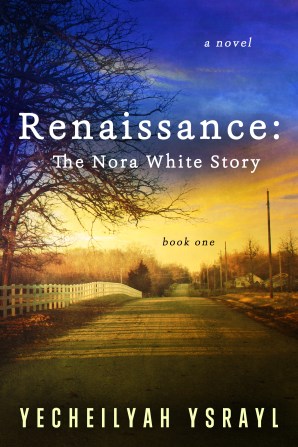
Since this is our last Black History Fun Fact of the year (There won’t be one next week. I will be on vacation), I decided to share my inspiration for the first book in my soon-to-be released novel series Renaissance: The Nora White Story.


renaissance-ebookDespite the wealth of information online, in books, and in movies, there’s still a misconception about what it meant to be black in the south and black in the north in the early 1900s. One recycled piece of information that no doubt holds some truth, is the mass movement of blacks who packed up and carried their southern roots north to escape Jim Crow and to acquire better financial opportunities. But not only were blacks escaping Jim Crow, but the north had a reputation of being prosperous and successful. This image largely shaped by the south’s brutal history.

Slavery is so much the outstanding feature of the South, in the unthinking view of it, that people often forget there had been slaves all over the U.S. Slaves were auctioned openly in the Market House of Philadelphia; in the shadow of Congregational churches in Rhode Island; in Boston taverns and warehouses; In Chicago and weekly, sometimes daily, in Merchant’s Coffee House of New York. The north has been painted as the picture of staunch abolitionism when in truth Northerners bought, sold, and owned slaves.

In the presence of such information, many blacks came to look at northern cities as a saving grace. Not only did it represent freedom from bondage, but discrimination in the north has always been so well organized that it did not have the same up close and the personal effect that the south had. The south was more brutal, more abusive, and more personal whereas the racism in the northern cities was sugar coated (I should use the present tense here).

Blacks then looked up to Harlem and Chicago and many in their hearts scorned their brothers and sisters in Mississippi and Alabama and Louisiana who picked cotton instead of sleep on the floor. Blacks opted to tread north to share rooms with rats and roaches in overcrowding apartment buildings while leaving an impression among their southern brethren that they were in the lands of milk and honey. And even when we returned, many of us maintained this air of superiority and this created a silent fuel between blacks in the south and blacks in the north.

Deep down southern blacks knew that northern blacks thought themselves too proud because they were in New York trying to live like white men but being black men without a pot to piss in, and a window to throw it out of. This was my inspiration behind The Nora White Story.

e89f486217390722e4f05dc613a25672

Shaped by such views, Nora is not as appreciative of the sacrifices that her parents made as she should be. She’s naïve, pampered, and sees the North through the same eyes as many who came before her. Before and during The Harlem Renaissance, many black women tried to mimic the traditional image and role of white women. Many of them saw themselves as  elite and often tried to appear “white”. (Many black women lightened their skin or passed as white as portrayed in Book Two of The Stella Trilogy “Beyond The Colored Line” which you can read free HERE). Since the days of chattel slavery blacks have been faced with a constant reminder of America’s sweetheart.

Her blonde hair and blue eyes graced the workplace, newspapers, women’s magazines, and everywhere in their daily lives’. When the end of slavery happened and blacks were given the opportunity to escape the south, a symbol of their captivity, many adapted the model of the white world and white standards of beauty and not only beauty but the concept of success itself, that is to exude whiteness.

Nora is a descendant of freemen, not just slaves. Her family does not sharecrop but they own land, and Nora does not live in a shabby home in the middle of corn fields. This story, Nora’s story, is not of your stereotypical black southern family. Nora’s lineage is a prestigious one. The only question is, will she realize how good she’s got it before it’s gone?


book-and-e-reader-nora-wRenaissance: The Nora White Story Coming July 15-16, 2017

Meanwhile, The Road to Freedom is $0.99! Don’t miss out. Get your copy at this super low price now HERE.

theroadtofreedom_ysrayl

“Deeply concerned about the state of Black America, a fight with his brother compels a young Joseph to leave his mother’s house and join his friends for a trip to Atlanta for SNCC’s (Student Non-Violent Coordinating Committee) second conference. Excited to live life on their own, Jo and his friends have left school and the lives they were living for a chance to become part of the movement. With no money and essentially no plan the seven friends, three black and four white, set out for the road when they are stopped by a racist cop who makes them exit the car. The teens are unaware that a mob of Klansmen also await them at the New Orleans bus terminal.”