Race Doesn’t Exist

French physician Francois Bernier was the first to use the word “race” as a category for scientifically classifying humans in a 1684 essay titled “A New Division of the Earth, According to the Different Species or Races of Men Who Inhabit It”.


6a00d8341bf68b53ef0133ed28d33d970b-800wi

In addition, Johan Friedrich Blumenbach (1752-1840), a medical professor in Germany, argued that human beings fall into five races: Caucasian, Mongolian, Ethiopian, American, and Malay. He argued that Caucasians derived from the Caucasus Mountain region and embodied the ideal human from which the others degenerated. It was a popular belief that Caucasians were the ideal form based on a skull that had been found in the Caucasus Mountains, near the alleged location of Noah’s ark. What this classification achieved is the setting up of a color line. Blumenbach classified five chief races of mankind and by attributing psychological value and importance to race; this became what we know as racism.

Science has a lot to do with the usage of “race” to identify a people. Although there is uncertainty in the title about the correctness of the term “race” versus “species” to classify human variation, Bernier relied on categories based on outward physical characteristics such as skin color.
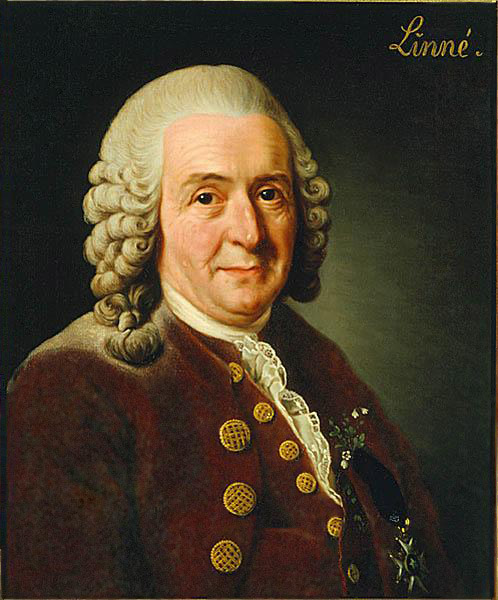
Carolus_Linnaeus_(cleaned_up_version)A prime example is Swedish botanist Carolus Linnaeus’ system of biological classifications in Systemae Naturae, published in 1735. Linnaean taxonomy is the system of scientific classification of plants and animals now widely used in the biological sciences. He formalized the distinction among the continental populations of the world and his work helped characterize the concept of race. In the tenth edition of Systemae Naturae, which was published in 1758, Linnaeus projected four subcategories of Homo sapiens: Americanus; Asiaticus; Africanus; and Europeanus. In short, the moral components of race–such as beliefs, values, etc., were not as prevalent where racial hierarchy was already established by slavery, but the word race was a general term that was used interchangeably with species, sort, type or variety. This is why there is no such thing as a race of people.

crayons-labThe concept of Race is a new ideology and has not always been with us. Genesis Chapter 10, known as The Table of Nations, gives an example of how people were split into nations and lands and language, not races. In fact, “definitions of who is black vary quite sharply from country to country, and for this reason people in other countries often express consternation about our definition.” (F. James Davis). What has happened then? How has a nation of people now become a race of people? They told you about a brown man, a black man, a yellow man, a red man, and a white man. It’s as if they took their crayons and painted us the colors of their expectations. After coloring they began the tasks of assigning these colors to class and certain geological locations in that they may properly identify them. Not necessarily so that these people may identify themselves, but so that racial superiority would reign supreme.

6a00d83420747353ef01a511c3312b970c-320wiThe U.S. Census Bureau defines race as “a social category recognized by the United States and does not attempt to define race biologically, anthropologically, or genetically”. The Census Bureau recognizes five categories of race: White (people with origins in Europe, the Middle East, or North Africa,) Black or African American (Africa), American Indian or Alaska Native, Asian, Native Hawaiian or Other Pacific Islander. The census also includes a Hispanic ethnic category. It is an ethnic category rather than a race category because the Latino community is said to include many races, such as White, Black, Native American, Asian, and mixed.

The truth is that every single person on the face of the earth belongs to a nation of people, as he was so divided since the beginning, and thus he falls into whatever family according to his nationality. Every people have a nation to which they belong, followed by a specific set of laws, customs, and traditions separated only by land and this is why race does not exist, because there’s no such thing as a race of people. Sure, we may use the term for understanding sake, one may say “my race is..” so that the person next to him gets it, but he does not really belong to a race, he belongs to a nation. Prejudices, Biases, and oppression of one people who feel superior over another people does exist, but race within the concept to which we’ve grown to know it, does not.

Guest Feature – A Modern Day Slave Plantation Part 3 by Laura Dimon

*Note: This article was not written by The PBS Blog, it is featured as part of the continuation of an ongoing series and is written by Laura Dimon. This is the last part which includes my commentary. Please view our Guest Feature or Article Section for Parts 1 & 2*

***************************************************

caa920fa7ae99bb5cb31ed0cb31cf296

In King’s trials, the juries were all white, with one black person. This past March, Glenn Ford, 64, walked out of Angola a free man after 30 years on death row. He was Louisiana’s longest-serving death row prisoner, yet he’s just another black man who was convicted and sentenced by an all-white jury. King said Angola today still reminds him of a slave plantation, but not as much as it reminds him of a graveyard. “There seems to be an artificial sanitation that is disturbing to me,” he said. The land is “beautiful, whitewashed, looks like a college campus.” But underneath, “The bones are rottin’.”

 
Angola exists in the shadow of slavery, a time when black men did not have rights. In a state with the motto “Union, justice and confidence,” there is certainly a lingering stink of a bygone, ugly era for which “union and justice” is simply not a fitting description. The other two members of the Angola 3 are Albert Woodfox and Herman Wallace. There is overwhelming evidence of their innocence and accordingly, state and federal judges have overturned Woodfox’s conviction three times, citing racial discrimination, misconduct by the prosecution and inadequate defense. But Louisiana’s Attorney General James “Buddy” Caldwell holds the ultimate power, and has contested the rulings, claiming they were based on technicalities.


To this day, after 42 years, Woodfox remains in solitary confinement in Angola. He’s thought to be the longest-serving inmate in solitary. In the documentary film, he says, “If a cause is noble enough, you can carry the weight of the world on your shoulders. And I thought my cause, then and no, was noble. So therefore, they would never break me.”
They might bend me a little bit. They might cause me a lot of pain. They may even take my life. But they will never be able to break me.”

 
Wallace was released in October 2013 with advanced liver cancer. King went with Woodfox, who was permitted to leave briefly, to visit their friend and tell him he was out of Angola for good. “We told him,” King said. Wallace couldn’t move or respond. “[But] we saw it in his eyes. … He knew he was getting out.” Wallace took his last breaths a free man, after over 40 years. He died three days later.

 
King continues the fight for Woodfox. So when he is asked about his own release, he responds with this apt adage: “I was free of Angola, but Angola would not be free of me.”


Image Credits: AP, Peter Puna, Robert King

************************************************************************************

angolaCommentary:

The disturbing reality, is that no so called African American should be surprised by this article. At some point we must realize that under the fine print of America’s democracy you were never intended to be citizens. Your stay here in this country was never received with the certificate of adoption and thus you were never granted the same rights of America’s children, and that is why such institutions such as the Angola Facility still exist in the first place. You have Civil Rights but you have no Human Rights. It is no surprise then, that the mental state of the African American people is worse today than it was during slavery. Even during the Civil Rights Era your state of consciousness was not like it is now; for Freedom Rides denoted an understanding that you were not free here and you understood that. But the worse thing about mental enslavement however is that if the mind thinks itself free it doesn’t really matter what happens to the body. You can continue to mistreat it and it will still not grasp the understanding that it remains confined. You can put it in a hog pen, lock it up inside the inner rooms, isolate it and because the mind has been warped it will still think it possesses some kind of freedom. In The Mis-Education of The Negro Carter G. Woodson said it best, “when you control a man’s thinking you do not have to worry about his actions. You do not have to tell him to stand here or go yonder. He will find his “proper place” and will stay in it. You do not need to send him to the back door, he will cut one for his special benefit. His education makes it necessary.

  • Prison institutions determine how many more beds to add to their facility, based on how many black boys can’t read by the 4th grade


  • According a recent Brookings Institution report, black men born in 1975 who dropped out of high school had a 70 percent chance of ending up in prison by their mid-thirties. The probability is actually greater for young black men who drop out today.


  • The bible prophecy’s of black men being hidden in prison houses and that their heavens will be bronze and their earth iron (Deut. 28:23, Lev. 26:19)


  • According to Prof. Michelle Alexander’s analysis of U.S. Bureau of Justice Statistics, there are now more black men in prison than were enslaved in 1850.


  • The so called African American was never included in the U.S. Constitution; his civil rights were amended or added on, this means they can also be removed


  • The 13th Amendment, when it abolished slavery, did so except for convicts. Through the prison system, the vestiges of slavery continue.


Guest Feature – A Modern Day Slave Plantation by Laura Dimon Part 2

*Note: This article was not written by The PBS Blog, it is featured as part of the continuation of an ongoing series and is written by Laura Dimon. Please view our Guest Feature or Article Section for Part 1*

**************************

Angola_Prison_--_Leadbelly_in_the_foreground

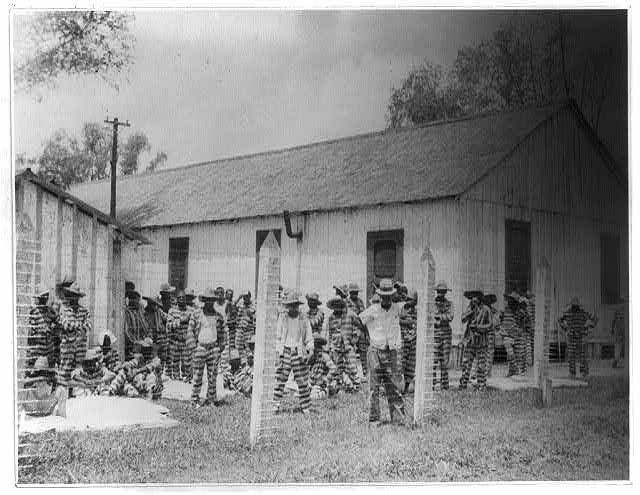
In 1972, the prisoners were virtually all black. Merciless guards — all white men, called “freemen” — worked the inmates like slaves. Sugar cane was the main crop, King said. In the documentary film In the Land of the Free, it’s stated that the inmates labored all day every day for a measly $.02 per hour. The abuse didn’t stop there. As NPR reported, “There was a prisoner slave trade and rampant rape; inmates slept with J.C. Penney catalogs tied to their waists for protection.” King was one of three men who formed the famous Angola 3 group, leaders of the Black Panther Party’s Angola chapter. King said they were fighting for equality, but he later realized their efforts had been misaimed: “We were focused on civil rights, but we didn’t have human rights,” he said.


Prison Horses

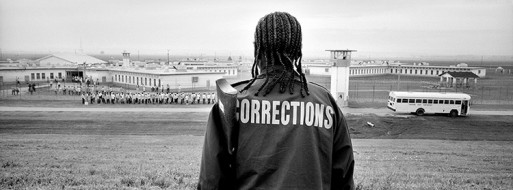
In our most recent conversation, I asked King, “How’s it going?” “It’s … ongoing,” he replied. It’s easy to see why: Little has changed at Angola. It remains a time warp, a living, breathing relic of a shameful past. Of about 6,000 inmates currently in custody, roughly 70% are black and 30% are white. In October 2008, NPR reported, “In the distance on this day, 100 black men toil, bent over in the field, while a single white officer on a horse sits above them, a shotgun in his lap.” The context of this modern day slave plantation is unfortunately appropriate. Nola.com wrote that Louisiana is the world’s “prison capital,” with 1 in 86 residents serving time — nearly double the national average. The racial skew is extreme. One in 14 black men in New Orleans is behind bars; 1 in 7 is either in prison, on parole or on probation. Louisiana is “notorious for racial disparities in its justice systems,” Andrew Cohen wrote in the Atlantic.


One highly concerning aspect of Louisiana’s judicial scheme is that, unlike in 48 states, a unanimous jury decision is not required — only 10 jurors have to vote to convict someone, even for a life sentence. Oregon is the only other state with this system, but it doesn’t have the same tremendous racial component. Cohen wrote, “Prosecutors can comply with their constitutional obligations to permit blacks and other minority citizens to serve as jurors but then effectively nullify the votes of those jurors should they vote to acquit.” It is one of “the most obvious and destructive flaws in Louisiana’s broken justice system,” he wrote, arguing, plain and simple: “Louisiana is terribly wrong to defend a law that was born of white supremacy.”

grace-before-dying-513x190
A Duke University study examined more than 700 non-capital felony criminal cases in Florida and found that, in cases with no blacks in the jury pool, blacks were convicted 81% of the time while whites were convicted 66% of the time. The researchers concluded that “the racial composition of the jury pool has a substantial impact on conviction rates” and that “the application of justice is highly uneven.”


Image Credits: AP, Peter Puna, Robert King, Google Images

Guest Feature – A Modern Day Slave Plantation Exists, and It’s Thriving in the Heart of America – Part 1

This post is part of a 3 day Special Feature Post on ThePBSblog, located under our Articles  and Guest Feature section. The author’s name is Laura Dimon. Laura graduated from Columbia University’s Graduate School of Journalism in 2013. She has been published in the Economist, the Atlantic, and the Daily Beast. I ran across her article on the Prison system and its striking similarity to the Slavery Plantation and thought I’d share it here. However, it is  a lengthy article so I will be breaking it down into 3 separate post to give you room to process the information. I will also wait until after this series (Friday 10/17/14) before adding my own commentary, though you may comment after each segment as you wish.

*******************************************

It was 1972. Thousands of American troops were battling communist forces in Vietnam. Nixon had won re-election by a landslide, but Watergate would soon usher in his demise. Space travel and technology were advancing rapidly.
Change was brewing across America, but one place stood still, frozen in time: Louisiana State Penitentiary, commonly known as Angola. When Robert King arrived that year, he felt as though he’d stepped into the past.

90c8de8106fbbeda3ba73105db15189d
Angola sits 50 miles northwest of Baton Rouge. It’s the largest maximum-security facility in the United States and one of the country’s most notorious prisons. In the book The Life and Legend of Leadbelly, the authors wrote, “Tough criminals allegedly broke down when they received a sentence to Angola. … None of them wanted to be sent to a prison where 1 of every 10 inmates annually received stab wounds and which routinely seethed with black-white confrontations.”

 
Angola’s expanse covers a vast 28 square miles — larger than the size of Manhattan. Tucked away in a bend of the Mississippi River, it’s surrounded by water and swamp on three sides. It’s an isolated penal village — the nearest town 30 miles away — and it’s the only penitentiary in the country where staff members live on site. Generation after generation grow up, live and die on Angola’s land.


6be2f7f86a51e48c43c5d2ca8c296dab
When King, now 71, arrived at Angola, his first impression of it was that it resembled a slave plantation, he said. And it used to be just that. Its name is derived from the home country of the slaves who used to work the land. Today, the comparison remains sadly accurate: Inmates are disproportionately black. They’re forced into hard labor and monitored closely by armed white staff on horseback. There is a sex slave trade behind the bars and many black inmates are deprived of basic constitutional rights. King landed a tough lot in life: He was born black in Louisiana in 1942. In his 2008 book From the Bottom of the Heap, he wrote, “I was born in the U.S.A. Born black, born poor. Is it any wonder that I have spent most of my life in prison?” He went to Angola when he was 18 for a murder he did not commit and remained there for 31 years, 29 of which he spent in solitary confinement, before he was finally freed in 2001.

*Note: Image Credits: AP, Peter Puna, Robert King

Dumbing Down Our Kids

dumb3

“We the people, of the American educational system, in order to possess docile minds, establish low self-esteem, proper enslaved attitudes, regurgitation of unnecessary facts and a lack of self-defense; promote poverty to those unable to service their own welfare and secure the system of stupidity among ourselves to proliferate your posterity, we will sing songs and graduate in time to add riches to the wealthy, do ordain and establish this Educational System of America.”

Signed, The Educated Fool