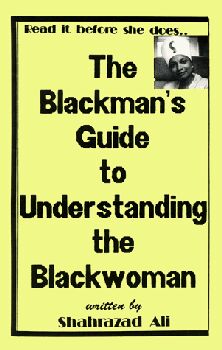
• It is difficult to get her to listen to new information about a new approach to living her life because she is so certain that she is justified in being out of order. She is mostly a lot of mouth. She can be a number of things, as already proven, but she cannot be a man.
• By nature the Blackman cannot submit to the woman.
• All the good things she says she wants would be immediately available to her if she drops her defenses, drops her suspicions and allows herself to melt into the waiting arms of the man who loves her.
• When the Blackwoman attacks the Blackman publicly she inadvertently gives the entire world permission to attack him also.
• It is not easy for a Blackman to be motivated if his woman doubts him, or if their relationship is so stormy that it takes his head and robs him of the ability to concentrate
• The Blackman can tell which woman is his by the way she submits to his ideas and instructions. And by the way she works to make him happy. His Blackwoman should take the position that his success is her success—their success, and work as a team.
• By letting the Black man be the head of the family she could revive him, and by getting behind him and supporting him he could be free.
Category: Guest Feature
Guest Feature Poets
One of the features we have added to The PBS Blog’s list of reading material is our Guest Feature section. In this section, we strive to deliver quality poems or articles, usually written by an author outside of PBS, for your enjoyment. We would like to cover so many different topics but we can’t do it without your help. After all, who better to get your message out there but you? So, we are opening up to allow some of you to Submit a Poem of any subject to The PBS Blog to be posted in our Guest Feature section. This is not the same as a Guest blogger because you will not have access to this site. You will not be given a key in which to go into the inner rooms at this time, but I will be posting your poem to The PBS Blog for you. I will not edit your work and a link back to your blog (if you have one) will accompany your poem (further details are below). I have to make it clear that I do not have millions of followers. You will not be exposed to a grand audience and you will not be compensated for services rendered. However, you will get the opportunity to have your work exposed to some new faces and may even be able to make some new connections. I am also aware that there are many new bloggers in the blogosphere (like some of you just started yesterday, congrats! btw). If you are among one of these, this exercise is for you. I have seen an enormous increase in the follower or traffic or however you track your blog’s success, to someone’s blog when they were either featured or re blogged by someone else. That’s because in this vast techno-world, it’s not always easy to see everyone. Sure, your blog can be great, but it can also get lost in the clutter. So the re-blogs help to greatly generate attention to who you are. The Guest Blogs and Features do the same. So, for those of you who are still looking to do some connections and increase traffic to your blog, this is for you. One of the many purposes for this blog is inspiration. I enjoy inspiring and motivating people by way of poetry. I love being able to write about things that others can relate to, so being able to relate to others will be a key factor in the Guest Features I choose.
I will begin posting the Guest Features as soon as you can get them to me, but I will also like to space them out so if you don’t see your poem posted immediately it’ll probably post the next day (Poems are posted in the order to which they are received). Below is a basic guideline to follow:
– Only Poetry submissions are accepted at this time, Guest Featured Articles from Bloggers is coming soon.
– Poems can cover a variety of topics, except for these no no’s: 1. I will not accept material with an obscene use of profanity (guest or no guest, this blog is after all a reflection of me and that’s just not the kind of language I use) 2. religious agendas (this is not to say you can’t submit a poem with spiritualism, but please don’t send in a poem about how Jesus is Lord and that we all need to accept him as our personal lord and savior) 3. and poems that are just outright disrespectful (no example needed)
The idea is to try to relate to people across the board so try to be relatable. You have your own blog in which to push your own agendas.
– I will NEVER edit your post. All submissions will be posted AS IS.
– I will NEVER take credit for your work. All submissions include your first and last name along with any other credentials you’d like to send, such as: blog address, copyright information, etc. If you only send in your first and last name, this is what will accompany your post
– Limited promotions only. Please don’t send us a book about how great your business or talent is. Keep in mind that you are a guest in someone else’s home.
– If you’re familiar with The PBS Blog you know we like to use big colorful images to compliment each post. While images are not always used, if you would like to use them, please include them attached to your e-mail. I will arrange them in your post so that it looks nice (see posts for an idea). If no picture is attached to your e-mail we will not add pictures.
– If you’re a blogger, we encourage you to respond to the corresponding comments following your Guest Feature. If you are not a blogger, The PBS Blog will kindly thank those who comment on your poem. We can add an e-mail address or your personal website too if you include it in the e-mail. It’s up to you.
– You will know if I am interested in posting your poem simply because I will respond to your e-mail. Please give at least 1-2 business days before slamming your computer into the wall because you have not heard back from me. Bloggers actually have lives outside of cyber space, so give it a day or two.
That’s it, see ya soon 🙂
Please e-mail entries to: ahouseofpoetry@gmail.com
Guest Feature – Fear Itself Is Undefined by Bianca Flores
I lay on my bed soaking my pillow with my tears,
I try to remember exactly what it is that I fear.
Is it the passing of time or the love that I lack?
Is it the mistakes that I’ve made or the fact that I can’t bring the past back?
What is it that I’m afraid of?
Why am I so scared?
Is it the people I’ve hurt or the people that have hurt me?
Am I afraid of everything that I cant seem to see?
Is it the love of a friend, or the loss of my family?
Is it the possibility that my life can end in a tragedy?
What is it that I fear most?
What do my eyes say I’m scared of?
Is it the sun that sets but won’t seem to rise?
Is it the hope that I have that always seems to die?
Is it the trust of a person that I cannot begin to grasp?
Is it all the memories of my horrid past?
Is it me?
Can it possibly be that the thing I fear most is the thing I can’t be?
The things that I try to understand?
The me that I try to be with when I’m feeling sad?
The person I’m expected to be? Is that what I fear? . . .
I think the thing I fear most . . .is me
– Poem written by Bianca Flores
Guest Feature – A Modern Day Slave Plantation Part 3 by Laura Dimon
*Note: This article was not written by The PBS Blog, it is featured as part of the continuation of an ongoing series and is written by Laura Dimon. This is the last part which includes my commentary. Please view our Guest Feature or Article Section for Parts 1 & 2*
***************************************************
In King’s trials, the juries were all white, with one black person. This past March, Glenn Ford, 64, walked out of Angola a free man after 30 years on death row. He was Louisiana’s longest-serving death row prisoner, yet he’s just another black man who was convicted and sentenced by an all-white jury. King said Angola today still reminds him of a slave plantation, but not as much as it reminds him of a graveyard. “There seems to be an artificial sanitation that is disturbing to me,” he said. The land is “beautiful, whitewashed, looks like a college campus.” But underneath, “The bones are rottin’.”
Angola exists in the shadow of slavery, a time when black men did not have rights. In a state with the motto “Union, justice and confidence,” there is certainly a lingering stink of a bygone, ugly era for which “union and justice” is simply not a fitting description. The other two members of the Angola 3 are Albert Woodfox and Herman Wallace. There is overwhelming evidence of their innocence and accordingly, state and federal judges have overturned Woodfox’s conviction three times, citing racial discrimination, misconduct by the prosecution and inadequate defense. But Louisiana’s Attorney General James “Buddy” Caldwell holds the ultimate power, and has contested the rulings, claiming they were based on technicalities.
To this day, after 42 years, Woodfox remains in solitary confinement in Angola. He’s thought to be the longest-serving inmate in solitary. In the documentary film, he says, “If a cause is noble enough, you can carry the weight of the world on your shoulders. And I thought my cause, then and no, was noble. So therefore, they would never break me.”
“They might bend me a little bit. They might cause me a lot of pain. They may even take my life. But they will never be able to break me.”
Wallace was released in October 2013 with advanced liver cancer. King went with Woodfox, who was permitted to leave briefly, to visit their friend and tell him he was out of Angola for good. “We told him,” King said. Wallace couldn’t move or respond. “[But] we saw it in his eyes. … He knew he was getting out.” Wallace took his last breaths a free man, after over 40 years. He died three days later.
King continues the fight for Woodfox. So when he is asked about his own release, he responds with this apt adage: “I was free of Angola, but Angola would not be free of me.”
Image Credits: AP, Peter Puna, Robert King
************************************************************************************
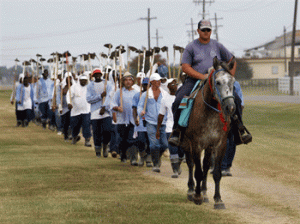
The disturbing reality, is that no so called African American should be surprised by this article. At some point we must realize that under the fine print of America’s democracy you were never intended to be citizens. Your stay here in this country was never received with the certificate of adoption and thus you were never granted the same rights of America’s children, and that is why such institutions such as the Angola Facility still exist in the first place. You have Civil Rights but you have no Human Rights. It is no surprise then, that the mental state of the African American people is worse today than it was during slavery. Even during the Civil Rights Era your state of consciousness was not like it is now; for Freedom Rides denoted an understanding that you were not free here and you understood that. But the worse thing about mental enslavement however is that if the mind thinks itself free it doesn’t really matter what happens to the body. You can continue to mistreat it and it will still not grasp the understanding that it remains confined. You can put it in a hog pen, lock it up inside the inner rooms, isolate it and because the mind has been warped it will still think it possesses some kind of freedom. In The Mis-Education of The Negro Carter G. Woodson said it best, “when you control a man’s thinking you do not have to worry about his actions. You do not have to tell him to stand here or go yonder. He will find his “proper place” and will stay in it. You do not need to send him to the back door, he will cut one for his special benefit. His education makes it necessary.“
- Prison institutions determine how many more beds to add to their facility, based on how many black boys can’t read by the 4th grade
- According a recent Brookings Institution report, black men born in 1975 who dropped out of high school had a 70 percent chance of ending up in prison by their mid-thirties. The probability is actually greater for young black men who drop out today.
- The bible prophecy’s of black men being hidden in prison houses and that their heavens will be bronze and their earth iron (Deut. 28:23, Lev. 26:19)
- According to Prof. Michelle Alexander’s analysis of U.S. Bureau of Justice Statistics, there are now more black men in prison than were enslaved in 1850.
- The so called African American was never included in the U.S. Constitution; his civil rights were amended or added on, this means they can also be removed
- The 13th Amendment, when it abolished slavery, did so except for convicts. Through the prison system, the vestiges of slavery continue.
Guest Feature – A Modern Day Slave Plantation by Laura Dimon Part 2
*Note: This article was not written by The PBS Blog, it is featured as part of the continuation of an ongoing series and is written by Laura Dimon. Please view our Guest Feature or Article Section for Part 1*
**************************
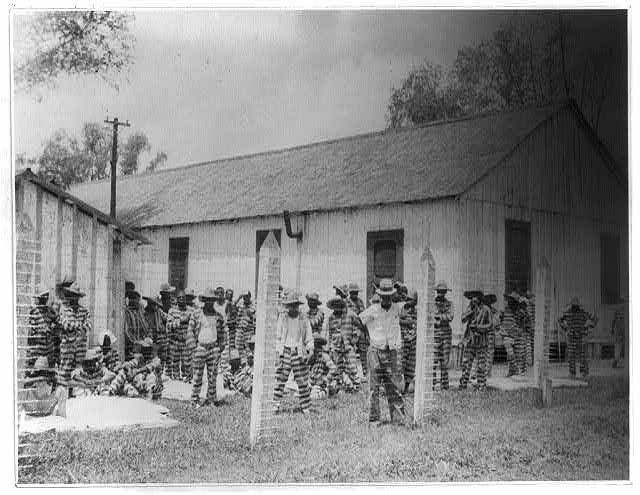
In 1972, the prisoners were virtually all black. Merciless guards — all white men, called “freemen” — worked the inmates like slaves. Sugar cane was the main crop, King said. In the documentary film In the Land of the Free, it’s stated that the inmates labored all day every day for a measly $.02 per hour. The abuse didn’t stop there. As NPR reported, “There was a prisoner slave trade and rampant rape; inmates slept with J.C. Penney catalogs tied to their waists for protection.” King was one of three men who formed the famous Angola 3 group, leaders of the Black Panther Party’s Angola chapter. King said they were fighting for equality, but he later realized their efforts had been misaimed: “We were focused on civil rights, but we didn’t have human rights,” he said.
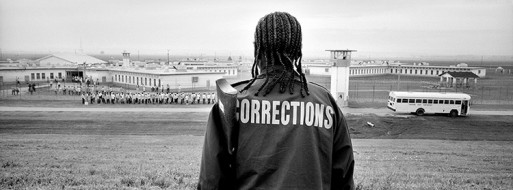
In our most recent conversation, I asked King, “How’s it going?” “It’s … ongoing,” he replied. It’s easy to see why: Little has changed at Angola. It remains a time warp, a living, breathing relic of a shameful past. Of about 6,000 inmates currently in custody, roughly 70% are black and 30% are white. In October 2008, NPR reported, “In the distance on this day, 100 black men toil, bent over in the field, while a single white officer on a horse sits above them, a shotgun in his lap.” The context of this modern day slave plantation is unfortunately appropriate. Nola.com wrote that Louisiana is the world’s “prison capital,” with 1 in 86 residents serving time — nearly double the national average. The racial skew is extreme. One in 14 black men in New Orleans is behind bars; 1 in 7 is either in prison, on parole or on probation. Louisiana is “notorious for racial disparities in its justice systems,” Andrew Cohen wrote in the Atlantic.
One highly concerning aspect of Louisiana’s judicial scheme is that, unlike in 48 states, a unanimous jury decision is not required — only 10 jurors have to vote to convict someone, even for a life sentence. Oregon is the only other state with this system, but it doesn’t have the same tremendous racial component. Cohen wrote, “Prosecutors can comply with their constitutional obligations to permit blacks and other minority citizens to serve as jurors but then effectively nullify the votes of those jurors should they vote to acquit.” It is one of “the most obvious and destructive flaws in Louisiana’s broken justice system,” he wrote, arguing, plain and simple: “Louisiana is terribly wrong to defend a law that was born of white supremacy.”

A Duke University study examined more than 700 non-capital felony criminal cases in Florida and found that, in cases with no blacks in the jury pool, blacks were convicted 81% of the time while whites were convicted 66% of the time. The researchers concluded that “the racial composition of the jury pool has a substantial impact on conviction rates” and that “the application of justice is highly uneven.”
Image Credits: AP, Peter Puna, Robert King, Google Images
Guest Feature – A Modern Day Slave Plantation Exists, and It’s Thriving in the Heart of America – Part 1
This post is part of a 3 day Special Feature Post on ThePBSblog, located under our Articles and Guest Feature section. The author’s name is Laura Dimon. Laura graduated from Columbia University’s Graduate School of Journalism in 2013. She has been published in the Economist, the Atlantic, and the Daily Beast. I ran across her article on the Prison system and its striking similarity to the Slavery Plantation and thought I’d share it here. However, it is a lengthy article so I will be breaking it down into 3 separate post to give you room to process the information. I will also wait until after this series (Friday 10/17/14) before adding my own commentary, though you may comment after each segment as you wish.
*******************************************
It was 1972. Thousands of American troops were battling communist forces in Vietnam. Nixon had won re-election by a landslide, but Watergate would soon usher in his demise. Space travel and technology were advancing rapidly.
Change was brewing across America, but one place stood still, frozen in time: Louisiana State Penitentiary, commonly known as Angola. When Robert King arrived that year, he felt as though he’d stepped into the past.

Angola sits 50 miles northwest of Baton Rouge. It’s the largest maximum-security facility in the United States and one of the country’s most notorious prisons. In the book The Life and Legend of Leadbelly, the authors wrote, “Tough criminals allegedly broke down when they received a sentence to Angola. … None of them wanted to be sent to a prison where 1 of every 10 inmates annually received stab wounds and which routinely seethed with black-white confrontations.”
Angola’s expanse covers a vast 28 square miles — larger than the size of Manhattan. Tucked away in a bend of the Mississippi River, it’s surrounded by water and swamp on three sides. It’s an isolated penal village — the nearest town 30 miles away — and it’s the only penitentiary in the country where staff members live on site. Generation after generation grow up, live and die on Angola’s land.

When King, now 71, arrived at Angola, his first impression of it was that it resembled a slave plantation, he said. And it used to be just that. Its name is derived from the home country of the slaves who used to work the land. Today, the comparison remains sadly accurate: Inmates are disproportionately black. They’re forced into hard labor and monitored closely by armed white staff on horseback. There is a sex slave trade behind the bars and many black inmates are deprived of basic constitutional rights. King landed a tough lot in life: He was born black in Louisiana in 1942. In his 2008 book From the Bottom of the Heap, he wrote, “I was born in the U.S.A. Born black, born poor. Is it any wonder that I have spent most of my life in prison?” He went to Angola when he was 18 for a murder he did not commit and remained there for 31 years, 29 of which he spent in solitary confinement, before he was finally freed in 2001.
*Note: Image Credits: AP, Peter Puna, Robert King
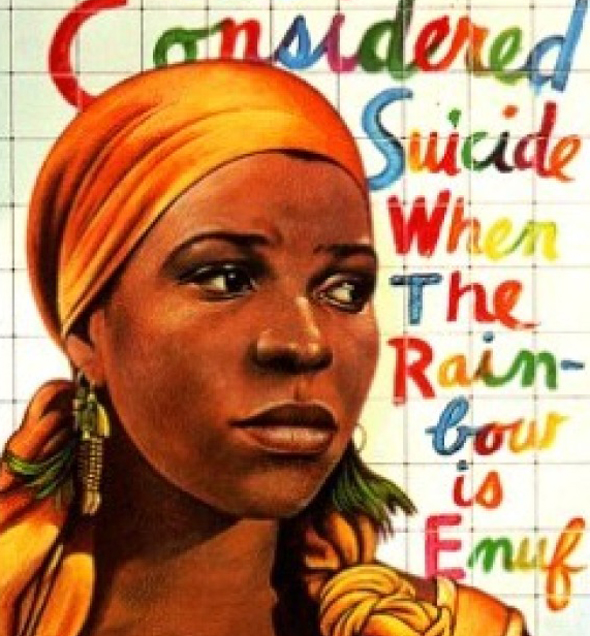
Guest Feature – Exerpt from Ntozake Shange

i can’t hear anythin
but maddening screams
& the soft strains of death
& you promised me
you promised me…
somebody/anybody
sing a black girl’s song
bring her out to know herself
to know you
but sing her rhythms
carin/struggle/hard times
sing her song of life
she’s been dead so long
closed in silence so long
she doesn’t know the sound
of her own voice
her infinite beauty
she’s half-notes scattered
without rhythm/no tune
sing her sighs
sing the song of her possibilities
sing a righteous gospel
let her be born
let her be born
and handled warmly.