
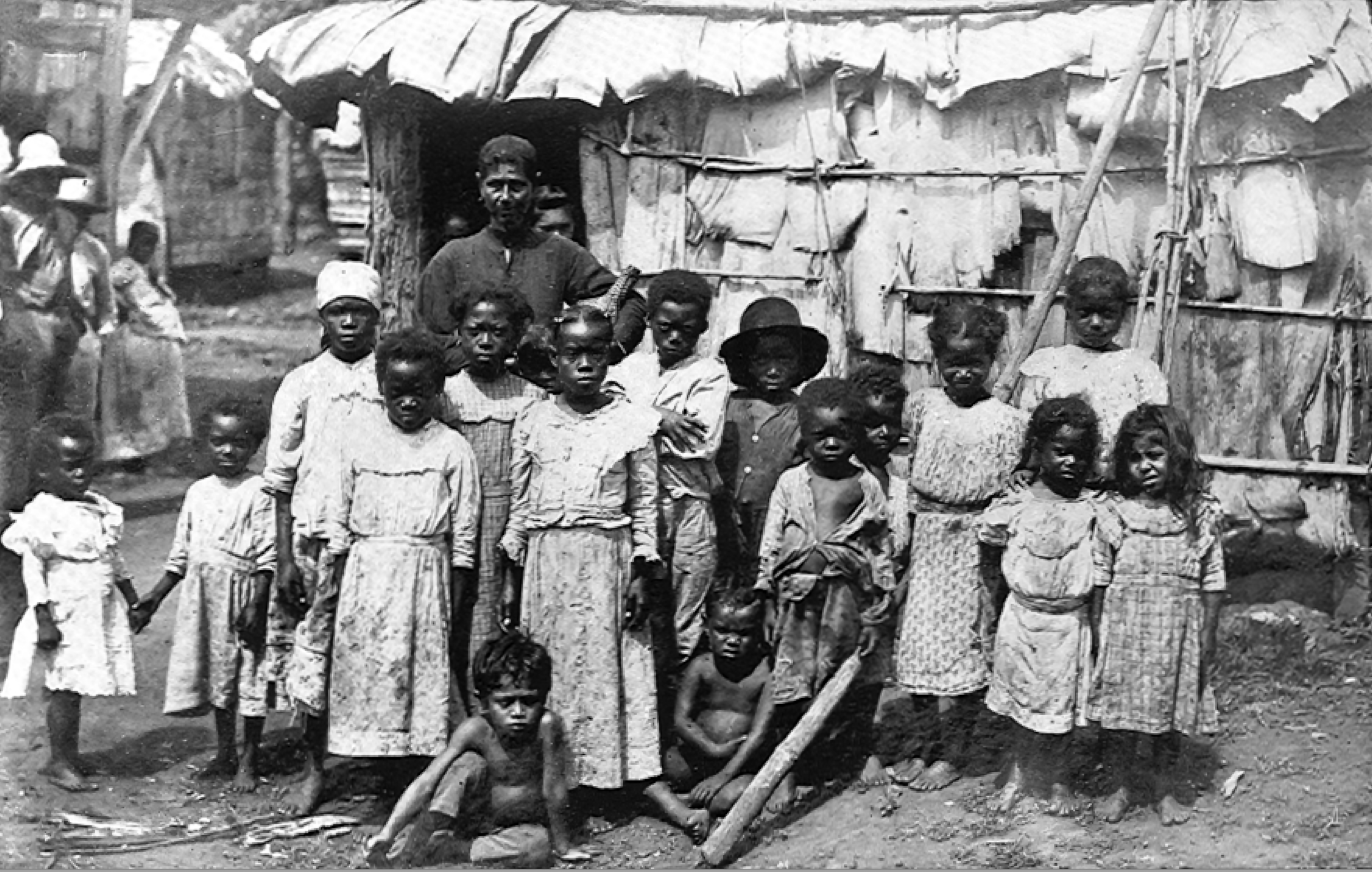
Though many students will learn about slavery in the U.S. at some point, our teachings are usually narrow in that we only learn about the European Slave Trade and the wrongs that Europeans have done. We won’t be told that we weren’t just dropped off in America. We won’t be told that every people, from Jews to the Five Civilized Native American Tribes, held us as slaves. We won’t be told of the difference between the Africans themselves who had slaves and those who were enslaved, and we won’t be told of the many different tribes and nations of black people that occupy the continent.
Contrary to popular belief, mostly brought on by television and movies, slave traders did not go into the interior of Africa to pick up any “African” but they were looking for a specific people. However, since the continent has been lumped up into one big mass, all blacks are assumed to be the same people and as a result, many ancient practices and truths faded from memory.
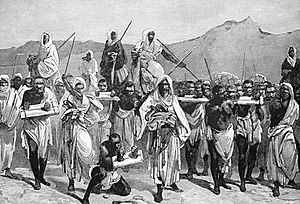
The trade of slaves across the Sahara has a long history. Dr. John Alembellah Azumah in his 2001 book, The Legacy of Arab-Islam in Africa estimates that over 80 million black people died en route to the Islamic world. Having enslaved blacks about one thousand years before the Europeans, the Arabs had already identified the people of the book. That is the people of the covenant. The people of scripture. The chosen and the prophecies surrounding their captivity.
Indeed, they were not after just any African, but the ones who held principles that were distinct from the other tribes. Differing by way of culture and spirituality, these blacks could easily be spotted by way of their traditions. Olaudah Equiano, known as Gustavus Vassa, captured, enslaved, and then freed, told in his book, The Interesting Narrative of the Life of Olaudah Equiano, of his life in Africa before the abduction.
Born among the Ibo people in the kingdom of Benin, along the Niger River, Olaudah recounts in his narrative of how they still held many Hebrew customs and traditions, such as the circumcision, the division of the tribes by twelve, and the marrying of their brother’s wife after death just to name a few. What is not recounted is that not only did Olaudah’s family uphold such traditions but so did many so-called African tribes.
That said, many of the slaves who came to Puerto Rico were from Congo, the Ashanti, Yoruba, Igbo and Bantu tribes. In all, 31 known African tribes were brought to the island from Central and West Africa through the slave trade but they weren’t the only ones.
Not only was Afro-Puerto Ricans largely made up of these Hebrew tribes, but so were the Jamaicans, Dominicans, Cubans, and so-called African Americans of today. Though we see each other as separate, the truth is that many of us (even if we’ve mixed) are all the same people and were all part of the dispersion.
Today’s lost to history segment focuses not on one individual but a group of individuals who have gone on to war within themselves due to the lost historical fact that we are not a different people but the same. Having been separated by land, we were taken from the same areas because we are descendent of the same people. The only difference is that we were dropped off in different places. Some to Jamaica, some to Haiti, some to Puerto Rico, and so on. As a result, some of us speak English, some of us speak Spanish, and some of us speak French.


 The PBS Blog