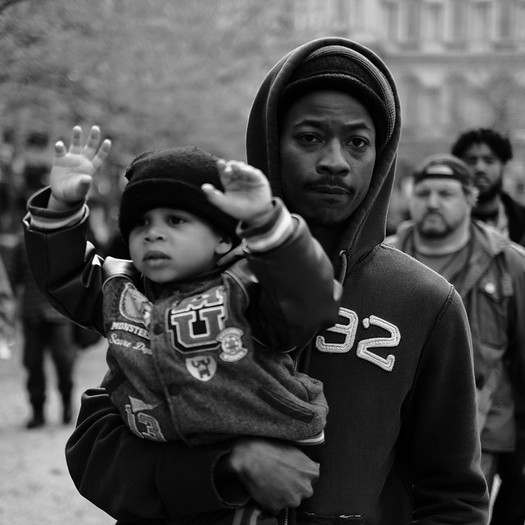
Just thought I’d share this article as a current events type deal before heading out for today. Though I don’t really get photography as an art far as all the technicalities are concerned (I mean, there are good pictures and then there are…good pictures), I do love the camera myself and I do think photography plays an important role in the unfolding of historical events. Had it not been for photographers, we would not have the opportunity to relive some of the most profound moments in history with such intimacy. As for my thoughts on the specific events rocking the country, I will have to come back with another post when I have more time, however I am led, we will see. Till then stay in tune:
Devin Allen is a self-taught photographer and Baltimore native. His images from the protests following the death of Freddie Gray while in police custody have received thousands of likes and shares on social media. As the situation continued to unfold in his hometown, Fusion caught up with Allen to learn more about his work and the gaps in the narratives being reported on the news versus those being experienced on the ground.
Fusion: So how old are you and how long have you been doing photography?
Devin Allen: Well, I’m 26, and I started photography [about] 3 years ago, in 2013.
Fusion: What got you started?
Devin Allen: Basically, hanging in the city, we don’t have a lot to do…one of my friends actually got me into doing poetry, so I had my own poetry night. But I suck. I can write poetry but I cannot perform. So I had to find a way to give people that poetry feel, but visually, so I started making T-shirts. From there I got into photography. I would take pictures and put them on T-shirts and eventually, I fell in love with it and that became my major outlet since then.
Fusion: How long have you been in Baltimore?
Devin Allen: All my life.
Fusion: Your whole life, so you’re local?
Devin Allen: Yes.
Fusion: What stands out to you about Baltimore when you are taking pictures? What makes Baltimore so interesting to you?
Devin Allen: It’s just real. Baltimore is a real city. It don’t cut no corners. You know, when you get around certain people or certain places it don’t feel real? You know, like everything seems perfect? Baltimore is not that. It’s a beautiful place, it’s like a rose in concrete to me. It’s a beautiful place, but most people don’t see it like I see it. I was born and raised here, so I see the negative, I see the positive. I see the good and the bad. I’ve been on both sides of the fence – both the good side and the bad side. So that’s what it is for me – it’s a beautiful place, and it’s real.
Fusion: When you say you’ve been on the bad side, what do you mean? What is the bad Baltimore that you know and what is the good Baltimore that you know?
Devin Allen: Well, growing up here is very stressful. You can get caught up in a lot of things if you don’t have a strong environment [around you]. Growing up, I got caught up in a lot of foolishness because of friends, where I hung at, and umm…I was raised by my mother and her family, I was raised good, but I just had affection for the streets. I had a lot of friends in the hood who’d run the streets all day, I hung with a lot of people. I lost a lot of friends. I buried both my best friends back in 2013. Both of them were murdered. I lost both my best friends, so they’re like my inspiration. I was just doing whatever, you know, to get the day passed. I tried the school thing, didn’t work. Got a job, but you know it’s hard to stay the narrow with so much stress and negativity. Drugs everywhere, crack-infested, heroin-infested. It’s very difficult, but [an] easy city to get caught up in. As far as being on the bad side, I hung with drug dealers and I ran the streets with some bad people, you know?
Photography actually got me away from that because both my best friends were both murdered; one was murdered on a Friday, and my other best friend was murdered on a Saturday. The only reason I was not with them was because I had photo shoots both days. And that kind of bridged the gap between the streets and my art, and I chose my art over the streets.
Fusion: What would you say about your interactions with the police growing up in Baltimore?
Devin Allen: (Exhales.) Well, I have been subjected to racial profiling. You know, I have had friends beaten by police. I have had police plant drugs on me because they’ve been mad that they didn’t find any.
When I think of storytelling, a familiar image creeps into my mind: an elder with the strength of several generations. Eyes covered with glasses slightly tilted off the nose, they nod slowly to the beat of a rocking chair. Their hands and knees are stiff with arthritis so it is rubbed continuously as the history of whatever crawls out of their mouth. And when it does, our ears jump with excitement, wondering how a single individual can be so vivid with detail. The story is told from somewhere down south under the roof of an inherited home, one passed down from generation to generation. A place where even the oldest relative once had his/her diapers changed, a place to always come back to and call home. A house in the countryside or a peaceful place in the city.
Storytelling has been around forever. It predates writing and has proven to be one of the oldest and most effective ways to relay a message. Stories have been shared in every culture for education, cultural preservation, entertainment, and for instilling moral values.
One of the characteristics of storytelling that makes it so powerful is the colorful expression as showcased by the orator. The tone of voice, gestures, creativity, and speaker’s point of view. I always enjoy a good sit down with the elderly in that I may relive moments to which I had not existed. Even in my mind, as I pass an elder on the street, I cannot help but fathom what today’s world must look like through their eyes. It is a silent and private game between that person and me. Quickly and excitedly, I create a background for them. Did that old Black lady experience Jim Crow? What was it like for her? Did that old white lady experience the first integration of schools? What was it like for her? As you can tell, it is why I love writing historical fiction. It is like getting inside a time machine and blasting myself into another world.
As I remember I was one day standing under a foyer at the Veterans Hospital waiting for my husband. Moshe. It was raining out so I was careful to keep under the hood of the building. An elderly white man came walking out of the building. His back was slightly hunched as he glided from one step to the next. “Is it still raining?” he asked, more so to the air than anyone in particular. “Yep,” I said looking into the sky. As he walked away, muttering a phrase under his breath I’d never heard but cannot remember accurately enough to share, I wondered about his youth and about how he would compare today’s world to the one he grew up in. Did he think the direction of things had bettered or worsened? I wondered.
Storytelling is a means for sharing and interpreting experiences. Stories are great teaching tools because, like love, it is a universal language. Universal in that they can bridge cultural, linguistic, and age-related divides. Although my image of the storyteller is that of an elder, storytelling can be adaptive for all ages. It can teach ethics, values, and cultural norms and differences. Books and organized / structured schooling are one way to acquire information, but experience has taught us that social environment and physical contact with others greatly benefit learning. It provides real-life examples of how knowledge is to be applied. Stories then function as a tool to pass on knowledge in a social context.
And since art is defined as the expression or application of human creative skill and imagination, storytelling is also a form of art, producing stories to be appreciated primarily for its emotional power and for the beauty in which it is told.
I would like to present first Philips Wheatley because as I embark on publishing my third collection of poetry, I cannot help but wonder what it must have been like for her to be the first. Phillis Wheatley was the first black poet in America to publish a book. She was born on May 8, 1753 in West Africa and brought to New England in 1761, where John Wheatley of Boston purchased her as a gift for his wife. Like many of her time, Phillis was taught to read by her owners and could read and write English by the age of nine.
Many people are under the impression that slaves were of pure ignorance; that they muttered broken English because they were imbecile. This is not truth. Slaves were only ignorant so far as the English language is concerned, at which they could not read, write, and could barely speak. They were strangers in a foreign land and introduced to ways to which neither they nor their fathers had known. Put me in the middle of a street in China and see how dumb I will be.
Nonetheless, Wheatley also became familiar with Latin, Greek, the Bible, and selected classics at an early age. She began writing poetry at thirteen (around the same time I started writing), modeling her work on the English poets of the time, particularly John Milton, Thomas Gray, and Alexander Pope. Her poem “On the Death of the Rev. Mr. George Whitefield” was published as a broadside in cities such as Boston, New York, and Philadelphia and garnered Wheatley national acclaim. This poem was also printed in London.
Anne Spencer
1882–1975
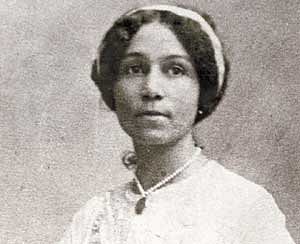
Anne has too many names for me to keep up with so we’ll stick with Anne Spencer. Anne was born in Virginia in 1882. She was the daughter of a former slave and her mother enrolled her in school for the first time when she was eleven years old. She graduated seven years later as valedictorian. Known as a “Harlem Renaissance Poet”, Anne was good friends with many Harlem Renaissance writers, including James Weldon Johnson, Langston Hughes, and W.E.B. Du Bois. Spencer’s poetry engages themes of religion, race, and the natural world. Thirty of her poems were published during her lifetime, in such anthologies as The Book of American Negro Poetry (1922) and Caroling Dusk (1927) and was the first African American woman poet to be featured in the Norton Anthology of Modern Poetry (1973).
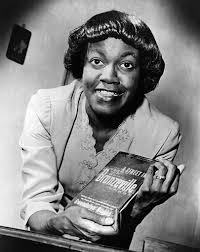
Gwendolyn Brooks
1917–2000
For some reason, whenever I say this woman’s name I think of Books. Seems like it should be Gwendolyn Books, but anyway, Brooks and I do actually have something in common: we are both from Chicago. Brooks was born in Topeka, Kansas, but her family moved to Chicago when she was young. Her father was a janitor who had hoped to become a doctor; her mother was a schoolteacher and trained pianist. They were supportive of their daughter’s passion for reading and writing. Brooks was thirteen (again around the same age I was when I began writing) when her first published poem, “Eventide,” appeared in American Childhood; by the time she was seventeen she was publishing poems frequently in the Chicago Defender, a newspaper serving Chicago’s black population. After such formative experiences as attending junior college and working for the NAACP, she developed her craft in poetry workshops and began writing the poems, focusing on urban blacks, that would be published in her first collection, “A Street in Bronzeville”.
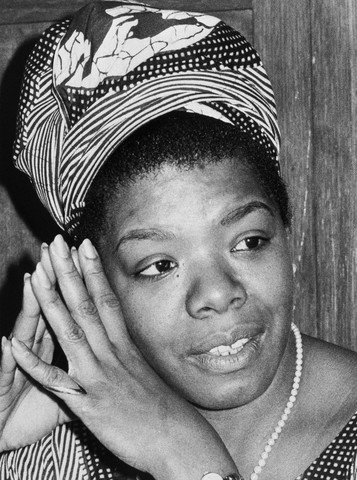
Maya Angelou
1928-2014
I could probably leave this part blank and many of you would still know who this woman was. The poet and award-winning author known for her acclaimed memoir “I Know Why the Caged Bird Sings” and her numerous poetry and essay collections. Born on April 4, 1928, in St. Louis, Missouri, writer and civil rights activist Maya Angelou is known for her 1969 memoir, I Know Why the Caged Bird Sings, which made literary history as the first nonfiction best-seller by an African-American woman. In 1971, Angelou published the Pulitzer Prize-nominated poetry collection “Just Give Me a Cool Drink of Water ‘Fore I Die”. She later wrote the poem “On the Pulse of Morning“—one of her most famous works—which she recited at Bill Clinton’s inauguration in 1993. Angelou received several honors throughout her career, including two NAACP Image Awards in the outstanding literary work (nonfiction) category, in 2005 and 2009. She died two days after my 27th birthday on May 28, 2014.
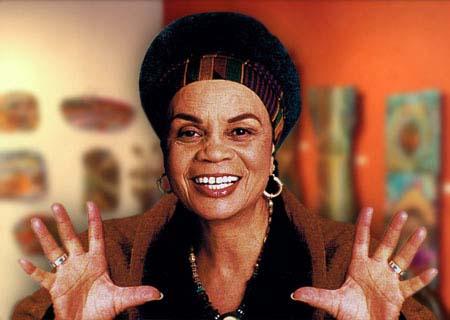
Sonia Sanchez
1934
Sonia is another poet whose name rings with such prominence that I could leave her bio blank too and many of you would still know who she is. Born Wilsonia Benita Driver, on September 9, 1934, in Birmingham, Alabama Sanchez lived with her paternal grandmother and other relatives for several years after her mother died in childbirth a year later. In 1943, she moved to Harlem with her sister to live with their father and his third wife. Sonia married and divorced Albert Sanchez, a Puerto Rican immigrant whose surname she kept.
In the 1950s, Sanchez formed a poets’ group, the Broadside Quartet. Sanchez began teaching in the San Francisco area in 1965 and was a pioneer in developing black studies courses at what is now San Francisco State University, where she was an instructor from 1968 to 1969. Sanchez is the author of more than a dozen books of poetry, including “Morning Haiku” (Beacon Press, 2010); “Shake Loose My Skin: New and Selected Poems” (Beacon Press, 1999); “Does your house have lions?” (Beacon Press, 1995), which was nominated for both the NAACP Image and National Book Critics Circle Award; “Homegirls & Handgrenades” (White Pine Press, 1984), which won an American Book Award from the Before Columbus Foundation. From the 1970s through the ’90s, she wrote poetry, plays and kids’ books. She retired from her Laura Carnell chair in English in 1999.
Nikki Giovanni
1943-
Giovanni’s collections, like the women before her, focused on African American identity. Born Yolanda Cornelia, Nikki Giovanni was born in Knoxville, Tennessee on June 7, 1943 and raised in Cincinnati Ohio, a place I got the chance to visit for our 8th Grade school trip. On July 28, 2000, when I was thirteen years old, I lost my Dad to cancer. In December of 2014, I lost my Aunt to the same disease. In some way or another I can sympathize with Giovanni, who is not only a poet but a Lung Cancer survivor and has contributed an introduction to the anthology Breaking the Silence: Inspirational Stories of Black Cancer Survivors (Hilton Publishing, 2005). Giovanni has been awarded The Langston Hughes award for Distinguished Contributions to Arts and Letters in 1996, as well as more than twenty honorary degrees from national colleges and universities. She has been given keys to more than a dozen cities, including New York, Los Angeles, Dallas, Miami, and New Orleans. She has served as poetry judge for the National Book Awards and was a finalist for a Grammy Award in the category of Spoken Word.
She is currently professor of English and Gloria D. Smith Professor of Black Studies at Virginia Tech, where she has taught since 1987.
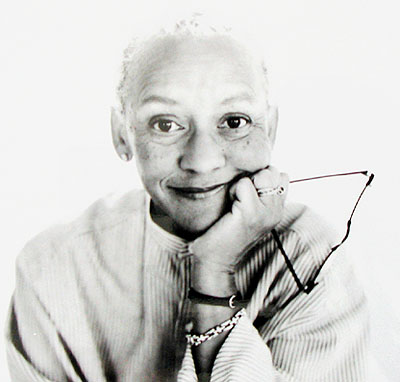
Ntozake Shange
1948-
I fell in love with Shange’s poems almost instantly. I really enjoy the raw truth of experience embodied in the words and the style in which they occupy the page is hard to ignore. I like how she allows the words to be written just how they are spoken, how they ignore the “professionalism” of the edit. (though poetry does tend to allow for this kind of freedom).
Born Paulette Williams, Ntozake Shange was born into an upper middle-class African-American family. Her father was an Air Force surgeon and her mother a psychiatric social worker. Cultural icons like Dizzie Gillepsie, Miles Davis and W.E.B. DuBois were regular guests in the Williams home. Shange attended Barnard College and UCLA, earning both a bachelors and master degree in American Studies. But Shange is most famous for her play For Colored Girls Who Have Considered Suicide/When the Rainbow Is Enuf (1975) which is how I was introduced to her. A unique blend of poetry, music, dance and drama called a “choreopoem,” it “took the theater world by storm” said Jacqueline Trescott in the Washington Post, as it “became an electrifying Broadway hit and provoked heated exchanges about the relationships between black men and women…Its form—seven women on the stage dramatizing poetry—was a refreshing slap at the traditional, one-two-three-act structures.” The play uses female dancers to dramatize poems that recall encounters with their classmates, lovers, rapists, and abortionists. The women survive abuse and disappointment and come to recognize in each other the promise of a better future.
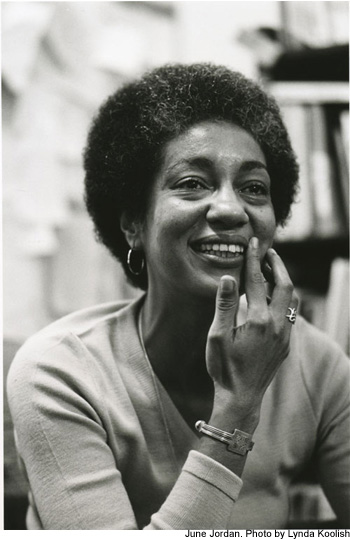
June Jordan
1936-2002
June Jordan is the author of children’s books, plays, a novel, and Poetry for the People: A Blueprint for the Revolution (1995), a guide to writing, teaching and publishing poetry. Her collections of political essays include Affirmative Acts: Political Essays (1998) and Technical Difficulties (1994). Basic Books published her memoir, Soldier: A Poet’s Childhood, in 2000.
Born in New York City on July 9, 1936, June Jordan attended Barnard College. She received the National Association of Black Journalists Award, and fellowships from the Massachusetts Council on the Arts, the National Endowment for the Arts, and the New York Foundation for the Arts.
Her numerous books of poetry include Directed by Desire: The Collected Poems (Copper Canyon Press, 2007), Haruko/Love Poems (1994), Passion (1980), and Things That I Do in the Dark (1977), among many others. She taught at the University of California, Berkeley, where she founded Poetry for the People. June Jordan died of breast cancer on June 14, 2002, in Berkeley, California.
Rita Dove
1952-
Rita Dove is the first African-American woman to be named Poet Laureate of the United States, and only the second to win a Pulitzer Prize for poetry (Thomas and Beulah, 1987), Rita Dove has achieved a great deal in her career. Her multi-layered poems dramatize the stories of individuals both living and dead against the backdrop of larger historical forces (I really like “Reverie in Open Air”). Rita was born in Akron, Ohio on August 28, 1952. Her books of poetry include (but are not limited to) Sonata Mulattica (W. W. Norton, 2009); American Smooth (W. W. Norton, 2004); On the Bus with Rosa Parks (W. W. Norton, 1999), which was named a New York Times Notable Book of the Year and was a finalist for the National Book Critics Circle Award. In addition to poetry, Dove has published a book of short stories, Fifth Sunday (University of Kentucky Press, 1985), the novel Through the Ivory Gate (Pantheon, 1992), essays in The Poet’s World and the verse drama The Darker Face of the Earth (Story Line Press, 1994). She also edited The Best American Poetry 2000 and The Penguin Anthology of Twentieth-Century American Poetry (Penguin, 2011).
Dove is Commonwealth Professor of English at the University of Virginia, where she has been teaching since 1989.
********************************************
And that’s it for this week’s episode of Black History Fun Facts. Don’t forget to check out last week’s episode, in case you missed it:
I believe life tends to happen in stages. There are certain bridges that we have crossed as stepping stones to get to where we are; a small portion of the bigger picture to lead us on. And even where we are today is of itself a mere foundation for where we will be tomorrow. As I think about this, I am recalled to Lucille’s quote and I am reminded of the compassion and the respect that we should have for one another because you never know what’s beyond those eyes. What they have seen, what they see, or what they have endured. And even our idea of what seems difficult or simple can play a different role in the life of someone else. I may have known homelessness but the man who lost his mother to cancer may experience a struggle that would have broken me, whereas my homelessness could have broken him. Makes me think about what each person has endured and how it has contributed to their strength. No matter how seemingly small it was something that we ourselves probably could not have faced if given the chance to do so.
About the Author:
Lucille Clifton 1936–2010
What I noticed right away about Lucille is that she puts the sweet in “short and sweet”. Her poems are often not very long-winded, but they are short, almost speeding like, but not tasteless. Clifton is noted for saying much with few words. In a review of her work, Peggy Rosenthal commented, “The first thing that strikes us about Lucille Clifton’s poetry is what is missing: capitalization, punctuation, long and plentiful lines. We see a poetry so pared down that its spaces take on substance, become a shaping presence as much as the words themselves.”
In an American Poetry Review article about Clifton’s work, Robin Becker commented on Clifton’s lean style: “Clifton’s poetics of understatement—no capitalization, few strong stresses per line, many poems totaling fewer than twenty lines, the sharp rhetorical question—includes the essential only.”
In addition, Lucille Clifton’s work hinges largely on life, emphasizing endurance and strength with a focus particularly on the African American experience and family life. It is another reason I enjoy her poetry. In 2007, Clifton was awarded the Ruth Lilly Poetry Prize in which the judges remarked,
“One always feels the looming humaneness around Lucille Clifton’s poems—it is a moral quality that some poets have and some don’t.”
In addition to the Ruth Lilly prize, Clifton was the first author to have two books of poetry chosen as finalists for the Pulitzer Prize, Good Woman: Poems and a Memoir, 1969-1980 and Next: New Poems (1987).
An additional plus is that Lucille was not just a poet, but she was also an author of children’s books, designed to help them to understand the world and enable an understanding of black heritage specifically.
In books like “All Us Come Cross the Water “(1973), Clifton raises awareness of African-American history and heritage. Her most famous creation, though, was Everett Anderson, an African-American boy living in a big city; an eight title series that won the Coretta Scott King Award. Connecting Clifton’s work as a children’s author to her poetry, Jocelyn K. Moody in the Oxford Companion to African American Literature wrote: “Like her poetry, Clifton’s short fiction extols the human capacity for love, rejuvenation, and transcendence over weakness and malevolence even as it exposes the myth of the American dream.”
And that’s it for this weeks episode of Writers Quote Wednesday!
Be sure to checkout Silver Threading to see how you can join the fun.
So, I wanted to present music in general for you this morning. But the African American contribution to music is too far reaching to cover ever genre in one post. Black people have had influence on almost every kind of music there is, for example: Born in the South, the blues is an African American-derived music form that highlighted the pain of lost love and injustice and gave expression to the victory of outlasting a broken heart and facing down adversity. The blues evolved from hymns, and work songs.
Blues is the foundation of jazz as well as the prime source of rhythm and blues, rock ‘n’ roll, and country music.
JAZZ
Duke Ellington: Master Composer
“One of the most significant figures in music history, Edward Kennedy “Duke” Ellington was born on April 29, 1899, in Washington, D.C. He began studying the piano at the age of seven. He started playing jazz as a teenager, and moved to New York City to become a bandleader. As a pianist, composer, and bandleader, Ellington was one of the creators of the big band sound, which fueled the “swing” era. He continued leading and composing for his jazz orchestra until his death in 1974. “Ellington plays the piano, but his real instrument is his band. Each member of his band is to him a distinctive tone color and set of emotions, which he mixes with others equally distinctive to produce a third thing, which I like to call the ‘Ellington Effect.'”
—Billy Strayhorn, composer and arranger
1900s New Orleans: The Melting Pot of Sound
“New Orleans had a great tradition of celebration. Opera, military marching bands, folk music, the blues, ragtime, echoes of traditional African drumming, and all of the dance styles that went with this music could be heard and seen throughout the city. When all of these kinds of music blended into one, jazz was born.” —Wynton Marsalis
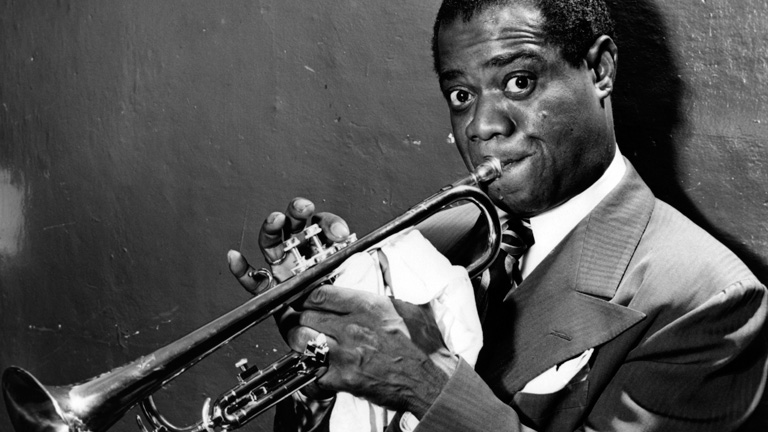
1901 Louis Armstrong is born: The Jazz Original
“Through his clear, warm sound, unbelievable sense of swing, perfect grasp of harmony, and supremely intelligent and melodic improvisations, he taught us all to play jazz.” —Wynton Marsalis
Louis Armstrong was one of the most influential artists in the history of music. Born in New Orleans, Louisiana, on August 4, 1901, he began playing the cornet at the age of 13. Armstrong perfected the improvised jazz solo as we know it. Before Armstrong, Dixieland was the style of jazz that everyone was playing. This was a style that featured collective improvisation where everyone soloed at once. Armstrong developed the idea of musicians playing during breaks that expanded into musicians playing individual solos. This became the norm. Affectionately known as “Pops” and “Satchmo,” Louis was loved and admired throughout the world. He died in New York City on July 6, 1971. – Louis Armstrong House Museum
Dizzy Gillespie: A Jazz Visionary
“The first time you hear Dizzy Gillespie play the trumpet, you may think that the tape was recorded at the wrong speed. He played so high, so fast, so correctly.” —Wynton Marsalis
Trumpeter, bandleader, and composer John Birks “Dizzy” Gillespie was born on October 21, 1917, in Cheraw, South Carolina. He got his first music lesson from his father and took off from there. He moved to New York City in 1937 and met musicians such as Thelonious Monk and Charlie Parker. Together they experimented with jazz and came up with the bebop sound. Dizzy also helped to introduce Latin American rhythms to modern jazz through his collaborations with artists such as Machito and Chano Pozo. His bold trumpet playing, unique style of improvisation, and inspired teachings had a major influence, not only on other trumpet players, but on all jazz musicians in the years to come. He died in Englewood, New Jersey, on January 6, 1993.
– Dizzy Gillespie Biography
1940s Bebop: The Summit of Sound “If you really understand the meaning of bebop, you understand the meaning of freedom.” —Thelonious Monk, pianist and composer
In the early 1940s, jazz musicians were looking for new directions to explore. A new style of jazz was born, called bebop, had fast tempos, intricate melodies, and complex harmonies. Bebop was considered jazz for intellectuals. No longer were there huge big bands, but smaller groups that did not play for dancing audiences but for listening audiences.
1950s Latin and Afro-Cuban Jazz: Beyond the Borders
“Afro-Cuban jazz celebrates a collective musical history. Through its percussive beat, it unites ragtime, blues, swing, and the various grooves of Cuban music. It proclaims our shared musical heritage.” —Wynton Marsalis
The combination of African, Spanish, and native cultures in Latin America created a unique body of music and dance. Jazz musicians from Jelly Roll Morton to Duke Ellington to Dizzy Gillespie combined their music with this Latin sound to create a powerful blend. In the 1940s and 50s, when musicians from Cuba began to play with jazz musicians in New York, the circle was complete. Gillespie and Chano Pozo, a Cuban musician, created a new form of Latin jazz called CuBop.
*****************************
And that’s it for today’s segment of Black History Fun Facts. February is over and done but the fun never stops. To mark our 10th Fun Fact Week, I am introducing a new Fun Fact Badge. I will be using it to represent Black History Fun Facts for now on:
Be sure to check out last weeks Episode below, in case you missed it:
This is a 12 year old poem. It has since been revised but this is the original copy that I wrote back when I was a sophomore in High School. It was entered into a contest and it won. I was then to fly to Rio Nevada for the award ceremony but I could not afford to go. I have since performed it many times throughout my High School career at assemblies and talent shows. For me it was my first poem. It was the first poem I wrote that really spoke about something deeper than my personal adolescent issues and reached beyond the childhood perspective I was used to writing about. It was also my first Spoken Word poem, the first poem I ever shared while standing before an Audience. Today I would like to share it with you. (Keep in mind I was only like 15 when I wrote this so bear with me lol):
BEAUTY
Wake up Black beauty!
Look up black beauty!
And see the mountain range
Stand up Black beauty, know your name
Be the Sun that shines,
I clothe in your sweetness, I see in your eyes
I notice your strength and weaknesses that lies
Time has gone and we have grown,
into these skies of disguise
we are Earth’s insects, its flies.
Walking this ground with our black feet,
sitting at tables eating our black meat,
it is beauty we see.
Working our black railroads
While listening to stories retold
Watching as oceans and seas travel for miles and miles without smirks or smiles,
licking greedy lips,
waiting for boats and ships to please its hips
we are the ground walked upon
We sing and cook with soul offering any hungry person a bowl
We realize the importance of education
that we had before civilization
that we had before coming into the truth of our very own nation.
A nation of many different colors and sizes,
all of various secrets and surprises
We are the proud combination of dark skins,
from small twos to plus sized tens,
we are ALL beautiful.
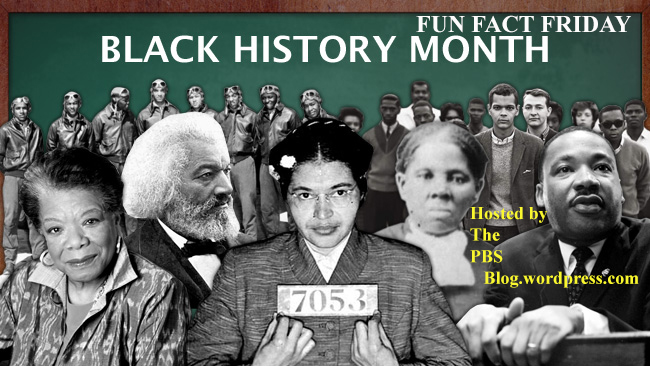
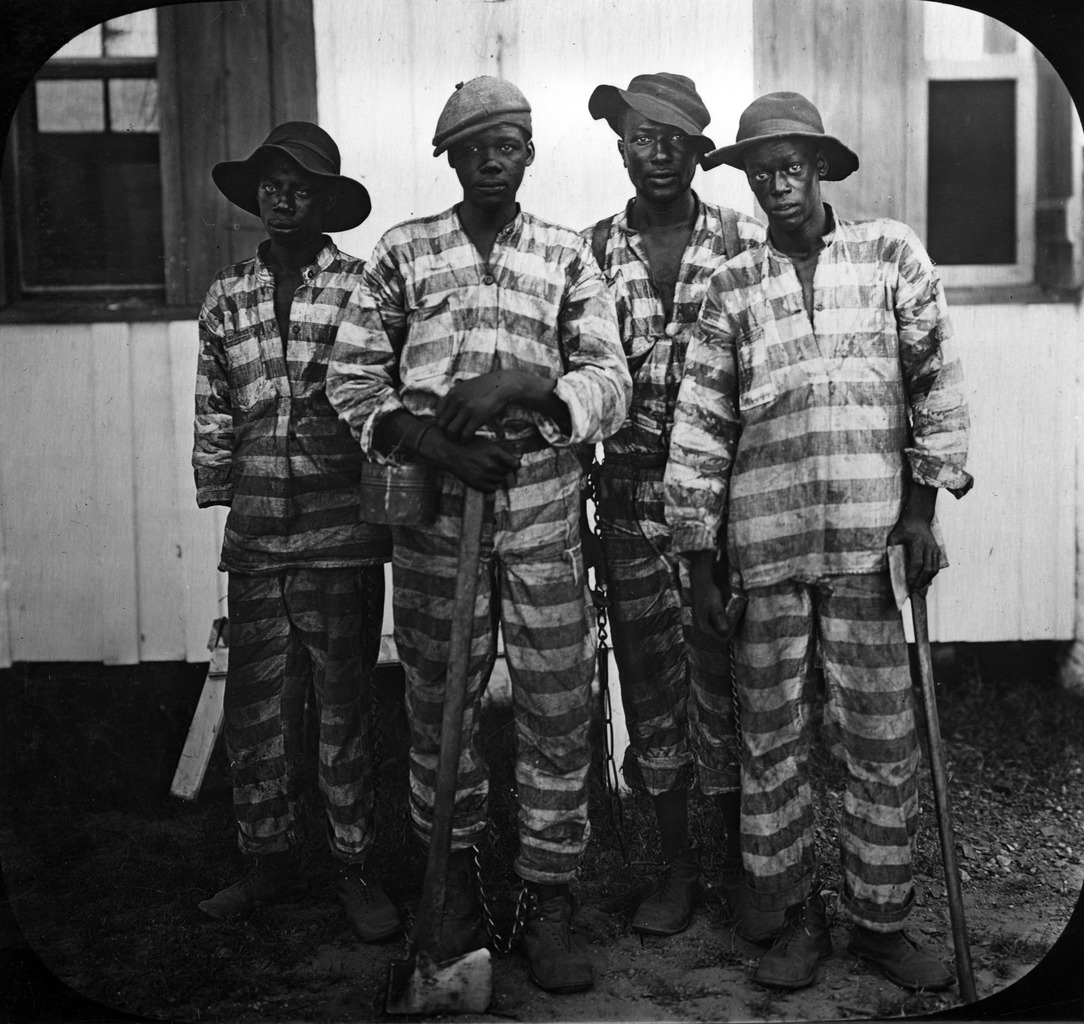
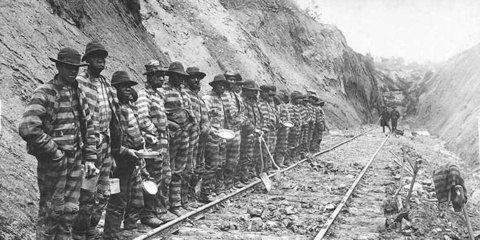
Welcome Back everyone to another episode of Black History Fun Fact Friday! Where we present movies, products, books, audio, or article Fun Facts on a portion of the History of African American people. We cover all things Archeological, Biblical, Historical, and most importantly, Factual. Today marks our 4th week into the series and we’d like to celebrate our month in with an excellent documentary on the history of convict leasing, but first, a little History:
According to the 13th Amendment: “Neither slavery nor involuntary servitude,
except as punishment for crime
whereof the party shall have been duly convicted, shall exist within the United States, nor any place subject to their jurisdiction.”
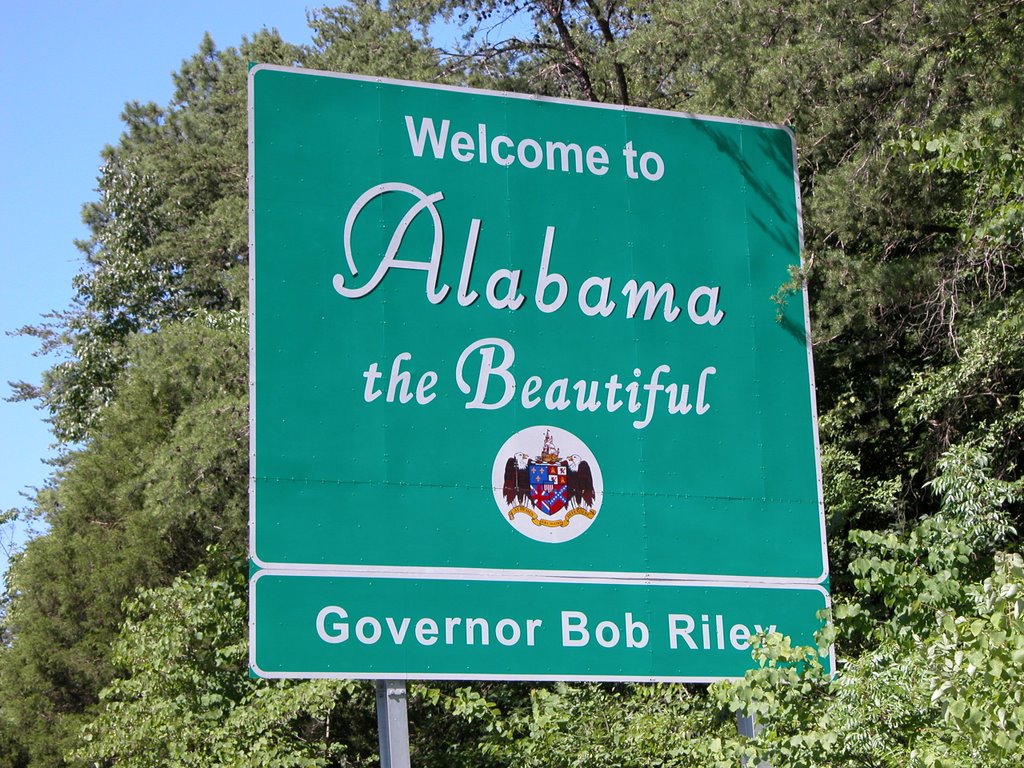
Convict leasing began in Alabama in 1846 and is recorded as lasting until July 1, 1928, however our past and present prison population speak a different language. Today, more than 60% of the people in prison are African American. For Black males in their thirties, 1 in every 10 is in prison or jail on any given day. Take a class filled with black boys and 1 in 3 has a likelihood of ending up in prison. It has gotten so bad that prisons now calculate the percentage of beds needed for cells based on whether or not black boys can read by the 4th grade.
In 1883, about 10 percent of Alabama’s total revenue was derived from convict leasing. In 1898, nearly 73 percent of total revenue came from this same source. Death rates among leased convicts were approximately 10 times higher than the death rates of prisoners in non-lease states. In 1873, for example, 25 percent of all black leased convicts died.
While most believe that the 13th Amendment abolished slavery and involuntary servitude, a loophole was opened that resulted in the widespread continuation of slavery in America–slavery as punishment for a crime.
Narrated by Lawrence Fishburne, learn from Historians and Scholars how the south reconstructed its means of financial stability after the end of the Civil War and the Emancipation of slaves:








 The PBS Blog