Remember, When Going Natural…

“It doesn’t have to be dreads. You can wear an Afro, or braids like you used to. There’s a lot you can do with natural hair” ― Chimamanda Ngozi Adichie
1501d3e6f4566f19aa324da1cea7fa95 enhanced-buzz-6177-1380562649-38 hairstyles-for-natural-hair-11 IMG_0378575x500-300x300 Kyssmyhair-e1426230816154-300x300 maxresdefault natural-hair1 Nigerian-wedding-natural-hair-bridal-hairstyles-taji-salon6 short-natural-hair Style 25

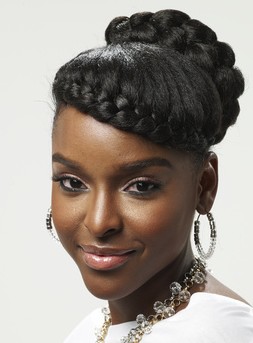
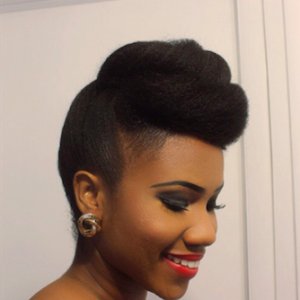
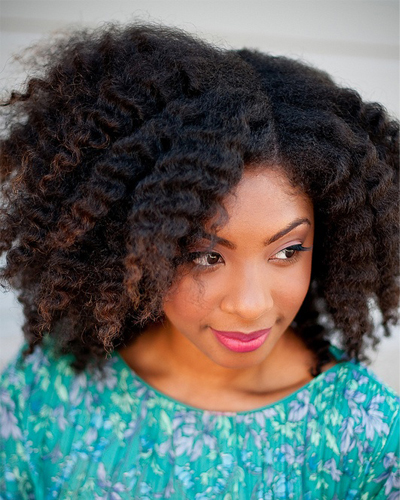
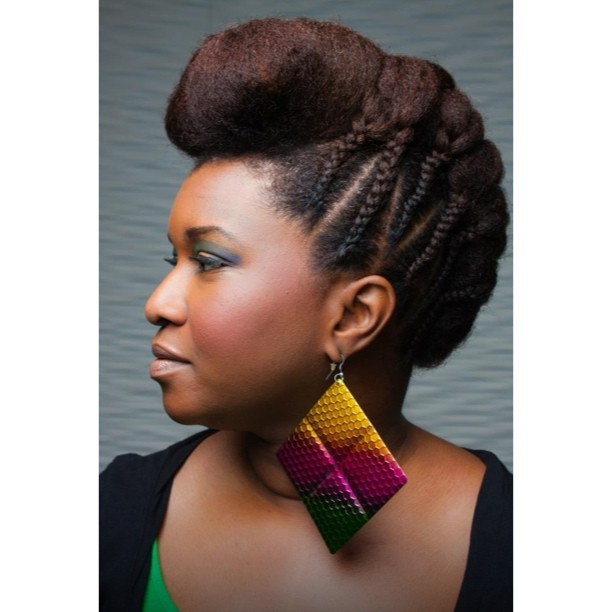
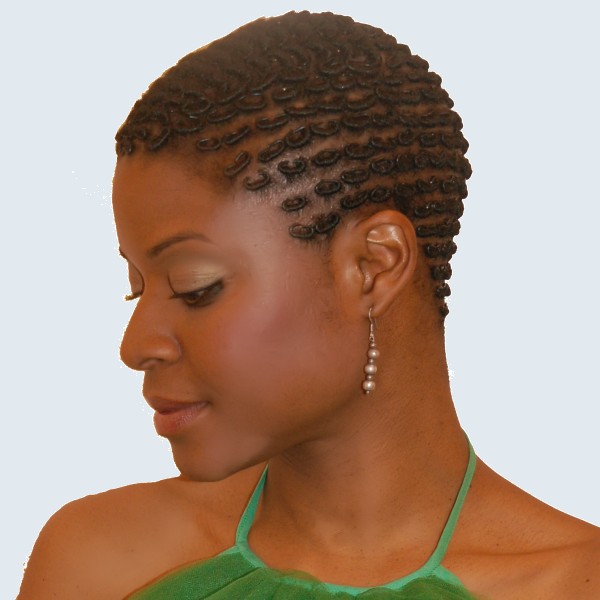
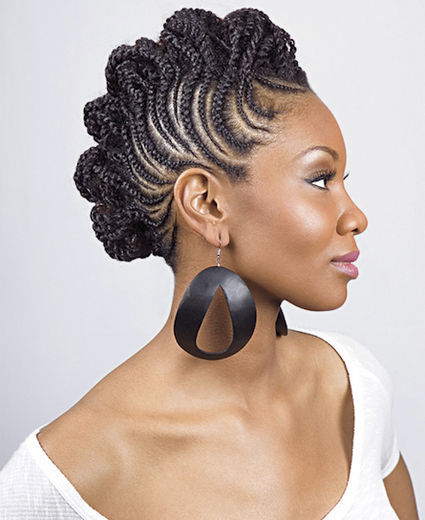
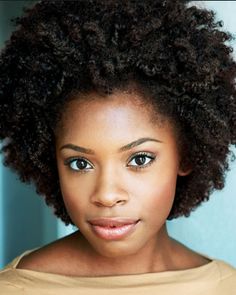
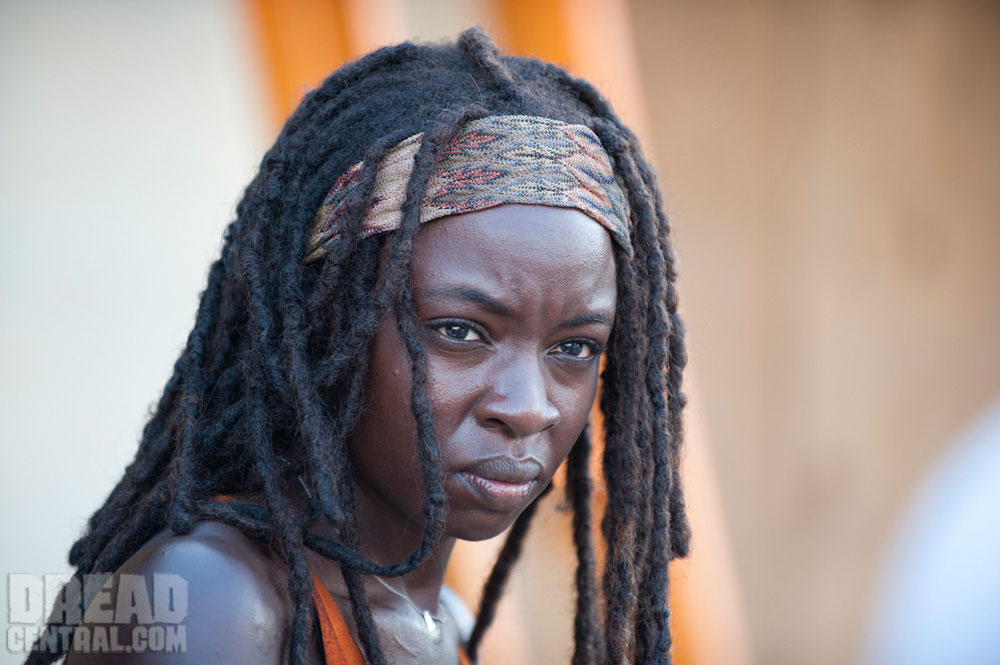
I was speaking with a sista recently who recently tried the natural challenge. That is, she went out on a limb and got locs. Thing is, she got tired of them and washed them out. While there are tons (I means TONS) of benefits to dred locs, I just want to encourage my natural sista’s in prolonging this journey with a reminder: When going natural, there are other styles you can try. Dred locs is the first thing that we think about because it is the most popular and we are in a time of re-awakening which,  as with every movement, is always occupied by a specific hair style. In the 60’s and 70’s it was the Afro, today it is the locs. But if you aren’t too sure about it, there’s a lot of experimenting you could do. There are tons of YouTube videos with tons of styles on how you can twist and pull and shape your antennae* in the way of your desire. Then, once you are comfortable with your natural hair, you can decide if you want to loc it up, which because it’s a permanent style, provides security in that you will endure the natural journey a little bit longer.

*Antennae: Hair is not just strands coming out of your head, but every body part exists to perform a certain function. Hair does not just protect your skull, but hairs are filled with your DNA and often act as Human Antennas or feelers to the physical and spiritual realm. For instance: All matter (solids, liquids, gasses) is made of particles called atoms. And as we learned in school, atoms are made of sub-atom particles called “electrons”, “protons”, and “neutrons”. These sub-atom’s all have electromagnetic fields. That means they are like “mini-magnets”. Your bones, your blood, your skin and your hair are all made of “mini-magnets”. As for your hair, it plays many important roles for your body. The least known role is that of antenna. Your hair is capable of sending/receiving information to and from your body exactly like a radio antenna. We have a large population of Wasps down here in Louisiana in the summer time. A couple summers ago, I noticed that I could hear Wasps buzzing in my ear as I swapped at it, (I hate the sound of bees and wasps buzzing) but I didn’t see anything. That is until a few minutes later when one was coming across the room. I noticed that the locs on the left side of my head were picking up the sound of the wasps before they got near.

According to Wikipedia:

“Antennae are jointed, at least at the base, and generally extend forward from the head. They are sensory organs, although the exact nature of what they sense and how they sense it is not the same in all groups, nor always clear. Functions may variously include sensing touch, air motion, heat, vibration (sound), and especially olfaction (smell) or gustation (taste).”
The Problem With Natural Hair On TV

d76c14824b2956a3eece726e3df53d2b7ac5765d
PHOTO: COURTESY OF ABC.

An article was recently published about the rise of Natural Hair among black women on TV. Below is the featured article. What are your thoughts?  Is there a conscious awareness connected to the sudden surge of natural hairstyles from Blacks? Do you think it matters what state the hair is in?

The Problem with Natural Hair on TV

by Taylor Bryant

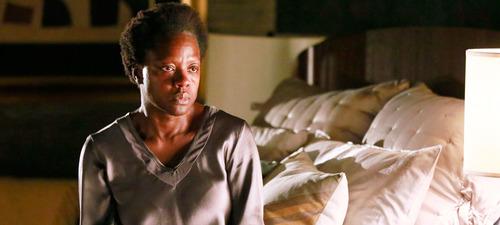
“If you tuned in to “How to Get Away with Murder” recently, you know that Viola Davis has spent some screen time without her wig on. It proved not only to be a raw and emotional episode, but it displayed a rare moment: a Black woman with natural hair on a mainstream TV network.

Turn back the clock 20 years, and you’d be hard-pressed to see a Black actress with hair that was anything other than just-got-out-of-the-salon laid. Flip through the tube in 1995, and you might find: the ladies from Living Single, all with straight strands (with some weaves thrown in), the freshly blowdried ‘do’s of Laura and Harriette on Family Matters, and Gina and Pam’s permed-out hair on Martin. Fast-forward a couple more years, and there’s some more representation with a two-for-one curly appearance in the form of the Mowry twins onSister, Sister. But, even their coils were straightened later in the series. As writer, fashion expert, and image activist Michaela Angela Davis points out, non-curly hairstyles that dominated the small screen in the ’90s were very much a sign of the times. “We were in a very conservative moment,” she says. “Relaxers were easier to get, easier to use, weaves came in…and getting straight hair just got more accessible.”

the-walking-dead-clear3danai-gurira11

While we’ve seen Black women’s natural hair on the small screen before the present-day era — these kinds of landmark moments date back to Cicely Tyson’s ’60s role in East Side/West Side — it’s becoming more common, and the new movement has been a long time coming.

6fdc496ef4525cc1cc3bdf5ebefd6b40caba8d5b
PHOTO: COURTESY OF ABC.

What does this modern evolution look like? Actress Tracee Ellis Ross has worn her curly crown in all its glory since 2000 on the (sorely missed) show Girlfriends, and continues to do so today, as the lead actress on ABC’s Black-ish. “I’m very conscious of how I wear my hair on the show, and yet it’s the way I wear my hair as Tracee,” she told Entertainment Weekly in December. “You hire me, you hire my hair, and you hire my ass. It’s all coming with me.” And, who could forget Davis’ wig-removal scene in earlier episodes of HTGAWM, which spurred many a think piece? According to Kent Nelson, the show’s hair-department head, Davis’ character Annalise is “unmasking” herself. “The armor and mask that she goes to work in every day is coming off,” he says. It signifies vulnerability, intimacy, and a shedding of society’s expectations. Which brings us to the problem with natural hair on TV right now: Yes, there are a lot more instances of it, but the way characters with it are depicted is not necessarily positive.

Take the Netflix series Orange Is the New Black, where the characters embrace, arguably, the widest range of textured styles in a series today (with the exception of Laverne Cox’s character, who, let’s be honest, would look fabulous with any style). There’s cornrows on Taystee, a short TWA style on Poussey, and, of course, Crazy Eyes’ signature bantu knots. “We really haven’t seen that many characters [like the OITNB ladies] on TV before,” says lead hairstylist Angel DeAngelis. “I think that’s why the show is so relatable and popular; because these prisoners look like people that are out there.”

Black History Fun Facts: Hair Story

Today’s Post is part of a weekly series on The PBS Blog that will take place from now on through February: Black History Fun Facts. During this series, I will post some fun facts about a portion of African American History, ranging from Archaeological, Cultural, Biblical, and Historical facts every Friday.

PublicationbhffI will also extend this open invitation to anyone who would like to take part in Black History Fun Facts. All you have to do is use the #BHFF badge in your post, tag Black History Fun Facts, and pingback. And of course, make sure your post is about something, well….Black.

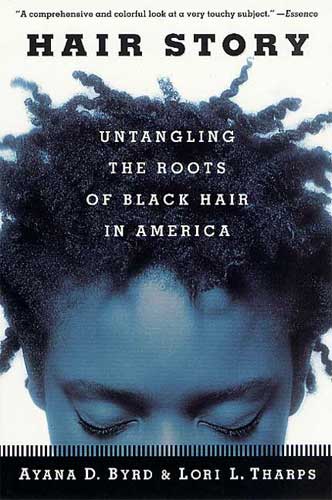
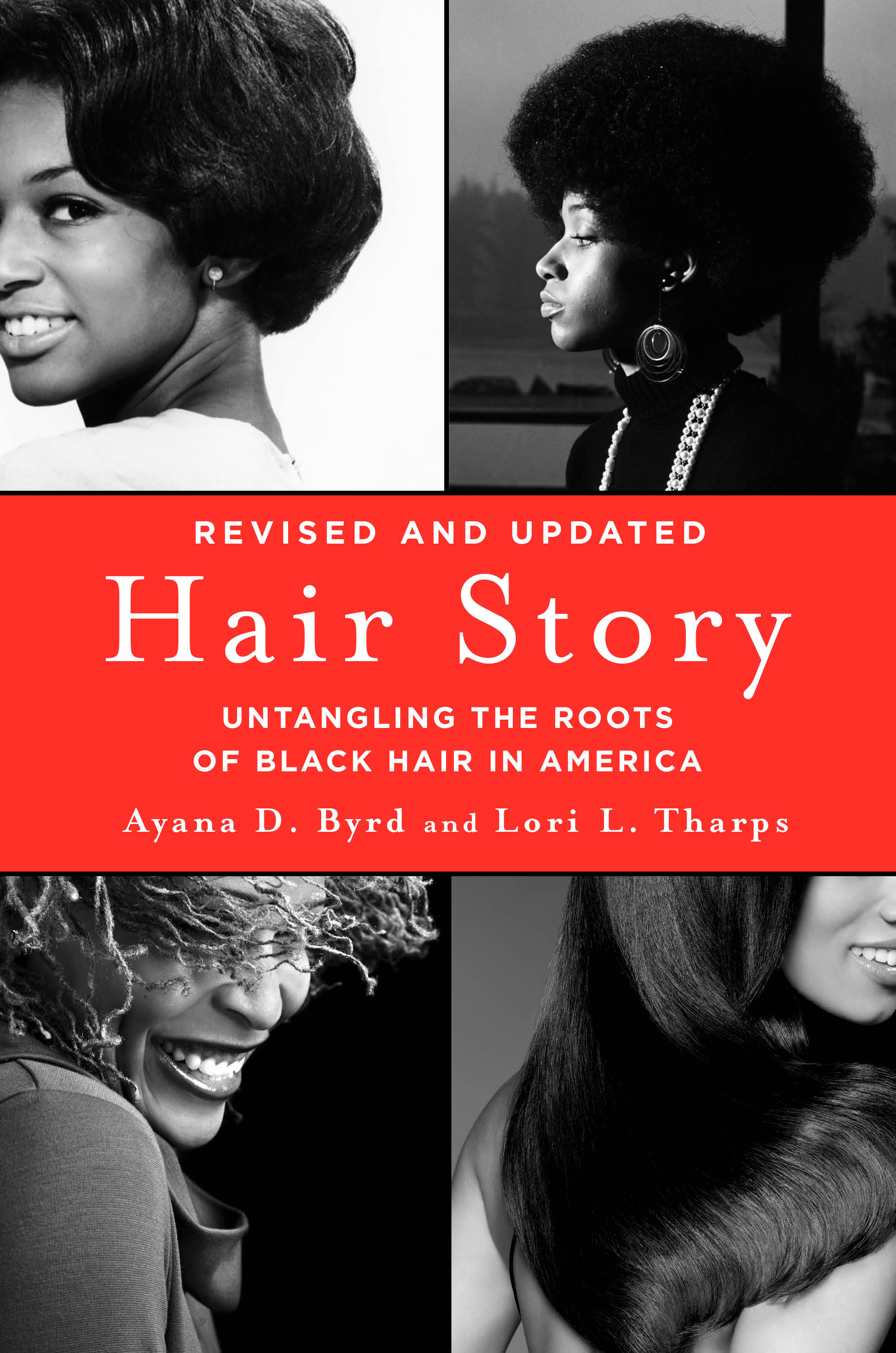
My pick for today’s BHFF is Hair Story: Untangling the roots of Black Hair in America:

hair-storyHair style and texture has been just as life changing and connected to the Black experience as racism and discrimination. Every movement in the history of the so-called African American people has had its own hairstyle. From the Afros of the 60’s & 70’s to the Jehri Curl of the 80’s, you can guarantee to spark conversation whenever black hair is involved.

revhair-story-coverIn Hair Story, authors Ayana D. Byrd, and Lori L. Thraps takes us through a chronological timeline of how Black hair has changed over the years. From Africa to present-day America, Hair Story is not just an exciting read but a great source of research. I enjoyed the blast from the past the ladies took us on and the pictures and hair recipes that complimented the document well. Every stage and every situation presented a physical manifestation of that era in the form of hair for Black people. While I do not agree with every account mentioned, Hair Story is definitely a book to have in your home library (you do have a library…right??).

Good Hair

51ixN5aBtgL

In 2009 Chris Rock reanimated the Hair debate in his comedy release Good Hair. Premiering at the Sundance Film Festival on January 18, 2009, Good Hair was released to select theaters in the United States by Roadside Attractions. According to Rock, he was inspired to make the movie after his then 3-year-old daughter Lola asked him, “Daddy, how come I don’t have good hair?” She has curly, wiry hair typical of many people of African descent. He realized she had already absorbed the perception among some blacks that curly hair was not “good”. As a result, Rock delves into the $9 billion hair industry, and visits such places as beauty salons, barbershops, and hair styling conventions to explore popular approaches to styling. He visits scientific laboratories to learn the science behind chemical relaxers that straighten hair. It is from this documentary that I went forward to do my own research on Hair. Interestingly enough, it is the same year I went natural.

http://www.youtube.com/watch?v=1m-4qxz08So

The only thing this film lost cool points for in my book is that there were so many valid points that seemed to have to be hidden under the concept of comedy in order to have it mentioned on air. It appeared to me, that if given the chance, Rock could have explored more deeply the state of Black Hair. It is for this reason that I went in depth on my very own research in order to discover the missing pieces. However, I’m not throwing any stones because what Chris Rock and HBO produced was sufficient enough to jump start anyone’s thirst for understanding of Black Hair and it is a movie worth having in your collection.

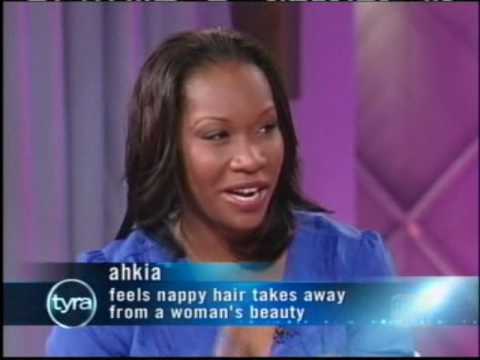
And who can’t forget Tyra Banks show on Good Hair?

hqdefaultAlso inspired by Chris Rock, Tyra launched a show in May of 2009 that spoke about African American women’s hair. It featured a variety of women (some with permed hair some with natural hair) who engaged in hot debate over what is considered good hair and bad hair. Children of the women also got involved, turning it into an emotional roller coaster of history and identity.

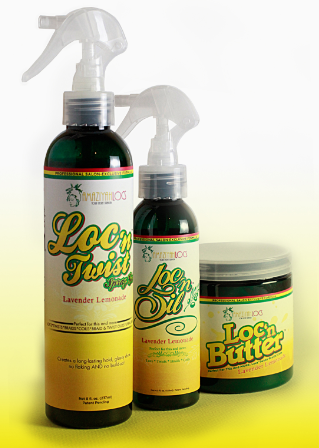
For my natural hair, I use Amaziyah Loc Products:

1982339_291465157689630_658672872_n

And so do most of your favorite artist and sports players:

For me locs are much more than just a fad. They represent our culture.  We have worn our hair in these styles for thousands of years. Amaziyah Locs- pronounced (Ah-ma-zi-yah) is a Hebrew name that means “Made Strong by Yah.” I knew that the meaning was perfect for a natural hair care company specializing in Locs. It immediately reminded me of the story of Samson and Delilah. Samson was granted super natural strength by Yah in order to wage war against his enemies, such as destroying an entire army with only the jawbone of a donkey! However, Samson had a weakness: his hair, and without it he was powerless. When they were cut by Delilah, he lost all of his strength. Makes you wonder why there is a barber shop on every corner in predominantly “African-American” communities.

My favorite is the Loc N Butter but Amaziyah’s got plenty of variety to go around. Get the Loc N Twist, Loc N Oil or Loc in Butter:

fbed20_a7a38be902dcbff69630f25febdefc03

Why not close out with a little music? Here’s India Arie, I am Not My Hair: